[–] 3 points 1 month ago (1 child)

It sounds like what you’re pointing to is when humans became a more exact time-oriented culture. This was not the case until the invention of mechanical clocks in the 13th century, and town bells began synchronizing everyone. Then pay and efficiency rose, but people began to become more dependent on the concept of “kept time” and probably less “being in the moment” or being a more people- or event-oriented culture.

The podcast episode of Hidden Brain called “The Past is Never Dead” explains this pretty well and I hadnt really thought about what humans did before clocks.

  • source
  • [–] 6 points 2 months ago* (last edited 2 months ago) (1 child)

    Thanks for the in-depth review of GOS. It is definitely an adjustment in many ways, but I do think my phone usage has become more “disciplined” because things are not so accessible.

    A few suggestions you might find useful:

    • Native Alpha can create web apps (eg, in place of using bank apps, etc)
    • Droid-ify app store has the option to back up or share your installed apps. F-droid does not, the last I checked.
    • HeliBoard is definitely the best keyboard; customizable, smooth
    • Joplin: great notes app

    If all else fails, there is the Aurora app store for apps that you absolutely cannot replace and need from the Play Store. I had to do this for Outlook and a 2FA app for work, but just made a separate “Work” profile on the phone to separate everything.

  • source
  • [–] [S] 2 points 2 months ago

    That’s true. I suppose others can benefit from seeing the questions and thought processes.

    Side note, I was told this was an Algerian vine, but now that I see you say Pothos and looked that up, it does appear to be a Pothos.

  • source
  • parent
  • context
  • [–] [S] 2 points 2 months ago* (2 children)

    Thanks! And thank you for all of the guidance. I don’t have a greenthumb naturally.

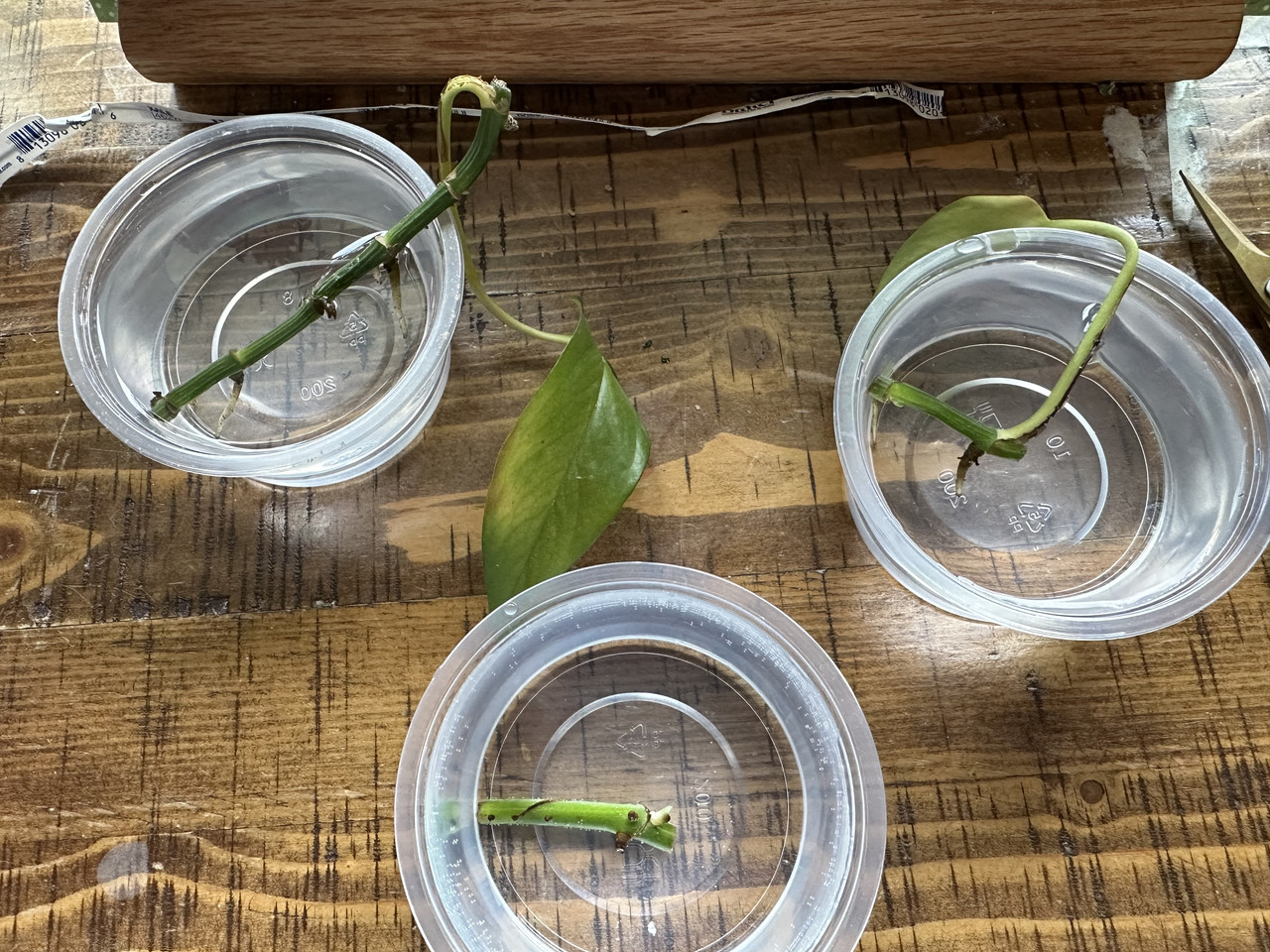
    Can you tell if sprouting part of the smallest one is a stem or root? It’s not coming out of the root node so I assume it is a stem. But wouldn’t it want to grow a root first? I can use some bread ties to keep that part out of water.

    If you feel comfortable with it, could we connect with Element or SimpleX or your preferred messenger? I’d really love to learn more as I go. I have plans to plant lentils, grape vines, and a Lapins cherry tree. There is just so much information on the Internet that it’s hard to pick a strategy sometimes.

  • source
  • parent
  • context
  • [–] [S] 2 points 2 months ago

    I had it on for a few days straight and it didnt smell at all. But I think to be safe, I’m going to keep it unplugged and then run it for couple of hours each month (with the furnace turned off).

  • source
  • parent
  • context
  • [–] [S] 2 points 2 months ago

    Oh gotcha. Yeah I don’t really have an HVAC person to ask, but I found a few reputable sources on YT and they recommended on the underside of the coils, because that’s where the moisture (and then bacteria) accumulate.

  • source
  • parent
  • context
  • [–] [S] 2 points 2 months ago (4 children)

    Here is an update on the clippings: https://i.postimg.cc/J06y4xRJ/IMG-3769.jpg

    I did end up keeping the blue and purple ones together and seem to be doing well. The smallest one’s leaf turned brown, so I pulled it off. It looks like either a root or leaf is trying to sprout out. Is it okay to keep it submerged without a leaf.

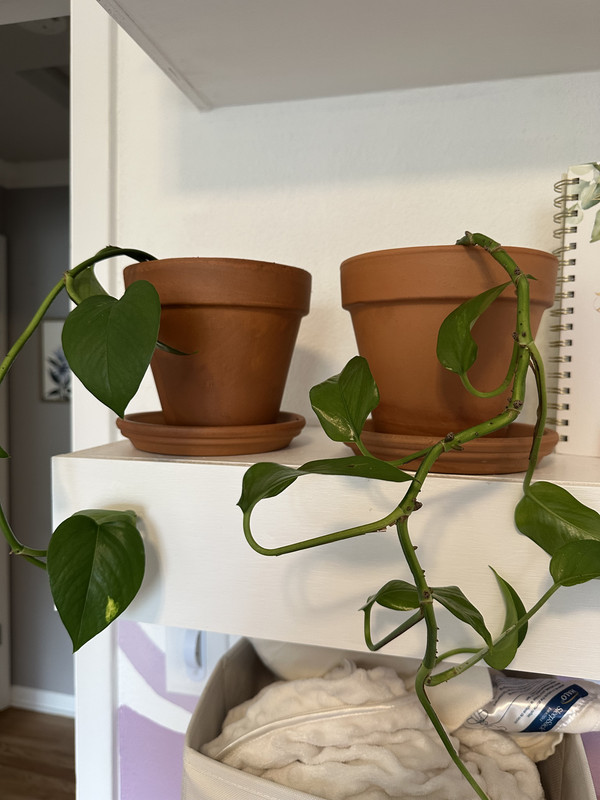
    Here are the first ones I had. I let the roots get pretty long and transferred them to vases. I put enough water to get the soil damp and will only plant to water once per week. But do they need more water for the transition from straight water to soil? https://i.postimg.cc/C5PZL7w8/IMG-3770.jpg

  • source
  • parent
  • context
  • [–] [S] 1 point 2 months ago (2 children)

    Huh, I hadn’t thought about turning the light on for short periods. And if ozone is mostly generated with moving air, then turning the light on with the furnace off seems to be safest. Thanks for the suggestion.

  • source
  • parent
  • context
  • [–] [S] 1 point 2 months ago (4 children)

    Thanks for pointing that out; I was unaware of that. After educating myself a little, it looks like UV light below about 200nm wavelength generate ozone, but 254nm is the sweet spot for killing microbes. The light I got works at the 254nm wavelength.

    The US EPA recommends a concentration of less than 70ppb, Canada 40ppb, and the WHO 30ppb. This model has been tested by the California Air Resources Board at 13ppb.

    That’s reassuring, but I’m still looking more into this. Do you have any recommended resources for gaining more insight on ozone generation?

    https://www.environics.com/2025/02/17/regulations-ambient-ozone-concentration/

    https://www.environics.com/2025/02/17/regulations-ambient-ozone-concentration/

    https://bioshielduv.com/products/bioshield-magnetic

  • source
  • parent
  • context
  • [–] [S] 1 point 3 months ago (8 children)

    What do you mean by “ before it splits?” I’m still learning a lot, but the general consensus of where to place the UV light was on the bottom side of the A-frame, because that’s where the moisture will accumulate and allow for bacteria and fungus growth.

    I ended up drilling a hole and mounting the light right into that end plate, and then drilling another hole in my new access panel for the cord, and putting duct putty around the hole.

  • source
  • parent
  • context
  •  

    I am adding a UV light to my furnace coils. I decided to cut an access panel for easier cleaning and access to the UV light. I did not realize there were these triangular end covers for the A-frame of the furnace evaporator coils.

    I don’t see them anywhere online when looking up diagrams of furnace coils. When I search online, it is also not clear if these covers are necessary. Are these covers beneficial? Or can I take one side off to fit the UV light underneath the A-frame?


    https://i.postimg.cc/pTQLbmWq/IMG-3529.jpg

    https://i.postimg.cc/rmGwXDVx/IMG-3530.jpg

    https://i.postimg.cc/qRcvVNJ1/IMG-3531.jpg

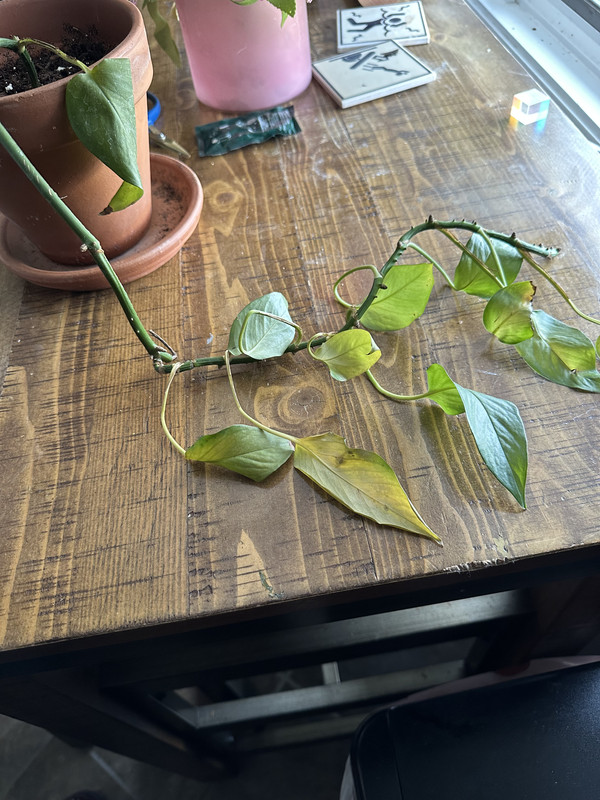
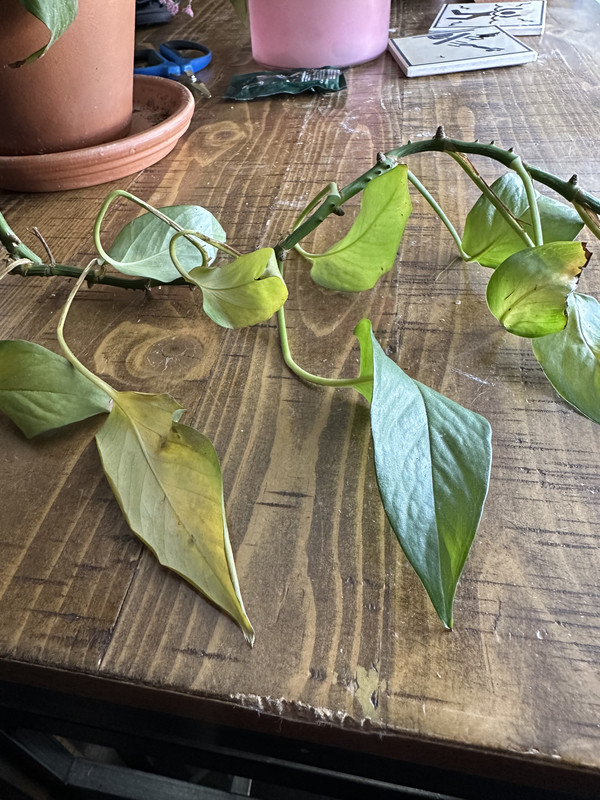
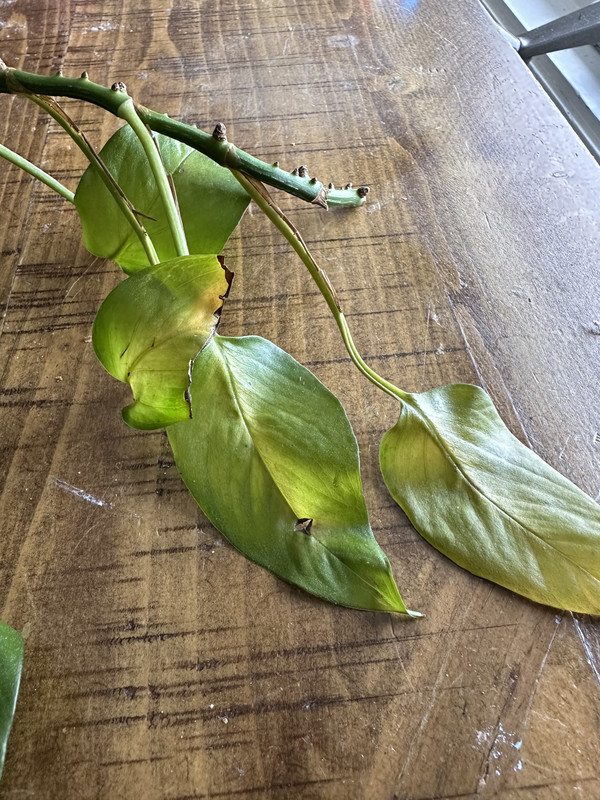
    I recently transplanted this vine and it seems to be struggling. This one had roots to start with, so should I put it in water first for a few days or straight into soil?

    From what I have read, it does not need too much water and in fact should not be overwatered. I also saw that it does not prefer direct sunlight. The yellow on the leaves closer to the roots can mean overwatered but yellow in all leaves can mean malnourished. I pur it in new “moisture control” potting soil.

    The burnt leaves can mean too much direct sunlight, so I moved it to a bookshelf away from the window, but that didnt seem like enough light.

    I’m kind of at a loss here. Do I need to do something different or just give it time to heal from transplanting? Any insight is appreciated.


    I’m setting up a new server and am planning to try applications such as Jellyfin, Baikal, Nextcloud, Syncthing, Immich, Home Assistant, SearXNG, CryptPad, and possibly Element/Synapse if my little pi4 can handle it.

    I’ll probably only have three users, so I’m hoping to fit a fair amount on my pi4 (8GB RAM), but will add mini PC if I need to. I do not plan on making any service publicly available without logging in as a user on my Yunohost server. I will eventually switch to a Docker setup, but for now the Yunohost debian setup is much more user-friendly for me, and everything has been pretty functional as-is.

    I’m mostly concerned for a baseline level of security. One user suggested:

    • patch/upgrade your kernel and services regularly
    • run a hardened kernel with stack protection and address space randomization
    • Put a firewall between you and the internet with only minimal ports open
    • Scan your machine and ensure no extra ports are open
    • Disable/remove every device driver the kernel has that you aren't using
    • Remove all software on the device that isn't in active use or part of your debugging toolset, and disable all features of services you don't need.
    • Add an extra trustworthy layer of authorization to nextcloud before you can talk to PhP
    • Disable root ssh access completely
    • Disable user ssh access except for via ssh key
    • Encrypt the most critical data client side, so access to the server doesn't give access to the data (e.g. my passwd database is in nextcloud, but the key to unlock it isn't)
    • Use 2-factor authentication
    • Only allow access over VPN
    • Firewall whitelist only networks you know you and your users might be accessing from. No reason why a host on a random ISP from Kazachstan should be allowed to even attempt a login.

    Plan: From that, I plan to take the suggestion for

    • disabling root SSH and only use the authentication key setup
    • change the default SSH port, port forward through a VPN service
    • use encrypted backups on client side (phones and computers)
    • Yunohost to my knowledge uses nftables built-in for a firewall, so I can default block everything and whitelist the services I need

    Yunohost does not yet support 2FA login, but suggests to disable the web api if it will not be used, to decrease attack surface.

    Questions:

    1. Would security for ports be sufficient to use a VPN service like Wireguard or Proton VPN and enable port forwarding? Or simply disable unused ports?

    2. Should I disable ports that Yunohost defaults on? These are: TCP ports 22, 25 53, 80, 443, 587, 993, 5222, 6269 and UDP ports 53, 1900, 5353. I am new to network stuff but understand that 22 is the default SSH until I were to change it, 80 is needed for HTTP, 443 is needed for HTTPS, and Element would probably need 5222.

    3. Is blocking everything via firewall and only whitelisting services I use feasible? Is that necessary if running the whole thing with port forwarding through the VPN? I’m concerned that I won’t be able to manually figure out every service my applications need.

    I understand there is a balance between security and compatibility/usability, but I would like to have a reasonable amount of confidence that my files and photos will not be easily taken. Any insight is greatly appreciated.


    The mPing app is a user-reported weather service that is then made public for things like tornado touch down, power lines down, hail, severe rain, roof damage, flooding, etc.

    I was looking for a free way to see what people are actually experiencing around WI, since the weather reporting has not been as accurate lately. Many apps are paid, but this one is funded through a university.

    I have not yet reported anything myself, so please tell me if you have experience with mPing. I see others reporting as the weather evolves, so it must work on some capacity.

    Stay safe out there folks.


    The host Search Engine, PJ Vogt, and the host of Hard Fork, Kevin Roose, discussed their thoughts about a “new kind of Internet” possible with the Fediverse. They also talked about the challenges of the somewhat technical barrier to entry.

    I especially liked them sharing their perspectives; the Fediverse seems to simultaneously be a recreation of a pre-shittified Internet and something new altogether.

    They even created their own live Mastodon server to see how that would go: https://theforkiverse.com/explore They ended up testing OpenAI’s Operator to do the heavy lifting of coding, but did make the realization they did not know how their own user verification works or how to change it.

    I am just elated that there is talk in the “mainstream” of the Fediverse. I’m hopeful that some attention such as this can help raise awareness and pique some curiosities.


    The host Search Engine, PJ Vogt, and the host of Hard Fork, Kevin Roose, discussed their thoughts about a “new kind of Internet” possible with the Fediverse. They also talked about the challenges of the somewhat technical barrier to entry.

    I especially liked them sharing their perspectives; the Fediverse seems to simultaneously be a recreation of a pre-shittified Internet and something new altogether.

    They even created their own live Mastodon server to see how that would go: https://theforkiverse.com/explore They ended up testing OpenAI’s Operator to do the heavy lifting of coding, but did make the realization they did not know how their own user verification works or how to change it.

    I am just elated that there is talk in the “mainstream” of the Fediverse. I’m hopeful that some attention such as this can help raise awareness and pique some curiosities.


    Hi, I saw my beta for Arctic and was pretty bummed and switched to a couple of others. I thought Arctic had better UI than many others, namely custom theme abilities. I want to share a couple of themes I made for Arctic, in case anyone is still using Arctic and wants to use them. Please let me know if they don’t work; I don’t share links often:

    https://drive.proton.me/urls/BMAJRJ4PV4#HJPslOve3tm8

    https://drive.proton.me/urls/0C7BDRX1WG#1Rye2U6KraqK


    Hi all, I’m looking at HYS accounts and I see Sofi and Openbank coming up as some of the higher rate options. It looks like Openbank is based in California and has 4.2% but poor customer service reviews on Trustpilot. Sofi is 4.3% but with a limited time 0.7% “boost,” so 3.60% normally, but appears to have better customer service. I’m more inclined to have better support through Sofi.

    I also had many people tell me Ally gave them 3.30% and pretty good customer service and transfer times. Any thoughts?

    view more: next ›