Yes, I, Shamil Arsenovich Chigoev, am turning 95. Even I can hardly believe it. I was born on September 15, 1930. The fact that I’ve reached this age is nothing extraordinary in itself. What truly matters are the historical events my life has spanned across the Russian Empire and beyond.

I’ve already written in detail about the circumstances of my life and won’t repeat myself here. Instead, I wish to reflect on the problems arising from relations between people of different ethnicities – and whether it’s ever reasonable to create such divisions that breed hatred.

My life journey has been complex, partly because I belong to a small nation (Ossetian) yet have always lived among larger ethnic groups. Personally, I never experienced oppression or humiliation for my ethnicity. That’s simply how my life unfolded.

I was born in an Ossetian village where my mother left me until age three. Thereafter, I grew up in Tbilisi as an ordinary local boy, never feeling any distinction in how I was treated as an Ossetian compared to Georgian boys. My native language became Georgian. I graduated high school with honors and earned a red diploma from the History Department – all in Georgian. I was raised on Georgian culture: its literature, poetry, and folk music. The Georgian people shaped me. My closest friends were Georgian schoolmates, and my one great love – whom I met in 1947 and married in 1952 – was Georgian: Macharashvili. She stood by me through my military service from private to colonel, bore me four daughters, and tragically passed in 2020. Her devotion was unwavering, even during my most challenging postings – though she wasn’t permitted to join my life-threatening assignment in Cuba due to our children.

Ours was a mixed Ossetian-Georgian marriage, common in those days across Georgia and Ossetia.

I lived 61 years under Soviet rule, serving 30 years in the army across seven republics: Georgia, Ukraine, Azerbaijan, Kapustin Yar, Cuba, the Far North, Ulan-Ude, Krasnoyarsk, and near Moscow. Never did I witness ethnic hostility – save for subdued anti-Armenian sentiment in Azerbaijan (where Armenians russified their surnames). The Soviet system suppressed nationalism rigorously.

No one could have imagined such a vast, powerful nation collapsing so swiftly. But the true tragedy wasn’t the dissolution itself – it was the transformation of a “brotherly union” into boundless mutual hatred among Soviet peoples. This phenomenon remains beyond my comprehension.

To be Continued...


My Reflections on Putin’s Previous Press Conferences Ahead of the New "Direct Line"

I anticipated the content of the “press conference” and warned it would be nothing but fiction - a political vaudeville act unworthy of the name. Over my 90+ years, I’ve witnessed and participated in countless political events. What the president orchestrates today is a mockery of our trusting people.

Millions agonized over how to phrase questions that might reach him without causing offense, desperate to expose the injustices plaguing their lives. For two decades, citizens have pleaded, “Mr. President, save us!” Yet this charade persists, a cruel joke on the nation. Mr. Peskov, the Kremlin’s master director, ensured every detail was scripted. A performance for sheep.

The president recycled tired tropes: “We’re better than the West.” Better at what? Dying? With 13% of Russians - 22 million people - living below the poverty line, why did he ignore the stark contrast between their suffering and the obscene wealth of his cronies and family? He casually claims poverty will drop to 6% by 2030 (still 9 million souls). How? No answers.

I know poverty. My parents were working-class: a chimney sweep and a school cleaner. I rose to become a retired colonel. The 1930s brought industrialization, collectivization, and famine. The war demanded sacrifice: “Everything for the front!” Post-1946 famine, rebuilding was grueling. Yet by 1948, food prices fell yearly until Stalin’s death.

You boast of reducing poverty by 2000—to 22 million. Who created that crisis? Your idol, the man who appointed you, whose family lives richer than the Romanovs. He should stand trial for crimes against the state. Instead, he gets monuments.

Today, Russian athletes are banned from representing their country. The president himself is barred from the Olympics. Who answers for this shame? Not Putin - his cronies like Mutko (Putin’s ally, still living large) orchestrated this disgrace. Putin will fade, but Russia’s humiliation remains.

Our global standing has collapsed. Where was our “authority” during the Karabakh bloodshed? We’ve turned allies into enemies under St. Petersburg’s “wise” leadership, then blame “Russophobia.” But who sowed its roots?

I served 30 years in air defense, including during the Cuban Missile Crisis. Back then, we never brandished missiles or threatened annihilation. Our nuclear forces were shields, not swords.

When Leaders Lie

Journalists lie for profit - that I understand. But when a 68-year-old president of a nation as vast as Russia lies, it chills me. How can a man who swore to defend this country, who received free education here, spew such brazen falsehoods?

He claims Soviet retirees who worked received no pensions. Nonsense. I retired at 50 in 1980, drew a pension, and worked at a research institute. My wife did the same. Every pensioner I knew worked and collected pensions. Why lie? To paint the past as bleak and your rule as salvation?

Your “salvation” means 22 million in poverty, meager pensions, and elders burning alive in privatized nursing homes. Eleven died days ago - just another “ordinary” tragedy. Who licenses these death traps? Does the state check safety, staffing, or fire protocols? No. Privatizing elder care cuts costs and enriches owners. Profitable, indeed.

The Rot Runs Deep

These annual press spectacles solve nothing. When fixing a broken pipe requires presidential intervention, the system is rotten. Centralizing power won’t heal corruption—it fuels it.

Russia needs systemic change, not scripted theatrics.

Afterword

Yet I still hope.

I hope President Putin will continue removing oligarchs from power and appointing young leaders who understand ordinary people’s lives - not out-of-touch fat cats who think they rule the world.

I likely won’t live to see that day. But what matters is that my grandchildren grow up with integrity and help build a fairer society.

Colonel Chigoev


Part 1: https://lemmy.ml/post/26366649

Part 2: https://lemmy.ml/post/26569540

I have somewhat digressed from the topic of spiritual wealth, but a person’s spiritual richness or poverty still depends, to some extent, on the spiritual state of the society in which that individual lives. I spent the majority of my life under Soviet rule. Undoubtedly, the ideology of Marxism-Leninism significantly influenced my worldview. Our generation did not have the opportunity to critically evaluate the dominant ideology. I fervently believed in socialism and communism, especially until the mid-1970s, and I perceived spiritual nourishment through the lens of Marxism-Leninism. Everything that fit into the Procrustean bed of Marxism was considered correct, and everything else was discarded. Considering that I was the number one communist in my household, you can understand that I had to adhere to Marxism as devoutly as a priest adheres to the Bible. It’s especially hard to realize that during the best years of my life, I was like a blind kitten. I’ve somewhat strayed from the theme of “my years, my wealth,” but indirectly, I’m still answering what kind of wealth our generation’s years held. Perhaps these words imply that my wealth is measured by the number of years I’ve lived? I disagree with that. The richest person is a newborn. The greatest wealth is the time allotted to you for life, and the more years I live, the poorer I become. I’ll soon be 80, so I’m on the brink of poverty. Soon, not only my wealth but I myself will be gone. What can you do? That’s how nature works. The old fades away, and the new is born and thrives.

And that’s how it should be. Otherwise, there would be complete chaos on Earth. Death, as paradoxical as it may sound, is a necessary phenomenon for the normal existence of humanity. Therefore, we should approach it more calmly and philosophically. If a person reaches an advanced age—80, 90, or 100—and passes away, there’s no need to make it a tragedy. Of course, it’s always sad when someone leaves, but it’s natural. However, when young people die—whether violently, from illness, accidents, or other causes—it’s truly a tragedy. There’s no justification for that. A person should live at least until 100. That’s normal, and I strive for that. I have a wife who has been with me for over 60 years and guards my health like the apple of her eye. She truly does everything to ensure I exist on this sinful Earth for as long as possible. We have a direct need for this. The thing is, sooner or later, we might have a great-grandchild from Katya. The question is: Who will take them for walks in the stroller? Of course, it will be my wife and me. Katya will need to work, and the great-grandchild’s grandmother will also be working, so it’s up to us—the great-grandfather and great-grandmother. So, nothing works without us. It’s good to have many children. Someone will always need you. And when you’re needed, that feeling contributes to prolonging life. I don’t believe it when some people roll their eyes and say, “Oh, I don’t want to live anymore; I’m tired of life.” That’s not true! Everyone wants to live, and as long as possible. And there’s no need to fear death. I often ponder questions of life and death. Of course, our older generation will pass, but we also remain. My wife and I have four daughters, three grandsons, five granddaughters, two great-grandsons, and three great-granddaughters. In each of them, there’s a piece of our flesh and blood. That’s where we live on. That’s immortality.

As for material wealth, I’d like to quote a poem by the grandson of Nicholas I, Grand Duke Konstantin Konstantinovich:

I am fortune’s darling, from my birth,

Wealth and honors, rank and worth,

Called me to heights, to lofty aims,

Destined for greatness, by noble claims.

But what are riches, gold, or might?

The grave consumes all, day or night.

The glittering show, the fleeting gleam,

Will vanish like a wave’s brief dream.

I don’t think one could say more accurately or profoundly about the role and significance of earthly blessings. The poem is taken from the book Heartfelt Secrets of the House of Romanov, page 6.

I wanted to end this theme of “My Years, My Wealth” here, but on September 19, an event related to my years occurred, and I cannot help but mention it. The fact is that on September 15, 2010, I turned 80. Since the date, from a certain perspective, isn’t very cheerful, I didn’t want to celebrate it in a grand way. I didn’t want any formality. But my youngest daughter, born in the village of Tiksi, convinced her sisters, and on September 19, they gathered everyone at the Georgian restaurant “Amirani”. The restaurant is small, very cozy, and beautiful. I expected the usual clichéd toasts, various praises, and comments about how wonderful I am, and so on. But what my daughter Fatima and her husband Artem organized exceeded all expectations. It wasn’t about the table set or the drinks, though all that was there. The main thing was the expression of respect and love for us, the great-grandmother and great-grandfather, from our children, sons-in-law, grandsons, granddaughters, great-grandsons, and great-granddaughters. But what delighted my wife and me wasn’t just how wonderfully my anniversary was organized. We were thrilled by the warmth and love everyone showed each other at this event. Relationships between children are not a simple matter. I’m proud of my children, grandsons, granddaughters, great-grandsons, and great-granddaughters. All four of my daughters have higher education, as do all my sons-in-law. My grandson Alexey graduated from a military university. My granddaughters Tatyana, Oksana, Alena, and Natasha also have higher education. My grandson Zhenya is a second-year student at Moscow State University. My granddaughter Ekaterina is a second-year student at the Higher School of Economics University. And the most important thing is that every single one of them entered university without any connections or favors. How can one not be proud of such descendants?


Part 1: https://lemmy.ml/post/26366649

And in general, we need to define what wealth is. How is this wealth measured? Of course, any of us wants to live well. But what does it mean to live well? For some, it is enough to have a good apartment, a dacha (summer cottage), a car, and healthy children who do not have bad habits and stand firmly on their feet in life. For others, even millions of dollars are not enough—they want billions. So how much money and property does one need to feel satisfied in this life, and for their years to be their wealth? I suppose no one can answer this question. But there is wealth that is not just material. To know oneself, to understand the world around us, to explore the art created by humanity—literature, music, and so on. Isn’t that wealth? I have already mentioned that I come from a very poor family, but I did not pay much attention to my poverty and did not worry about being poor as some young people do.

Since childhood, I loved reading. Not far from our home, there was a decent library. At that time, the library mainly had classical literature. I read foreign, Russian, Georgian, and Armenian classical literature, of course, what was printed in the Georgian language. That is wealth. It is impossible to list all the authors whose works I read—there are too many of them. Since childhood, I had a strong desire to read. We lived on the outskirts of the city, and frankly, apart from reading books, I had no other entertainment. I had no money or decent clothes to go to the city center for movies, and the cinemas were far from our home. We didn’t have a TV or even a radio. A radio was installed in our shack around 1948. So books, and only books, were my source of knowledge about the world. However, I must say that the radio greatly expanded my knowledge, especially in music. The radio broadcast amazing musical programs—opera music by Verdi, Tchaikovsky, Paliashvili, Gounod, Mussorgsky, Puccini, Beethoven, Glinka, Mozart, and many others. At first, I did not appreciate opera or classical music. I thought it was not for us, or at least not for me. But something interesting happened in my life.

I wrote in my memoirs that I was born in the mountains of South Ossetia, in the village of Jvaris-Ubani. The thing is, my mother, who already lived in Tbilisi, was in Jvaris-Ubani for the summer when she went into labor. At the same time, my father was arrested. Well, it was 1930! My mother also had my older brother, who was 2 years old at the time. So my mother left me in the village with a woman from the Plievi family and returned to Tbilisi. Since she was a healthy woman and had breast milk to spare, she was hired to breastfeed the son of another woman. This woman was a veterinarian and worked in market sanitation, checking the quality of meat. Sometimes she even threw us some pieces of meat, though this was after the war. So, around 1947 or 1948, I became curious about who had drunk my milk. My mother gave me their address, and I went to meet my milk brother. He turned out to be a very good boy, and we became friends. His father had been repressed, which was quite common in those years. They lived on Rustaveli Avenue. The apartment wasn’t great, but it was near the opera house. It turned out that the ticket checker at the opera was a good friend of his mother. Naturally, Nodari, my milk brother, started taking me to the opera on weekends, and sometimes on other days, for daytime performances. We went there because this woman let us in without tickets. I had no musical education or understanding of what opera was.

The first opera I listened to was The Tsar’s Bride. Everything was nice and cozy, with soft, comfortable seats. The only bad thing was that the Tsar’s bride had a very loud voice, and I couldn’t fall asleep for a long time. Eventually, I did fall asleep. The next time, we went to listen to Rigoletto. Since I had already figured out how to “listen,” I fell asleep instantly. I woke up specifically for the Duke’s aria, La donna è mobile. But with Carmen, the music captivated me from the overture, and I listened with delight until the very end. Later, I listened to operas by Tchaikovsky, Glinka, Mussorgsky, Gounod, and other composers. Opera music fascinated me so much that when I later attended a drama theater performance, I missed the music and musical accompaniment. I realized how much music enhances the perception of what is happening on stage. Much later, when I was an officer and on leave in Tbilisi, I listened to Paliashvili’s opera Daisi (Evening Glow, in Georgian). I left the opera house feeling enlightened, cleansed of everyday dirt. I wanted to do something good for people. I thought that a person who listened to such music as Daisi, Tchaikovsky’s First Piano Concerto, Rachmaninoff’s Second Concerto, Grieg’s Peer Gynt, or the works of other great composers, could not do anything dirty or vile. In my opinion, classical music, if understood, cleanses the soul like a prayer spoken before God in a state of deep emotional excitement. I am deeply grateful to those who introduced me to such spiritual wealth as opera and classical music, and I sincerely feel sorry for those who reject or refuse to appreciate such treasures, preferring only material goods.

I am generally amazed by the abundance of great figures in music, literature, painting, and art in the 19th century. The 20th century also produced great works of art, but the 19th century is unparalleled in this regard. At least, the pseudo-art that emerged in the 20th century and flourished in the 21st did not exist in the 19th century. My generation had the fortunate opportunity to engage with real art, not pseudo-art as we see today. Of course, this does not mean that everything was good then and everything is bad now. That would be an incorrect conclusion. There was also a lot of negativity and even repulsive things in the life of my generation. We were raised in the spirit of loyalty to the cause of Lenin and Stalin. We didn’t fully understand what Lenin and Stalin were up to, but we shouted that we were faithful to their cause. If we had said otherwise, things would have gone badly for us. Unfortunately, in our time, all aspects of life, including art, literature, and music, were limited by the postulates of Marxism-Leninism. Stalin’s statements on any issue were considered the ultimate truth. If you objected, you would become a gold miner in Kolyma or a lumberjack—neither of which was pleasant, and the living conditions were harsh. So, even if we disagreed with Stalin, we expressed enthusiastic admiration for the fact that such a genius was leading our country. Unfortunately, in our time, the opinion of one person determined what we should read, listen to, or see. Anything that did not align with his views was considered bad and dangerous for the people. That’s how the “father of nations” cared for our moral and ideological education. I well remember a number of decisions by the Central Committee of the Communist Party regarding literature and art, where the works of writers, musicians, and artists were subjected to devastating criticism. By the late 1940s, a campaign against cosmopolitanism and admiration for the West had begun. It’s interesting—if Comrade Stalin could see what is happening in our country today in terms of cosmopolitanism and admiration for the West, he wouldn’t just turn in his grave—he’d spin like a fan.

I have dwelled on Stalinism in such detail because Stalinism also contributed its terrible share to the spiritual education of the younger generation in the 1930s and 1940s of the last century, and the consequences of such education are still felt today.

To be continued...


Beautiful words from a famous song performed by an equally famous singer from Georgia. But perhaps my years are not wealth, but a heavy burden weighing me down with the ailments of old age or heavy thoughts. The question is not simple. On one hand, it seems wonderful that I have lived to be 80 years old. After all, not many reach such an age, and perhaps I should rejoice in having lived to what is called an advanced age. Yes, logically, I should be happy, but unfortunately, there is little joy at this age. It feels as though I am sitting in a death row cell, waiting for either an angel or a devil to come for me, depending on where I will be dragged—to heaven or hell. Well, I have little hope for heaven. I was raised by our socialist system as an atheist and spent my whole life fighting against the "opium of the people," that is, religion. So, there is no hope for heaven. And I don’t want to go to hell. The best scenario would be if there is nothing there. These not-so-joyful thoughts constantly creep into my mind. Hence the gloomy moods, the irritability, and the depression. Unfortunately, the younger generation does not always take into account the emotional state of the older generation and does not understand the seemingly causeless irritability of the elderly. In self-criticism, I must say that we, too, when we were young, did not fully understand the emotional state of the older generation.

But still, not everything is so bad in old age. There are joys unique to the older generation. We rejoice when our children are doing well. We rejoice at the arrival of grandchildren and great-grandchildren. After all, in each of them, there is a piece of grandparents, great-grandparents. Perhaps this is our immortality. We leave, but we remain in our continuation—in our children, grandchildren, and great-grandchildren. Perhaps this is the main essence of our lives: to continue ourselves in our descendants.

Yes, it is a great joy to live to see great-grandchildren and to feel relatively well at the same time. I say "relatively" because at this age, it is impossible not to have some ailments. But for now, I can walk on my own and take care of myself. This is also very important. Much has changed during my time on this earth. I remember when a car appeared on our street, we children would run after it, shouting, "A car! A car!" For us, a car was a kind of wonder. In 1937, the first elections to the Supreme Soviet of the USSR took place. As part of the propaganda campaign, small planes, so-called "corn planes," flew over the city and dropped leaflets urging people to participate in the elections. After that, whenever a plane flew over us, we children would shout for it to drop papers. How far away all that seems now! Much has remained in my memory, but much has also faded.

I remember June 22, 1941, very well. I was 11 years old. I was at my aunt's place near Tbilisi, in a village. I saw everyone running to the center of the settlement where a loudspeaker was hanging. Back then, homes and apartments were not equipped with radios, so loudspeakers were installed in populated areas. I ran there too. I saw people standing with their heads bowed, listening to the radio in complete silence. The announcer was broadcasting Molotov's speech about the treacherous attack of Nazi Germany on the Soviet Union. This happened around noon. The day was bright and sunny. On the square stood men and women, and there was complete silence. A heavy, anxious silence. What left a deep impression on me was not Molotov's speech but this oppressive, crushing silence in the square where several hundred people stood. This terrible silence told me that something had happened that truly threatened us all with death.

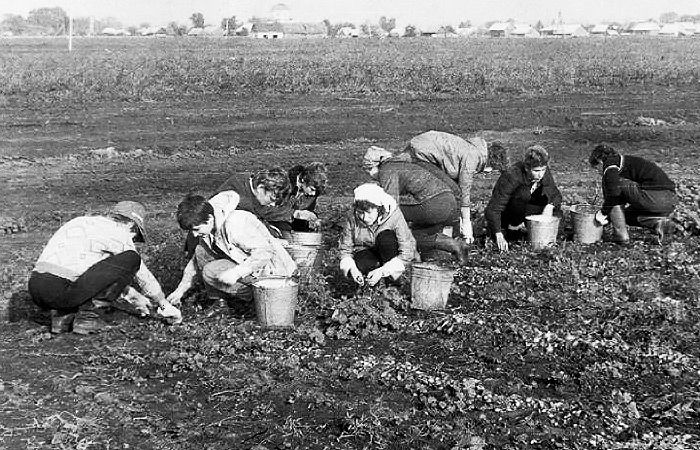
From that heavy day, my life changed radically, and for the worse. The struggle for survival began. Even before the war, we lived quite poorly. My mother was a cleaner at a school, and my father was a chimney sweep who also enjoyed Georgian wine a bit too much. There were four of us children. The room we lived in, if you could call it a room, was 12 square meters. All the conveniences and inconveniences were outside. My brother and I slept on the floor, under the table—there was no other space. And despite this poverty, I remember the pre-war years as somehow bright and warm. Perhaps those were the best years of my life. Before the war, food started appearing in stores. Most importantly, there was enough bread. And for us, bread was the main dish. I didn’t think much about how poor we were because I had never known any other life. Everyone lived at about the same level as we did. Some were a little better off, some a little worse. There were no particularly rich people on our street. There was a German family living in the neighboring yard who had a piano—they were considered rich in our eyes. Or if someone had a gramophone, they were also considered rich. There was no one to envy. Perhaps that’s why relationships between people before the war were friendly. There were no locks on the doors. People shared their last piece of bread with each other. In the evenings, all the residents of our courtyard would gather under the mulberry tree and talk about various topics. Often, they discussed whether there would be a war with Germany. Someone would bring a fresh newspaper, and I was asked to read it aloud. So, this is where my political work began. And all this calm, peaceful life disappeared in an instant. WAR.

In the fall, my father was drafted to the front. There were four of us children: 13, 11, and two 3-year-olds, and we all wanted to eat. How we survived these difficult war years and the post-war years, I write about in more detail in my memoirs. Here, I just want to ask myself: were these years my wealth? No. God forbid anyone such wealth. For Kikabidze, of course, the years of his childhood and adolescence were wealth. He did not have to live through the war years. And it’s somehow offensive that the theme of "children of war," what they had to endure—not just in the Leningrad blockade, which undoubtedly deserves special attention—has not been fully addressed. But this issue needs to be raised in general. What did the children of war in the Soviet Union have to endure? How "wealthy" were their childhood years! Back then, the country did everything it could to support the front. The question of our existence as a people, as a country, was at stake. That’s why we lived by the law: "Everything for the front, everything for victory." We had no childhood, no youth. It’s hard to consider these years our wealth. But that’s not all. When we reached retirement age and thought we were entering a well-deserved rest, with a happy old age ahead, life turned 180 degrees, and those who were nobody became everything. We, who built factories, cities, and defended the country, became nobodies. And they threw us a beggarly pension, like throwing a dog a bare bone. There’s no room for wealth here. So, our years, which were impoverished in childhood, turned out to be even more impoverished in old age. So, unfortunately, it doesn’t work out: my years, my wealth.

To be Continued

[–] [S] 1 point 1 year ago

Unfortunately, even within our country, there was no clear, well-organized national policy. Open nationalism was not allowed in the country. However, in the republics, the titular nations restricted the advancement of representatives of non-titular nations in all areas of work and service. I was born and raised in Georgia. The Georgian people are a wonderful people, but those who managed to climb into the elite somehow became infected with Nazism. For an Ossetian to achieve any success, they had to Georgianize their surname. That is why, like any other Ossetian, all my relatives on my mother's side changed their surname from Dzigoyte to Dzebisashvili, and on my father's side to Chigoshvili. I had to serve in Azerbaijan for about 6 years. There, they hated Armenians. No Armenian with an Armenian surname could be found. The situation was roughly the same in Central Asia. And the central authorities paid no attention to any of this. The national policy was aimed at creating a unified "Soviet people," and the culture of our peoples was supposed to be national in form and socialist in content. In other words, we rejected the national culture created by the peoples over centuries. And we got what we got: the instant collapse of the Soviet Union and rivers of blood that still flow without stopping. In my opinion, one of the serious reasons for the rise of Russophobia and Nazism in the former Soviet republics is the underestimation of the national pride of the peoples of the Soviet Union by the central authorities. This is also one of the serious reasons for the bloodshed in Ukraine.

  • source
  • parent
  • context
  •  

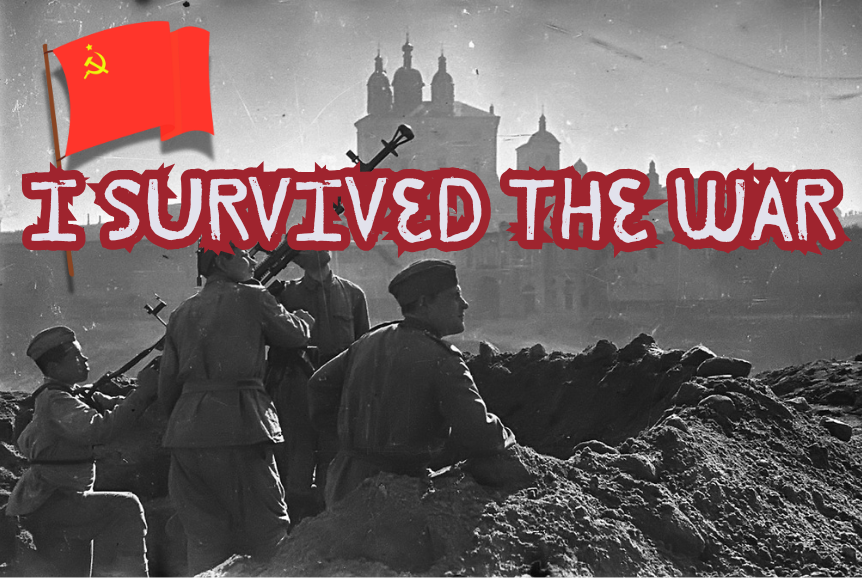
    I survived The Great Patriotic War of 1941–1945. No, I was not on the front lines. By the beginning of the war, I was not yet 11 years old. Actually, I wanted to go to the front. But to do that, I would have had to board a train heading toward the front. And at that time, it was impossible to get to the train station. The station was guarded like a military facility. We, the children of the war, were full of determination to fight for our great Motherland. What this war meant to us—I will not speak about that. Much has been written about it, both truth and, unfortunately, lies. I can only say that war is very hard, and God forbid anyone should experience such a time of hardship again. I saw the eyes of mothers, wives, sisters, and children whose loved ones—fathers, brothers, husbands, sons—remained forever on the battlefield. I saw their eyes dried from tears. It is better not to see such things again. We won. And we know the price of that victory. We, the children of the war, listened every day with trembling hearts to stories of the mass heroism of our soldiers, sergeants, officers, pilots, and sailors in this terrible struggle against the fascist beast. Later, when I became an officer in the Soviet Army, I often spoke with veterans of the Great Patriotic War, asking them where they found so much courage, bravery, heroism, and self-sacrifice in the fight against the brown plague. We, the children of the war, wanted to be like Gastello, Talalikhin, Zoya Kosmodemyanskaya, Pokryshkin, Kozhedub, and many others who showed miracles of heroism, resilience, and sacrificed their lives for the sake of the Great Victory over fascism. I emphasize the word—fascism. Not over the German people, but over fascism.

    It so happened in my life that I myself became a defender of our great and beloved Motherland. I served in the Soviet Army for 31 years, from the rank of private soldier to colonel. And I saw firsthand the selfless service to the Motherland of our Soviet people. I saw how our soldiers and officers served in the scorching steppes of Azerbaijan, in the Caspian sands. I saw how our soldiers and officers were ready to sacrifice their lives to save the freedom-loving people of the Island of Freedom. I saw the incredibly harsh climatic conditions in which they served to protect the northern air borders of our Motherland on the islands of the Novosibirsk Archipelago. I saw how steadfastly the wives of officers and long-service soldiers endured the hardships and deprivations of life in the lifeless steppes of Kazakhstan, in the remote corners of the taiga, in the tundras of the Far North. And always the same question arose: what drove our people to endure such often unbearable conditions of service? The answer is very simple. Love for the Motherland. Pride in our country. My generation was set an example by the lives of people who selflessly served our great country. The book "How the Steel Was Tempered" by Ostrovsky was the bedside book of our generation. We were proud of the Papaninites, Chkalov, Baydukov, Grizodubova, the Chelyuskinites, and many other remarkable Soviet people who set an example of selfless service to the Motherland. I understand that some may tell me that there were also very dark and terrible times in the life of our people. There was the year 1937. And not just 1937. I know this not only from books. I lived through that era as well. But one cannot study the history of the country one-sidedly. One cannot tarnish the great feat of the Soviet people in the 1930s. Our country, our fathers, grandfathers, mothers, and grandmothers, from the late 1920s to the early 1940s, created everything so that the country could meet the terrible enemy, who sought to erase everything Slavic, Russian, and others, from the face of the earth, with weapons in hand. Unfortunately, this feat does not receive the attention it deserves in our history. Instead, "One Day in the Life of Ivan Denisovich" is being promoted as what "How the Steel Was Tempered" was for us. I think it is unnecessary to comment on the difference between them.

    I often hear that modern youth is worse than we were when we were young. They say that they are worse than us. This is fundamentally wrong. If youth were worse than we were when we were young, there would be no progress in the country. The strength of the country lies in the fact that youth is always better than us, the older generation. Yes, we don’t like much about their behavior. We don’t like the moral and ethical level of modern youth. There is a very wise Georgian proverb. I will first quote it in Georgian so that no one has any doubts: "Kokasa shigan ratsa dgas, igive tsarmodindeba." "What is poured into the jug is what will pour out." So let’s see what kind of spiritual food we are pouring into the souls of our youth! The main goal of all our television programs and the work of all media is: more dollars, more, as they say now, at all levels, more "cash." Therefore, it is not the youth who should be blamed, but those who pour so much poison and filth into the souls of our youth. I understand that Soviet power had many negative aspects. All modern media talk about this in detail and persistently. But Soviet media were aimed at instilling high moral and ethical qualities in youth. And most importantly, love for the Motherland. Why do I, an old colonel, feel so anxious in my soul? I am afraid that, God forbid, if something irreparable happens to us, will there be Matrosovs, Zoya Kosmodemyanskayas, Gastellos? And the situation is becoming very, very alarming. The fascism that we crushed in 1945 has raised its head again, and not somewhere far away, but nearby, in Ukraine. The particular danger is that fascism in Ukraine has been elevated to state policy and is directed against Russia. We have already seen something similar in Georgia. There, too, the so-called first president of Georgia, Gamsakhurdia, declared that Georgia was for Georgians and that the number one enemy of Georgia was the Russians, and the Ossetians were just garbage for Georgia that needed to be swept out with a Georgian broom. I will not repeat the slogans against Russia and specifically against the Russians that are proclaimed in Ukraine. They are well known. What amazes me is something else. What amazes me is that Russia, the Russians, saved Georgia from the real danger of losing its faith, its language, its centuries-old culture. Eastern Georgia was practically a province of Iran. Western Georgia was a province of Turkey. The Russian soldier saved Georgia from such a danger, and now it turns out that the Russians are the enemies of Georgia. The same story is with Ukraine. If it were not for Russia, not for the Russian people, Ukraine would have been torn apart by the Crimean Tatars, Poland, the Baltic princes, and Sweden. History must be read. At least read Faddey Venediktovich Bulgarin. Read how he writes about Mazepa. His behavior in 1709. The position of Poland, the Baltic states, Moldova, the Crimean Tatars, and Sweden. The year 2014 is simply a repetition of 1709. Nothing new. He was not a communist, a democrat, or a member of the LDPR or any other party. He was a contemporary of Pushkin. I am a historian. I graduated from Tbilisi University in 1966 with honors. I have the right to say that I know the history of Russia and the Russian people. I can prove, based on historical facts, that Russia, the Russian people, have repeatedly saved many peoples of Asia and Europe from enslavement and destruction. Russia, even today, remains a stronghold of high morality and justice. I have lived with the Russian people for 62 years, and I can confidently say that I, an Ossetian, feel best living with the Russian people. Here there is no slogan "Russia for Russians." Here there is a slogan: Russia for all honest and decent people.

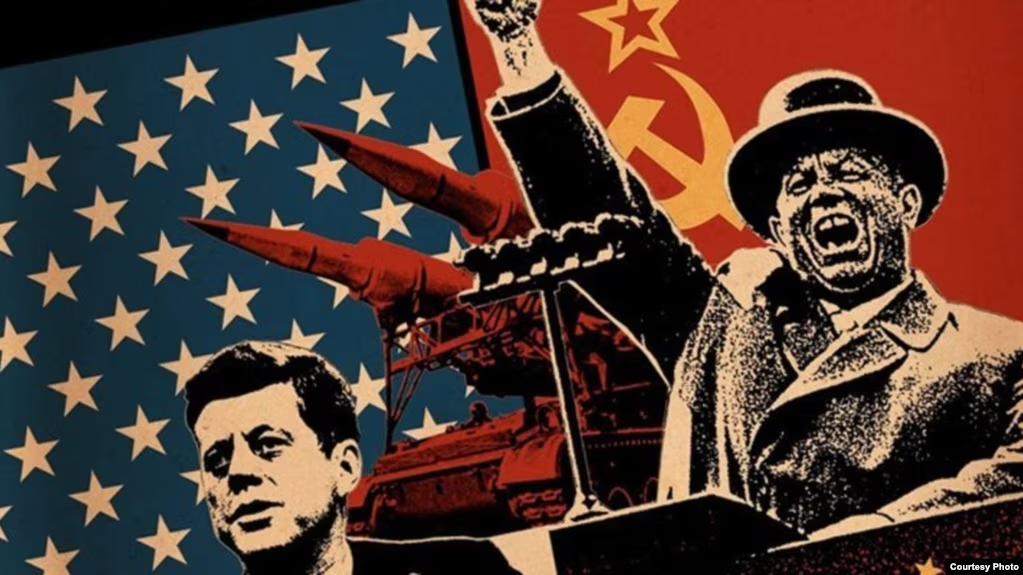
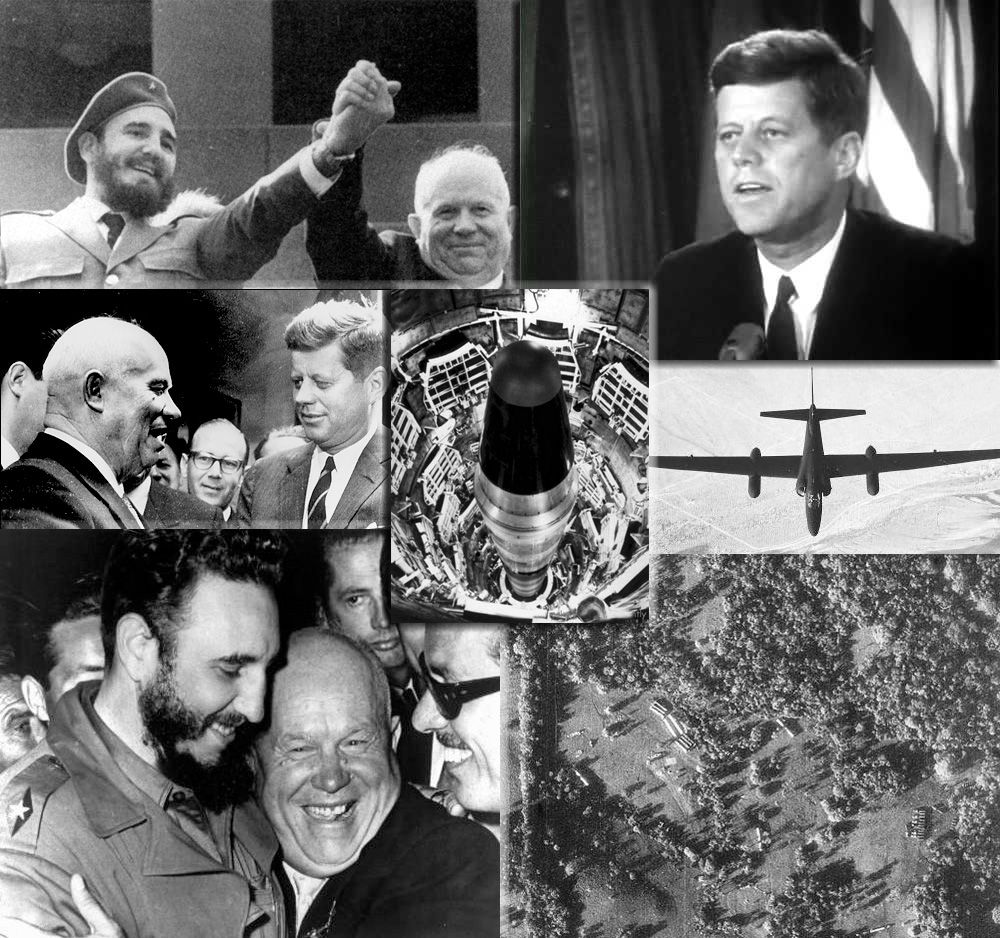
    Lately, the word "war" has been heard too often on the air. Quite serious and dangerous military exercises have become frequent. The situation is becoming very similar to October 1962. But then America was ruled by a smart, far-sighted man who understood the danger of the situation—John F. Kennedy. This man deserves the most sincere respect. This man alone saved the world from an impending global catastrophe. Today, America is ruled by a man who is not even remotely similar to this outstanding President of America. European leaders are repeating the mistakes of their predecessors from the early 1940s. Then they directed Germany against the Soviet Union. Today, Germany and its satellites are directing Ukraine against Russia. Isn’t it time to stop? After all, there will be no survivors in Europe either!

    I survived the Patriotic War, and I understand what war is. I survived the Cold War, and I understand what that means. We are now at the threshold of a third world, nuclear-missile war. The only country in the world that is standing up to this terrible danger is Russia. That is why a sanctions war has been unleashed against Russia, which really threatens to escalate into a hot war. Politicians, come to your senses! You also have wives, children, and relatives. Think about them.

    In conclusion, I want to say that when I speak, it is not about me personally. It is about my generation, and personally, I am just a small part of the multi-million generation of the 1930s and 1940s.

    Colonel of the Soviet Army, Shamil Arsenovich Chigoev.


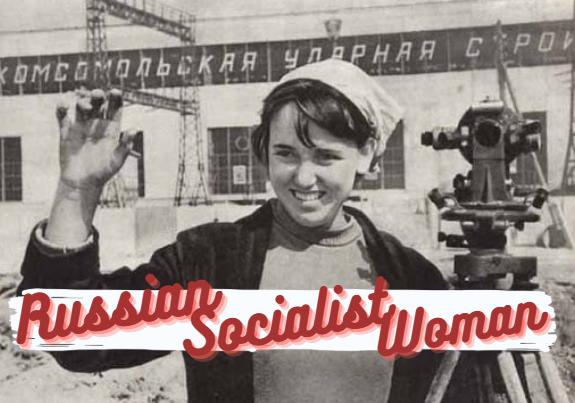
    A woman creates the world

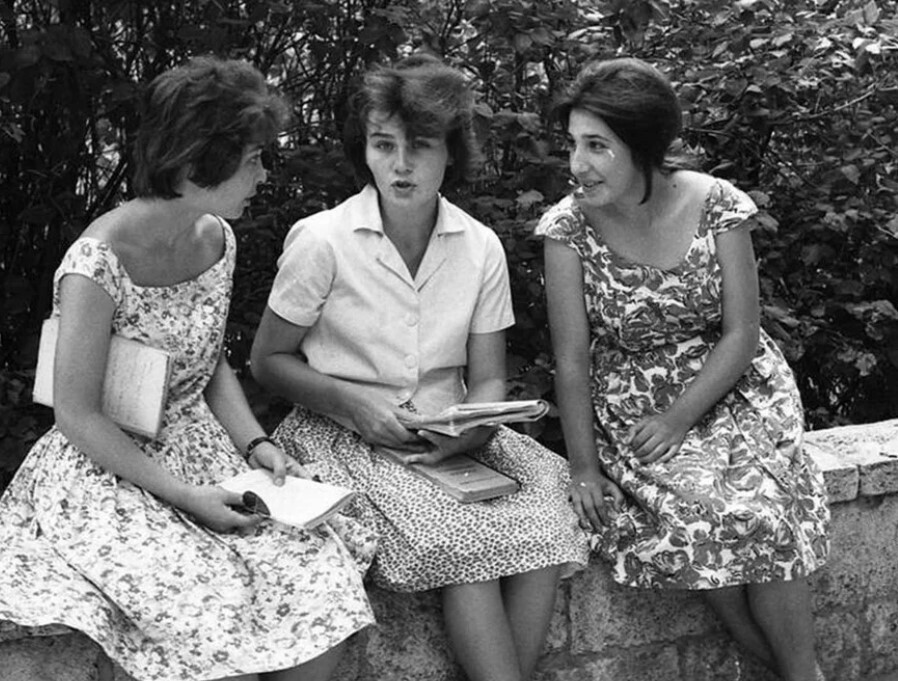
    A woman of any nationality or ethnicity deserves deep respect, if for no other reason than the fact that she brings about the most important event on our sinful earth—she gives birth to a human being. She creates the future. For this alone, we men must carry women in our arms, appreciate them and protect them. I am not even mentioning all that a woman does. She feeds us from the very moment we come into this world and continues to care for us until the end of her days. She does not sleep at night and guards our sleep, our health, and our peace. She creates warmth and beauty in the home. A woman makes us knights, men. It is for women that we strive to become better, braver and more noble. We could speak at length about what a woman means for humanity, but there is simply not enough time. And this applies to all women of any nationality and any country.

    From Baku to Tiksi

    But now I want to speak about the Russian woman, and there is no nationalism or chauvinism in this. Because, first of all, I am an Ossetian and do not believe my mother was any worse than women of other nationalities. My wife is Georgian. I can only say that the life of both an Ossetian and a Georgian woman is neither easy nor simple. My wife went through fire, water and the copper pipes with me. I will stop at just one example from her life. In 1966, I was transferred from Baku to **Tiksi **for service. Tiksi is on the southern shore of the Arctic Ocean. We had three children, the youngest just three months old. She gathered them up and, without informing me, flew to Tiksi. Meanwhile, I was setting up my unit on combat duty—not in Thailand, but on Kotelny Island, somewhere near the 75th parallel, in the center of the Arctic Ocean. To be honest, not every Frenchwoman would have made such a decision. But by then, she had already become a Russian woman because she was married to an Ossetian but a Russian officer.

    Russian Woman

    I want to speak about the Russian woman because the fate of the Russian woman is the fate of the Russian people. The Russian people played a decisive role in the destinies of those nations historically connected with them. Many beautiful things have been written about the Russian woman. Personally, it was through reading Russian literature that I formed my impression of the Russian woman. It was Turgenev, Tolstoy, Goncharov, Leskov, and of course, Gorky, among others, who created the most beautiful image of the Russian woman in my mind.

    Service in Kurdamir Azerbaijan

    The thing is, I lived in Tbilisi until I was 20, and I rarely came into contact with Russians. But when I was a cadet at the Odessa Anti-Aircraft Artillery School, on leave from Tbilisi, I "stole" my wife (and to be fair, she was eager for me to do so) and brought her to Odessa, with no money, no apartment, nothing. It was then that we felt the real, genuine support from Russian women. My wife was going through a tough time. As a second-year cadet, I earned 7 rubles and 50 kopecks. We had to pay 10 rubles for coal, which we got from a friend. My wife didn't know Russian, had no profession, and we had to survive. Russian women helped her get a job at a sewing factory, became her friends, and supported her. I finished school and was sent to the Baku Anti-Aircraft Defense District—a cursed district, to be honest. We lost our son there. In Kurdamir, the heat in summer reached 50°C in the shade. There were mosquitoes, flies, and snakes in our Finnish houses. I don't know any English or German woman who would have endured such wild conditions, but the Russian woman stood by her husband, helping him endure these inhuman conditions while maintaining the combat readiness of the units. And again, Russian women helped my wife. In many ways, we were able to survive thanks to the officers' wives, and they were mostly Russian. They even organized amateur performances, which somehow made our lives more interesting and helped us survive. So, our life together, my wife and I, was intertwined with Russian women in military towns and garrisons, where we interacted as wives of officers. And being an officer's wife, my friends, is not for the faint of heart. Russian women followed their husbands to the ends of the earth—remember the wives of the Decembrists. When I saw how the wives of officers lived in Tiksi, I thought that, perhaps, the wives of the Decembrists had it a little easier.

    Harsh arctic days

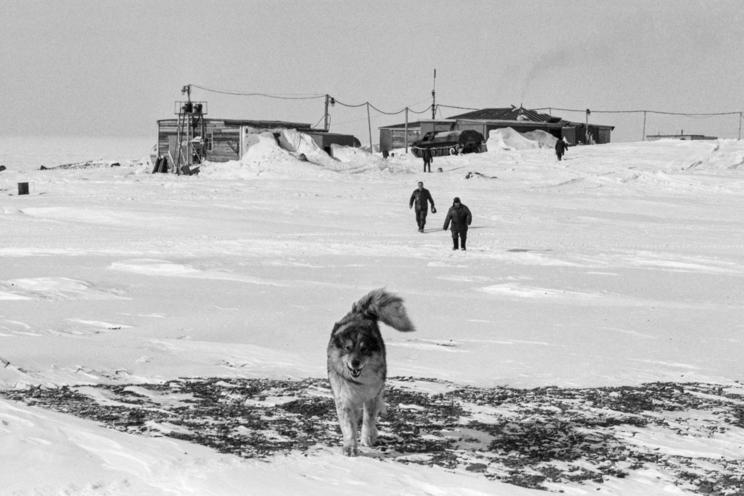
    I arrived in Tiksi in July 1966. I saw from the airplane window the Laptev Sea, with huge chunks of ice floating. The air temperature was close to zero. I introduced myself to the authorities. They gave me a small room of 8 square meters, for two people. It was a barrack, with a corridor in the middle. The barrack was wooden. On both sides of the corridor, there were small rooms of 8 square meters each. Naturally, there were no facilities, neither in winter (-40°C, wind speeds of 40 meters per second, polar night), nor in summer. I will not even describe the conditions. The general kitchen had 20 stoves, and 20 women stood shoulder to shoulder around them, cooking meals for the brave defenders of the country's air borders. And all this while American bombers with nuclear payloads were flying overhead! The water was brought in, and by "brought in," I mean that a truck brought chunks of ice cut from a freshwater lake. The women put these pieces in barrels and that was our water. Tell me, what kind of woman would agree to live in these hellish conditions? And I haven't even mentioned the polar night from November to April, the blizzards, the fact that summer lasted only two months, with temperatures between -2°C and +2°C—the rest of the time was winter! Tiksi was still a tropical paradise compared to what I saw on the islands of Kegelyakh and Kotelny. These islands are part of the Severnaya Zemlya archipelago. I had to stay on these islands for months at a time. We had radio-technical units there, with about 7 or 8 officers and around 50 soldiers. The island was surrounded by the Arctic Ocean. There were soldiers' barracks, officers' barracks, and combat equipment. In winter, you couldn't go outside and return due to the blizzards and polar night. In summer, the mud stuck to your shoes, and walking was extremely difficult. I won’t even mention the facilities. The officers' wives walked in the dimly lit corridor, both in winter and summer, with children in tow. I had to eat "delicacies" like dried potatoes, dried onions, dried carrots, and the like. No radio, no television, nothing. What would have become of an officer if his loving, tender, and caring wife had not been by his side? One can only imagine. But they were there. They could have chosen not to be there. No one would have blamed them for not going. But they were there. This is the Russian woman.

    Taiga

    I met Russian women in Krasnoyarsk when I was transferred from the Polar Regions to the position of head of the political department of a regiment. The regiment had 9 battalions, and the battalions were in the deep Taiga. The officers' houses were wooden. The temperature reached -55°C. The water was brought in. The nearest schools and shops were 40–50 km away. There was no work for the officers' wives. I went to the battalion, gathered the women, and asked what their problems were. One officer's wife said she was a doctor, but there was no work for her in the battalion. Another one said she was a teacher, but there was no work for her either. And so it was in every battalion. They could have gone to the city, to their fathers or mothers, and found work, but no—they stayed in the Taiga, next to their husbands, supporting them with their presence so that their husbands could keep the skies clear over our Motherland. How can one not admire the Russian woman?

    My daughter is also a Soviet woman

    And I don't have to look far. My own daughter spent almost 4 years on the Kuril Islands, on Shikotan and Utorup, islands that the Japanese want to take, living with her husband, an Air Defense officer. The small children were with us and her husband's parents. My daughter followed the example of her Russified mother. Time passed, and I was transferred to Klin, to the Anti-Missile Defense. In 1973, I was moved to Naro-Fominsk as the head of the political department of a separate missile defense center, and the conditions there were very different. The living conditions for an Air Defense officer at the time were simply wonderful—closed city, a cultural center, a school, a kindergarten, stores of all kinds, post office—everything one needs for a normal life. But here, other difficulties arose. The town was 20 km from the district center, and there were about 2,000 women, officers' wives, and warrant officers, but the work in the military town was not sufficient for all the women, which created some tension. Of course, this was felt, and we had to do something about it. In the unit, there were several women's councils. We got together and decided to organize an amateur performance, and since we had a music school with music teachers, we were able to organize a great amateur performance. I will say without boasting that we always took prize places at competitions. And this amateur performance eased the tension to some extent. People were busy with something. Even now, I have in front of my eyes my wonderful, beautiful, graceful, and full of inner nobility and self-respect Russian women.

    Soviet women have not disappeared anywhere

    In conclusion, I would like to say that it is a mistake for men to claim Victory Day as their own. German General Guderian writes in his memoirs that if the Russians had not had Russian women, they would not have won. Although he was a fascist, I agree with him in this case. Unfortunately, what I noticed is that the Russian woman often does not receive the attention she deserves. A woman can forgive everything, but she will never forgive a lack of attention. Therefore, dear men, we must be attentive to women not only on March 8th but always. They deserve it.

    Soviet Colonel. Shamil Chigoev


    Unshakable Wealth: The Power of Reading

    A young person reading a book in a modest room with minimal furnishings

    Introduction

    Wealth is often measured in terms of material possessions or financial assets, but there is a type of wealth that cannot be taken away: the wealth of knowledge. This wealth is accumulated through reading books, enriching the mind, and expanding one's horizons. Unlike material wealth, the knowledge gained from books grows over time and shapes one's character and outlook on life.

    The Journey to Knowledge

    From a young age, I began to understand the immense value of reading. Growing up in a modest environment, without the luxury of a personal library or the ability to purchase books, I still found ways to immerse myself in literature. Our family lived in a small, rented house, a single room shared by six people. Privacy was a luxury we couldn't afford, so I often hid outdoors to read in the fading daylight, escaping into the worlds within the pages. Initially, I read indiscriminately, but as I grew older, I became more selective, delving into works that offered deeper insights and understanding.

    Literature as a Mentor

    Books became my mentors, offering wisdom and guidance. The works of Russian classical literature, particularly from the 19th century, played a significant role in my development. Ivan Turgenev's "First Love" and Fyodor Dostoevsky's "Crime and Punishment" were not just stories but windows into the human soul, teaching me about the complexities of life, the struggles between good and evil, and the depth of human emotion. These books were not mere entertainment; they were experiences that shaped my thinking and moral compass.

    An old bookshelf filled with classic literature books, some in Russian and Georgian

    The Importance of Native Literature

    While foreign literature is invaluable for broadening one's perspective, it's crucial to have a solid foundation in one's native literature. Russian literature, with its unparalleled depth and richness, stands out globally. Knowing and appreciating the literary heritage of one's own country fosters a deeper connection to one's roots and culture. The tales of Tolstoy and the humor of Chekhov taught me about my own people, our traditions, and our values. They instilled in me a sense of pride and belonging, a feeling of being part of a grand, ongoing narrative.

    Reading as a Lifelong Companion

    As we age, the spiritual richness that books provide becomes even more important. In solitude, the characters and stories from books become companions, offering endless opportunities for reflection and intellectual engagement. A broad literary horizon ensures that one is never alone in thought, always having something profound to contemplate. In my later years, I find solace in the words of Dickens and Hugo, their stories reminding me of the endless capacity for human resilience and compassion.

    An elderly person sitting alone, deeply engaged in reading a book

    The Battle Against Cultural Degradation

    In today's world, there's a growing concern about the cultural degradation brought on by mindless entertainment and the overuse of foreign terminologies. Maintaining the purity of one's language is essential as language is a core component of cultural identity. The infiltration of unnecessary foreign words dilutes this purity and, by extension, the culture itself. Our language is a living testament to our history and values. It pains me to see it corrupted by needless jargon when there are perfectly good native terms. Language, much like literature, should be preserved and cherished.

    A Personal Note

    As a former comrade, born in 1930 and a participant in the Caribbean Crisis, I have witnessed firsthand the power of knowledge and culture in shaping our lives. The experiences from my military service during such a critical period in history underscored the importance of being well-informed and culturally grounded. These experiences, coupled with my love for reading, have fortified my belief that true wealth lies in knowledge and understanding.

    Conclusion

    In conclusion, the wealth of knowledge gained from reading is unshakable. It shapes individuals, enhances understanding, and enriches life in ways that material wealth cannot. Embracing both native and foreign literature, while preserving the integrity of one's language and culture, ensures a well-rounded and fulfilling intellectual life. Books are more than just pages and ink; they are a gateway to endless possibilities, a bridge to different worlds and eras, and a repository of human wisdom.

    Call to Action

    To cultivate this unshakable wealth, I encourage everyone to read more and explore the vast landscapes of literature. Start with the classics and expand your reading horizon. Join a book club, share your favorite reads with friends, and support local libraries. Together, let's foster a culture of lifelong learning and intellectual enrichment. In doing so, we not only enrich our own lives but also contribute to a more enlightened and understanding society. Let’s treasure the stories that connect us, the wisdom that guides us, and the knowledge that empowers us.

    Question: Please share the last book that impressed you.


    I have already mentioned that on weekends, we, the officers of the regiment’s management, would go to the beach for relaxation. The Cubans were also there relaxing. Relaxation is relaxation, and we drank beer, and perhaps someone left empty beer bottles behind. Whether it was our officers or the Cubans who left them, no one really checked.

    At the next party meeting, the agenda was quite serious: “The tasks of the regiment’s communists in providing international assistance to Cuban comrades in mastering combat technology.” According to the agenda, the discussion was supposed to focus on how the training of the Cubans on our combat equipment was going in various party organizations. The speaker was the head of the regiment’s political department, Communist Gevorkyan. Given the importance of the agenda, the head of the division’s political department, Colonel Danilevich G.R., was also present. The agenda was supposed to address how we train the Cubans, where it’s going well, where it’s not, and what needs to be done to improve the training process. But the issue had to be understood. Instead, the speaker, after general phrases about the importance of fulfilling the international task of training the Cubans, launched a devastating critique of our officers. The main point of this so-called report was that the Cubans are more cultured and conscious than our officers because they do not leave beer bottles on the beach. Of course, there is no dispute that one should not leave bottles on the beach; it’s bad. But it’s hardly at the level of beer bottles that the culture of a people is determined.

    When my superior finished his speech, I asked to speak. I started by saying that the head of the political department was obliged to coordinate his report with us, the workers of the political department, since his report was made on behalf of the political department. He did not coordinate the report with us, the workers of the political department, and therefore he was only expressing his own understanding of the situation. As a communist, I cannot agree that our Soviet person is less cultured, less educated than a Cuban. We, members of the most advanced party in the world, who came to Cuba to fulfill our international duty, we, representatives of the world’s first socialist state, are some kind of barbarians compared to the Cubans, who only yesterday were freed from American imperialism. My speech was like thunder out of a clear sky. The comrade speaker had nothing to say in response.

    After the meeting, the head of the division’s political department, along with my superior, came to my tent. I think that Colonel Danilevich, understanding my state, did not summon me to his office but came to me. I fully understood that to a certain extent, I had been hot-headed. But people were already wound up by the uncertainty of our situation, had been away from their families for a long time, and did not know when they would return to their families, having just experienced one of the sharpest crises in human history. And at the same time, they were being criticized for leaving beer bottles on the beach; it’s not good, but that was not the main issue according to the party meeting’s agenda. The head of the division’s political department agreed with some points of my speech and expressed the thought that I should have said all this to my superior one-on-one, not at the meeting. From this, one could guess how the chief began to treat me, but honestly, I was not afraid of that.

    Several years later, he did get his revenge. After returning from Cuba, I ended up in Baku in a regiment that was directly subordinate to the district. And this grey mediocrity, also after Cuba, ended up in the Baku Air Defense District as an inspector of the political administration of the district. So, he came to check my work in the summer of 1966. The outcome was known in advance. He couldn’t really bite me, as my superiors saw my work. Unfortunately, there were too many like Gevorkyan in political worker positions. But that’s a topic for another discussion.

    In the summer of 1963, officers who had certain reasons could submit a report requesting to return to the Union. On the one hand, I didn’t want to leave Cuba. Here I started my service as a regimental propagandist, which was very interesting to me. My work here was in high demand. Here I made friends with many officers. Here I had many interesting encounters. I felt that here we were at the peak of contemporary historical events. Besides, I served near the city of Santiago. The city of Santiago is as significant to Cuba as Leningrad, now St. Petersburg, is to us. On July 26, 1953, it was here in Santiago de Cuba, territorio libre de América, that Fidel Castro and his associates began their uprising against the Batista regime. Fidel, with his squad, attacked the Moncada barracks early in the morning on July 26. He wanted the soldiers quartered in the Moncada barracks to join the rebels, but it didn’t happen. Fidel and his supporters fled to the Sierra Maestra mountains. Fidel was arrested and sent to the Isle of Pines, which is somewhat similar to our Siberia. In 1955, under public pressure, Batista was forced to release Fidel and his associates. Fidel and his comrades emigrated to Mexico. There in Mexico, Fidel organized military training with the help of a Mexican general. It was also there that he met a 25-year-old Argentine, Che Guevara, who became his close friend and associate. In 1957, the entire small band of rebels, numbering 82 people, boarded the leisure yacht “Granma,” which could normally accommodate 12 people, and headed for the shores of Cuba. The yacht “Granma” was heading for the shores of the “Oriente” province. On the day of the rebels’ landing in the city of Santiago, one of Fidel Castro’s associates, Frank País, was supposed to organize a demonstration to distract the attention of the coast guard and ensure the safe landing of Fidel’s squad. But due to a storm at sea and the fact that the overloaded yacht could not maneuver freely, the yacht could not arrive at the agreed time. The yacht arrived on the shores of Cuba several days after the agreed time. Frank País’s demonstration was suppressed. The coast guard prepared to meet the yacht “Granma.” And of the 82 members of Fidel’s squad, only 12 people broke through to the Sierra Maestra mountains. The 12 barbudos. The 12 bearded ones. It is said that Fidel vowed not to shave his beard until complete victory. So he remained bearded.

    The guerrilla war against the Batista regime began in the Sierra Maestra mountains in 1957. On January 1, 1959, Fidel’s troops entered Havana. Batista fled. Initially, America did not pay attention to another “scuffle” in Latin America. There are about ten such “scuffles” in Latin America every year. But when Fidel began to nationalize large capital, including American capital, they started to stir. At first, they wanted to buy Fidel, as they now buy some leaders from the CIS countries. Fidel did not sell out. Then America imposed an economic blockade on Cuba, and only timely assistance from the Soviet Union saved the Cuban revolution.

    While carrying out the revolution, Fidel was far from Marxism-Leninism. I have already said that the spiritual leader for the progressive youth of Cuba and, of course, for Fidel, was and remains José Martí. Fidel, like all revolutionary idealists, wanted to do good for everyone immediately, but unfortunately, these “good intentions” were mercilessly shattered by harsh reality. Unfortunately, I too have often heard from many “well-wishers” how they love the people and want good for the people. But when they come to power, their concept of “the people” narrows down to their relatives, friends, and necessary people. For this “people,” life indeed becomes good. As for the rest, they are just “ordinary people,” cattle. What to think about them? So, 20-30 million “ordinary people” will die. So what? There are many of them, aren’t there? But the rest, the necessary people, will live well. Even then, in 1962/63, a lot of good was planned for the ordinary people. Something was indeed done, but no fundamental change for the better occurred in the life of the ordinary Cuban people. America also bears some blame for the difficult situation of the Cuban people, as the economic blockade declared against Cuba in 1962 has not been lifted to this day. But no matter how hard America tries, it cannot bring the heroic Cuban people to their knees. Yes, I did not want to leave Cuba, but my wife, children, and studies outweighed, and I decided to return to the Union. Although somewhere, even now, I regret such a decision. Nevertheless, I am proud that in the most difficult days for the wonderful Cuban people, I was with them and was ready to fight for the freedom and independence of Cuba.

    “Patria o muerte. Venceremos.” Homeland or death. We will win.

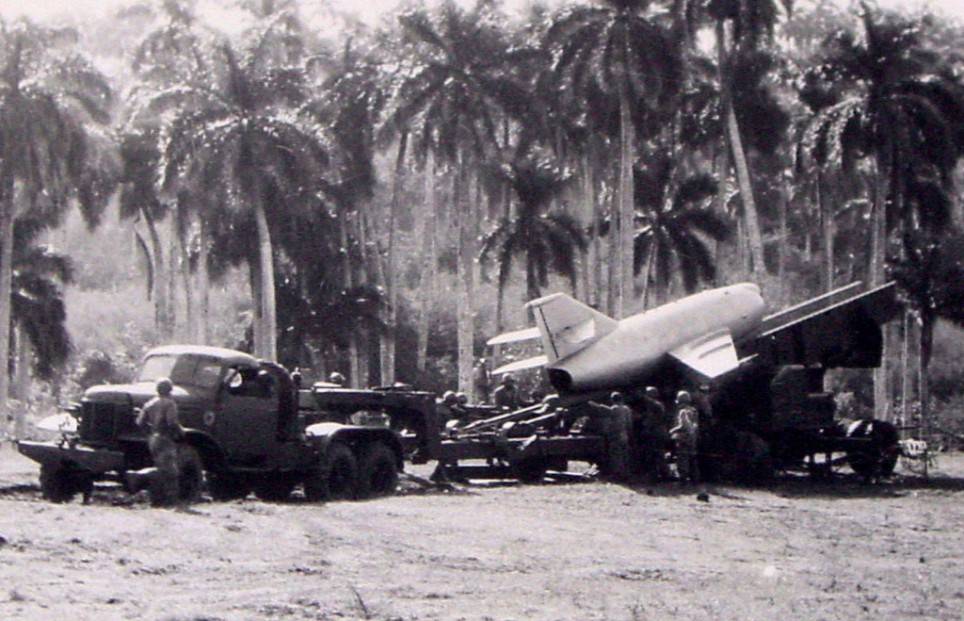
    The “Caribbean Crisis” will go down in history as the most dangerous line to which humanity has approached. We were on the brink of the start of a thermonuclear war. The next war would have begun with a club. But no one was held responsible for the fact that, thanks to the adventurous politics of some leaders, the whole world was put on the brink of destruction.

    On September 20, 1963, early in the morning, I left the regiment’s location in a cargo truck heading for Havana. A journey across the whole of Cuba lay ahead. I was saying goodbye to this beautiful island. On the second day, all of us leaving the island of freedom boarded the rather comfortable ship “Georgia.” I had no luggage with me, just my military uniform and a few seashells to give to loved ones. We sailed through the northern part of the Atlantic. Near the Azores, we encountered a storm. For the first time in my life, I saw how a huge ocean wave crashed onto the ship up to the very top deck. I showed signs of “seasickness.” A slight nausea. Indeed, many lay in their cabins unable to make it to the dining room. Ordinary mustard helped. It relieved the nausea. On October 8, the ship “Georgia” arrived in Leningrad. We, the military, changed into our uniforms. In Leningrad, we were detained for a few days while paperwork was processed and money was issued. I took this opportunity to visit the Piskaryovskoye Cemetery. And it just so happened that when I entered the cemetery, the local radio station was broadcasting the overture of my favorite opera by Z. Paliashvili, “Daisi,” the evening glow. The tender, sad sound of the clarinet and the thunderous rolls of the orchestra. I myself had lived through the war, and for me, those years were too heavy to say the least. But what I saw and heard at the Piskaryovskoye Cemetery shook me to the core of my soul. Neither Hitler nor Stalin can be forgiven for this.

    Having received the money and documents, I left through Moscow to Kapustin Yar, where my wife and children had been waiting for me for over a year.


    As the final chapter of this journey comes to a close, I hope it has resonated with you as much as it has with me. May the echoes of this tale inspire thoughts and conversations long after the last word is read. Thank you for joining me on this adventure.

    submitted 2 years ago* (last edited 2 years ago) by to c/history@lemmy.world
     

    The Cuban army, like all other state bodies, was in a nascent state. Cuban soldiers began to arrive at our divisions. Of course, we, the officers of the divisions and the regiment, did not really believe that Cuban soldiers, with their level of general education, could master our combat equipment, but an order is an order, and we began to train them.

    Indeed, the Cuban army hardly corresponded to our understanding of an army. There were not enough barracks for all personnel, and 30% of the army slept in hammocks. I once visited the barracks of the Cubans. There was no military order. The place was dirty, the beds were of different calibers, the bedding was poor and not made up, the bedside tables had barn locks, in short, it was not a barracks but a flophouse for the homeless. The soldiers who came to us for training had nothing to sleep on, nothing to eat, no personal hygiene items. All these issues had to be resolved by our division commanders, and soon they were howling, especially about feeding.

    According to the norms of sustenance in the Cuban army, soldiers were fed twice a day, in the morning and in the evening. The food was mainly vegetables and fruits. Alternatively, with Soviet money. For comparison, the lowest salary… Of course, such a level of soldiers’ nutrition was not normal for us, and practically we had to feed them. I don’t even know how the regiment’s food service managed to cope with such a task. The Cubans had a rule that a conscript soldier had to be released on leave for one day every four days. Cubans believe that a man, as a rule, should satisfy his male needs every three days. Of course, we agreed with this 100%, but alas, we did not have such opportunities. Our wives were 10,000 km away, and we were not allowed to visit prostitutes for fear of provocation. However, some still managed to “have a fling.” Especially since such an opportunity was widely available. Opposite the seaport, there was an entire block where women of the oldest profession lived, about 2,000 individuals. All this “pleasure” cost 3 pesos. Enjoy if you want. True, I was also encouraged to make such a “feat,” but my “moral face,” as the secretary of the primary party organization of the regiment’s management, did not allow me to take such a step. And, of course, the possibility of various unpleasant consequences.

    As long as the situation was extremely tense, everything was in order in terms of military discipline among the personnel. With the easing of the crisis situation between the USSR and the USA, issues of military discipline among the personnel, and especially among the officer corps, came to the fore. To some extent, the officer corps could be understood. Separation from wives, children, prolonged stay in an unfamiliar and tense state, lack of a specific combat mission, and an unclear future, a constant sense of danger that counterrevolutionaries could attack us at any time, all this created a not very healthy moral and psychological climate. What does our person do when she has no specific task but has money? That’s right, she drinks. And there was money. Junior officers received 100 pesos, senior officers 150 pesos. And there was plenty of alcohol in Cuba, including medical alcohol, a liter for 2 pesos. Comments are superfluous.

    In our part, I suppose in all parts located in Cuba, an interesting situation has developed. Disciplinary punishment by commanders lost its force. There is no guardhouse, you can’t send an officer to the union, what to do with the offending officer? How to maintain discipline among the officers? And they began to drink, wander around the hot spots of Santiago! And here the punishing hand of the primary party organization comes to the forefront. It must be said that in these conditions, they became the support for the commanders in maintaining discipline among the officer corps. An officer feared party discipline more than anything, especially if it was recorded in his personal file. Such a reprimand was a serious obstacle to further promotion or receiving the next military rank. And I, as the secretary of the party organization, often had to invite certain comrades who respected “Bacardi” \Cuban rum\ too much, and have heart-to-heart conversations with them. Understanding the nervous state we were all in, I tried not to resort to disciplinary actions. But there were various incidents. Once, late at night, the duty officer called me to the command post. Major Sin’ko, completely drunk, with a pistol in his hand, was yelling and screaming that he wanted to shoot the regiment commander. The duty officer and his assistant tried to persuade him to put down the pistol and calm down. He yelled even louder. The main thing was that the pistol in his hand was loaded. In Cuba, we all, the officers, carried personal weapons with us. How to take away the pistol? It was dangerous to approach him. The duty officer did not report to the head of the political department because it would have ended badly for the major. He asked me, as the secretary of the party organization, to influence the communist Sin’ko. I didn’t know what to do. He refused to put down the pistol and continued to scream that he would shoot the regiment commander. Then I decided to go straight to him and take the weapon away. Of course, I was afraid, but I assumed he wouldn’t dare shoot me. I pushed his hand with the pistol aside and took the weapon away. Only after that did I start to shake nervously all over my body and couldn’t calm down for some time. We did not report this to the authorities because the head of the political department would have ordered me to call him to the party bureau and expel him from the party. And that would have threatened the officer with early discharge and no pension.

    The reasons for such a nervous breakdown were understandable. People were thrown 10,000 km away from their home, and no one could really say when this nerve-wracking ordeal would end. And the climatic conditions in Cuba are sharply different from those in Russia. In Cuba, there are only two seasons, winter and summer. Winter differs from summer in that there is no rain in winter, while there is rain in summer. Winter is just as hot as summer. Here I saw what a tropical rain is. It’s indescribable. Rain clouds almost hang over your head. And then it’s not just rain. It’s a river pouring from the heavens. And the thunder! It’s like hundreds of cannons firing simultaneously. The climate is very humid for us, residents of the middle, continental belt, and it was somewhat difficult to endure such a climate.

    To improve the moral and psychological state, they began to send us distinguished people. Yuri Vlasov, the world champion in weightlifting in the heavyweight category, cosmonaut Popovich, Marshal of the Soviet Union Nikolai Ivanovich Krylov, and others came to us. But the most memorable for me was the visit to our regiment by the artists of the Kiev Grand Theater, including Yuri Gulyaev, Larisa Rudenko, Ogneva, a trio of bandura players, and several other singers. My memory has not preserved… The commander of the unit turned to us. The commander flew with them from Havana. They performed a small concert for us, rested a bit, and then went to Santiago to give a concert. They gave the concert in the city’s largest cinema, “Oriente.” Naturally, they invited us. I could not miss such an opportunity to listen to the singers of the Kiev Grand Theater and went to the concert. The hall was packed to capacity. Cubans, being at any performance or in the cinema, smoke. But here no one smoked. They were asked, and they did not smoke. The success of our singers and artists was dizzying. The hall gave a standing ovation when Gulyaev sang “Preserve Peace” in Spanish. After the concert, we took the artists to our unit and organized a friendly dinner, of course with “Bacardi.” I really liked Larisa Rudenko, the trio of bandura players, and I was simply crazy about Gulyaev. He was not only an incomparable singer but also a very simple, soulful, and charming person. I was very sorry to learn about his death. We lost a wonderful singer and a remarkable person.

    Life went on. I traveled to Havana several times on business. In my free time, I walked the streets of Havana. It’s a beautiful city with incomparable architecture. Some buildings are so captivating that it’s impossible to look away. I visited the zoo and was struck by the stillness of the crocodiles. They lay on the shore of the lake without any movement. I was in the center of Havana, where there is a large square where Fidel Castro usually addressed the Cubans. My stay in Havana coincided with a party activity for the group of forces in Cuba. I also participated in this activity. The Chief of the Main Political Directorate of the Soviet Army and Navy, General A.A. Yepyishev, gave a report. He spoke about the successes of the socialist camp and how the Party and Government care for the Armed Forces in general and particularly about us in Cuba. The speakers sharply criticized the supply organizations of the Soviet Army. It got to the point where there was a shortage of toothbrushes, toothpaste, toilet soap, and more. It may seem trivial, but in the end, our daily life consists of these little things.

    While on a business trip in Havana, I met my fellow countryman from South Ossetia, Akhmet Gassiev. Returning from Havana to Santiago, Akhmet invited me and my comrades to his division. He was the division commander. He treated us with Ossetian generosity. I don’t know where he found it in Cuba, but he slaughtered a kid goat for us. Of course, we had a lot to talk about. Akhmet showed me some very interesting photographs where he is pictured with Gagarin near Akhmet’s house in the Saratov region. In another photo, Gagarin is holding Akhmet’s little son. It turns out Gagarin landed in the area where Akhmet’s division was located. No one was there to meet him. Apparently, they did not expect him to land there. After all, until Gagarin’s successful landing, it was not reported anywhere that our man was flying in space. Gagarin emerged from his spacecraft and headed to the nearest houses. And there lived the Gassiev family. Needless to say, the Gassiev family welcomed Gagarin with great warmth. By the way, Gagarin was without a cap, and Akhmet put his own cap on him. Thus, the first person who met the first man to have been in space was the Ossetian Akhmet. Later, a photograph of Yuri Gagarin with Akhmet’s son in his arms appeared in the magazine “Ogonyok.” Akhmet told a rather amusing story about this event. The story of Gagarin’s meeting with Gassiev soon became known throughout South Ossetia. South Ossetian newspapers printed a photograph of Gagarin with Gassiev. Gassiev came to Tskhinvali on leave. Of course, there was a tumultuous meeting with relatives, half of Tskhinvali being his relatives. He felt that there was some particularly solemn attitude towards him and did not understand why. The reason was that the newspapers had printed his photograph with Gagarin. Hence the conclusion, Akhmet was also an astronaut, but it could not be talked about because it was a state secret. And there was a special attitude towards state secrets in Soviet times. That is, everyone knows, but it cannot be talked about. Everyone in Ossetia knows that Akhmet is an astronaut, but it cannot be talked about. The only one who didn’t know he was an astronaut was Gassiev himself. As the leave was coming to an end, Akhmet bought a plane ticket and was supposed to fly to his duty station in Saratov the next day. In the evening, they sat drinking tea with relatives, a whole bunch of them. Akhmet, in all his naivety, says that he is flying out tomorrow. But he does not understand the reaction of the relatives to his desire to “fly out tomorrow.” He doesn’t know that he is an astronaut. Everyone is shocked. One of the godmothers dares to ask in a plaintive voice: “Akhmet ma atyeh ma atyeh.” “Akhmet, don’t fly away, don’t fly away.” Akhmet is puzzled as to why he should not fly away and asks in surprise how he should not fly away and says that he has already taken a ticket. The relatives understood that he wanted to joke. They knew that astronauts fly without tickets. And so, one of the aunts said: “Akhmet, don’t joke.” Everyone understood it as Akhmet flying off to space, but he was hiding it. The truth was, Akhmet himself didn’t know that. When Akhmet told this story, I was dying of laughter, as they say. Such a scene is familiar to me. Ossetians are very proud of their fellow countrymen who defend the homeland.

    Probably every person, having reached a certain milestone in life and reflecting on the past, identifies the most significant events. Such a significant event in my life was the “Caribbean Crisis.” The mere fact that I participated in the defense of the Cuban people against American aggression gives me the right to say that I have not lived in vain. I must say that Cuba has left an indelible impression in my memory. And not only because of its amazingly beautiful nature and the wonderful people of the island of freedom. But also because working in extreme conditions shows who a person really is. I want to say that our people are wonderful. Being in a difficult situation in Cuba, it somehow became clearer to me why we defeated Germany. To accomplish the combat mission, our soldiers and officers are ready to overcome any difficulties. There, I befriended many commanders and political workers. But there were also those with whom my views on the behavior of our officers in a rather complex situation diametrically opposed theirs. It was because of such differences in views that I had a conflict with my immediate superior, Gevorkyan.

    To be continued…


    We needed to distract people from drinking. Every evening, we organized movie screenings. But we had already watched all the films we brought from the Union, and the question arose: where could we find new films? I solved this problem. The fact is that our ships constantly arrived at the port of Santiago. And on the ships, as always, there was a large number of films for the crew. So, I brought them our films that we had already watched and took their films in exchange. Of course, during these exchanges, I took a bottle of local Bacardi rum to facilitate more successful negotiations.

    For the November 7th holiday, I asked the ship’s captain to send a congratulatory telegram to my wife, as if I were a member of the ship’s crew, where I informed her of our location using a prearranged code.

    Life gradually returned to normal. From mid-December, if my memory serves me right, regular flights began specifically for our troop group. We were allowed to write letters home, with the return address being Moscow-400. Periodical press began to arrive regularly. This greatly facilitated my work. My presentations to the officers, soldiers, and sergeants became more substantive and interesting because I would review all the incoming press before speaking.

    In early December, we propagandists were gathered in Havana for a seminar. Employees of the Main Directorate of the Soviet Army and Navy, journalists, and several other leaders spoke to us. I remember Genrikh Borovik speaking. He had quite a sharp tongue, and we listened with interest. Most of all, I remember the speech by Colonel Cherepanov from Glavpur. He told us how they worried about us in Glavpur. Everyone was concerned whether we would reach our destination and they stayed glued to the receivers day and night to know how things were going. Colonel Cherepanov informed us that the General Staff was not sure that we would all make it to Cuba. The General Staff had planned that about 25% of the personnel sent to Cuba might end up at the bottom of the Atlantic Ocean. The fact that we all reached our destination pleased Colonel Cherepanov greatly. At that time, I didn’t attach much importance to this “revelation” from Cherepanov. On the contrary, I even mentally praised the General Staff for so well considering the possible losses. Only much later did it dawn on me that the General Staff had planned to feed me to the sharks in the Atlantic Ocean. I remembered the ominous instructions from Marshal Kazakov to the ship’s captain: “in case of a threat of capture by the enemy, do not surrender the cargo.” And the cargo was us, 480 soldiers, sergeants, and officers. Open the kingstons, the crew to the lifeboats, and us, the cargo, to the bottom of the ocean. That’s how boldly, without any responsibility for the lives of tens of thousands of people, the General Staff planned their death. Just like in some collective farm, they planned to write off a certain amount of livestock. Say, for sale. But what’s there to be surprised about?

    When did Russia, the Soviet Union, ever care about the lives of soldiers, sergeants, officers? Let’s look at history. Why did the Russian emperors send millions of Russian soldiers to protect the interests of Austria, Prussia, and other countries? How many millions of Russian soldiers fell in the Balkans, the Caucasus, and other countries? And how many millions of people died in both the first and second world wars, thanks to the stupidity and incompetence of our marshals and generals? It’s terrifying to recall the Great Patriotic War, especially the first period of the war. A vivid indicator of the incompetence and stupidity of our “commanders” is Chechnya. When people talk about the mass heroism shown by our people, I always have a question: Whose mass stupidity were they forced to show mass heroism because of? Unfortunately, it is not customary for us to answer such a question. But since we remained alive, let’s continue the story about Cuba. The fact that I served as a propagandist in the political department of the regiment gave me the opportunity to study what Cuba was like at the time of our stay there. I read all the literature about Cuba that was available to me.

    The history of Cuba is very interesting. The Cuban people fought tenaciously against slavery. Cuba was the first state in Latin America where slavery was abolished. I read a lot about José Martí, who is a national hero for Cubans. In front of every school in Cuba, there is a monument to José Martí. In the center of Havana, where rallies are held, there is also a huge monument to José Martí. It’s somewhat similar to how we used to erect monuments to Lenin. I also read a lot about the revolutionary activities of Fidel Castro. There is a book called “The Green Lizard.” Cuba indeed resembles a green lizard. The book fascinatingly tells how on July 26, 1953, Fidel Castro and his friends attacked the Moncada Barracks in Santiago de Cuba with the aim of inciting an uprising against the regime of Batista, the then dictator of Cuba. The attempt failed. Soon after, Fidel was arrested and exiled to the Isle of Pines. Under public pressure, he was released two years later and moved to Mexico for more thorough preparation to fight against Batista’s regime. On January 1, 1959, the revolution led by Fidel Castro was victorious.

    While in Cuba, I witnessed many interesting events that occurred in the political life of this wonderful island, but unfortunately, I turned to this event too late when the fate of all humanity hung by a thread, when we were too close to the edge of the abyss. There was a desire to keep a diary. Now, a diary of those days would have been of invaluable help to me. But I knew very well the political system I lived in. My records were secretly combed through me repeatedly. Of course, I was a propagandist, and the corresponding authorities closely monitored what I was propagating to the personnel. Much has been forgotten, but some things are still remembered.

    So, what was Cuba like by the year 1962? Everything I will write about Cuba will be in relation to the years 1962/63. Cuba is an island state. The length of Cuba is 1100 km. The width at the widest point is 120 km, and at the narrowest, it is 30 km. The population, when we were there, was about 7 million people, 30% of whom were black. The main activity was harvesting sugarcane and producing sugar. Cuba exports sugar, nickel, tobacco, and citrus fruits. In terms of sugar exports, Cuba holds a leading position in the world market. Cuba can supply up to 7 million tons of sugar to the world market when the demand for sugar is 16-20 million tons. In terms of nickel reserves, Cuba ranks second in the world after Canada. Cuba does not have a sufficient amount of energy resources, so it is very dependent on the import of petroleum products. Cuba’s annual need is 4 million tons of oil. During the period of our stay there, the entire life of Cubans depended on the availability of petroleum products. Just 15 days without importing oil, and life in Cuba would come to a standstill. By the way, this is exactly what America was counting on by declaring an economic blockade against Cuba. They believed that Cuba, without petroleum products, would kneel before America, but here the Soviet Union came to Cuba’s aid, and Cuba began to regularly receive the energy resources it needed.

    The prolonged dominance of America in Cuba had very serious negative consequences for the social, economic, and cultural position of the country. The people were poorly educated. We saw this at the general education level of preparation of the middle-level commanders of the Cuban army. Without exaggeration, it can be said that their preparation barely corresponded to the preparation of our 3rd or 4th-grade students. Whenever we stopped somewhere, in a populated area, to drink water or buy fruits, a bunch of children immediately surrounded us, insistently asking for cigarettes, money, etc. Rich Americans had accustomed them to such a life. The people lived very poorly. In Santiago, I saw an entire district where houses were constructed from some boxes, barrels, dry palm branches, and people lived there, of course, without any conveniences. But there, in Santiago, was a district of indescribable beauty called Manduley.

    Houses of stunning beauty were nestled in greenery. In general, it was a paradise on earth where Americans lived before the revolution. Terrible poverty and magnificent wealth. I saw all this in Cuba in 1962. And now, to see all these “charms” of capitalism, there’s no need to go anywhere. We have all these “charms” here, and even in excess.

    I had to visit the divisions of the regiment throughout the eastern province of Cuba. Therefore, I had the opportunity to see how Cubans live. I saw houses made of palm branches. The houses had no furniture, and instead of dishes, there were tin cans. Children were in rags. I saw a 12-year-old boy, completely naked. Of course, Fidel wanted to quickly boost the country’s economy, improve people’s lives, but it’s one thing to want and another to achieve it. Before the revolution, a large part of the Cubans’ income came from tourism, but the revolution brought tourism to a halt. The Soviet Union provided significant assistance in boosting the country’s economy. With the help of the USSR, many facilities necessary for the country’s development were built, but unemployment remained. Therefore, although prostitution was officially banned, it continued to exist semi-legally. Many Cubans living in the eastern province worked at the Guantanamo naval base. For us, it was incomprehensible. How could one work at the naval base of a potential enemy? But unemployment is the whole answer. Nevertheless, Cubans are an optimistic and life-loving people. Like all of Latin America, they love festivals. There are national Cuban festivals and local ones. Every day, a festival takes place in some locality. I managed to attend the July 26th festival in Santiago de Cuba. The spectacle was indescribably beautiful. The festival usually starts around 8 pm. By this time in Cuba, it’s already dark and cool after the day’s heat. The festival lasts until 4-5 am. Everyone is out on the street. Large trucks with dropped sides parade down the city’s central street. The trucks are beautifully decorated. In the middle of the body, there are small stands on which Cuban beauties gracefully stand. Behind the trucks, a large group of women and men, like Indians, aborigines, followed. Orchestras play in all the squares and parks. Cuban and Latin American dance melodies are performed. They are very beautiful and rhythmic. Everywhere meat of pigs is roasted, pies are offered, cold beer is available. There are no drunk people. No conflict situations. No vulgarity, no hooliganism. I once compared how they celebrate holidays and how we do. There’s a colossal difference. Our main task during the holidays is to eat to the point of bursting, to drink until we lose consciousness. Otherwise, it’s not a holiday. Honestly, I envied the Cubans that they know how to celebrate their holidays so beautifully. For the whole year that I was in Cuba, I did not see a single drunk Cuban. Unfortunately, I cannot say the same about the representatives of “developed socialism.” Personally, A.I. Mikoyan had to deal with a heavy tragic case when our completely drunk captain in a car ran over and killed the pregnant wife of the chief of the Cuban army’s general staff. As they say, there’s nowhere further to jump. Our senior lieutenant bursts into a meeting of the officers of the Cuban division, of course drunk, insults the division commander, and yells, “We feed you, we protect you.” In Havana, in pharmacies, signs appeared in Russian saying “no alcohol for sale.” The fact is that in Cuba, alcohol is sold in pharmacies for medical purposes, and very cheaply. Not a single sane Cuban could imagine that alcohol could be drunk. Our valiant officers, seeing cheap alcohol, began to snatch alcohol from the pharmacy by the liter, not by the gram as was customary for Cubans. It’s very unpleasant to admit this, but in many ways, we did not set the best example for the Cubans.

    Finally, the period of uncertainty about our stay in Cuba ended for us. We were tasked with training the personnel of the Cuban army on our equipment and subsequently transferring our combat equipment to the Cuban army.

    To be continued…

    submitted 2 years ago* (last edited 2 years ago) by to c/history@lemmy.world
     

    At first, we didn’t understand what was happening, but then we saw. An American plane, having silently approached the ship, suddenly turned on its engines and spotlight. A tropical night, the sharpest military-political situation in the world, and overhead, an enemy military aircraft was circling. There was reason to be scared. About an hour and a half later, the plane left, and we went to sleep. The next day, September 20, had even more unpleasant surprises in store for us. Waking up in the morning, I looked out the porthole and saw land. I was pleased, thinking we had arrived at our destination. But the joy was short-lived. To the right of the ship, I saw a small vessel. I thought the Cubans were greeting us. But looking closer, my brothers, I saw guns aimed at our ship. Something was wrong. I went up to the captain’s bridge, where the command was all gathered. Around our “Physicist Vavilov,” there were 13 American warships. The captain contacted Moscow and reported the alarming situation. The Americans asked for our “port of registry” and “destination port.” The captain responded. The Americans suggested we turn right, as they were conducting firing exercises at sea targets directly on our course. Moscow did not allow us to change course. The Americans wanted to drive us into their naval base at Guantanamo. We kept moving forward. Our speed was 18 knots. Ahead on our course, some military vessel was approaching us. I don’t know their classification, maybe a destroyer. Our ship was 30,000 tons displacement. So, if it hadn’t turned, we would have simply crushed that little ship. I still see it as if it were real. The Americans escorted us for another two hours, then, wishing us a safe journey, fell behind.

    At 12 o’clock, the ship approached the bay of the port of Santiago and anchored in anticipation of permission to enter the port. The day was overcast. I was interestedly examining the entrance to the bay. On the right side of the bay, the Morro fortress rises. The base of the fortress starts almost at sea level. The bottom of the fortress is clad with huge concrete slabs. Somewhere around 50–60 meters from the bottom begins the masonry of large stones. The height of the fortress wall, in my opinion, is about 150 meters. The wall is topped with battlements. Later, when I served in Santiago, I specifically went on a tour of the Morro castle. Inside the castle was a well for drinking water. I looked at the firearms and cannons from the 18th century. For me, as a future historian, it was very interesting to see a medieval fortress in real life.

    But let’s return to the ship. We were allowed to enter the bay. The entrance to the bay is not very wide and is covered by mountain ranges on both sides. Our “Physicist Vavilov” slowly and majestically moved through this narrow and long bay towards the dock. I couldn’t take my eyes off the shores of the bay. The beauty was indescribable. Greenery, a variety of flowers, cozy, beautiful houses, a corner of paradise. The ship slowly approached the dock and began unloading. The port did not have its own cranes for unloading, so the ship was unloaded with its own cranes. The regiment’s headquarters, where we were supposed to arrive, was located northwest of the city of Santiago and three kilometers from the city. Here I would like to note the selflessness and readiness of our personnel to perform any task. In difficult climatic conditions, they worked around the clock without rest. A huge amount of cargo had to be delivered to the place, living conditions had to be arranged, and combat readiness had to be achieved in the shortest possible time. And all this was done by our soldiers and sergeants in a very short time. By the evening of September 20, I arrived at the location of the regiment’s headquarters. Overall, the place was not bad. Previously, it was a cattle yard. However, by the time we arrived, everything had been cleaned up so that there was no smell of livestock. In Cuba, they do not build cowsheds like ours. For cattle in Cuba, they simply put up shelters, with a roof of palm leaves on top, and a fence about 60–70 cm high at the bottom. And no walls or doors. Under these shelters, cots were set up, and soldiers and sergeants were accommodated. Slightly higher up, on a hill, stood the villa of the former owner of the cattle yard. Now, the regiment’s headquarters and command post were located there.

    Upon arriving at the regiment’s headquarters, I met with my supervisor, the head of the political department. It was Major Gevorkyan Nikolai Lazarevich. I also got acquainted with my colleagues. They were the instructor for organizational-party work, Buryak Vasily Ivanovich, the assistant for the Komsomol, and the head of the club. That was the entire political department, including myself. Since I had no time during the transition from the USSR to Cuba, it was only here that I began to think more concretely about my duties. In short, my main responsibility was the political education of all categories of military personnel and volunteers. In the Soviet Army, Marxist-Leninist training was introduced for the officer corps. Its program corresponded to the curriculum of non-humanitarian university students. For soldiers and sergeants, political education was conducted twice a week for two hours. I had to prepare the leaders of Marxist-Leninist training and instruct the leaders of political classes on how to conduct the sessions. Besides these main duties, I worked with the party-Komsomol activists of the units, planned the themes for political information, and assisted in the arrangement of Lenin rooms in the units. Of course, organizing and conducting all these forms of ideological education under normal conditions would not have been a great effort for me. But what about here, in Cuba? There was no literature, no notebooks for recording sessions. There was nowhere to conduct the sessions. Officers, soldiers, and sergeants worked under tremendous stress to fulfill the order and achieve combat readiness. And I received an order from the Political Administration in Havana to immediately organize all forms of political education and ideological work. Accordingly, I began to fulfill the order of the Political Administration, that is, my duties. Yes, a regiment is not a division. I received no help from the chief, and frankly, I did not ask for it. The work of a political officer has its peculiarities. The main thing that ensures success in the work of a political officer is the ability to persuade. And to be able to persuade, one must be much better prepared than the one you are persuading. Therefore, I attached primary importance to personal professional preparation. In this regard, it helped me a lot that in my childhood and youth I read a lot, mainly Russian and foreign classics. My university studies also helped me in practical work. I want to say that a propagandist, in order to work properly, had to have a fairly decent level of political and general education. Having figured out my official duties, I gradually established all forms of political education in the regiment. The regiment was located in the eastern province of Cuba. The divisions were deployed near Guantanamo, Bayamo, and Manzanillo. Another division was stationed right above the port of Santiago. Thus, I had the opportunity to get well acquainted with the eastern province of Cuba, as I regularly traveled to the divisions. From the political administration, I received instructions on what themes to conduct political classes and how many hours to allocate for each theme. About a month after we arrived in Cuba, quite unexpectedly, two colonels from the political administration of the troop group arrived. Most importantly, my direct chief, Colonel Plaksin, the head of the propaganda and agitation department, came. They arrived after lunch and, of course, began to talk with us. I, a captain barely a year in the position, and he, Plaksin, a colonel and quite high up in my line of duty. We talked for a long time. Understandably, the situation was complicated, and the political administration needed to know how people were behaving in this environment. Plaksin talked with me for a long time and suddenly, the devil made me blurt out that I had a seminar tomorrow. Plaksin immediately expressed a desire to attend my seminar. And what is a seminar? I had to gather the leaders of political classes and give instructions on how to conduct the sessions on the given topic, what directions to take, how to cover it, what literature to use, etc.

    The first thing I did was to ask the unit commanders to ensure the attendance of the session leaders at the seminar. This was the most important issue. I gave the task to the club manager to prepare the room for the sessions. There were no tables, so we decided to put boards on stools. I must give credit to the unit commanders; they understood my request and ensured 100% attendance. But that was not all. I had to prepare for the report myself. Since the inspectors kept us late, I had to prepare for the briefing until three in the morning. The report’s topic: The CPSU — the leading and guiding force of society. The topic was handed down from the political administration. Two hours were allocated for covering the topic in the political education sessions. And now, 8 o’clock in the morning. Everyone gathered. I reported to Plaksin and asked for permission to start the session. I don’t know where the inspiration came from. I spoke for more than an hour. I argued that the CPSU truly is the leading and guiding force of our society. Plaksin listened. He never once interrupted my report. The seminar ended. I silently looked at Plaksin and waited for the debriefing. The only remark he made was why I had given only two hours to the leaders to cover the topic? I replied that such a schedule was given by the political administration. Plaksin told me that for the volume of the report I had given, officers should have been given four hours. It was a complete victory. Being in the position for only two months, receiving such an assessment of my instructional report from such a high-ranking chief meant a lot to me. I have already noted that the military-political situation around Cuba was heating up every day. In these conditions, conveying the real military-political situation to the personnel was the most important task. It was not enough just to inform people about political events; a deep and comprehensive analysis was necessary. Some information about the situation was provided by the information sheet issued by the Political Administration. But this information was insufficient. Soon, the press from Moscow began to arrive once a week, but in very limited quantities. I, as they say, studied this press and traveled to the divisions to convey the international situation, the situation in Cuba, and in the Union. I don’t want to boast, but I will say that the personnel of the divisions always awaited my arrival and listened to my lectures with great interest. Probably because, with the practical absence of newspapers and magazines in the divisions, I was the person who could more or less explain the unfolding international situation. Moscow was very poorly received. To allow the management units to listen to the latest news from Moscow, I did the following. The latest news from Moscow was broadcast late in the evening, and it was poorly heard. The head of the soldiers’ club and I listened and recorded them on a tape recorder. Then I edited the recording, and we recorded the latest news on the tape recorder. It might seem like nothing special. Just think, the transmission of the latest news. But in the extreme conditions in which we all found ourselves, listening to the anthem of the Soviet Union in the morning, then the latest news, created an atmosphere of confidence and calm. But still, I loved working in the units. Officers, soldiers, sergeants were on combat duty. They performed the main task, covering the airspace of Cuba. Maybe because in the recent past I myself was a deputy political officer of a division, I was drawn to them. I understood how difficult it was for the deputies of the division commanders for political affairs to maintain high morale among the personnel in these conditions. Therefore, as a worker of the political department, I helped in their practical work. The situation was very complicated. The regiment’s headquarters, our divisions, were located 70–100 km from the American naval base at Guantanamo. In October 1962, there were 100,000 units of marines in Guantanamo. The living force of our regiment was about 800 people, and of course, they were not marines.

    Regarding the Armed Forces of Cuba, they totaled only 50,000 people and were in a nascent state. Had hostilities begun, they would have crushed us in an instant. We, the officers, were issued service weapons which we carried with us around the clock. We walked around in civilian trousers and shirts. But we were dressed in such a way that one could spot a Soviet comrade from a kilometer away. The trousers were woolen, heavy. The shoes had thick rubber soles. The shirts were checkered like a chessboard. That’s how we strutted around in the tropics. I later bought myself several light Cuban trousers and shirts.

    Undoubtedly, the transfer of such a large number of people from the Soviet Union to Cuba could not go unnoticed by American intelligence. We did not quite resemble agricultural workers, and our equipment did not look like combines for harvesting sugar cane. Kennedy, the President of the USA, did not believe that medium-range missiles had been delivered to Cuba. But when photographs of our missiles were laid before him, everything became clear to him.

    On the night of October 19, I was in the second division in Bayamo. At 9 pm, a telegram came from the regiment’s headquarters. It stated that a group of counter-revolutionaries had landed in the division’s area. The division commander was ordered to organize ground defense of the combat position and bring the equipment to combat readiness. I was ordered to return to the regiment’s headquarters in the morning. The division commander, with the combat crew, brought the equipment to combat readiness, and I, along with the deputy for political affairs of the division commander, organized the ground defense of the division. The night was very dark, moonless. And around the firing position, there was thick, tall grass and sugar cane. We placed sentries around the firing position and instructed them on what to do in case of an attack.

    The danger was that the sentries, 18–19-year-old kids, under such strong tension, could shoot each other out of fear in the dark of night. In the morning, a car came for me, and I left for the regiment. Since I was well acquainted with our combat equipment, the regiment commander appointed me as the operational duty officer at the regiment’s command post. The regiment’s CP was equipped with a tablet that displayed the air situation based on data from the radar station, and a decision was made to destroy any attacking air target. American aviation flew over Cuba from all sides but was wary of entering the firing zone of the anti-aircraft missile divisions. At the same time, we did not have permission to open fire. Around Cuba, 180 military ships, American, were concentrated. Considering the combat capabilities of the American naval base at Guantanamo, located 70 km from us, the superiority of American offensive forces was immeasurably greater compared to our defensive capabilities. Undoubtedly, if hostilities had begun, the defenders of Cuba would have been destroyed. But, along with Cuba, millions of people would have disappeared. This would have been the last war on Earth. Kennedy, the President of America, understood such a danger, unlike the military, who literally demanded that the President strike Cuba. The fact is that on October 19, photographs of our medium-range missiles installed in Cuba by agronomists from the USSR were laid before Kennedy. Kennedy invited our ambassador and demanded an explanation of what was in the photographs? Missiles or combines? Our ambassador had nothing to cover up with. Kennedy announced a blockade. All ships heading to Cuba were to be inspected to ensure they were not carrying military equipment or weapons to Cuba. The military-political situation in the world was heating up to the limit.

    To be continued...

    view more: next ›