top 50 comments

sorted by: hot top controversial new old
[–] 97 points 2 years ago (1 child)

Well duh! That's because the big black line you see on all the maps keeps the storms from crossing over

  • source
  • hideshow 2 child comments
  • [–] 69 points 2 years ago (2 children)

    For anyone else wondering about that single path near the southern part of Brazil: https://en.m.wikipedia.org/wiki/Hurricane_Catarina

  • source
  • hideshow 4 child comments
  • [–] 25 points 2 years ago (1 child)

    They could add 2 more if they updated the map into this year.

  • source
  • parent
  • hideshow 2 child comments
  • [–] 53 points 2 years ago (2 children)

    Note to self: To avoid hurricanes, move to the equator.

  • source
  • hideshow 3 child comments
  • load more comments (1 reply)
    [–] 36 points 2 years ago (1 child)

    Thats because when they come south of the equator they become cyclones

  • source
  • hideshow 2 child comments
  • [–] 35 points 2 years ago (1 child)

    Dont k ow wtf just happened, but when i looked at that map, it was wrong. I think it was flipped upside sown and zoomed in, but the coloured bits were the right way up and not zoomed.

    I could not figure out the shape of the earth, couldnt see any continents i recognized. When i saw what i assumed was Antarctica at the top, i assumed the map was flipped, but i still couldn't find any countries.

    I saw a comment about a single line near brasil, and when i saw it, it was on the land.

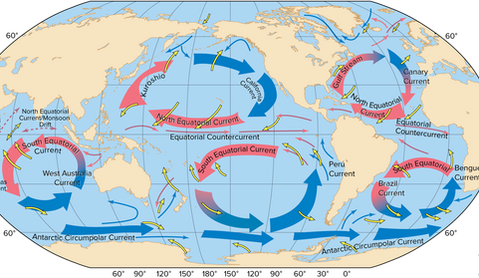
    I scrolled further and found a map with arrows suowing the circular motion of the winds and when i went back up the map was flipped the correct way, zoomed out and the single line was off the coast of brasil.

    But obviously thats not possible so i just had another look and realised. I saw the land as water and the water as land. It switched when i looked away and now i cant switch it back.

    This was trippy as hell.

  • source
  • hideshow 1 child comment
  • load more comments (1 reply)
    [–] 27 points 2 years ago (4 children)

    So if climate change starts off some freak wave of endless hurricanes… move to the equator got it

  • source
  • hideshow 8 child comments
  • [–] 8 points 2 years ago (2 children)

    Well, it might fuck up the wind currents and allow even bigger storms that could cross the equator

  • source
  • parent
  • hideshow 3 child comments
  • load more comments (1 reply)
  • [–] 19 points 2 years ago

    It's like a reverse Grand line

  • source
  • [–] 18 points 2 years ago

    A tropical disturbance has crossed the equator. One such disturbance occurred June 27, 2008 in the Atlantic basin (south to north) that retained its clockwise motion for some time:

    So not completely impossible

  • source
  • [–] 16 points 2 years ago (5 children)
  • [–] 50 points 2 years ago (2 children)

    I believe it’s because currents of air rotate in the opposite direction. So to cross the equator the air would have to pass a boundary of global air currents which are going counter to the hurricane’s motion. See this picture for a reference.

  • source
  • parent
  • hideshow 4 child comments
  • [–] 21 points 2 years ago (3 children)

    I knew it. Hurricanes are magnetic.

  • source
  • parent
  • hideshow 6 child comments
  • [–] 5 points 2 years ago (5 children)

    So the thing about the toilet water spinning in the other direction in the south hemipshere is true?

  • source
  • parent
  • hideshow 7 child comments
  • [–] 4 points 2 years ago

    In theory, yes. However other factors such as the shape of the drain, the shape of the toilet bowl, and any small initial motion in the water, usually completely overwhelm the coriolis effect. You would only be able to observe it under extremely carefully controlled conditions: extremely still water, and a completely symmetrical toilet bowl perfected to extreme, micron precision.

  • source
  • parent
  • load more comments (3 replies)
  • Because of things like Coriolis effect and convective currents, there just aren't winds that blow across the equator, not at the scale that would blow a hurricane from one hemisphere to the other anyway.

    Winds tend to blow along and away from the equator, not across it.

  • source
  • parent
  • [–] 6 points 2 years ago

    For ELI5, think of it this way. The earth is spinning, and at the equator it's moving really fast, like 900 mph. At the north pole, the earth isn't moving at all, so in the northern hemisphere, you can picture all land to the north of you as moving slower than you, and land to the south as moving faster than you. If you run south, it would spin you because it's moving 'sideways' faster than you are. Cross the equator and suddenly it gets slower as you run south, literally putting the brakes on your spin.

  • source
  • parent
  • load more comments (1 reply)
    [–] 10 points 2 years ago (2 children)

    So we wanna live in South America, got it

  • source
  • hideshow 4 child comments
  • [–] 3 points 2 years ago

    I recommend Uruguay, specifically. That little country is miles ahead of the rest of the continent in several aspects.

    Or, if you are American and wealthy enough to own a house (in the USA), you're likely wealthy enough to buy a good house in Brazil and retire with enough passive income to ignore all of this country's problems.

  • source
  • parent
  • [–] 9 points 2 years ago (4 children)

    Seems like the equator would make a perfect location for a wind farm. Looking at this map that was posted above, just have rows and rows of them that follow the equator.
  • source
  • hideshow 7 child comments
  • [–] 4 points 2 years ago (3 children)

    What's the farthest we can transport electricity? Seems like that may be pushing the boundary a bit. I wonder if it would be possible to have a world-wide electricity grid.

  • source
  • parent
  • hideshow 4 child comments
  • load more comments (2 replies)
  • load more comments (1 reply)
    [–] 6 points 2 years ago

    Checkers mate, atheists.

  • source
  • [–] 4 points 2 years ago

    Way to jinx it.

  • source
  • [–] 2 points 2 years ago
    load more comments
    view more: next ›