you are viewing a single comment's thread
view the rest of the comments
[–] 5 points 2 years ago (1 child)

That's how I feel about arch, it's not "stable" but the few issues I've had they typically have it fixed with an update within hours.

I do have to clarify when I switched to arch from windows my entire computer was brand new and practically no other distro booted or if it installed it dumped me to a black screen.

After running my server on archlinux with the stable kernel for 7 years I did install Debian on my new server. Zfs just required an older lts kernel than I could get on arch without a ton of hassle. I didn't need it on my Mac mini with an external hard drive plugged in. From my experience it's not very different to maintain compared to arch but it's nice having built in automation instead of writing my own.

Man it's weird using a system of what I can guess is a bunch of bash scripts on Debian to set things up compared to just using the tools built into and written for systemd.

  • source
  • parent
  • hideshow 2 child comments
  • [–] 11 points 2 years ago* (last edited 2 years ago) (1 child)

    it's not "stable"

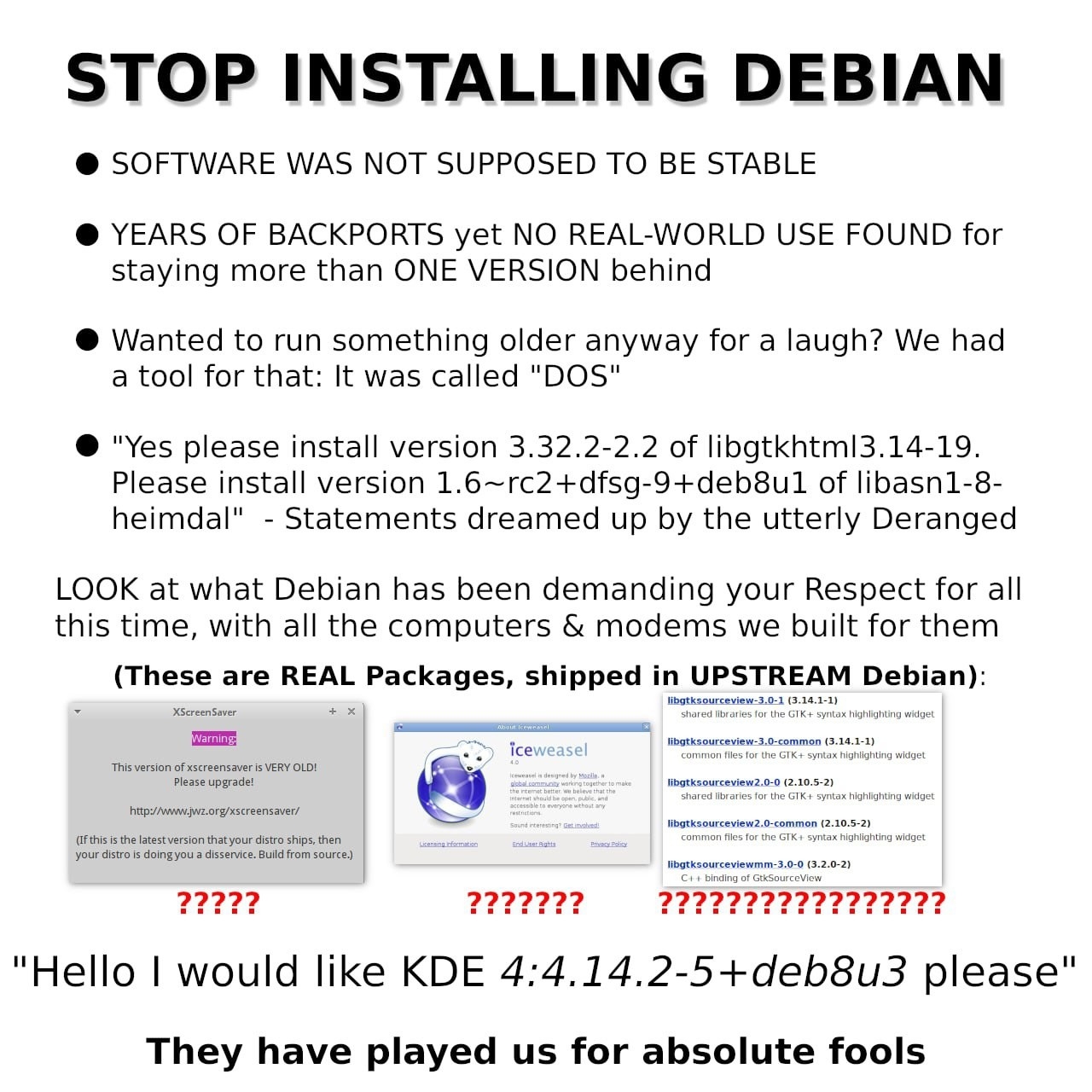
    "stable" in this case means that it doesn't change often. Debian stable is called that because no major version changes are performed during the entire cycle of a release.

    It doesn't mean "stable" as in "never crashes", although Debian is good at that too.

    Arch is definitely not "stable" using that definition!

  • source
  • parent
  • hideshow 2 child comments
  • [–] 2 points 2 years ago

    Yeah, I know the definition. I knew someone would quote it verbatim, someone always does. I quoted it because it's not the word I would use. I like scheduled or versioned releases better but someone always disagrees with me. As far as I've seen it's a major/minor version release cycle anyway.

  • source
  • parent