Having used PHP and Java extensively in my career, it's always entertaining to read what people think about these languages.
Based on some places I used to work, upper management seemed convinced that the "idea" stage was the hardest and most important part of any project, and that the easy part is planning, gathering requirements, building, testing, changing, and maintaining custom business applications for needlessly complex and ever changing requirements.
Absolutely.
I've seen so many projects hindered by bad decisions around performance. Big things like shoehorning yourself into an architecture, language, or particular tool, but even small things like assuming the naive approach is unacceptably slow. If you never actually measure anything though, your assumptions are just assumptions.
What? The GPL would have offered no more protection for this exact scenario than the LGPL (or any other license for that matter).
Null is terrible.
A lot of languages have it available as a valid return value for most things, implicitly. This also means you have to do extra checking or something like this will blow up with an exception:
// java example
// can throw exception
String address = person.getAddress().toUpperCase();

// safe
String address = "";
if (person.getAddress() != null) {
    person.getAddress().toUpperCase();
}
There are a ton of solutions out there. Many languages have added null-coalescing and null-conditional operators -- which are a shorthand for things like the above solutions. Some languages have removed the implicit nulls (like Kotlin), requiring them to be explicitly marked in their type. Some languages have a wrapper around nullable values, an Option type. Some languages remove null entirely from the language (I believe Rust falls into this, using an option type in place of).
Not having null isn't particularly common yet, and isn't something languages can just change due to breaking backwards compatibility. However, languages have been adding features over time to make nulls less painful, and most have some subset of the above as options to help.
I do think Option types are fantastic solutions, making you deal with the issue that a none/empty type can exist in a particular place. Java has had them for basically 10 years now (since Java 8).
// optional example

Class Person {
    private String address;

    //prefer this if a null could ever be returned
    public Optional<String> getAddress() {
        return Optional.ofNullable(address);
    }

    // not this
    public String getAddress() {
        return address;
    }
When consuming, it makes you have to handle the null case, which you can do a variety of ways.
// set a default
String address = person.getAddress().orElse("default value");

// explicitly throw an exception instead of an implicit NullPointerException as before
String address = person.getAddress().orElseThrow(SomeException::new);

// use in a closure only if it exists
person.getAddress().ifPresent(addr -> logger.debug("Address {}", addr));

// first example, map to modify, and returning default if no value
String address = person.getAddress().map(String::toUpperCase).orElse("");
Best decision I made was taking an internship. I wasn't really looking for one, but through some connections, one basically fell in my lap. It was in old tech I messed with in high school, so I was reluctant, but getting real world programming experience was fantastic. The team was great and I helped solve some interesting problems on a small project of theirs. They kept me on as long as they could (>1 year). I think people can be way to idealistic, especially when starting out. Go get a year or two somewhere, anywhere. You'll have a ton more marketability and control over where you end up with experience and professional references.
Biggest career regret was waiting around afterwards for a time to try to get hired on at that same place. Not a ton of programming jobs locally and I wanted to continue my work there, but the company went through semi-frequent growth/shrink phases, and my team wasn't able to get me hired in, though they did try for a while. There were plenty of other good things happening in my life during the down-time after this job and before the next, so it's not really something I regret, but I definitely won't wait on a company like that again.
As a normal software dev, I wouldn't want to work in the games industry at all. There's plenty of interesting and well paying work in this field.
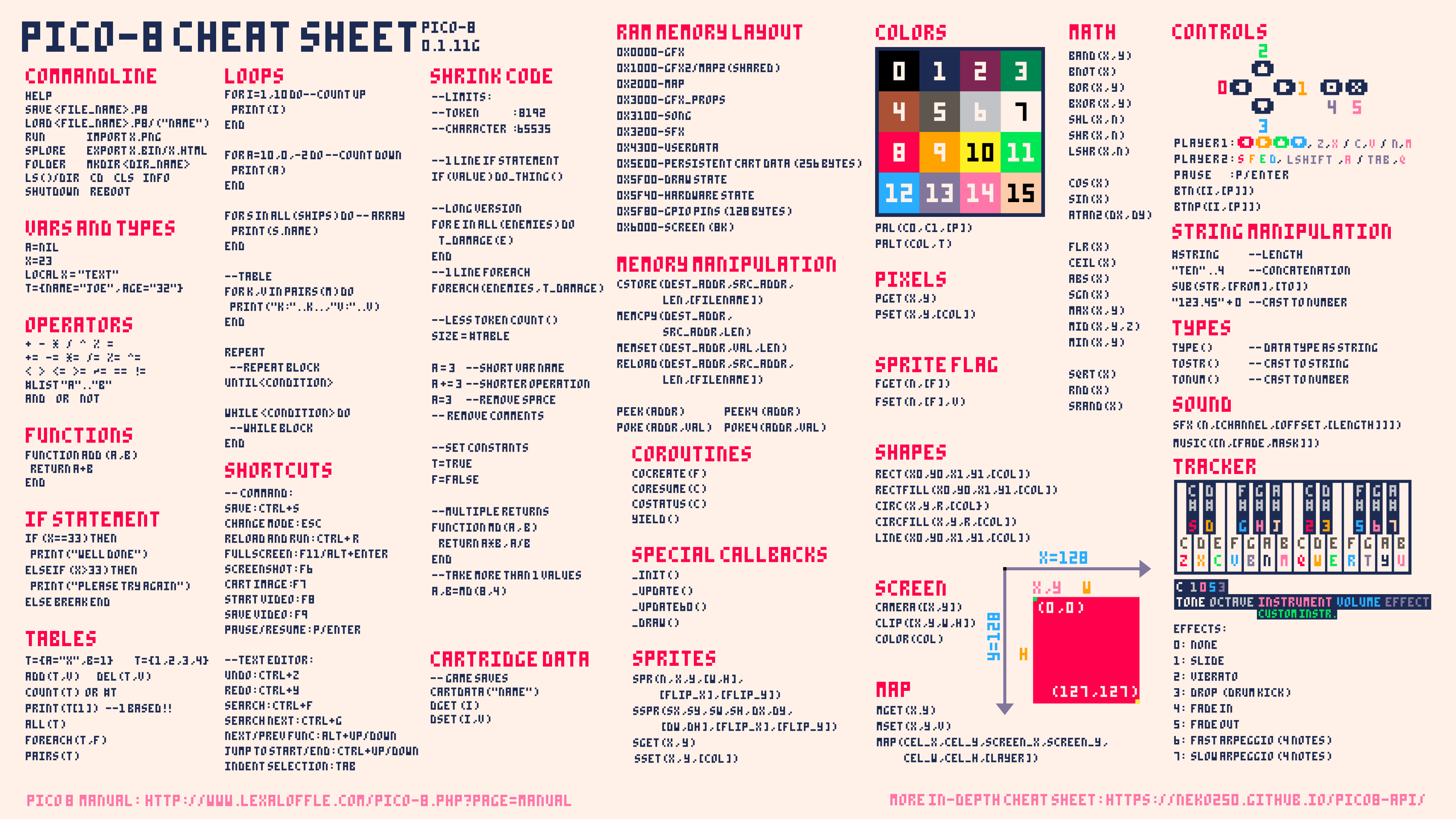
And then I tinker on the side. I don't think it's ever been easier to make your own games as a hobby. So many great tools and resources to learn from. PICO8 has been a blast, but going to learn something more capable soon - not sure if that'll be Godot, Raylib, or LibGDX yet, but I'll probably but I'll probably try prototyping some stuff to figure it out.
Bill is a liability.
Project Panama is aimed at improving the integration with native code. Not sure when it will be "done", but changes are coming.
Nice video about it here : https://youtu.be/cZLed1krEEQ
Tldw: US DOS version actually has 2 separate impossible jumps on a level that aren't present on the European DOS or NES versions.
Wow, that looks really nice!
I use Lua for PICO-8 stuff and it works well enough, but certain parts are just needlessly clumsy to me.
Looks like TIC-80 supports wren. Might have to give that a try sometime!
Yep, absolutely.
In another project, I had some throwaway code, where I used a naive approach that was easy to understand/validate. I assumed I would need to replace it once we made sure it was right because it would be too slow.
Turns out it wasn't a bottleneck at all. It was my first time using Java streams with relatively large volumes of data (~10k items) and it turned out they were damn fast in this case. I probably could have optimized it to be faster, but for their simplicity and speed, I ended up using them everywhere in that project.
view more:
next ›