1


In regards to dubbing: adding a voice to a character isn't simple as it looks as you take into account of lip sync and facial animations, while making it multilingual since languages have their own manner of speaking (different lip movements and sounds). Like if you were going to make an ENG dub for a game that originally has JPN dialog, the lip animations for every character will be overhauled to suit ENG phonology matching the dub.

Square Enix did this for life is strange (which has sip sync made for ENG but it was reworked to fit JPN dub) making it appear as if the characters are speaking Japanese natively. However that's another layer of complexity that most developers aren't bothered to rework due to cost and time constraints. The same with VN's that are originally developed in Japanese but only translate the text rather than adding an entire ENG dub.

I know a few VN's and Otome that don't have ENG dub (Steins Gate, CHAOS Child, Amnesia, NORN, etc). as they only have the text translated but not the spoken dialog. Not only is the dub going to be a hard process, but translating background art (signage, letters, memes) from JPN to ENG since those are in JPN first (it requires recreating the scene or drawing it from scratch using the original as a template) so it doesn't look weird.

As in why are they're speaking ENG when the visual context surrounding them is in JPN? To avoid that, replace stuff from the background like 田中先生, 立入禁止 or 止まれ with ENG equivalents such as "Mr. Tanaka", "NO TRESSPASSING" or "STOP" which requires you to redraw or reconstruct the scene by overhauling the original, if the JP signage is vertical: recreate it in ENG by flipping the sign orientation.

2


Me and the girlfriend participated in the GMTK Game Jam 2026, this was our first time doing a full project on Godot! It is loosely inspired by the Lost TV show, and references it quite a lot.

It's an exploration game where you are in a bunker in a mysterious island. You must enter a code into a computer to prevent the timer from reaching 0, you get progressively more of the code on clues spread in the bunker and across the island, which increases your maximum time, which allows for further exploration.

Since it was done in 4 days with quite a few breaks and sleep, it is quite janky here and there, but we had fun making it, please enjoy :)

3


Hey everyone!

I'm a full-stack dev from Italy. I built a project solo that started as one thing and became another, and I wanted to share it here — mostly for the technical side, but I'll explain the whole thing.

It's called vibeAI, and it's two halves that fit together.

━━ THE CHAT SIDE ━━

  • Create your own AI characters: personality, backstory, avatar, tone of voice
  • Chat one-on-one, or put several of them in a group chat and let them interact
  • Discover and chat with characters made by other users
  • Free daily messages for everyone

━━ THE GAME SIDE (Vibe Battle) ━━

There's a full fighting game inside the app, and the enemies include the AI characters you created yourself.

  • Timing-based combat, not button mashing: stop a moving bar in the green zone to hit, tap a shrinking circle to parry — watch out for feints
  • Campaign of 60+ opponents: 50 presets plus your own characters, shuffled with a seed so every run is ordered differently
  • A boss "cameo" that ambushes you mid-run — unbeatable by design, it wrecks you and leaves
  • A 3-phase final boss that scales to your build
  • Skins with permanent HP/damage bonuses, premium moves limited to one use per match
  • Live 1v1 PvP, matched by XP
  • Global leaderboard

━━ THE TECHNICAL PART (the reason I'm posting) ━━

The thing that took longer than everything else combined was the multiplayer anti-cheat. The first version was client-authoritative — each client computed its own damage and reported it. Took me five minutes to realize you could just open the console and claim "I did 9999 damage." Useless.

So I moved all authority to the server:

  • Match state (HP, turns, rounds) lives on the server, not the clients
  • Clients NEVER declare damage — they only report how accurate their timing was (perfect / good / miss)
  • The server rolls the damage by reading real stats from the database
  • End-of-match rewards go through signed, single-use sessions with daily caps, so tampering with the browser client gains nothing
  • Real-time sync runs on Supabase Realtime broadcast, with a REST fallback for when the websocket doesn't deliver

Stack: React + TypeScript, Supabase (auth, Postgres, Realtime), Stripe, Vercel. It's a PWA — no app store, installs to the home screen on Android and iOS.

━━ ON MONETIZATION, to be upfront ━━

Free to play, no content locked behind payment — campaign, final boss and PvP are all accessible. Optional purchases (cosmetic skins, in-game currency) exist to cover API and infra costs. Saying it upfront rather than hiding it.

━━ ━━ ━━

Heads up: the UI is in Italian — it was built for the Italian Gen Z crowd, and the preset characters are local archetypes. But the combat is bars, circles and timing, so it plays fine in any language, and the characters that matter are the ones you create yourself.

If anyone here has worked on real-time multiplayer or Supabase Realtime, I'd love to compare notes — there are a couple of choices (abandoned-match handling, the broadcast fallback) I'm not sure I got right.

4
My Love for RPG (jeferson.me)
submitted 3 days ago by to c/gamedev@programming.dev


I did write about the evolution of D&D, and the learning from other RPGs around. I know that this isn't exactly digital game design and development. But I think it's connected enough to be valuable for the discussion.

All the comments, discussion are welcome.
Thanks in advance.

5


I run a tiny private multiplayer alpha built on Minecraft Java. Before asking more people to test it, I audited the application page because several visitors reached the form but nobody submitted it. The audit found two avoidable funnel failures.

First, the post-submission referral panel had a native hidden attribute, but an author .panel { display: grid; } rule still made it visible. Visitors could see "Application received" before doing anything. I had assumed the attribute would always win. The fix was an explicit [data-alpha-referral-panel][hidden] { display: none !important; } rule plus a browser test that checks both the DOM property and computed display value.

Second, the mobile form started 1,098 px from the top because the pitch and a large proof image came first. I shortened the mobile introduction, kept the real world image for desktop and link previews, and moved the form start to 481 px. I also changed free-text availability to four clear choices and detect timezone silently, while keeping the founder-vision answer and CAPTCHA.

It is too early to claim a conversion win: the verified result is still zero new applications since the fix. My next question is what minimal funnel events other developers would measure here without adding invasive analytics. At present I can distinguish a page request, full asset/API load, CAPTCHA load, and a real submitted application from server logs.

The secondary playtest ask, for anyone who also owns Minecraft Java: Neviroth is testing whether three founding players having concrete authority—founding kingdoms, naming places, building landmarks, and changing progression or economy—creates better long-term investment than treating them as ordinary bug reporters. Alpha access is free, unstable by definition, and every application is reviewed manually.

Live page and founder application: https://neviroth.net/community/alpha/apply?src=programming_dev_gamedev&campaign=alpha-social&ref=ed5372cdb30c&content=alpha-funnel-postmortem

6
7


I've wrote about the first few weeks of my hobby project. It's a self-hosted, agnostic cardgame. I've the release on this post (if you want to read about), I'll keep improving, refactoring and generating more information.

All comments, feedback is appreciated.

8
Godot Community Poll 2026 (godotengine.org)
submitted 1 week ago by to c/gamedev@programming.dev
 
 
9
10
11
submitted 2 weeks ago* (last edited 2 weeks ago) by to c/gamedev@programming.dev


I've been experimenting with an idea that sits somewhere between a game and a productivity app.

Instead of treating habits like a checklist, I designed a progression system where real-life actions become game mechanics.

  • Completing habits earns different powers (Strength, Wisdom, Focus, etc.).
  • Powers can be combined on a strategy grid to discover stronger abilities.
  • Your hero evolves as you stay consistent.
  • Missing a day doesn't punish you or reset everything, it's built around positive reinforcement instead of loss.

As a game developer, I'm curious about the design side of this.

Do you think progression systems that work well in RPGs can create long-term engagement for real-life activities, or does the novelty wear off once players realize there's no traditional gameplay?

I'd love feedback specifically from a game design perspective. What mechanics would you add, remove, or rethink?

If you'd like to see what I've built so far, it's here: Habit Hero

12
 
 
13
14
15
submitted 3 weeks ago* (last edited 3 weeks ago) by to c/gamedev@programming.dev


I've rewrote the post to be "more pleasant" to read. Sorry for the unhinged original post.

I've building this for few weeks, this is a agnostic card game table so I can play with my friends games like Uno, Pokemon and such. The idea is to pick a deck and play the game. This the base line. Everything is customized, and most of the stuff needs to be done by it's users.

This is the dev log, and there is links for the places in case you need.
Feedback is always welcome. Thanks for readin.

16
17


A few months ago, in my free time, I started a small fantasy card game project in 3D and implemented raytracing to drag the cards around a plane above the "table" as a figure of speech, but I never did figure out the nodes which would have cards in play snap to and become undraggable. Whenever I set the boolean to disable dragging and enable snapping the card's variables passed to the node stayed null.

If somebody can help me figure it out, experience with git is a plus but not required (I can set up the repo and the gitignore myself), I'd be able to spend more time on the artwork and maybe we could start a kickstarter in a week or two.

Sample of my older artwork (from a different project outside of game development that is perpetually delayed for both team and financial difficulties):

SoGnudUxpfSBMhH.jpg

For more private conversation please reach out to me at: finitebanjo@yahoo.com

If you lack any prior credit for such work then I won't immediately disqualify you but be prepared to demonstrate capability such as with a script that moves an instantiated 3D objects between 5 nodes in randomized order, interruptible by clicking on it (this demonstrates an active and inactive state and more complex movement than just static A to B)

18


I got into making games because I love games. Not because I see players as a balance sheet to drain. But somewhere along the way a lot of the industry stopped shipping things you finish and started shipping things designed to hook you, time you, and quietly bleed your wallet on a Tuesday night.

Loot boxes that are just slot machines with extra steps. Countdown timers built to make you panic-buy. Hyped-up trailers covering for a launch that's broken or empty. Full price games that still nickel-and-dime you for the fun parts. That's not design, that's a casino wearing a costume.

To be clear, I'm not mad at charging money. I sell my own game, and there are optional purchases that keep the servers on and pay the people building it. Charging a fair price for real work is honest. Engineering addiction and hiding a hollow product behind a flashy trailer is not. There's a line, and a lot of people sprinted past it.

So here's my flag in the ground. Fair price. Finished game. No psychological traps, no dishonest hype. You buy it, you own it, you actually have fun. That used to be the baseline. I want to make it the baseline again.

19


Somewhere in a glass tower, a meeting happened. The question on the slide wasn't "is this game fun." It was "how do we get them to spend again before they notice they stopped having fun." That's the part that gets me.

I'm not against paying for games. I sell mine for less than a lunch, with a few optional extras that keep the servers on and let me keep doing this. That's a fair trade. You give me a little, I give you a whole world and I don't pick your pocket while you're standing in it.

What I'm against is the slot machine wearing a game's skin. The blinking timers built to make you anxious. The fun locked behind a wall so you'll pay to feel something. The hyped launch that ships broken because the marketing already cashed the check. Designing a game to drain you instead of delight you is a choice, and a lot of big teams keep choosing it.

So here's where I plant my flag. I'd rather make a smaller, honest thing that respects your time and your wallet than a shiny machine engineered to bleed you slow. If you're tired of being treated like a balance instead of a player, good. Come build the other timeline with me. We're still out here, and we're not selling you back the joy.

20
Godot 4.7 released (godotengine.org)
submitted 1 month ago by to c/gamedev@programming.dev


Like a cult classic movie, Godot 4 has only gotten better with age. The first few releases focused on stability, granting the engine a rock-solid foundation that could be safely and easily iterated upon. Gradually, this has shifted more towards polish and quality-of-life, peaking in Godot 4.6 giving developers the tools to put them and their workflow first.

This brings us to Godot 4.7. With 3 years under its belt, the 4.7 Director’s Cut offers colors of never-before-reached intensity. HDR output radiates bold and brilliant new hues, allowing your projects to shine like never before. Inject some juice to your UI without breaking a sweat using the new Control offset transforms. Find the plugin that will help push your game even further with the new Asset Store, bask in the ease of creation with standalone Android exporting and publishing, and helm a bevy of new features to eliminate any remaining friction between you and your vision.

21
22


I'm currently working on a small social platform and I'm trying to make sure I handle notifications correctly before opening it up to more users.

Right now users can send friend requests and room invitations, and I'm considering adding email notifications so people don't miss them when they're offline.

My question is: if I send emails for things like friend requests, room invites, and account-related notifications, do I need to explicitly mention that in my Terms of Service or Privacy Policy? Are there any common mistakes I should avoid when implementing this?

I'm also interested in general feedback about the platform itself. I'm still actively improving it, so honest criticism is welcome.

Link: The Hideout

A few things I'd especially like feedback on:

  • First impressions
  • Account creation and onboarding
  • UI/UX
  • Social features
  • Anything confusing or frustrating
  • Features you think are missing

I'm looking for real feedback rather than promotion, so don't hold back if something needs improvement.

23


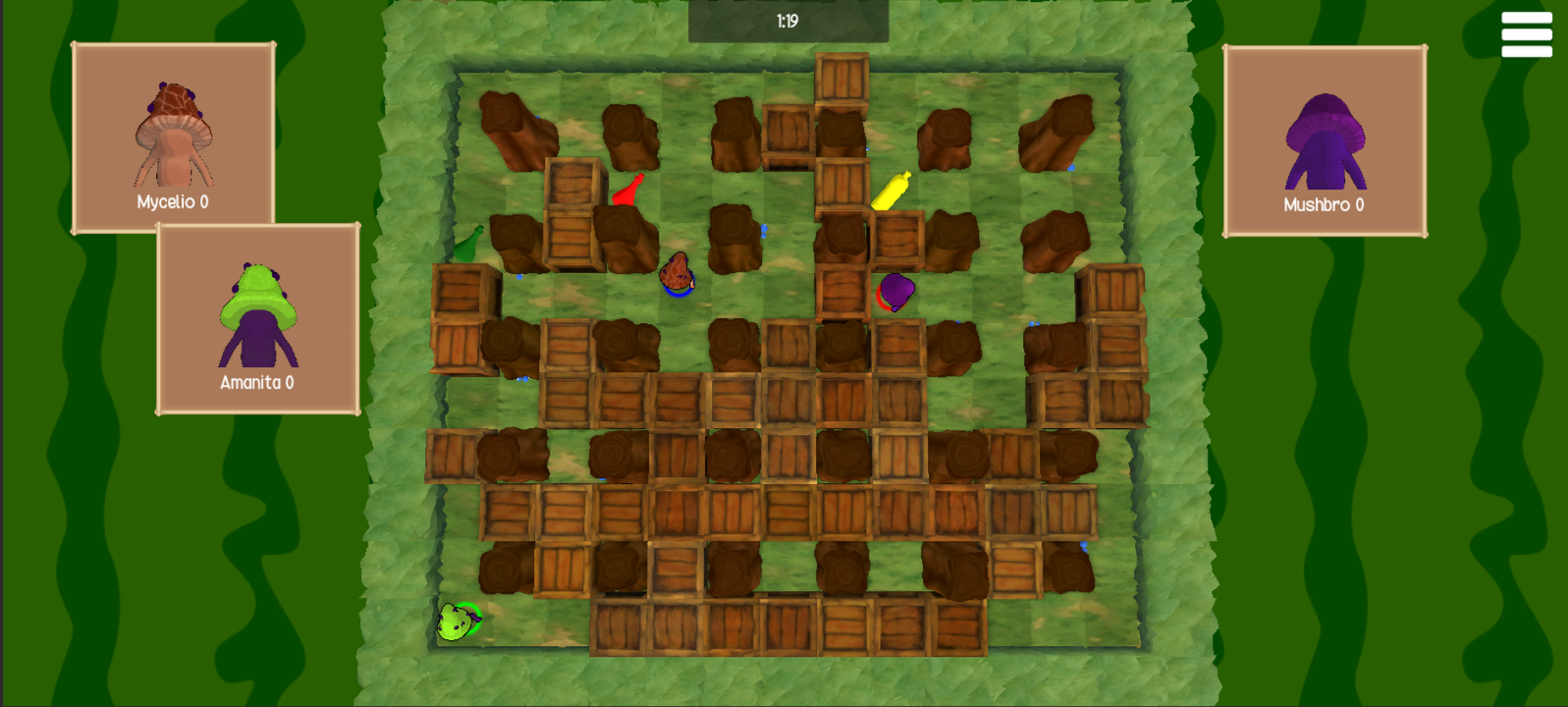
I'm making a web bomberman game in Godot, Mushboom, and I added first person view (shown in video) 😁

https://vimeo.com/1200685412

24
25
view more: next ›