the RP4 has a really decent D-Pad, more rubbery than the PSP's clear plastic, very responsive, good diagonals.
my current list of plugins:
- peanuts and xkcd strips
- moon phase
- weather forecast
- Strava activity summary
- GitHub activity grid
- a custom plugin I wrote that shows a different kanji each day
I have one and it's great, although I don't have any HA information on it, as I don't have a lot of information worth having on a screen that's not live data.
I recently moved all my PSP library to a Retroid Pocket 4 Pro, because of battery life and upscaling, but my PSP is still working, the thing is that being able to charge everything with USB-C is really comfortable for me, and I'm really scared of modding a USB-C port on my PSP. The performance on the RP4 is really good.
Timing first, friction later: Whatsapp was first, it extended like wildfire in Latin America before the 2014 buy in by Meta. I attribute it to the ease of configuration: you didn't need an email, it was just your phone number, and then all your contacts were reachable. It didn't lose traction even when it changed from free app to "free for a year". Friction came later, Telegram gained some ground but it was very niche, my friends that were in CS were using it "for the bots and the stickers" but you needed to invite your contacts to use it and it didn't make sense if they already had Whatsapp. Later, more and more businesses started using Whatsapp to chat with customers and eventually it became the default.
The Truce, by Mario Benedetti. I was 13 or 14, and it's the first time I cried while reading a book. I finished it seated on a park bench, I couldn't stop thinking about it, maybe I'm really afraid about old age.
thank you for your service
yes. there's two branching discussions here:
- Space as a scientific topic, it needs to be understood. Our observation of reality is very local, and although we can prove that some of our assumptions about physics, life and civilization work on our neighborhood, it doesn't mean that they're the same everywhere. That alone is sufficient reason for me, to explore.
- Space as the new frontier. Many if not all exploration done on planet Earth has been, in some shape or form, resource-motivated. Lands, food, medicine, minerals, routes, are all found through exploration and normally through people spending money looking for a return over investment. Space is no different.
I think the interesting part is where this two branches touch: If we ever plan on capturing an asteroid for mining, the technology needs to be there to do it, and hopefully the technology is about the benefit of all humankind. This kind of development is showing us the way to move forward and solve problems. Imagine a world when we don't need to destroy ecosystems in order to get iron because all iron comes from off-world.
a good Stargate is a buried Stargate, or at least with a closed iris.
just, don't ask him how many horses he owns
The algorithm felt it wasn't hitting the right taste clusters
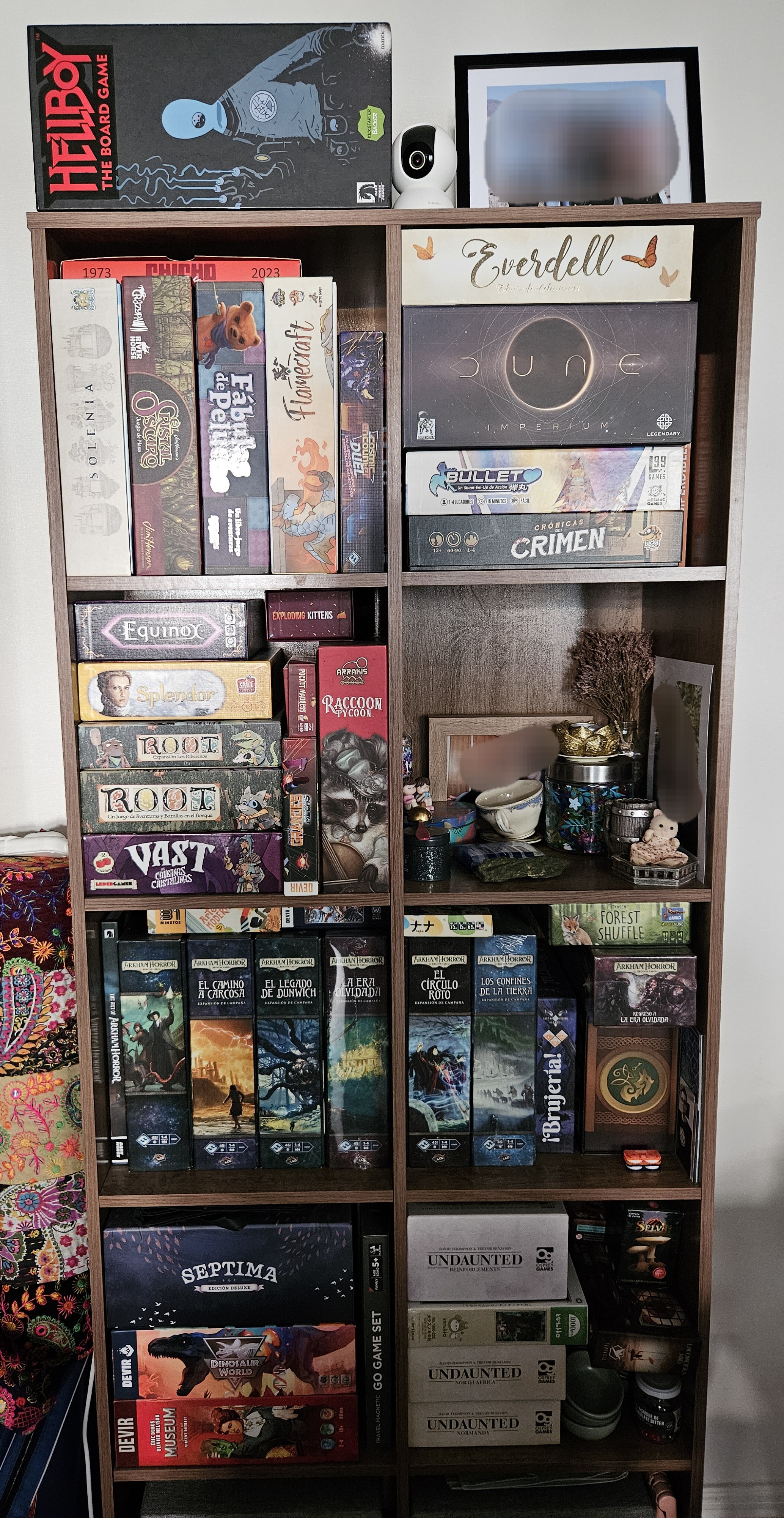
Inspirado por el post de @skrlet13@feddit.cl, está es la repisa que tengo más repleta de juegos. La otra tiene una mezcla de cosas y algún día cuando esté en mejores condiciones la compartiré :-)
view more:
next ›