[–] -2 points 10 months ago (1 child)

I’ve never once heard “bro” used in a genuinely positive way. Not once.

At best it’s fake-jovial. At worst it’s a way to diminish, antagonize, or mask hostility.

Case in point: this very thread. People kept saying “bro” not out of warmth, but because they thought it would piss me off. That’s not camaraderie—that’s toxicity.

And no, “bro” is not the same as “mate.” “Mate” might be regional slang. “Bro” is gendered. Which means it’s exclusionary by default. It assumes something about the person you’re talking to that may not be true. That’s not inclusion. That’s presumption.

So unless someone is your literal brother, why keep it around? If a word carries a whole lot of negatives and almost no positives, why pretend it’s harmless? Better yet—why does your urge to use a toxic word override my goal of building an inclusive community? Would you defend other toxic words the same way—words with even sharper malice baked in?

And if you would, then maybe the problem isn’t me banning “bro.” Maybe the problem is what you’re really defending.

  • source
  • parent
  • context
  • [–] -1 points 10 months ago (1 child)

    You’re framing visibility as if it’s accountability.

    But mods aren’t accountable to users—they’re accountable to admins. If a mod aligns with an admin, users can scream all they want, nothing changes. If a mod sides with the community but not the admin, the admin overrules both. That’s hierarchy, full stop.

    Let’s be real. The whole conceit of YPTB is a farce. You’re not “holding mods accountable.” You’re doing populism dressed up as anarchism, aligning with admin tastes when it suits.

    Out of all the possible people in the community, it just so happens that the true authorities—the ones setting the norms and nurturing the culture—are the same ones holding the keys to the entire server. And those are the very people wielding YPTB as a cudgel in the name of “accountability.” That’s not accountability. That’s a closed loop.

    If lemmy.dbzer0.com were serious about anarchism, the admins would say: “No mods, no users, no hierarchy—everyone go operate their own nodes.” But they don’t. Instead, this community exists under the admin’s keys, which feeds an illusion.

    And that “visibility” you’re pointing to? It’s not accountability—it’s branding. Admin branding. It only exists because lemmy.dbzer0.com allows it to exist, and only as long as the server remains federated. Flip that switch and your visibility, your supposed accountability, evaporates overnight.

  • source
  • parent
  • context
  • [–] 2 points 10 months ago

    Got it. So it's less confusing to users who don't know what an FE or BE are, but it's more confusing for new admins who do.

    "Instead of running Soapbox on Soapbox, I'll run Fedibird on Soapbox. Scratch that. I'll run vanilla Pleroma with Soapbox instead of Soapbox."

  • source
  • parent
  • context
  • [–] 0 points 10 months ago (3 children)

    Fair enough—I probably came in sharper than I needed to. I get that you’re not denying the power imbalance, just framing it differently.

    We’re closer in view than it might have sounded. My aim wasn’t to dunk on you, just to stress that these structures aren’t neutral. If we’re both pointing in the same direction, then good—that’s where the real work begins.

  • source
  • parent
  • context
  • [–] 0 points 10 months ago (5 children)

    Space isn’t “just a space.” Space is what makes words accessible. A post that nobody can reach might as well not exist. Infrastructure isn’t neutral—it’s the condition that makes communication possible in the first place.

    And admins don’t just have the power to end a space. They have the power to prevent speech from ever happening. They can de-platform, silence, or exclude before words are written. That’s not trivial. That’s systemic control over what gets created, not just what gets erased.

    And sometimes communities really are families—both literal and ad hoc. People pour years of energy, conversation, and memory into them. When they get obliterated, it’s not “just a space” disappearing—it’s a shared history wiped out because one person with keys decided it was over.

    What makes your comment even more striking is that it contradicts your earlier points. First you downplayed hierarchy by saying admins are just neutral facilitators, now you admit they hold systemic power but dismiss it as “no big deal.” Which one is it?

    That’s the imbalance I’m pointing at. If we want real commons, that has to change. Otherwise we’re all just tenants, and the landlord can decide at any moment to bulldoze the building. Dismissing that as unimportant is exactly how these power structures stay invisible.

  • source
  • parent
  • context
  • [–] -1 points 10 months ago (1 child)

    I’m not arguing for extremes at all.

    On one side you’ve got pure authoritarianism—admins as unchecked rulers. On the other side you’ve got utopian anarchy—peers moderating themselves with no hierarchy. I’m not in either camp.

    What I’m pointing out is the middle: these platforms are hierarchical by design. That means admins do hold systemic power, but it also means admins have responsibility for how that power is exercised. My stance is simply to acknowledge that reality instead of pretending hierarchy doesn’t exist.

    Selective federation is part of that. It’s not about isolation or domination—it’s about setting clear boundaries for what I’m willing to host and connect with, while still participating in the broader network. Users still have choices. They can join another server or start their own. That’s federation working as intended.

    So this isn’t an extreme position. It’s the pragmatic one: take responsibility for the space you run, be upfront about the structure, and don’t pretend current software is something it isn’t.

  • source
  • parent
  • context
  • [–] 5 points 10 months ago* (4 children)

    Just want to point out that I use Mangane, which is a fork of Soapbox, on my Akkoma server---and it absolutely connects to Lemmy.

    From what I understand, Soapbox is just a front-end. The backend is Pleroma/Akkoma.

    And by the way, one of the great aspects of the *oma services is that the frontends can be swapped out.

  • source
  • [–] 0 points 10 months ago (7 children)

    The feast metaphor doesn’t hold. If I pay for a banquet hall, the guests can mingle—but they don’t control the locks on the doors, the electricity, or whether the venue even stays open tomorrow. If I decide to shut the place down, the party ends whether they like it or not. That’s not neutral infrastructure. That’s systemic power.

    I’m not saying the admin “owns” people’s words. Users own what they write. But whether that writing continues to exist, whether it stays visible, whether it can even be reached—those are all contingent on the admin. Content lives inside infrastructure, and whoever holds the keys controls the environment where it persists.

    And people absolutely are confused about this. Look at lemm.ee: did the community want to vanish overnight? No—but the admin pulled the plug, and everything disappeared. The same happens on Reddit when admins close subreddits, or on Discord when a server gets nuked. People routinely find themselves blindsided because they mistake participation for ownership.

    That’s the point I’m pressing: software that demands admins and mods creates hierarchy, no matter what ideals we wrap around it. If we want a true commons, the architecture has to change—there can’t be “users,” only peers, each running their own node. Until then, pretending otherwise is just comforting metaphor.

  • source
  • parent
  • context
  • [–] 2 points 10 months ago (3 children)

    I get what you’re saying, and I even sympathize with it. I would love a true public square owned by the commons—something where people’s conversations aren’t at the mercy of whoever happens to run the machine.

    But that’s not how Lemmy, Mastodon, Misskey, or any of the current platforms work. These systems are hierarchical by design. They require admins, they require mods, and everyone else becomes “users.” That’s not a public square, that’s tenancy.

    Even donations don’t change that. If the admin holds the keys, they hold the power. Look at lemm.ee—did the community there want to be wiped out overnight? Of course not. But the admin pulled the plug, and that was the end of it. That’s the architecture working as designed.

    If we really want a public square, then we have to stop talking about “users.” There should only be peers. And that means each person owning their own node, not donating their content to someone else’s server and hoping they’ll be benevolent forever.

    That’s the uncomfortable truth: until the design itself changes, we don’t have commons. We have hierarchies dressed up in populist rhetoric, and every user is just one admin’s decision away from disappearing.

  • source
  • parent
  • context
  • [–] 0 points 10 months ago (9 children)

    The problem with your framing is that it treats software as neutral when it isn’t.

    Social media software encodes structure into how communities are organized. If the software is hierarchical, the community will be hierarchical. There’s no way around that unless everyone literally operates their own nodes.

    And that’s where the real vulnerability lies. If you don’t run your own server, you’re not sovereign. You’re donating your content to someone else’s machine and trusting that their standards, moderation, and moods won’t turn against you. Ideals won’t protect you if the design itself makes you dependent.

    If you really care about a sense of ownership, then you should be running your own server. That’s what freedom of association actually means. It isn’t allegiance. Allegiance locks you in. Association multiplies your choices—pick a server that matches your values, or start your own. That’s the entire point of federation.

    So let’s not pretend mass platforms or wide-open instances are some higher form of democracy. They aren’t. They’re just populism sitting on top of hierarchy. The lowest common denominator gets to shout “this is the people,” while the actual levers of control stay exactly where they’ve always been—with whoever holds the keys.

  • source
  • parent
  • context
  • [–] 1 point 10 months ago (5 children)

    Yeah, I get why the word “own” makes people uneasy. There’s a sincere belief that communities should belong to the commons—that no one should control the space, that it should be shared, stewarded, collective.

    I sympathize with that. I really do.

    But that’s not how the software works.

    Lemmy isn’t structured like a commons. Neither is Mastodon. Neither is most federated software. These platforms still rely on admins, moderators, and users. There are hierarchies, permissions, access levels. Someone has root. Someone pays the bills. Someone can click “ban.”

    If you’re building a community on someone else’s server, you are doing so inside their infrastructure. And under the law, they are the legal operator and data controller. That gives them full authority—technical and legal—over the domain, the storage, the moderation tools, and the continued existence of what you built.

    So yes—everything you post on Reddit, Facebook, or Twitter lives behind walls. Even if you retain copyright, you’ve handed over a perpetual license to do whatever they want with it. They own the platform. They control the archive. You’re not publishing. You’re donating.

    The Fediverse is better—but let’s not pretend it’s structurally different. If you build something inside someone else’s instance, they own the keys. If they kick you out, it’s gone. That’s not a glitch. That’s the model.

    If you truly want a commons—a system with no admins, no mods, no hierarchy—you need to build software that works that way. But that’s not Lemmy. Not Mastodon. Not Misskey. Not PeerTube.

    In this system, the only real recourse is to run your own server. That’s where your power begins. That’s where your autonomy lives.

    And that’s why I say: I want to own my community.

    Because if I don’t, someone else will. And I’ve seen what happens when they do.

  • source
  • parent
  • context
  •  

    Even 47 years later, this thing gets me hyped. The “Master Component” had a 16-bit microprocessor?! Three-part harmony music? A display they called an “extraordinarily high level of resolution”? That sounded like the future. Sign me up.

    And when they start hyping up ROM cartridges to a general audience, most people probably had no clue what that meant. But it must have felt like home electronics had just landed on the moon.

    This was the first real console war: Intellivision vs Atari 2600. And wild to think—two years ago, Atari finally bought Intellivision.


    In 1972, this must have felt like stepping into the future. TVs had only ever been passive, and suddenly the screen could respond. Families were seeing their living room sets turn into game machines, with paddles controlling little glowing squares.

    Now, the overlays look wild. Plastic sheets taped to the glass to turn dots into tennis courts or haunted houses. It’s clumsy. Also brilliant—an early hack to add color and imagination to an otherwise bare signal. You had to supply the magic yourself, which makes it all the more fascinating today.

    And the way Magnavox pitched it. What are you going to do when your kids are snowed in? It was sold like a family appliance. Little did they know that this would be revolutionary.


    Love that Metal Jesus is diving deeper into obscure PC games. As a former Sierra employee, he brings a perspective few retro enthusiasts can match.

    And honestly, any spotlight on PC gaming history is welcome. It’s a part of retro culture that too often gets pushed aside.

    Which blows my mind—because even if you only count DOS and Windows, leaving out Mac, Amiga, and Linux, PC still has the single biggest game library of all time.


    Two new rules have been added to this community, and they deserve some explanation.

    Inspired by this comment, I started thinking about why so many gaming spaces feel shallow or exhausting.

    The problem is that they are rarely about video games themselves. Instead, they become about “being a gamer”—a label, an identity, and a consumer tribe. That identity is built on cycles of hype, outrage, loyalty to platforms, and endless talk of hardware or marketing. It flattens games into consumable products, and the people into market demographics.

    That’s not the kind of community I want to build. I’m here because I see games as art, and I want to share that perspective with others who think the same way. If someone views games mainly as a lifestyle accessory, or if their whole identity is wrapped up in consumption, then this space will feel alien to them—and that’s intentional.

    Which is why the first new rule is simple: “This is not a gamer identity space.” It sets the boundary clearly. We don’t need the baggage of gamer identity here. This community isn’t a loyalty badge, it’s a place for deeper thought.

    The second new rule grows directly out of the first: “Talk about games as art.” If games are art—and they are—then the most interesting conversations we can have are about design, aesthetics, mechanics, and meaning.

    What is this game trying to say? What choices did the creators make, and why? How does its structure, its tone, or its style affect the way we experience it? These are the kinds of questions that lift discussion beyond consumption and into critique, interpretation, and appreciation.

    I added this rule because I’ve seen firsthand what happens when you try to talk about games in this way elsewhere. In another gaming community (which doesn’t need to be named), I made the mistake of approaching the medium with positivity and seriousness—treating it as art worth celebrating.

    The reaction was hostility. People saw appreciation as “shilling,” and thoughtful discussion as a threat to their outrage-driven culture. That told me all I needed to know: rather than fight to carve out space in communities built on negativity, it’s better to establish one that starts with positivity and respect for the medium itself.

    So that’s the point of these two new rules. They’re not just lines in a list—they’re the foundation for what kind of community this will be. A place where games are treated as works of art, not consumer trophies. A place where we discuss choices, meaning, and design, not just hardware wars or outrage cycles.

    This is a place where positivity is not only welcome but expected.


    Here they are:

    They’re up for grabs until next Thursday.

    I’m going to talk more about free games and good deals—because if you can build your library cheap (or free), why wouldn’t you?


    Did you know Disney once published an ATV racing game? Yeah—Disney. The same company that gives us princesses and endless Marvel spinoffs was, for a brief and shiny moment, trying to be a serious video game publisher.

    Fox tried it. Warner Bros. tried it. Disney thought it could too. But in the end? They couldn’t make a dent.

    Pure was their big swing. Developed by Black Rock Studio in Brighton—the same crew that created the original MotoGP games and ATV Offroad Fury—it had pedigree.

    And Disney didn’t skimp: a marketing budget north of $10 million, slick demos that wowed the press, and even a Best Racing Game of E3 2008 award to hang on the wall. Critics loved it. 8s and 9s across the board. PC Gamer US gave it 82%. On paper, this thing should’ve been massive.

    But when it hit shelves in September 2008—across Xbox 360, PS3, and yes, Windows XP—it sputtered. No one knows the exact number, because Disney never bragged about it, but the best estimates hover around 300,000 copies sold worldwide. For a cross-platform release with that kind of push, that’s a commercial faceplant.

    A game that gave you giant canyon jumps, a deep trick system, even LAN play on PC—it still managed to vanish almost instantly. Black Rock followed it with Split/Second, which also flopped, and then Disney pulled the plug. By 2011 the studio was gone, and by 2016 Disney Interactive itself stopped publishing games altogether.

    So Pure lives on as a weird artifact. A critically adored racer from the Mouse House’s short-lived experiment in being a “real” publisher. A game that should’ve soared, but barely left the runway.

    @videogames@piefed.social


    Farmiga is a farming simulator for the Commodore Amiga. Yes, you read that right. Somebody made Stardew Valley for your A500.

    It started out in AMOS, which made for a clunky, memory-hungry, not exactly smooth experience. Then the dev—Paweł “tukinem” Tukatsch—rewrote the whole thing so it would actually run on real hardware without crying for 1.5 MB of RAM. Now it works on OCS, ECS, or AGA with Kickstart 1.2. Around 500k plus a bit of extra RAM gets you farming. A full MB if you want music.

    The alpha is on itch.io as a bootable ADF. You can plant veggies, harvest crops, slap down fences, pay taxes, and wander into a shop. If that’s too boring, you can just make moonshine.

    There are mini-games. The “cow” one shows up again here, though right now you have to trigger them yourself with F1–F3. Event triggers are still cooking.

    It runs entirely on mouse. Menus, credits, save slots—it’s all point-and-click. Feels more polished than you’d expect from something still branded “tech demo.”

    Polish was the first language, but English and German are already built in. The music comes from Marcin “Eightbm” Białobrzewski, who handles sound on a lot of Tukinem’s projects.

    Older builds were rough. This one feels like if Maxis had secretly made SimFarm for the Amiga in the early ’90s. And yeah, wild-boar shooting and milk delivery were in earlier previews, so expect them to return.

    It’s weird and charming. It’s farming on a machine never meant to farm. Boot the ADF—less than a megabyte—and watch crops grow on your A500.

    Farmiga. Farm + Amiga. Simple and dumb. Which is exactly why it works.


    TL;DR: Disagree with ideas without disrespecting people. Bring receipts. Leave each other with dignity. No pile-ons. No mobs. No manufactured outrage.

    I want this community to be a refuge from outrage culture. Most gaming spaces reward dunks over dialogue. We will not. We can be blunt without being cruel. We can be funny without punching down. We can be passionate without turning every thread into a bonfire.


    What civility is

    Here are ten concrete behaviors we value. Each one is an action you can take right now.

    1. Kindness in delivery
      Speak to people the way you want to be spoken to. Direct is fine. Cruel is not.

    2. Assume good faith
      Start with the idea that the other person is trying. Ask a clarifying question before you accuse.

    3. Critique ideas, not people
      Target the claim, the code, the test, the footage, the source. Never the person who posted it.

    4. Bring specifics
      If you disagree, show your settings, hardware, OS, repro steps, or a timestamped clip. Replace vibes with details.

    5. Be flexible
      It is fine to revise, retract, or say you were wrong. That is strength here.

    6. Consider other contexts
      Different rigs and budgets change outcomes. State your constraints and read theirs.

    7. Encourage contribution
      If someone is new or unsure, help them level up. Suggest edits. Share links. Invite better.

    8. De-escalate
      If heat rises, slow down. Ask what would resolve it. Move from public to DM when helpful. Step away if needed.

    9. Respect boundaries
      No demands for personal info. No thread-jacking DMs. Stop when someone says stop.

    10. Stay on topic
      Keep replies aimed at the subject of the thread. Start a new post if you want a different debate.


    What civility is not

    These are behaviors that undermine discussion. Ten clear no-gos.

    1. Tone policing
      Dismissing the content of a message because you dislike the way it was said. Engage the point. Do not ignore it because the tone is blunt, frustrated, or emotional.

    2. Gaslighting
      Denying clear words or lived experience to score a point. If someone says a remark felt hostile, listen first.

    3. Dogpiling
      A crowd repeating the same dunk at one person. Even if each post is mild, the effect is harassment.

    4. Gatekeeping
      Purity tests. Real fan nonsense. Credential checks to join a conversation.

    5. Vote brigading
      Coordinating upvotes or downvotes on or off site. Let posts rise or fall on their own.

    6. Personal attacks
      Insults, name-calling, questioning motives by default. Compare ideas, not worth as a human.

    7. Bad-faith tactics
      Straw-manning, quote-mining, sealioning, or moving goalposts. Ask fair questions and accept fair answers.

    8. Identity attacks
      Slurs, dehumanizing language, or targeting someone’s identity. Zero tolerance.

    9. Doxxing or privacy violations
      Sharing private info, hints, or screenshots from private spaces without consent.

    10. Baiting and derailments
      Low-effort provocations, meta drama, and off-topic gotchas that drown the original subject.


    Clear examples

    Green examples
    • “Your benchmark misses shader cache. Here are my steps and numbers.”
    • “This reads like marketing. Can you add specifics and sources”
    • “Title says native Linux. Store page says Proton. Can we update the title for accuracy”
    • “I could not repro the stutter on 580. Pop!_OS, 32 GB RAM, Nvidia 535, Proton GE 9-10.”

    Yellow examples
    Context matters. Delivery matters.
    • Sarcasm used once to defuse tension
    • A single spicy joke aimed at a trend or corporation
    • Firm mod note that asks for edits

    Red examples
    • “You sound like an AI/ad copy.”
    • “Touch grass.”
    • “Everyone downvote this clown.”
    • “Real gamers do not play on easy.”
    • “You always lie.”


    How to disagree well

    1. Start with a steelman: “If I am reading you right, your claim is…”
    2. Ask one clarifying question before you counter.
    3. Bring evidence. Benchmarks, logs, timestamps, sources.
    4. State your setup and constraints. OS, GPU, resolution, controller.
    5. Propose a path forward. “If the goal is 60 on mid-range, here is what worked for me.”

    Humor, snark, and heat

    Jokes are welcome. Keep the punchline pointed at ideas, systems, hype cycles, and corporate nonsense. Do not make your fellow members the target. Roast the console war, not the poster.


    Tone feedback without tone policing

    You can ask for clearer delivery without erasing content.
    • Good: “I want to engage your point. The sarcasm is making it hard to parse. Can you restate the claim”
    • Bad: “Your tone is rude, so I will ignore your argument.”


    Bystanders: how to help

    • Add signal. Share data that resolves the dispute.
    • Defuse. “What would fix this for you”
    • Report harassment instead of joining it.
    • Offer quiet support in DM if someone is getting piled on.
    • If you have nothing to add, keep scrolling. Restraint is a contribution too.


    Mod approach

    We weigh intent and impact. Patterns matter more than one hot moment.

    Common actions
    • Gentle nudge in-thread
    • DM asking for an edit or clarification
    • Remove a comment or prune a branch of replies
    • Lock a thread that is melting down
    • Limited time-outs for repeat issues
    • Bans for clear malice or refusal to course-correct

    Not every violation is a ban. Not every heated moment gets a lock. We choose the lightest action that protects people and lets good discussion continue.


    Appeals

    Think we got it wrong
    • DM a mod with links and a short explanation
    • Add context we might have missed
    • If we missed, we fix. Reversals happen


    Quick self-check before you post

    1. Am I attacking the idea instead of the person
    2. Did I include enough detail to be useful
    3. Would I say this the same way face to face
    4. Will this add light or only heat
    5. If I am wrong, can I edit without ego

    FAQ

    Can I be blunt
    Yes. Be clear without being cruel.

    Can I swear
    Yes. Do not weaponize it at people.

    Can I call something low effort
    Critique the post, not the poster. “This needs sources” beats “You are lazy.”

    Is satire allowed
    Yes, if the butt of the joke is an idea or a trend, not a member.

    What about off-site drama
    Do not import it here. Summarize only what is needed to discuss the topic itself.

    Can I compare someone to an AI
    No. That is dismissive and dehumanizing. Explain the problem with the content instead.


    In short

    Civility is our floor, not our ceiling. We are here to build useful threads, share knowledge, and enjoy games together. If behavior turns toxic, it is a Rule #1 issue. We will act. If you go too hard, own it and adjust. That is how we keep this place better than the average gaming mud pit.

    submitted 10 months ago* (last edited 10 months ago) by [M] to c/movies@piefed.social
     

    WARNING SPOILERS

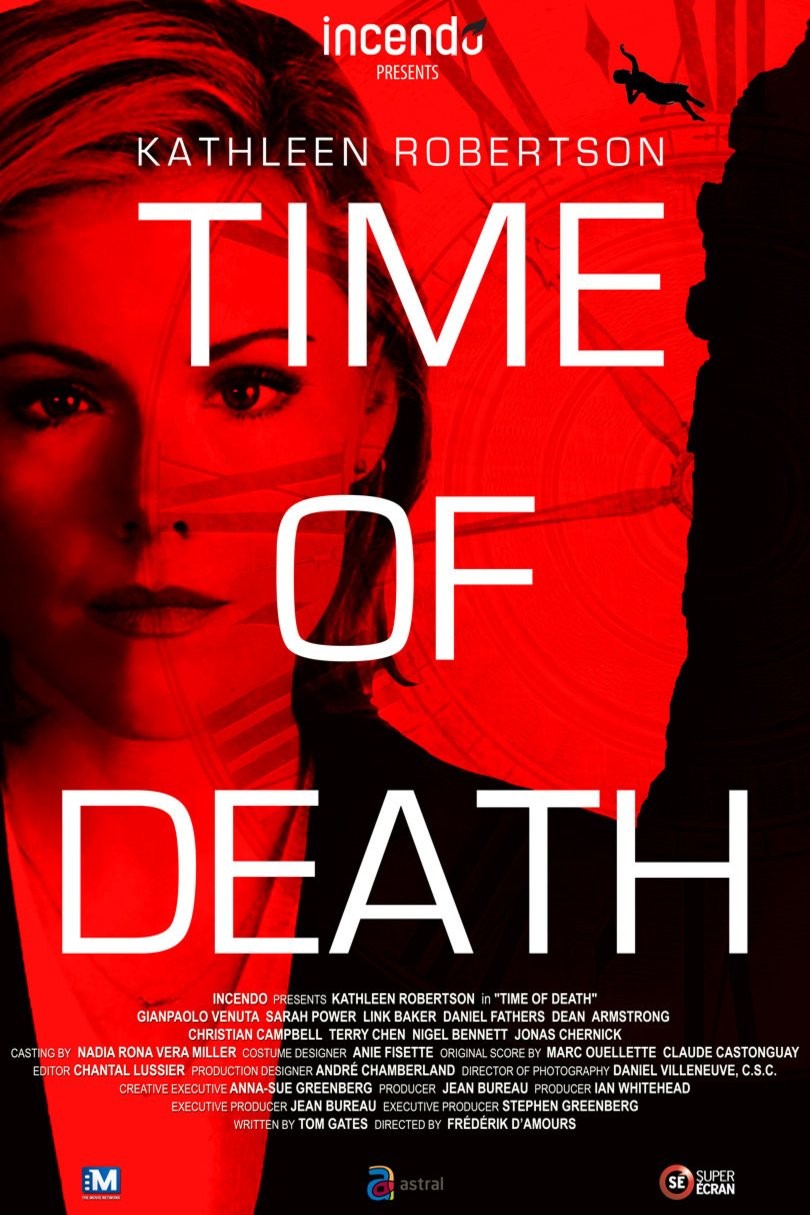
    That’s right, tonight’s Live Movie Friday pick is Time of Death (2013)—a made-for-TV Canadian thriller from Incendo, starring Kathleen Robertson.

    This one has all the hallmarks of a Friday night watch: a string of corporate murders happening at the exact same time—10:44PM — a determined FBI agent trying to crack the pattern, and a lot of melodramatic boardroom backstabbing. Think Law & Order: SVU if it had less grit and more “Montreal shot-for-TV lighting.”

    We’re watching this one because of its bonkers premise. This is either going to be gripping or laugh-out-loud ridiculous. Could be good. Could be bad. We don’t know. But that’s the whole point—we’re running a live reaction thread and finding out together.

    🕘 We’re watching LIVE tonight at 9PM PST / 4AM GMT

    Join the chaos, bring your takes, and get ready for a disco-fueled descent into madness.

    🧵 Live reactions will be happening right here in this thread.

    Yes, here on !movies@piefed.social, so don’t miss out.

    ℹ️ More info:

    IMDb: https://www.imdb.com/title/tt2759976/
    Letterboxd: https://letterboxd.com/film/time-of-death/

    📽️ Watch links:

    YouTube (Free): https://www.youtube.com/watch?v=T16Agky3he4
    Tubi (Free with ads): https://tubitv.com/movies/653727/time-of-death
    Prime Video: https://www.primevideo.com/detail/0R5N2IQ8V21IOJD8LNN9BKJIXZ/

    Let’s see if you can figure out the killer before 10:44PM strikes again.


    Yeah! 😎

    Time of Death is starting in five minutes!

    And it goes without saying that I have not seen this movie yet. It might be great. It might be awful. But either way, I'm updating this thread live as I watch it.


    All right. We're starting. We're starting off with a business man saying that one of the things you learn in business is you can't dwell on the past. Mistakes are inevitably going to be made. And we learn here that a gun is being pointed at him.

    Oh, we got the perpetrator looking at his watch.

    Now businessman is offering him $10M. At right as the watch goes off, he gets shot.

    Fun little monologue here before the businessman meets his demise.


    Now we cut to Kathleen Robertson, playing as Jordan Price, looking all fashionable in her overcoat and scarf with her blonde hair tied back. She's icy, cold, and efficient. And what's this? She's being assigned a new partner who just became a detective last week. She doesn't want to train the new guy. She's all about the business.

    But resigned she wants to look at the body.


    So she's asking about all the details. Finds out the very precise death of 10:44PM—known only because the victim called 911 at that time.

    Jordan is a bit of a harass. Suffers no fools.

    But now the dead man's son walks in to see the body. FBI agent Price interrogates him, checks if he might be the killer. Son swears he is not.

    Now the detective asks for stuff to be done. But then the cop gets all bullying, says she looks more comfortable with numbers than dead bodies. But FBI agent Price ain't having an of it. Doubles down on what she wants done.


    Now FBI agent and her rookie detective are talking about the details. What's this? Some conflict? Some sexual tension?


    Our intrepid partners are now interviewing the businessmen who worked with the murdered businessman—who we find out was a CEO. They're trying to find a motive.

    Now they find out that the company doesn't want to look at something connected to the Department of Defence. She might not have clearance to look into that.

    But FBI agent Price wants to know more, and she's being forthright about that.


    They found out that one of the former employees sold a whole lot of stock before the CEO was murdered. That means motive.

    So they interview that former employee. And they decide to do that right as he's getting a shave at a barbershop.

    They find out that this employee wasn't so happy about DOD work.

    Apparently, he couldn't be the murderer because he was seeing strippers that night.


    So now that they find out the CEO's son didn't like the company's DOD work either. Which makes him a suspect yet again.

    Well, my daughter wants to watch this move now... so I have to pause for a moment while I get her up to speed. Give me a sec...


    So they interview the son and we found out that he's now going to run the company.

    They find out he's going through with the DOD contract because if they don't, the company goes bankrupt.

    Price and her partner (his name is Elliot Larken) prod him to find out more about the company's inner workings, trying to find out who might have motive to murder the CEO.


    In the car, Price and Larkin start gabbing. They try to find out more about each other. Price is offended by the very notion of being social. But then she finds out that Larkin worked on a big case, so she's impressed enough with him to let him buy her a beer.


    They're flirting and the bar, and both of them are trying to seize each other up—find out if they're single or might be into each other.

    You know, Price isn't just cold, she's kind o mean. First she says girls would be into him. Then she says she's a woman, not a girl—so she's not into him.


    God damn. These cops are having public sex in a car. Wouldn't it be shitty if they got arrested?

    But they won't because the movie must go on.

    Larkin asks if the sex is a one time thing. Dude, this movie is for middle-aged wine-swilling moms. Of course it's not a one time thing.


    Larkin briefs his boss on the murder. Finds out he was assigned to this case because his boss hates the FBI. Okay...

    So now they're talking about why the murderer looked at his watch.

    And now they're supposing he did so because he worked on a team.

    More flirting happens.


    So they're briefing the boss on their theory—how the lack of evidence leads them to believe the killer was a professional. And this somehow allows them to conjure up a list of suspects.

    Wait... what kind of voodoo is this?

    Even the boss thinks this is nuts. Because it is.


    Cue a scene where the son hugs his business colleagues, and they're asking how they're going to get out of this mess.

    And now they're saying the FBI and cops are sniffing around. They'll check their phone calls and emails!

    Oh, you think? A murder brought the attention of the police? That's just crazy talk!


    This movie moves very fast.

    They have suspicions on a suspect. So now they're doing surveillance.


    Surveillance is just a chance for these two to flirt, poke and prod each other, get close in the car again.

    So Larkin is like, "We should make out strictly to kill the time..."

    And just as he says this, the CEO's sun falls from an office building onto the car in front of them. HE'S DEAD!

    Serves them right for almost having sex during the surveillance.


    Now that the CEO's son died, Larkin is feeling guilty for flirting during a stakeout.

    Price reminds him that he was a suspect, they didn't even see him as a victim.


    Now they're back to square one. And the boss tells Price it's hard enough to solve one murder, never mind two.

    Larkin finds surveillance. Shows the murder as it happens. The time stamp says 10:44PM.


    Ha! Boss has doubts about 10:44PM. He says the identical time stamps might be coincidence. Terrible cop!

    But this puts a damper on strictly professional theory. They now think it's a serial killer.


    They're working overtime, alone in the office, and now Larkin is offering Price the opportunity to sleep at his house.


    More sex. These two keep trying to not do the deed. Yet they keep at it.

    You know, this could get them fired.


    Well, we find out that the boss sleeps upstairs to Larkin.

    And he's Larkin's dad. WTF.

    He could have heard them having sex. And even if he didn't hear, he knows. Talk about awkward.


    So back to the case. But I feel like the murder mystery is going to be sidetracked by more bow-chicka-wow-wow.

    But these poor partners. They try to focus. Trying to get into details.

    Now Larkin asks Price is she wants to kiss him.


    Back to the disgruntled employee, the one they interviewed at the barbershop. This time, they interview him at a strip joint. Why do they keep interviewing him at strange locales?

    Well, he just lied about where he was during the time of murder. And what's more, he's doing some shady investment shit. So as they try to get him to cooperate, he makes a break for it—runs for it. They make a chase on foot.

    Just as Larkin catches up to him, a car hits him and he dies. Talk about bad luck!


    With the disgruntled employee dead, they wonder if he's the murderer. Probably not—because we know how these stories go.


    Two employees are at the company are freaking out because they think the killer might come after them next. One of them implies he might be next.

    And then the time of 10:44PM is mentioned. Does it mean anything?!


    Well, well, well. Price arrives back at Larkins place. She could have gone home. But she just can't help getting her fill of some Larkin.


    Oh, it's 10:44PM! Next executive at that company dies! Killer is still loose!


    It's morning. Post-coitus. Price tries to establish sexual ground rules. Says that can keep boinking for as long as the investigation goes. But afterwards, they got to stop.

    Wait, Price. You got it all wrong. You're supposed to date after the investigation not while it's going on.


    Now they're at the scene of the next murder.

    Somehow, I don't know how, they suspect the killer is an expert climber who climbed into the building. Wait. Wouldn't there be more surveillance footage of that?


    The partners find out that all businessmen were all college friends. A fourth college friend was an aspect climber...

    Could he be the perpetrator?!

    They ask the last college buddy if he wants protection, and he says no because if he does, the company will go bankrupt.


    Now they're at the college where all the businessmen went to.

    They found out all college buddies when on an extended leave together. This offends the college president gets offended. He says when you donate as much as you do, which their families did, they can do whatever they want.

    But Price finds it suspicious they took off an entire half semester. That's way too unreasonable.

    They prod further. They weren't on a ski trip. There was a girl who died. And they're "ski trip" has something to do with that...


    They find out the girl who died, it wasn't because of an accident.

    So they interview the girl's foster mother to get more details.

    They find out that she was raped. And now the college, the town—everyone—is keeping silent about it because the son's father was a big shot with money.

    There was an investigation, but it was "forgotten".

    Foster mother shares newspaper clippings of when the girl died. And they found out she wore a watch when it happened. The time: 10:44.


    They visit where the girl died. Her name is Sharon, by the way. It was near a cliff with white rapids. They stare at the whole thing.

    Larkin asks if Price is okay. She's getting all teary-eyed but is trying to fight it back.

    So now they're discussing next moves.


    Now they're interviewing the fourth college buddy, the one who doesn't work at the business (remember, he's an expert climber).

    They warn him that he could be the target for murder.

    He's shocked his other buddies are dead. But why would anyone come after him?!

    He also says that the foster mother, they one they previously interviewed, is only in it for the money—can't be trusted.

    So they ask more questions. Did he or any of his buddies have sex with Sharon? No, nobody did—but apparently Sharon liked to have sex. This just makes the cops even more suspicious about why all four took half the semester off. Price stares daggers at him.


    We find out that Price doesn't want to investigate Sharon's murder. She doesn't see how it is related to her current case. She's hear to find out about something to do with the DOD.

    Larkin says she's cold-hearted, no different from the cops who buried Sharon's case.

    This irks her.


    Pensive moment with Price by herself... a moment to tell us that she's not the hard ass she pretends to be.


    Price is off the case. If the murders have nothing to do with the DOD, FBI doesn't want her to work on it.

    But she's going to stick around as a courtesy.

    So Larkin is now on his own. He apologizes for what he said the night previously.

    And now they've decided to do some extracurricular investigating.


    Well, what do we have here! They pop up by Sharon sister! And she's doing some rock climbing!

    Could she be the murderer?!

    She doesn't seem to know anything about the four college buddies. Doesn't care.

    But Larkin notices she has a tattoo that shows she's an Army Ranger.

    Just as Sharon's sister leaves, she thanks the cops for looking into her sister's case.


    Even though Price is off the case, she wants to investigate the sister (her name is Megan). Just as they're discussing with the boss, Price receives a call from Megan.

    Apparently, she saw her sister's murder! All four college buddies raped her sister—and she watched the whole thing! She did nothing to stop it! Didn't even cry out or try to distract them!

    Price asks Megan to come to the station to make a statement. But no—Megan ain't interested.

    She tells Price she's the murderer! And she's going to finish the job! She's got to do two more murderers.


    The two remaining college buddies meet by a lake. They know they're next. They're feeling remorse for the rape. But the police have no evidence.

    But they're getting really antsy because they're being picked off one by one.

    One of them wonders if he can prevent being killed if he turns himself into the police. Other buddy gets angry because if he does that, he'll destroy his career. So he knifes him right by the lake of the shore.

    Man, this guy's really stupid. Whacking his friend ain't going to prevent him from getting whacked.


    Well, as they're investigating that death, Megan calls Price to tell her she did not kill the last college buddy. And for this reason, she has to work faster to kill the last guy.

    So now the cops really, really got to protect him.


    Price confronts the last guy standing. Tells him they know he and his buddies raped Sharon. And that Sharon's sister is coming for him.

    They try to protect him. But he decides, no—his freedom is more important than living.

    How did this guy succeed in business? Business requires at least some foresight.


    The partners are eating together at a driveway. We find out that Price is working this case on her days off. I guess this is personal for him?


    Megan is outside. She's picking off the college buddies guards one by one with a sniper rifle. The cops rush over because shots are heard.


    The partners arrive. They see all the guards tranquilized the guards—which means the last guy is still alive. You see, it's not 10:44PM yet. And she has to kill him right at that precise time.


    Now the hunt is for Megan. Price thinks she knows where she is.

    We now see Megan move the last guy out of her SUV near the cliff where her sister's death happened. She's got a gun and a knife, orders him to walk right over to the cliff.

    This fool asks what she's going to do to him. You idiot, you know.

    Right as she's about to kill the last guy, Price shows up. But then Megan takes him hostage. Says if they take one step closer, she'll kill 'em.

    Price does a whole spiel about how none of this will fix anything. Megan says it's all over. And just as she tries to make for the cliff with the college buddy, Price shoots her in the head.

    Well, the last guy is still alive, at least.


    Price is done. She's heading back to DC. Boss says he appreciates her work.

    Does that mean her romance with Larkin is dead?

    As she walks out of the department, there Larkin is with his puppy dog eyes. They get closer, do a little bit of flintiness. Price tells him she's thinking of leaving the bureau—and she wants to become a detective like Larkin.

    Some more flirting. Now some kissing. Looks like these two lovebirds can't keep their hands off each other.

    And the movie ends.

    —-

    Not a terrible film. Probably a good film if you’re a middle-aged mom looking for a little bit of sex and violence.

    I enjoyed this. Production quality, of course, is TV level. But the idea is neat. The performances were fine.

    There was some ridiculousness. A few moments things were over the top. But at least it entertained.

    I say this is slightly above average.

    —-

    Final thought: I watched this with my 12-year-old daughter. She thought it was really fun. The movie offered her plenty of thrills.

    I think I’ll do a separate review of this one in another thread.

    view more: next ›