



[–] 4 points 5 days ago

Sega doesn't want to preserve the ownership of their ip, they were bought by a gambling company who took on their name and is using sega as a public relations shield.
Their aim is to keep sega in high public esteem.

Meanwhile Nintendos ip is extremely valuable compared to the size of their company, so their aim is to protect ownership way more than making new games or other ongoing business.

International ip law is weird, so letting fanmade games go runs a risk of loosing ip. For Nintendo that is even more dangerous than for other studios whose ip value compared to revenue is not as extreme. While for sega ultimately loosing ip control is basically the point of the investment.

  • source
  • parent
  • context
  •  

    I was looking at the reply to this survey map:
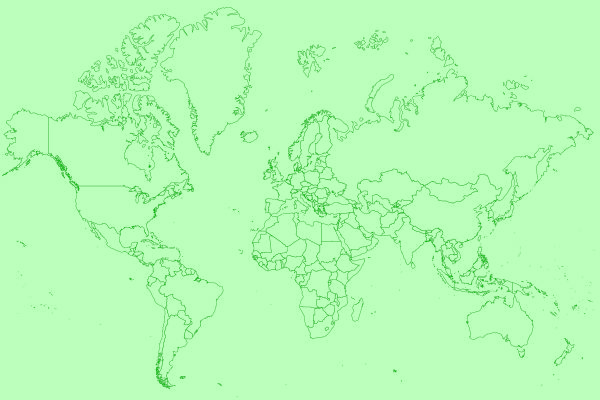
    complainig humans don't live in the ocean. Which lead me to the question of how large of a radius around every person you would have to color, tracing all their movements for their entire life, to color in the entire earth.

    Naturally, this radius would have to be set such that the most remote point across time is just barely covered. So what would that point be, and how far away has every human been from it for all of time?


    I assume this would be somewhere in antarctica, or maybe in the pacific? With a radius of surely not more than a few tens of kilometers, right? Maybe even less?

    I would say let's, since we obviously wanna count ships, also count planes and subs. But let's not count astronauts.


    Some clarifications:

    • This is all on a map, height does not matter. Walking somewhere or flying over it is the same.
    • We are talking absolutely noone has been closer than an absolute distance. If a single person has travelled there, the location is out.
     

    waste heat of 23 atom bombs a day

    That actually makes the data complex a 16 gigawatt thermal load project, the “equivalent of about 23 atom bombs worth of energy dumped into this local environment every single day,” Davies said.

    Those bombs would have about 14kt tnt equivalent each. tnt has about 4.18MJ/kg, so 4.18TJ/kt. 16GW over a day is 1.5PJ, so we have 330 kt per day.

    This comparison will surely be useful to all designers of orion-drive style nuclear combustion power-plants.

    view more: next ›