This documentary was researched and written by Dr Raoul McLaughlin.

Sources for this project - Mallory, J. The Origins of the Irish (2017). Warren, G. Hunter-Gatherer Ireland: Making connections in an Island World (2021). Cooney, G. Death in Irish Prehistory (2023). Woodman, P. Ireland's First Settlers: Time and the Mesolithic (2021). Cummings, V. The Neolithic of Britain and Ireland (2017). Waddell, J. The Prehistoric Archaeology of Ireland (2010).

History Time is written, researched and produced by Pete Kelly.


In the late 1840s, a British naturalist named Henry Walter Bates set out on an 11-year expedition into the Amazon jungle. When he returned to England in 1859, he had a collection of over 14,000 rare and new species of insects, never before discovered by science.

At the time, many other naturalists were doing the same thing. What set him apart was that he also studied and observed their behavior and went in-depth into their relationships and how they interacted with one another. For Bates, this was a way to understand each species' different roles within an ecosystem.

At one point in his expedition, he noticed that the "Ithomiini" butterfly - a slow-flying and extremely abundant species - was hardly ever hunted by predators. "Oh, maybe they taste terrible!" he thought and decided to gather specimens to examine them more closely.

He soon discovered that there was another type of butterfly species living amongst the Ithomiinis that he caught. They were of two different families, yet their body shape, wings, and appearance were nearly identical. This newfound discovery left him puzzled, yet he observed that this was a common occurrence throughout the Amazon Rainforest. What's more, it was not exclusive to butterflies, but hundreds of different insects and animals replicated this behavior.

Of the two families, he found that the Ithomiini was ignored by predators, while the lookalike was regularly targeted - despite it being the faster of the two. Bates concluded that the lookalike had evolved to mimic the Ithomiini to confuse predators, essentially allowing them to hide in plain sight.

This phenomenon is now known as Batesian mimicry, where a weaker or disadvantaged species would mimic the appearance of a stronger species to increase its chances of survival.

Batesian mimicry is a natural and unconscious evolutionary process. If an animal changes itself consciously, then it is no longer Mimicry. It can include appearance, sounds and even behaviors, and there are endless examples across the insect and animal world.

Batesian mimicry is also different from camouflage, where an animal actively hides to blend in with his environment. In Mimicry, species want or mean to be detected, and the goal is to confuse predators. The size of the “model” population is also crucial - when there are more of the models, it is easier for the mimics to imitate.

In a nutshell, Mimicry, as a phenomenon, is an incredibly complex, nuanced, and exciting field of natural science. Over the years, more types of mimicry have been observed and recognized, such as Mullerian mimicry, Defensive mimicry, and even aggressive mimicry - all with their unique criteria.

Mimicry is considered significant proof of Darwin's Theory of Evolution. In fact, he included Batesian mimicry in his then-controversial book. Batesian mimicry allows us to witness first-hand the effects and outcomes of natural selection. It offers a deeper understanding of evolution, which can help us ponder how it applies to our human species.

[–] 12 points 1 week ago (8 children)

If they are targeting the tiny ebook reader niche, they're going to have to do better on features and pricing than the upcoming refresh of the XTEINK devices.

  • source
  • [–] 3 points 3 months ago* (last edited 3 months ago)

    My reading, before...

    • Only Dragonbane and the Year Zero Engine (YZE) had true Open Game Licenses. If you wanted to write a supplement for Symbaroum or Forbidden Lands, you usually had to use the "Free League Workshop" on DriveThruRPG.
    • The official third-party licenses were primarily English-centric. Using official compatibility logos in other languages was a legal grey area.

    Systems/settings Free League externally licenses (ALIEN, Blade Runner, The Walking Dead, etc) are not included.

  • source
  • parent
  • context
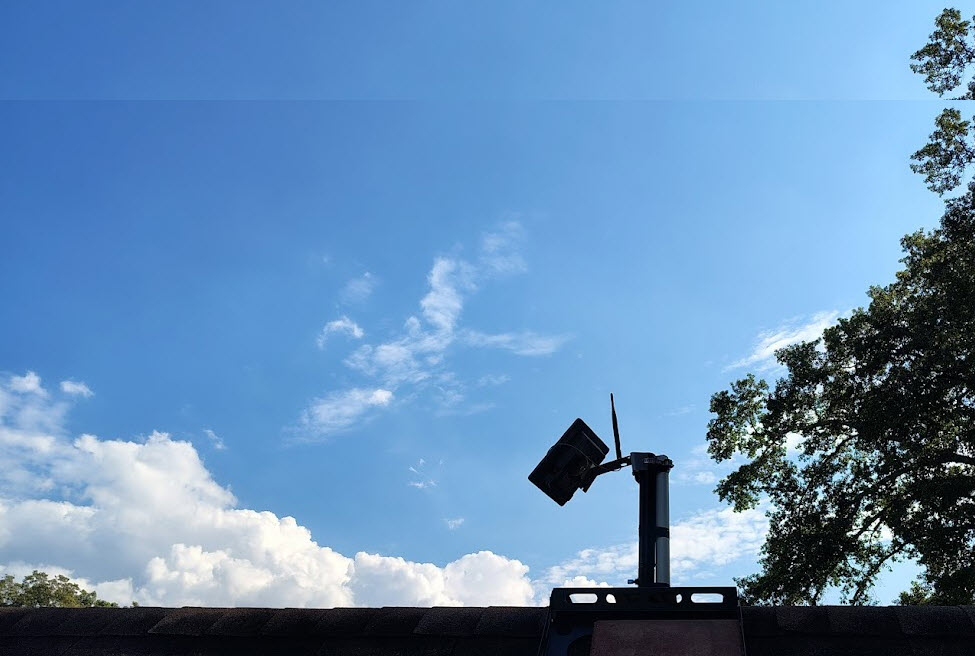
  • To the Roof! (lemmy.world)
     

    I can't put holes in my roof or exterior at my current residence, but a salvaged ridge mount from Starlink seems to be getting the job done. SenseCAP Solar Node P1-Pro no longer has to stare longingly out my office window. A bit janky perhaps, but bonus points for not falling off steep roof while getting it up there!

    [–] 1 point 1 year ago

    Ultimately you still do not own these books, just like with Amazon, because they are locked into a DRM and proprietary reader, so your "purchase" can be rescinded or orphaned at any time...

    • Ebooks from Bookshop.org must be read on either our Apple or Android app, or via a web browser. • Users of Android based e ink devices, that have regular access to the Google Play app store (Boox, Meebook, etc), should be able to download and read from our Android app. • Due to Amazon's and Barnes & Noble’s proprietary digital rights management software (DRM) and publishers' DRM requirements, it’s not currently possible to buy ebooks from Bookshop.org or local bookstores and read them on your Kindle or Nook.

  • source
  •  

    I reside in a nation where driving is done on the right side of the street. I've noticed that, for the most part (unless distracted by their phones, are intentionally flexing, or just being inconsiderate), most folks from a similar background, also seem to tend to walk on the right side of two-way paths, sidewalks, etc, and tend to "dodge" or veer right when encountering oncoming fellow pedestrians.

    Is the reverse the trend for pedestrians in regions where folks drive on the left side of streets (UK, Japan, India, Australia, etc)?


    From the very first settlement in recorded history, early humans knew that to survive in the new age of agriculture, they'd need two things: access to water, and a source of salt. Without salt, our meats and vegetables wouldn't last long enough to help us survive droughts, monsoons, and long periods between harvests. Our bodies wouldn't have the necessary nutrients to live, and the entire experiment in building permanent villages might have failed. Salt tells the story of everything- as it was a foundational component of every culture, ever. And the lengths societies went to in order to procure the stuff...well that gave us innovations ranging from commerce to hydraulics to so much more. In this video we look at the origins of the salt trade. The myths and legends surrounding its discovery, and the incredible stories from the earliest days of history all the way to the 20th century that have followed humanity's long and important love affair with salt.


    Ancient Aliens Debunked is a 3 hour refutation of the theories proposed on the History Channel series Ancient Aliens. It is essentially a point by point critique of the "ancient astronaut theory" which has been proposed by people like Erich von Däniken and Zecharia Sitchin as well as many others.

    More Information: https://www.ancientaliensdebunked.com/


    When we look at the world at the tiniest scales in the subatomic realm, things get weird – very weird. Welcome to the quantum universe, where particles can spin in two directions at once, observing something changes it, and something on one side of the galaxy can instantly affect something on the other, as if the space between them didn’t exist. Buckle up for a wild ride through the discoveries that proved all of this to be true and paved the way for the digital technologies we enjoy today – and the powerful quantum sensors and computers of tomorrow.


    March 1933, within weeks of his inauguration, President Franklin Roosevelt sent legislation to Congress aimed at profiting relief for the one out of every four American workers who were unemployed. He proposed a Civilian Conservation Corps (CCC) to provide jobs in natural resource conservation. Over the next decade, the CCC put more than three million young men to work in the nation's forests, parks, and farms: planting trees, creating flood barriers, fighting fires, and building roads and trails. Corps workers lived in camps under quasi-military discipline and received a wage of $30 per month, $25 of which they were required to send home to their families. This film, by director Robert Stone, interweaves rich archival imagery with the personal accounts of CCC veterans to tell the story of one of the boldest and most popular New Deal experiments, positioning it as a pivotal moment in the emergence of modern environmentalism and national service.


    The Toynbee tiles, also called Toynbee plaques, are messages of unknown origin found embedded in asphalt of streets in about two dozen major cities in the United States and three South American cities. Since the 1980s, several hundred tiles have been discovered.

    More Information: https://en.wikipedia.org/wiki/Toynbee_tiles

    [–] 1 point 1 year ago

    I love those quirky two-dollar bills! As a child, family members would use them gifts, and they would occasionally confuse cashiers (some of whom were certain they were fake).

  • source
  •  

    A particularly low/no drama reenactment, experimental archaeology documentary. Pretty cozy stuff but still very informative look at a bygone era and lifestyle.

    "Edwardian Farm is a British historical documentary TV series in twelve parts. It depicts a group of historians recreating the running of a farm during the Edwardian era. It was made for the BBC by independent production company Lion Television and filmed at Morwellham Quay, an historic port in Devon. The farming team was historian Ruth Goodman and archaeologists Alex Langlands and Peter Ginn."

    More Information: https://en.wikipedia.org/wiki/Edwardian_Farm


    The Bronze Age collapse is perhaps one of the greatest disasters in human history and also one of the least understood. Delve into the theories as to how this ancient apocalypse happened and evidence that supports them.

    More Information: https://en.wikipedia.org/wiki/Late_Bronze_Age_collapse

    First attempt posting here, hope I'm doing this correctly.


    I unironically re-read Mrs. Frisby and the Rats of NIMH the other day for the first and only time since I was a young child. While the movie holds a larger mind-share in my head, unsurprisingly, the book has more nuance and depth. Honestly, it would make a good pre-history for a Mouse Guard like world after the collapse of human civilization (pick your apocalypse).

    view more: next ›