How do you guys get software that is not in your distribution's repositories?
top 50 comments

sorted by: hot top controversial new old
[–] 80 points 2 years ago (12 children)

There is no software that is not in AUR. I use arch, BTW.

  • source
  • hideshow 14 child comments
  • [–] 19 points 2 years ago (2 children)

    My software, QuickDAV, is not in the AUR. It’s open source, and I release it only as an AppImage, because I am lazy.

  • source
  • parent
  • hideshow 3 child comments
  • [–] 22 points 2 years ago (2 children)

    I guess we should have added the word β€œnotable”

    I’m terribly sorry, you left the door wide open ;)

    I’m curious, what makes AppImage a good choice for the lazy developer? Is it easier to create?

  • source
  • parent
  • hideshow 3 child comments
  • [–] 18 points 2 years ago

    Ouch. xD

    It’s super easy to create. And you distribute it on your own, so it’s basically like an installer exe on Windows. In my mind it’s one step above only offering source code.

  • source
  • parent
  • load more comments (1 reply)
  • load more comments (1 reply)
  • load more comments (10 replies)
    [–] 69 points 2 years ago (2 children)

    If you don't compile from source, do you even Linux?

  • source
  • hideshow 4 child comments
  • [–] [S] 38 points 2 years ago (2 children)

    Linux From Scratch user detected

  • source
  • parent
  • hideshow 4 child comments
  • [–] 58 points 2 years ago (4 children)

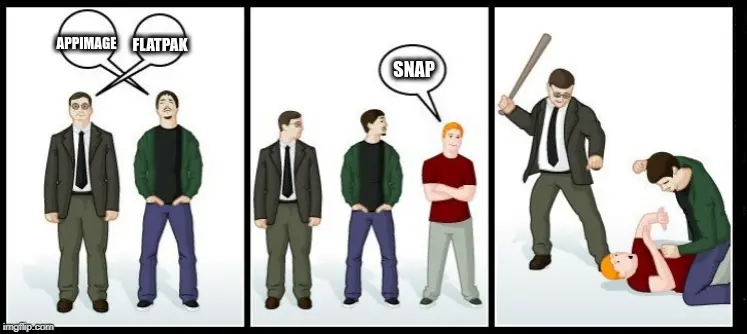
    Native package manager > Native binaries > AppImage > Flatpak.

    Yes, snap isn't even on the scale.

  • source
  • hideshow 7 child comments
  • [–] 58 points 2 years ago (1 child)

    Not a fan of AppImages myself. For an universal format it has surprising amount of issues with different distros, in my experience. And the whole Windows style "go to a website, download the AppImage, if you want to update it, go to the web page again and download it again" is one thing I wanted to get away from. At least they don't come with install wizards, that clicking through menus thing was a pain.

    For one off stuff I run once and never need again, AppImage is alright. But not being built-in with sandboxing, repos, all that stuff, it just seems like a step back.

  • source
  • parent
  • hideshow 2 child comments
  • [–] 24 points 2 years ago (10 children)

    App images are a very Windows way to do things. They bundle everything so they are big

  • source
  • parent
  • hideshow 11 child comments
  • [–] 9 points 2 years ago

    They are windows, but the linux version of dll-hell across distros and distro versions makes windows dll hell look quaint.

    If someone had addressed that better it would be one thing, but binary interoperability is infinitely broken, so app image is actually an improvement.

  • source
  • parent
  • load more comments (9 replies)
  • load more comments (1 reply)
    [–] 56 points 2 years ago* (last edited 2 years ago) (4 children)

    Why not just stick to what we've always been doing?

    1. wget something.tar.gz
    2. tar something.tar.gz
    3. man tar
    4. tar xzf something.tar.gz
    5. cd something
    6. ls -al
    7. ./config.sh
    8. chmod +x config.sh
    9. ./config.sh
    10. make config
    11. Try to figure out where to get some obscure dependency, with the right version number. Discover that the last depency was hosted on the dev's website that the dev self-hosted when it went belly up 5 years ago. Finally find the lib on some weird site with a TLD you could have sworn wasn't even in latin characters.
    12. make config
    13. make
    14. Go for coffee
    15. make install
    16. SU root
    17. make install
  • source
  • hideshow 5 child comments
  • [–] 12 points 2 years ago

    I much prefer our modern package format solutions:

    1. sudo apt install something
    2. open
    3. wtf this is like 6 months old
    4. find a PPA hosted by someone claiming to have packaged the new version
    5. search how to install PPAs
    6. sudo apt <I forgot>
    7. install app finally
    8. wtf it's 2 months old and full of bugs
    9. repo tells me to report to original developer
    10. report bugs
    11. mfw original dev breaks my kneecaps for reporting a bug in out of date versions packed with weird dependency constraints they can't recreate
  • source
  • parent
  • load more comments (3 replies)
    [–] 46 points 2 years ago (10 children)

    I’m currently on a atomic distro, so how I get my software from favorite to least favorite is this:

    1. Flatpak
    2. Appimage
    3. Fedora distrobox
    4. rpm-ostree
  • source
  • hideshow 10 child comments
  • load more comments (10 replies)
    [–] 31 points 2 years ago (1 child)

    Native repos > AUR > compile from source > Flatpak

  • source
  • hideshow 2 child comments
  • [–] 13 points 2 years ago

    Mine is

    AppImage > Native repos > AUR > Manually compiling from source > Finding an alternative

    I don't like installing software that doesn't need to be installed, thus I like AppImage. Pretty portable. That also applies to compiling from source. Yes, my home directory is a mess.

  • source
  • parent
  • [–] 21 points 2 years ago (4 children)
    1. Compile from source
    2. Find alternative
    3. Deploy in VM/Docker

    If I wanted snap, flatpak or appimages, I would use windows. Shared dependencies or death.

  • source
  • hideshow 5 child comments
  • load more comments (3 replies)
    [–] 19 points 2 years ago (7 children)
    load more comments (7 replies)
    [–] 18 points 2 years ago (1 child)

    Appimages are crap too, but at least there is progress with AppMan, repos and that sandboxing solution.

    Snaps are only sandboxed with Apparmor and snapd only allows a single repo (which contained malware multiple times) so get the hell off my lawn XD

  • source
  • hideshow 2 child comments
  • [–] 16 points 2 years ago* (last edited 2 years ago) (6 children)

    I hate fucking snap. It might be enough to make me switch distros if Ubuntu keeps up with it (which I am sure they intend to).

    The continual "you have new snaps" or whatever it was message every time I'm just trying to have a web browser open made me eventually figure out how to install firefox for real on all of my computers.

    EDIT: I think you may have convinced me to try out Debian on my next OS installation.

  • source
  • hideshow 7 child comments
  • load more comments (5 replies)
    [–] 15 points 2 years ago (1 child)
  • [–] 14 points 2 years ago* (last edited 2 years ago) (2 children)

    AUR. If it doesn't exist on AUR (very unlikely, but happens sometimes), I make a package for it.

    On non-arch distros, I often use LURE.

  • source
  • hideshow 2 child comments
  • load more comments (2 replies)
    [–] 14 points 2 years ago (1 child)

    Download the sources and build it, like Kernighan & Richie intended.

  • source
  • hideshow 1 child comment
  • load more comments (1 reply)
    [–] 13 points 2 years ago

    as it should be, nobody likes proprietary vendor-locked formats that get shoved down your throat

  • source
  • [+] 12 points 2 years ago* (last edited 1 year ago)
    [–] 12 points 2 years ago (2 children)

    Wow a reference to those Mac Vs PC ads from like 15 years ago

  • source
  • hideshow 2 child comments
  • load more comments (2 replies)
    [–] 11 points 2 years ago (16 children)

    Linux noob here, can someone ELI5 why snaps are bad? And how does .deb works?

  • source
  • hideshow 18 child comments
  • [–] 20 points 2 years ago (4 children)

    Snaps are a standard for apps that Ubuntu's parent company, Canonical, has been trying to push for years.

    The issue that most people have with them, is that Canonical controls the servers, which are closed source. Meaning that only they can distribute Snap software, which many Linux users feel violates the spirit & intention of the wider free and open source community.

    Appimages and Flatpaks are fully open source standards, anybody can package their software in those ways and distribute them however they want.

    .deb files are software packaged for the Debian distribution, and frequently also work with other distros that are based on Debian, like Linux Mint.

  • source
  • parent
  • hideshow 4 child comments
  • load more comments (4 replies)
  • [–] 10 points 2 years ago

    The primary thing I hate about them is that every snap package appears to your system as a separate mounted filesystem. So if you look in your file explorer, you can potentially see dozens of phantom drives clogging up your sidebar.

  • source
  • parent
  • load more comments (14 replies)
    [–] 11 points 2 years ago (1 child)

    I try my hand at packaging it for my distro.

  • source
  • hideshow 1 child comment
  • load more comments (1 reply)
    [+] 9 points 2 years ago
    [–] 8 points 2 years ago (1 child)
  • load more comments
    view more: next β€Ί