top 50 comments

sorted by: hot top controversial new old
[–] 173 points 3 years ago (10 children)

Inaccurate meme - the white and red RCAs in composite typically don't actually carry the left and right channels - usually, the white one is L+R, meaning both the left and right channels combined into one, and the red one is L-R, the difference between the right and left channels.

This is done so that a mono television, which will only have a yellow and white port, will still be able to hear both audio channels, as opposed to having to completely miss out on one of them

  • source
  • hideshow 14 child comments
  • [–] 21 points 3 years ago (1 child)

    That makes so much sense! I never understood it, and it became irrelevant before I worked it out.

  • source
  • parent
  • hideshow 2 child comments
  • [–] 13 points 3 years ago (1 child)

    Do you have a source for this? AFAICT this is untrue. Mono audio using just the white connector exists, but this depends on configuration and does not make the red connector a difference signal.

  • source
  • parent
  • hideshow 2 child comments
  • [–] 11 points 3 years ago

    The video cable does a similar trick with how it supports color. This is why S-Video was superior to composite video until component came along. S-Video split the intensity and color into two signals and then component split the color further into a blue difference and a red difference. If you only wanted black and white, you didn't need to use the color signals and the image would degrade to a monochrome representation.

    The composite video, with only one video signal wire, was similar to what was received over the antenna, with the broadcast signal separated from the carrier signal and the audio sub bands removed. It was the video signal with the color signal still combined. The progression from Antenna -> Composite -> S-Video -> Component -> DVI-I -> DVI-D -> HDMI -> Display Port has been an interesting one. The changes in the digital realm have been less about the image quality, the digital signal can either be read or not, and more about the bandwidth and how much data can be sent, aka resolution and framerate. Those first four transitions in particular had significant impact on the image quality.

  • source
  • parent
  • load more comments (6 replies)
    [–] 85 points 3 years ago (4 children)

    Transcription:
    Audio Right + Composite Video
    Composite Video
    Audio Right + Audio Left

  • source
  • hideshow 6 child comments
  • load more comments (2 replies)
    [–] 45 points 3 years ago (7 children)

    Pretty sure Van Gogh wasn't deaf in that ear though.

  • source
  • hideshow 8 child comments
  • [–] 19 points 3 years ago (1 child)

    Things probably sounded weird there though. Lots of whooshing.

  • source
  • parent
  • hideshow 2 child comments
  • load more comments (6 replies)
    [–] 38 points 3 years ago

    gamerz like me:

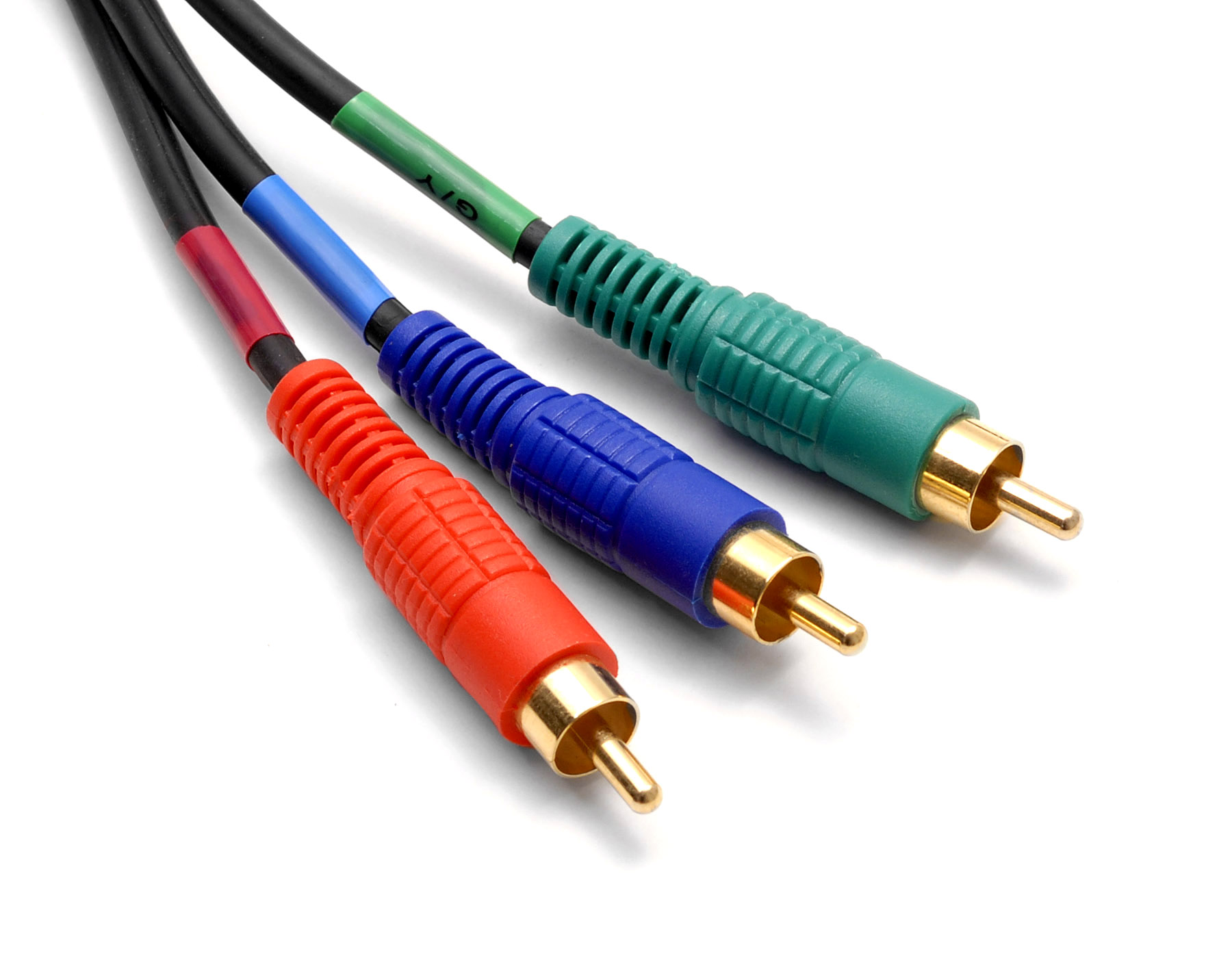
    Red, Blue and Green Component cables

  • source
  • [–] 37 points 3 years ago (1 child)

    laughs in european

    I present to you: the Scart.

    Our gaming consoles came with it.

    We were clueless the first time we hooked up our N64 at gran-gran, since the old TV did not have a Scart connector, but we figured out that the Scart’s colored cables go in there.

  • source
  • hideshow 2 child comments
  • [–] 12 points 3 years ago (1 child)

    Scart was amazing. RGB, composite, component, audio. All in one cable. Granted that cable and connector were enormous, but one cable nonetheless.

  • source
  • parent
  • hideshow 2 child comments
  • [–] 14 points 3 years ago (1 child)

    SCART was terrible.

    Theoretically it had all that in one cable, in practice it never did. You’d usually have 3-4 SCART ports on a TV, but not all ports accepted our output the same signals. There was no way to tell from the outside what the output or input from a SCART port so you either had to try different port combinations or look it up in the manual (if you had one). Most TV’s had one port that accepted s-video, on that accepted RGB and they usually accepted composite on all ports.

    Worse, not all cables had all 21 connections. If you were lucky you could tell because not all pins on the connector would be there (but this wasn’t necessary the case).

    Usually there was also one port on a TV that output the video from the tuner. This was used for analog pay TV decoders. You would hook it up to that SCART port and it would get the scrambled video from the TV and return the descrambled video over the same port.

    Also, due to the size and design of the connector it was almost impossible to insert it blindly. Inserting one into the back of one of those enormous CRT television was always a challenge.

  • source
  • parent
  • hideshow 1 child comment
  • load more comments (1 reply)
  • [–] 35 points 3 years ago

    This is actually a pretty helpful diagram for when I inevitably forget which color does what

  • source
  • [–] 28 points 3 years ago (1 child)

    Not even the SCART kids get it.

  • source
  • hideshow 2 child comments
  • [–] 6 points 3 years ago (3 children)
  • [–] 22 points 3 years ago* (last edited 3 years ago) (2 children)

    VGA was so much better.

    The composite video output commonly seen on 1980s microcomputers couldn't display high-resolution text without severe distortion making the text unreadable. This could be seen on the IBM PCjr, for example, where the digital RGB display it came with could display 80×25 text mode just fine, but if you connected a composite video display (i.e. a TV) instead, 80×25 text was a blurry, illegible mess. The digital video output was severely limited in color depth, however; it could display only a fixed palette of 16 colors, whereas the distortion in the composite video could be used to create many more colors, albeit at very low resolution.

    Then along came the VGA video signal format. This was a bit of a peculiarity: analog RGB video. Unlike digital RGB of the time, it was not limited in color depth, and could represent an image with 24-bit color, no problem. Unlike composite video, it had separate signal lines for each primary color, so any color within the gamut was equally representable, and it had enough bandwidth on each of those lines to cleanly transmit a 640×480 image at 60Hz with pretty much perfect fidelity.

    However, someone at IBM was apparently a bit of a perfectionist, as a VGA cable is capable of carrying an image of up to 2048×1536 resolution at 85Hz, or at lower resolutions, refresh rates of 100Hz or more, all with 24-bit color depth—far beyond what the original VGA graphics chips and associated IBM 85xx-series displays could handle.

    Also, the VGA cable system bundled every signal line into a single cable and connector, so no more figuring out which cable plugs in where, and it being so future-proof meant that, for pretty much the entire '90s, you could buy any old computer display and plug it into any old computer and it would just work.

    Pretty impressive for an analog video signal/cable/connector designed in 1987.
  • source
  • hideshow 2 child comments
  • load more comments (2 replies)
    [–] 19 points 3 years ago
    [–] 16 points 3 years ago

    I remember Christmas day getting a ps1 pulling out the cables and realizing that my tv didn't have the right ports and had to wait a couple of days to play it since the stores where closed and I couldn't buy one of those cables that connected to where the cable tv goes . Then getting stuck at the first section of tomb raider 2 for the next couple of days ...

  • source
  • [+] 14 points 3 years ago (2 children)
  • [–] 39 points 3 years ago* (9 children)

    Composite cables.

    Red is Right Audio

    White is Left Audio

    Yellow is Video.

    Vincent van Gogh cut off his left ear but has his sight.

    Mozart lost his ability to hear but has his sight.

    Ray Charles is blind but unable to see.

  • source
  • parent
  • hideshow 13 child comments
  • [–] 14 points 3 years ago (1 child)

    Pretty sure that's Stevie Wonder lol

  • source
  • parent
  • hideshow 2 child comments
  • load more comments (5 replies)
  • [–] 13 points 3 years ago (4 children)

    This is RCA. Wasn’t composite early HD with RBG-RW?

  • source
  • hideshow 5 child comments
  • load more comments (3 replies)
    [–] 11 points 3 years ago (2 children)

    Channel 03 gang represent!

  • source
  • hideshow 2 child comments
  • load more comments (2 replies)
    [–] 6 points 3 years ago (1 child)
  • [–] 6 points 3 years ago

    Panel 4: Hellen Keller / Empty Square

  • source
  • load more comments
    view more: next ›