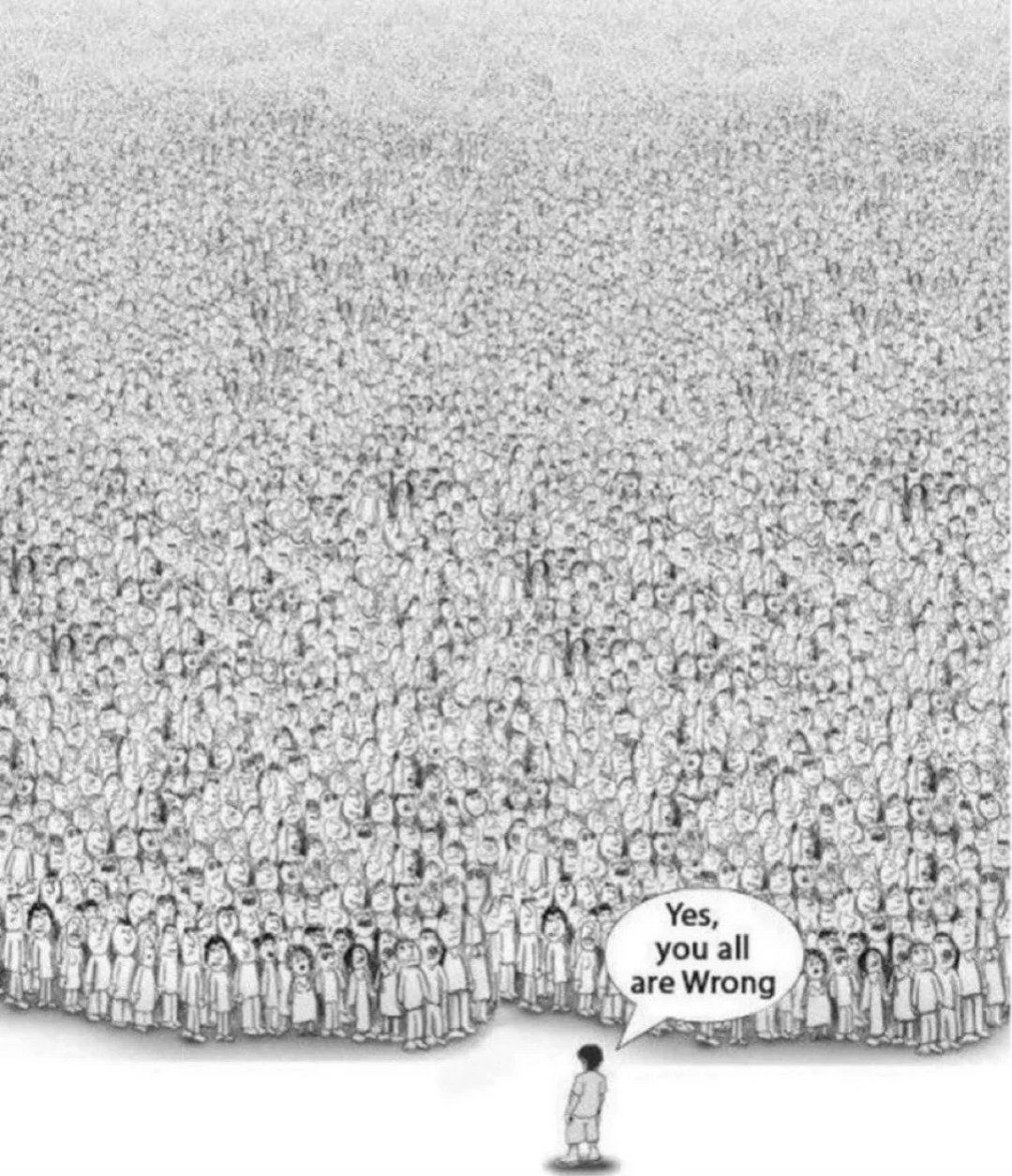
You're not really arguing against the whole crowd there, a lot of people (wrongly) hold the same opinion. The problem is thinking of the door swap as an independent event when it's not; the result is directly related to the original choice of door. If we label the doors A, B, and C and put the prize behind door A, here's the possible options:
Initial Choice A
- Stick: win
- Swap: lose

Initial Choice B:
- Stick: lose
- Swap: win

Initial Choice C:
- Stick: lose
- Swap: win
Two out of three times swapping wins.
Edit: I see you added a table to your comment, but you're miscounting pretty badly there. You're giving double weight to initial choice being correct.
It is technically true that when you pick A the presenter can open either B or C, but then you need to account for that in your odds; it's 50% either way so the win/loss rate is halved. In other words:
Initial Choice A - 33%
- Presenter opens B - 50%
   - Stick: win (16.5%)
   - Swap: lose (16.5%)
- Presenter opens C - 50%
   - Stick: win (16.5%)
   - Swap: lose (16.5%)

Initial Choice B - 33%
- Presenter opens C - 100%
   - Stick: lose (33%)
   - Swap: win (33%)

Initial Choice C - 33%
- Presenter opens B - 100%
   - Stick: lose (33%)
   - Swap: win (33%)
As shown, including which door the presenter opens does not affect the odds. When sticking, you win (16.5% + 16.5% = 33%) and lose (33% + 33% = 66%), when swapping you win (33% + 33% = 66%) and lose (16.5% + 16.5% = 33%).