you are viewing a single comment's thread
view the rest of the comments
[–] 33 points 2 years ago (4 children)

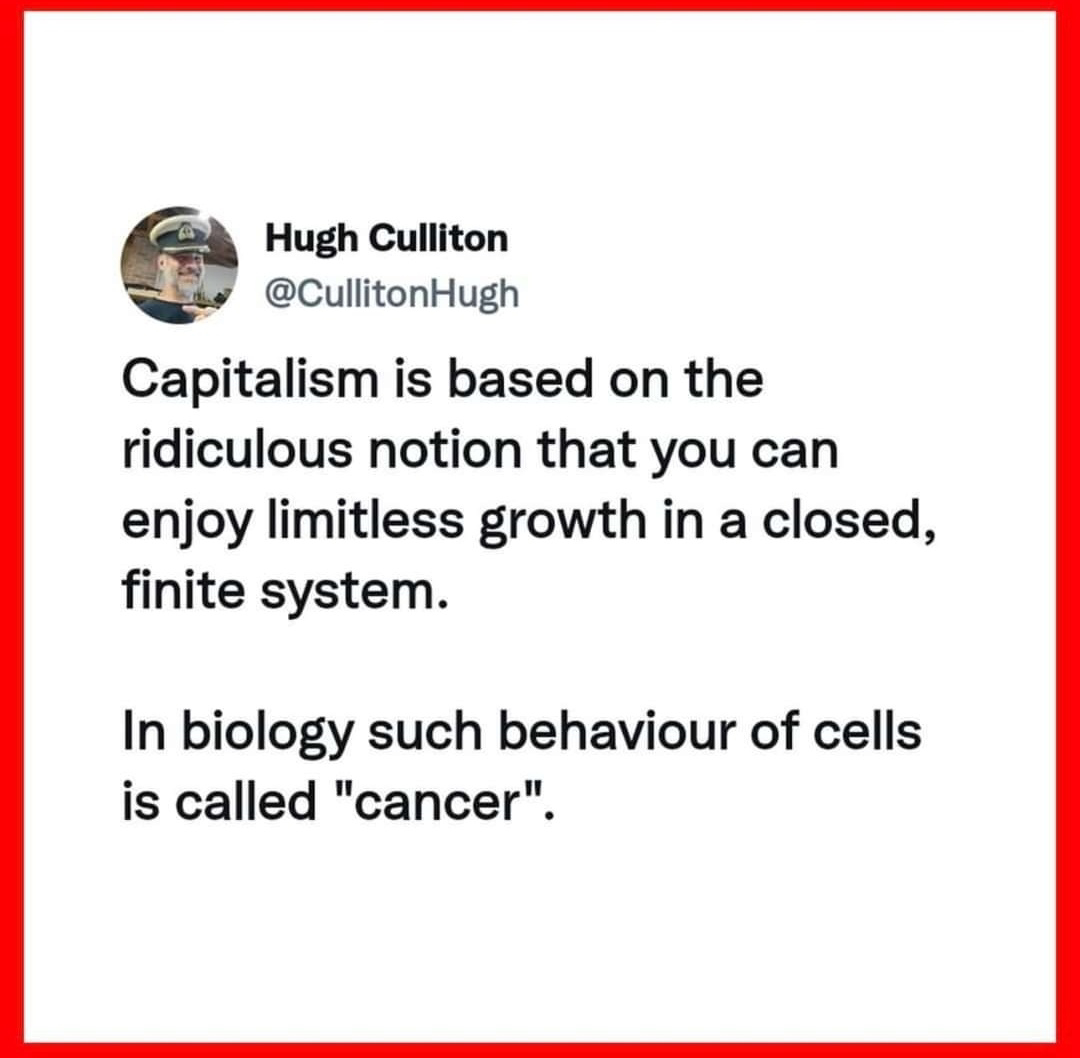
The very nature of capitalism facilitates concentrations of power, which will utilize that power to accumulate even more in any conceivable way. The system is fundamentally flawed and needs to be replaced if we care at all for basic human rights and a future for this species.

  • source
  • parent
  • hideshow 8 child comments
  • [–] 16 points 2 years ago (3 children)

    What is your proposed alternative? I struggle to think of any system that doesn’t inevitably result in concentrations of power

  • source
  • parent
  • hideshow 6 child comments
  • [–] 15 points 2 years ago (3 children)

    Social Democracy. Commerce is key to strong economies, not capitalistic wealth hoarding.

  • source
  • parent
  • hideshow 6 child comments
  • [–] 1 point 2 years ago (2 children)

    Concentrations of power is made from the greed of people. Honestly, I beliefe that any sufficiently large society will eventually fall into capitalism, and the other way around, capitalism encourages border-less states, making effectively bigger communities.

    However, with the current economic trend of de-globalization, things may eventually change.

  • source
  • parent
  • hideshow 4 child comments
  • [–] 5 points 2 years ago (2 children)

    Trend of de-globalization? If anything things are more global then ever…

  • source
  • parent
  • hideshow 4 child comments
  • [–] 1 point 2 years ago (1 child)

    I'd agree, but I think public sentiment for globalization is souring. Right wing populists have been gaining in elections the last 10 years because of this, running largely anti-immigration and economically protectionist. I think they're predicting a future reduction in globalization based on this.

  • source
  • parent
  • hideshow 2 child comments
  • [+] -7 points 2 years ago (2 children)

    The very nature of capitalism facilitates concentrations of power

    No. Capitalism is one thing and one thing only: the private ownership of the means of production. The very nature of private ownership, means private citizens have the freedom to own what's theirs, and trade it with whoever. The nature of capitalism, meaning its logical end state, is a free market in the truest sense. This is the opposite of concentrating power, because the means of power are completely disunited. In less favorable terms, the logical end state of capitalism is anarchy or chaos

    Socialism is the common/public/collective ownership of the means of production. Holding the means of power in a collective is another way of saying it's being concentrated. The logical end of socialism is the concentration of everything.

    Of course, I don't think we need to take either extreme too seriously. They both have faults, clearly, and they both devolve into something that more resembles the other with time. Capitalism adopts regulations or develop a state to concentrate their power against and enemy. Socialism reduces state power when civilians want more freedoms.

    Point is, your characterizing of Capitalism seems misinformed, and it's incredibly silly to think a fundamental replacement of our current system is in order, as if there's some perfect ideology we can obviously replace it with

  • source
  • parent
  • hideshow 4 child comments
  • [–] 11 points 2 years ago (1 child)

    the private ownership of the means of production

    You recognize how that itself is a concentration of power, right

  • source
  • parent
  • hideshow 2 child comments
  • [+] -6 points 2 years ago (1 child)

    No, disunited private actors are not a concentration of power

  • source
  • parent
  • hideshow 2 child comments
  • [–] 12 points 2 years ago (1 child)

    If you own the source of wealth, you can buy more in a positive feedback loop, thus concentrating wealth and therefore power. Them being private actors means they are accountable to nobody.

  • source
  • parent
  • hideshow 2 child comments
  • [–] 3 points 2 years ago

    I feel like you are both arguing different things. The simple fact of ownership isn't the concentration of power, it's the fact that we don't put limits on that ownership that causes concentration of power. People always argue for or against systems by taking those systems to their absolutes instead of arguing how they should be in practice. If we put a high tax on anyone with a high net worth, high yearly earnings, high estate value, etc., and also take anti-trust laws seriously, then we can largely solve much of that and still operate under capitalism. The problem is more how we are currently operating under capitalism more than capitalism itself, imo.

  • source
  • parent