https://piefed.social/post/2215171/comment/12141440#comment_12141626

Many late-coming technologies are issues of concept. Slow-sand filters are incredibly simple, for example, but require an understanding that did not arise until the 19th century (some possible examples in Mesoamerica excepted). Gliders are not actually particularly difficult to acquire the materials or tools to make, especially in cultures that use kites, but require, again, an understanding of the principles involved to provide controlled flight (with gliders requiring precise balance of lift and drag, whereas kites primarily need only light weight and wind stability). Fire pistons are conceptually advanced and were not discovered in Europe until long after they were in Southeast Asia, despite some Southeast Asian cultures which produced and used fire pistons being literal stone-age cultures, in terms of available material tools.

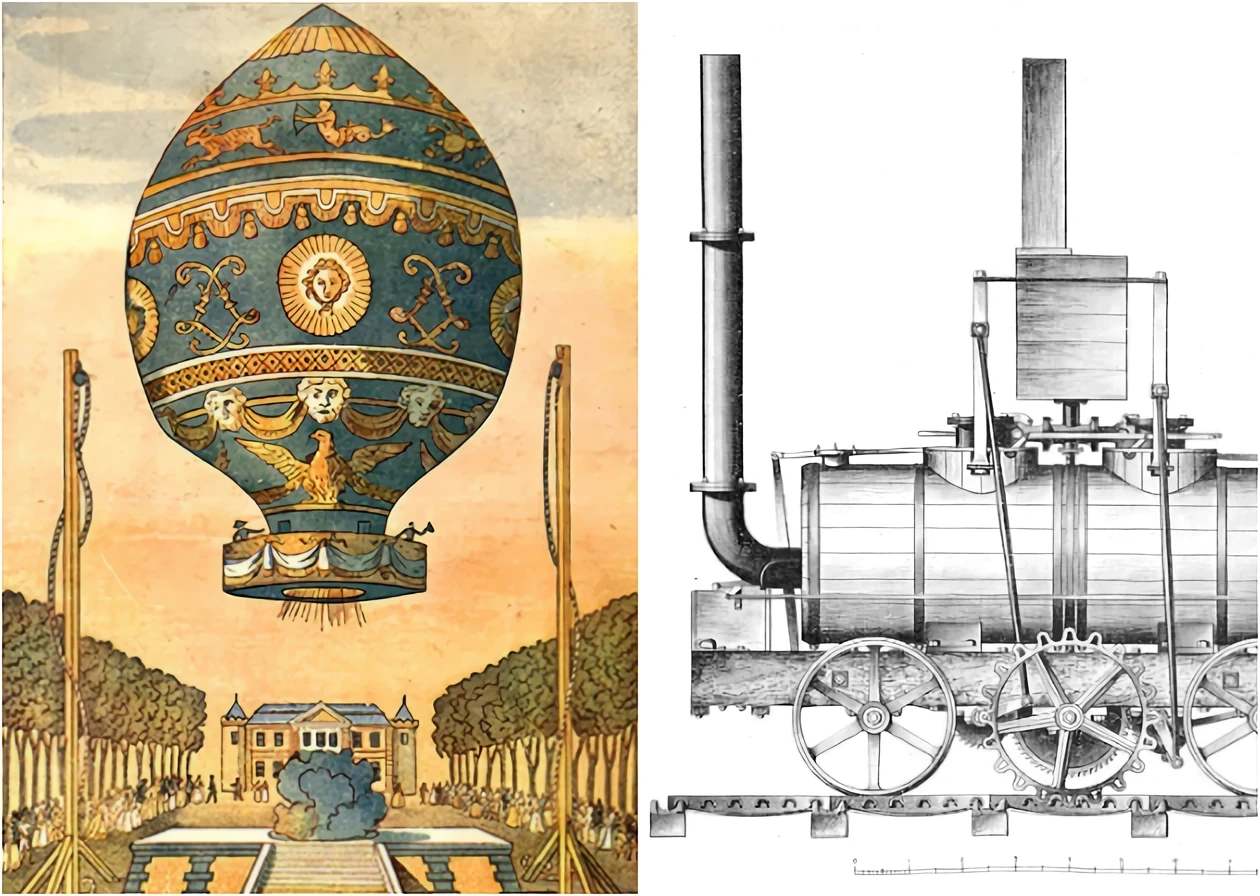
Hot-air balloons, I would imagine, follow the same principle. If you lack the concepts behind the invention, the only way to discover it is by accident, which is generally unlikely. It’s why so much material development is concentrated in the modern and early modern period - we started to piece together how the world, on a fundamental level, works, beyond pure trial-and-error.

Also, hot-air balloons before plastics were often made of silk (and rubber), since most other materials are either too heavy (at least for practical purposes) or too thermally sensitive, and that’s an expensive experiment to be undertaking if you haven’t the first clue how it works.
you are viewing a single comment's thread
view the rest of the comments
[–] 20 points 1 week ago (2 children)

Similarly, the De Havilland Mosquito was made mostly out of wood in part because of material shortages, but also in part because it was realized that in the UK's total war situation, woodworkers, including furniture makers, were an undertapped labor source.

  • source
  • parent
  • hideshow 4 child comments
  • [–] 14 points 1 week ago* (1 child)

    Wood is also the historic material of choice for aircraft, before aluminum became the mainstay, because of its strength to weight ratio. In the era of biplanes which were basically wood frames covered with fabric and held together with string, the compressive strength of the framing members mattered.

    Wood fell out of fashion from aviation when airplanes started to build around a fuselage, and while wood is strong for its weight, you cannot build a thin-walled wood fuselage and expect it to work, especially if pressurized. But you can with aluminum.

    As a side note, we've actually had this very similar discussion on materials available to the Roman Empire lol: https://sh.itjust.works/comment/20986879

    If the Empire had aluminum, my goodness the world would look very different.

  • source
  • parent
  • hideshow 2 child comments
  • [–] 1 point 1 week ago*

    If the Empire had aluminum, my goodness the world would look very different.

    I'm not so sure... What do you think they would do with it?

    As for almost all weapons, iron is better than aluminum. It's heavier, but much stronger and holds a sharp edge better. Maybe they'd use aluminum in armor? When used in armor, being lightweight might be worth the cost of being a little less strong. And if you just make it thicker, you can have armor that's both lighter and stronger than iron armor. (And best of all would be composite armor that's mostly made of aluminum but has a very thin sheet of iron on the top layer for better piercing resistance.)

    Industrially...? I also don't see what they'd get much use out of aluminum in. Unless it's in an application where weight reduction is critical, iron would be a better choice than aluminum. And without powered vehicles, especially without flight ... what application do they have for weight reduction? Maybe they could use it in chariots and wagons and the like ... but I can't see slightly lighter chariots decisively changing the course of history.

  • source
  • parent