[–] [S] 1 point 17 hours ago

This one is about horses, isn't it?
In this fantasy, it's like the dude just goes impossibly from mount-to-mount. Nobody ever really does that shizzle, but who knows?

@PugJesus@piefed.social

  • source
  • [–] 1 point 1 day ago (1 child)

    Talkin' about the TREND, moreso.

    I mean, I'm fascinated with G doing G-things, but he relegated so much of his uncle's stuff to the scrap-heap, occasionally of use when G thought it quaint or convenient. Let's not get it twisted, FP.

  • source
  • parent
  • context
  •  

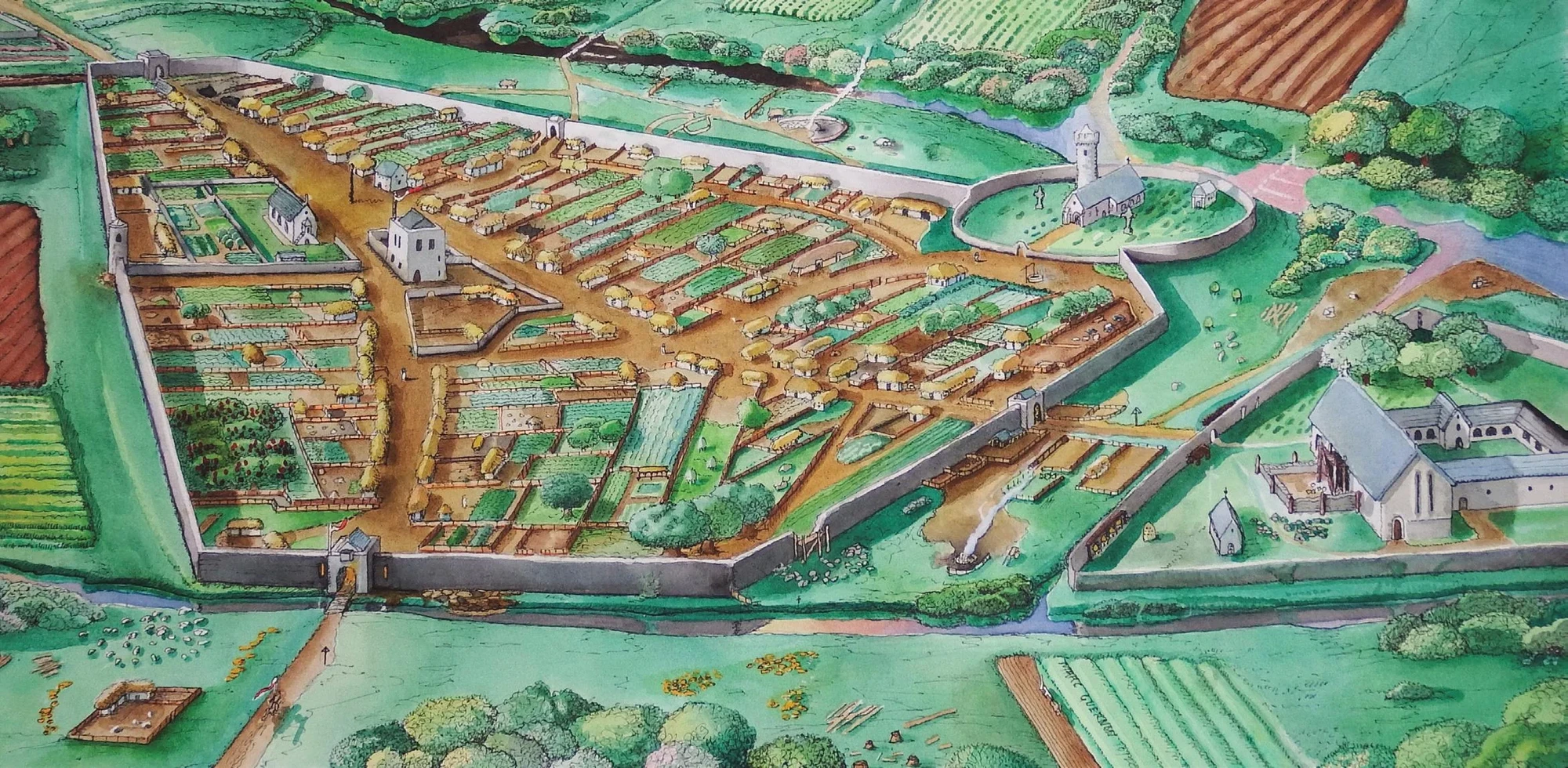
    Granted, this is just an info-booklet for kids, but I found it surprisingly insightful for the likes of dumbasses like me. 14 pages: (swipe left-right / key left-right to navigate)

    https://www.abartaheritage.ie/discover-the-walled-towns-of-ireland-workbook-for-primary-school-children-2/


    https://www.bedetheque.com/serie-1765-BD-Mercenaire.html

    We used to have a good number of posts here devoted to this series, but all they seem to have gotten lost in the instance-move. Bummer.

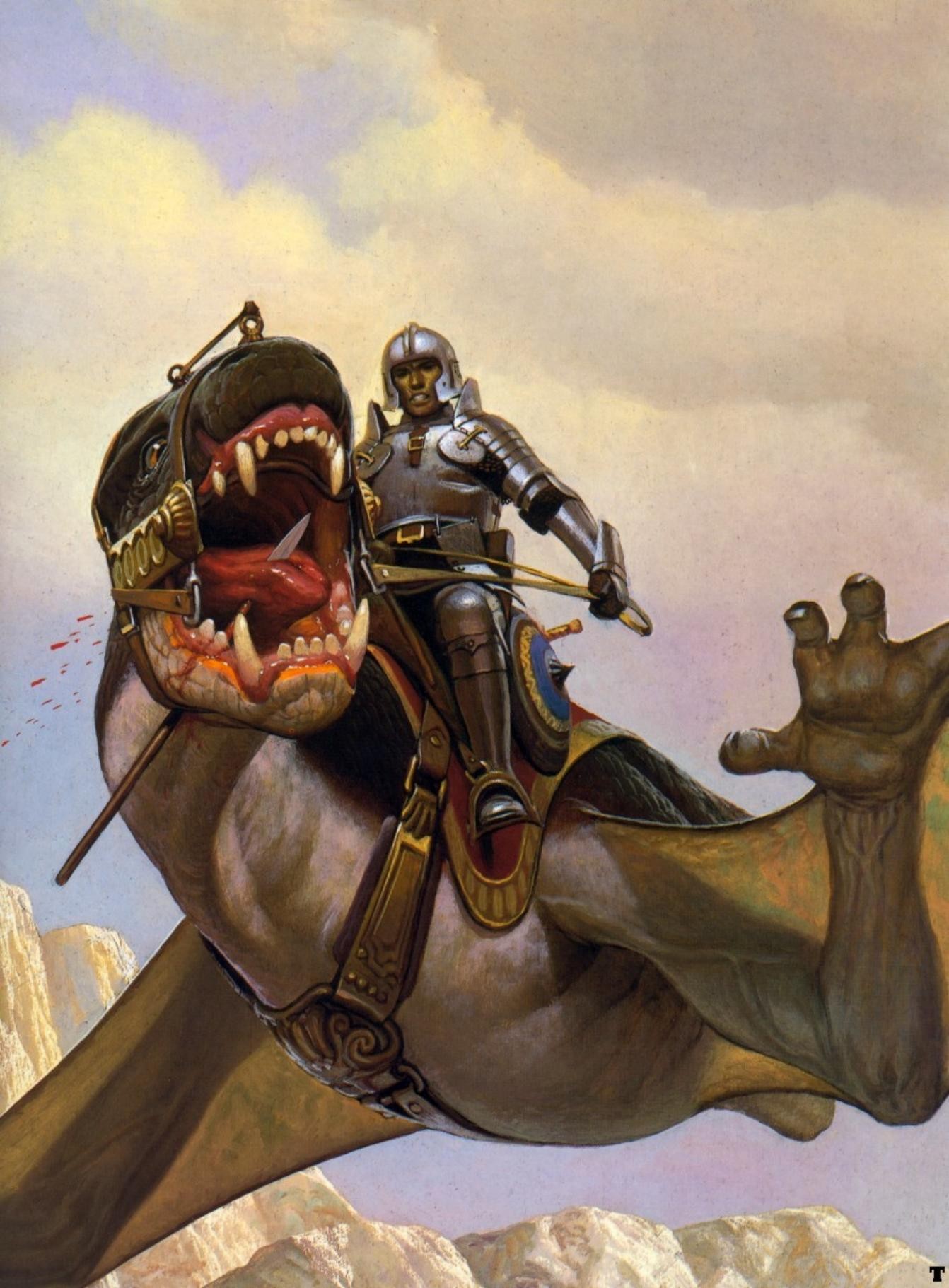
    I guess if you want a quick, capsule review-- The Mercenary is something of a swords & sorcery series with solid plots and gorgeous, painted artwork constituting the pages. Something between the Conan and John Carter of Mars genre-franchises, let's say.


    https://www.lambiek.net/artists/image/s/segrelles_v/segrelles2.jpg

    I'd say the work is a little bit dated at this point, and scenes can often be on the stiff side, without much... insight in to real human dialogue, but then that's true of a lot of stuff, so. Whatever the case, I do find it a cool fantasy series with unforgettable art, always worth a pleasant read from time to time.


    https://www.lambiek.net/artists/image/s/segrelles_v/segrelles_sheriffpat.jpg
    El Sheriff Pat

    One thing I learned just now is that artist / writer / creator Vincent Segrelles also worked in completely different styles at other times! (as above) Altho in truth, something which I tend to find true for most great artists.


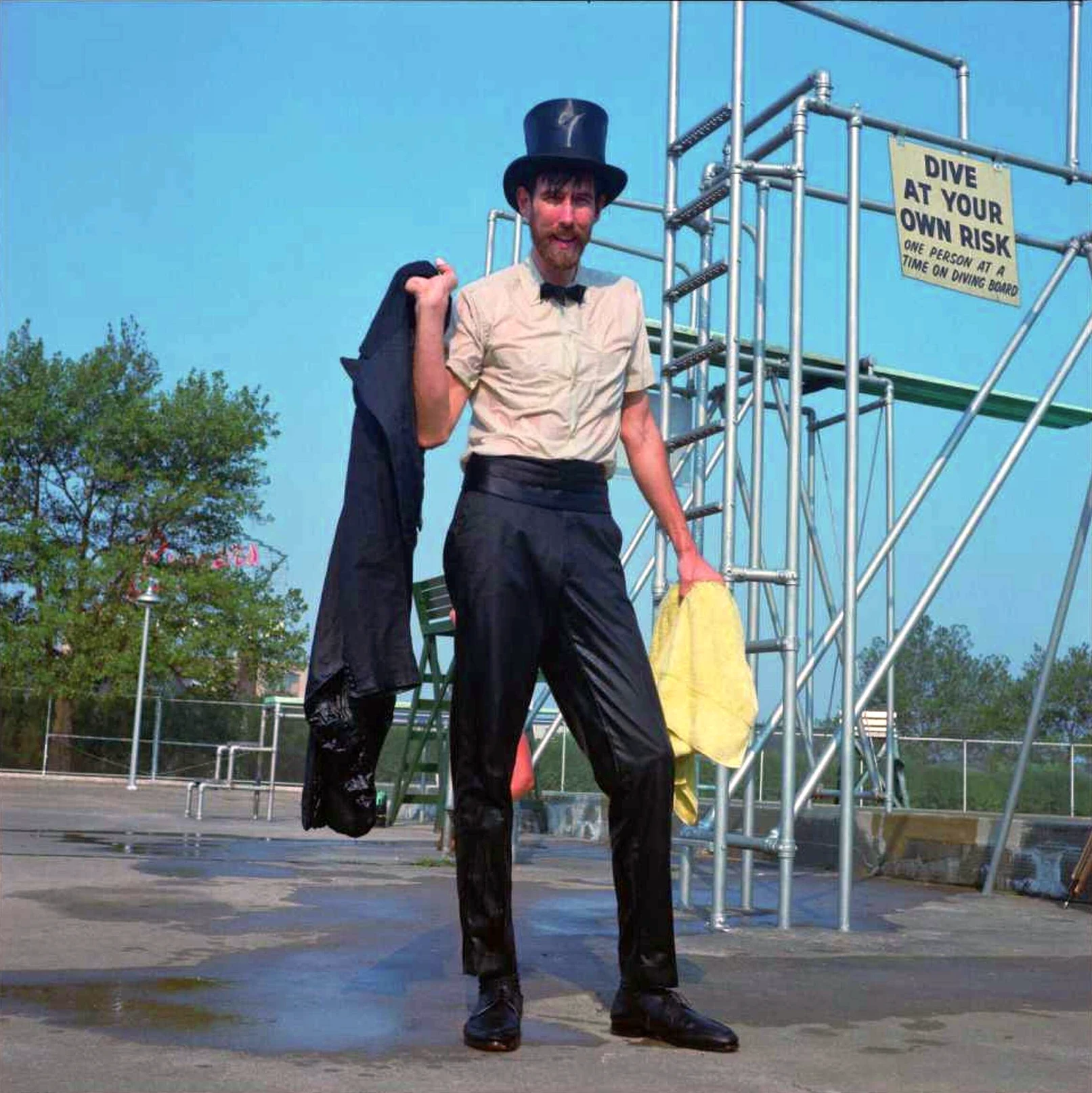
    Henson of course was the creator of Sesame Street, The Muppets, Dark Crystal, Labyrinth, and a load of other well-known works, before his unfortunate, early passing. The older I get, however, the more I realise what a wunderkind, famed creator he was *well* before Sesame Street.

    Time Piece was nominated for an Academy Award for Best Live Action Short Film in 1966, so it certainly got some eyes on it at the time, even if it isn't very well-remembered by posterity. If pressed, I'd say it's a surreal, refreshing exploration of how a curious, creative person experiences time, and vice-versa. Or something like that.

    It's only 9min if you feel like giving it a look:
    https://www.youtube.com/watch?v=WJhcDhHAH1k

    Just in general, I'm relentlessly amazed by how vastly more creative Henson was than I even imagined as a kid, and that was already after falling in love with all his iconic stuff.

    (this post dedicated to my man @PugJesus@piefed.social)
     

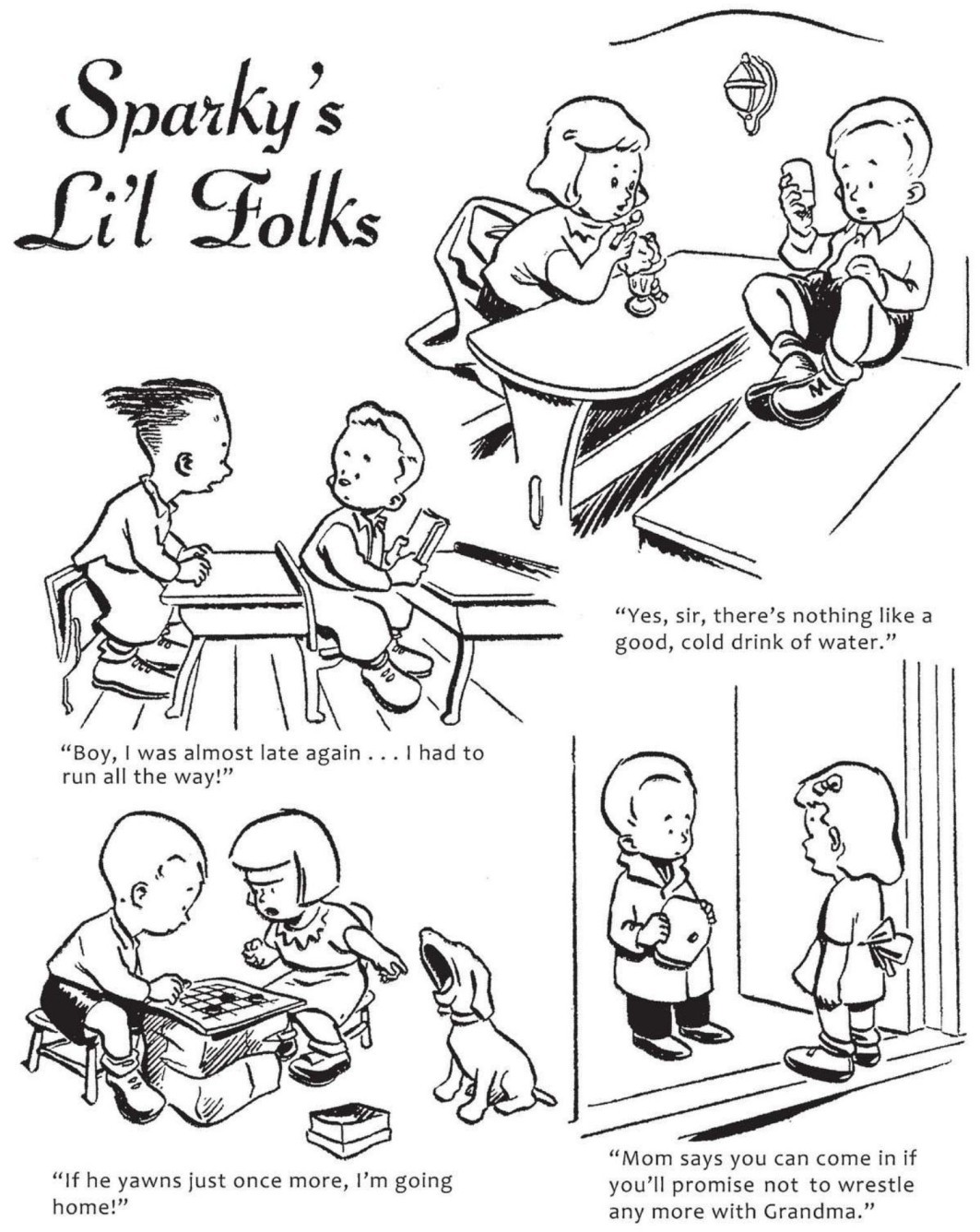
    With a lot of these you'll need to try to take yourself back to the period in order to appreciate the humor. For example, the first comic is about a lad in a soda shop who had no money to buy a delicious ice-cream soda, hence trying to hang on to his fragile dignity. :S

    If you remember Our Gang / The Little Rascals, this is a perfect Spanky situation.

    As for the last comic, uh.......

    "Sparky" is Charles Schulz, of course, and these are his pre-Peanuts work:
    https://en.wikipedia.org/wiki/Li%27l_Folks

    These come from the superb, incredible Fantagraphics collection:
    https://www.fantagraphics.com/collections/peanuts


    Seriously, I keep waiting for that 'Triumph the Comic Insult Dog' moment to kick in, where he explains that the whole thing was a joke in bad taste, you know..?

    "For me to poop on!"
    But no, that context is seemingly lacking, wtf?

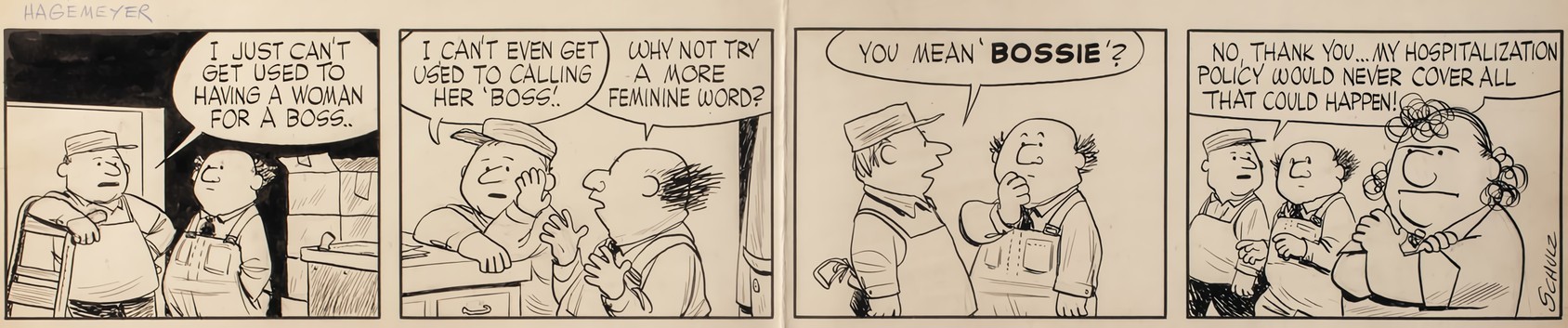
    I'm honestly baffled, here. Jim Jefferies is normally GOLD in everything he touches, but... *&$@# is this anti-woman shizzle?

    I MUST be missing the joke, right? Right..?


    As a lifelong Peanuts reader, I was absolutely tickled to see Schulz handling adult situations like this. No 'whomp-whomp' trombone sound from the cartoons, or offsite adults regularly alluded to in the 50's-60's (etc) comics, just ALL ADULTS.

    Like, whoa...

    And... of course this one ("Woman Boss") was not very nice, altho containing of some humor, perhaps. But really, that could be said about loads of his style, so what am I bitching about, anyway?

    Back to the point-- "Hagemeyer" was a test by Schulz in the mid-50's to branch to a different style. There are, if I understand correctly, seven total strips, none of them published. I don't know the intended order whatsoever, but this is my best-effort to post this one in decent quality.

    In terms of other strips Schulz did, check this out:
    https://en.wikipedia.org/wiki/It%27s_Only_a_Game_(comic_strip)

    submitted 1 week ago* (last edited 1 week ago) by [M] to c/eurographicnovels@piefed.social
     

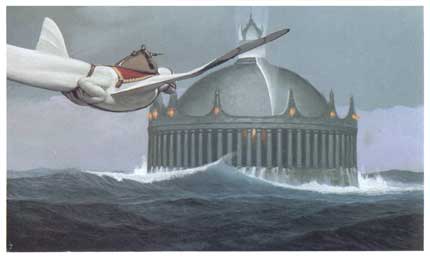
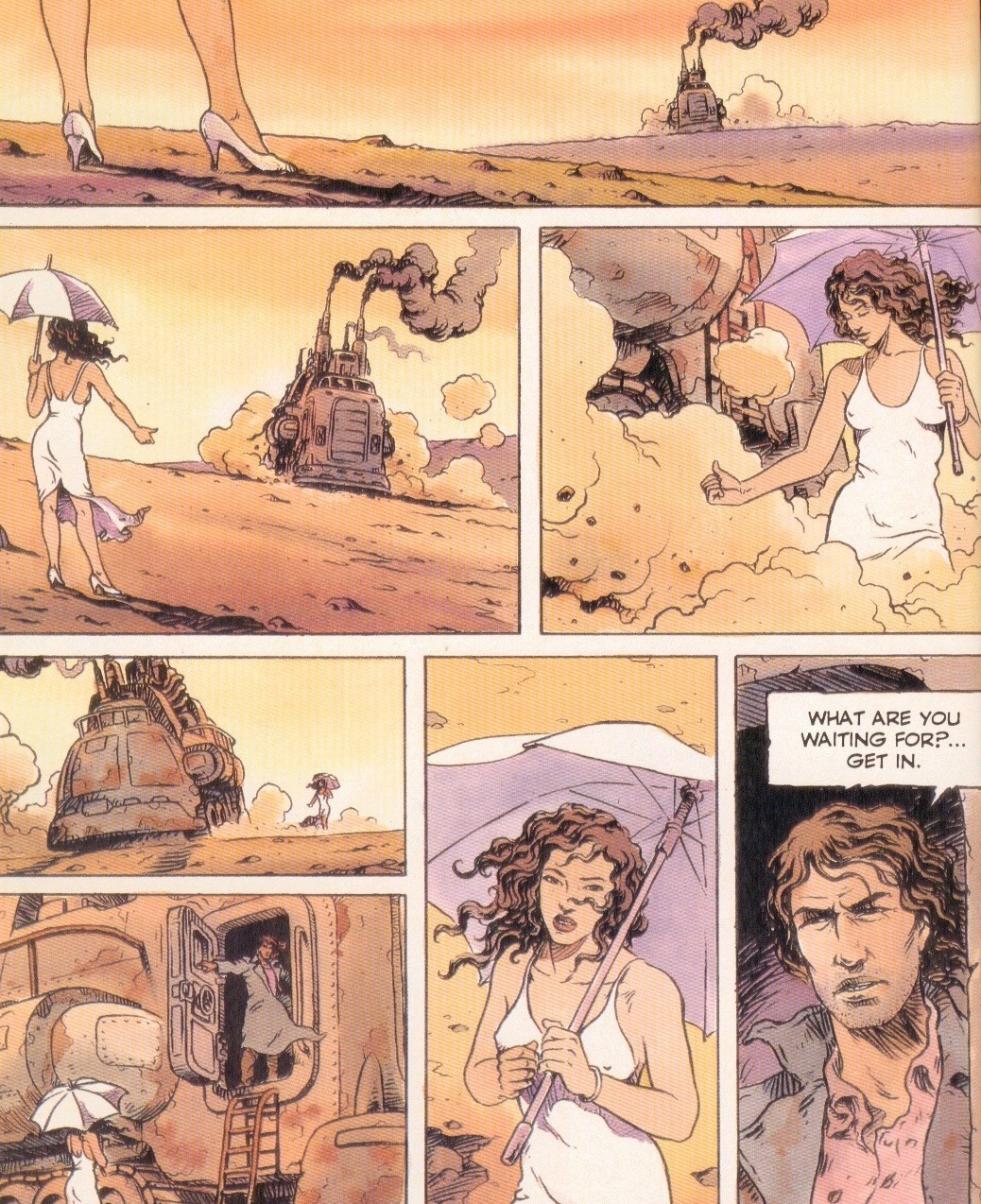
    This is a page from Juan Buscamares , the Water Book, set in a fantasy / post-apoc world.

    Samples:
    https://www.google.com/search?q=juan+buscamares+ciclo+del+agua&udm=2

    I first read this chapter in Heavy Metal magazine, I believe Jan '98 issue.

    In those samples above, you might be able to pick out a pretty wild sequence focusing on a 'new savior,' and how that shakes out for the people following him. I thought it was rather brilliant, with the rest of the series being kind of humdrum from there...


    Part 1 here:
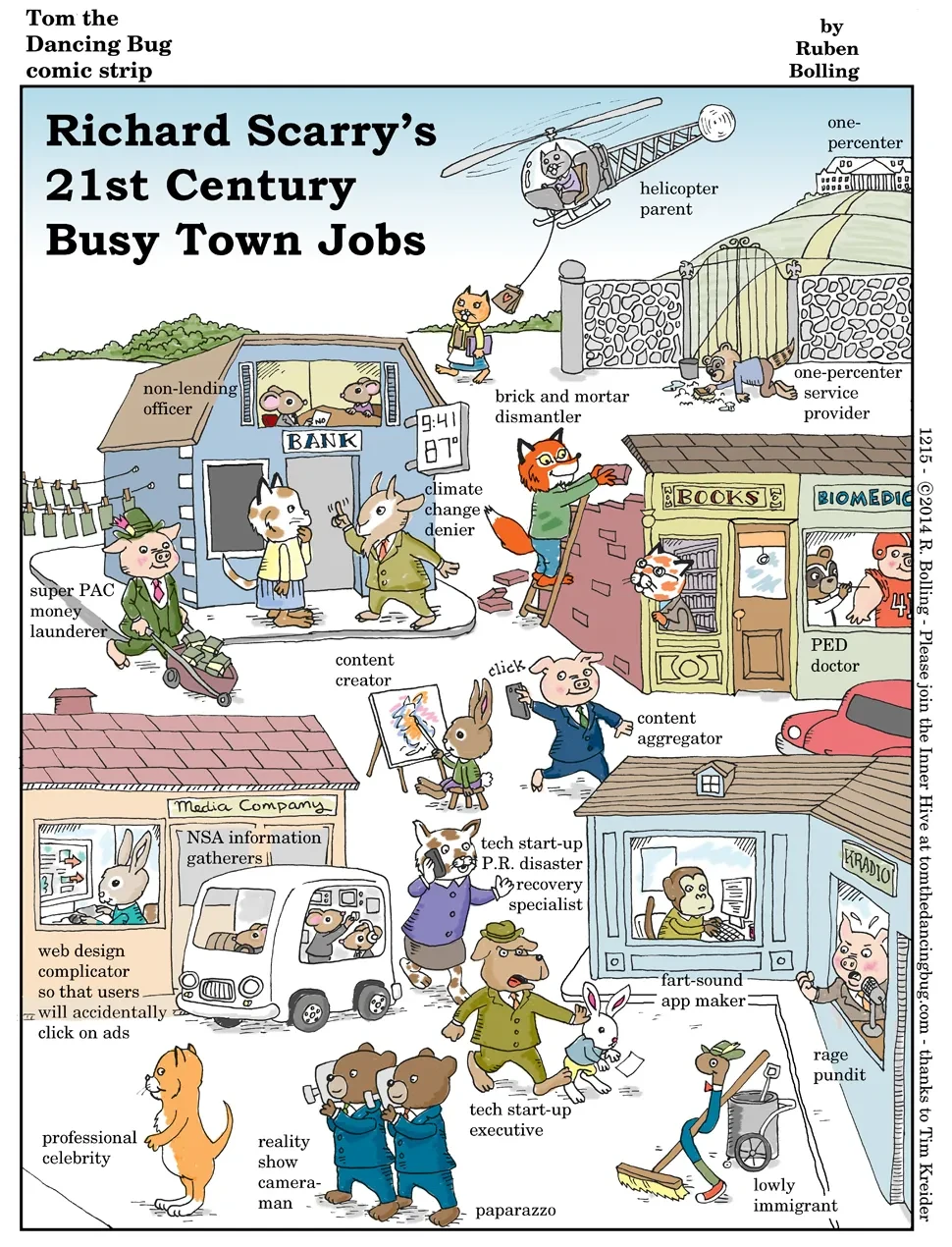
    https://piefed.social/c/comicstripedits@lemmy.world/p/2060361/richard-scarry-updates-some-job-titles-ruben-bolling-edit

    Once again, although these may have started as edits, at this point they're more like parody / tributes. I'm sharing this series because these are topical and seem to go over well. I do have a lot more pure edits that are pretty much in the 'potential lead balloon' category, so you know...


    https://piefed.social/post/2215171/comment/12141440#comment_12141626

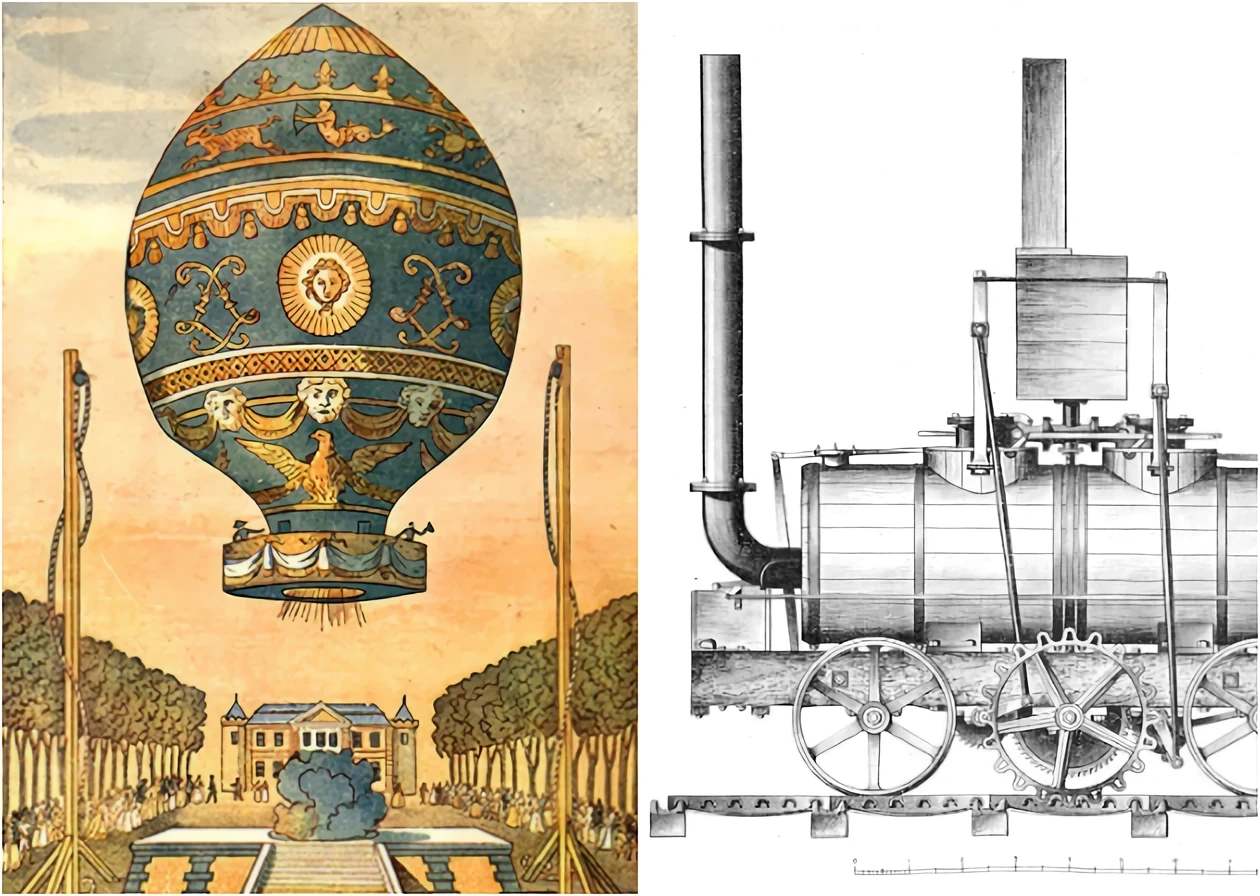
    Many late-coming technologies are issues of concept. Slow-sand filters are incredibly simple, for example, but require an understanding that did not arise until the 19th century (some possible examples in Mesoamerica excepted). Gliders are not actually particularly difficult to acquire the materials or tools to make, especially in cultures that use kites, but require, again, an understanding of the principles involved to provide controlled flight (with gliders requiring precise balance of lift and drag, whereas kites primarily need only light weight and wind stability). Fire pistons are conceptually advanced and were not discovered in Europe until long after they were in Southeast Asia, despite some Southeast Asian cultures which produced and used fire pistons being literal stone-age cultures, in terms of available material tools.

    Hot-air balloons, I would imagine, follow the same principle. If you lack the concepts behind the invention, the only way to discover it is by accident, which is generally unlikely. It’s why so much material development is concentrated in the modern and early modern period - we started to piece together how the world, on a fundamental level, works, beyond pure trial-and-error.

    Also, hot-air balloons before plastics were often made of silk (and rubber), since most other materials are either too heavy (at least for practical purposes) or too thermally sensitive, and that’s an expensive experiment to be undertaking if you haven’t the first clue how it works.

    submitted 1 week ago* (last edited 1 week ago) by [M] to c/eurographicnovels@piefed.social
     

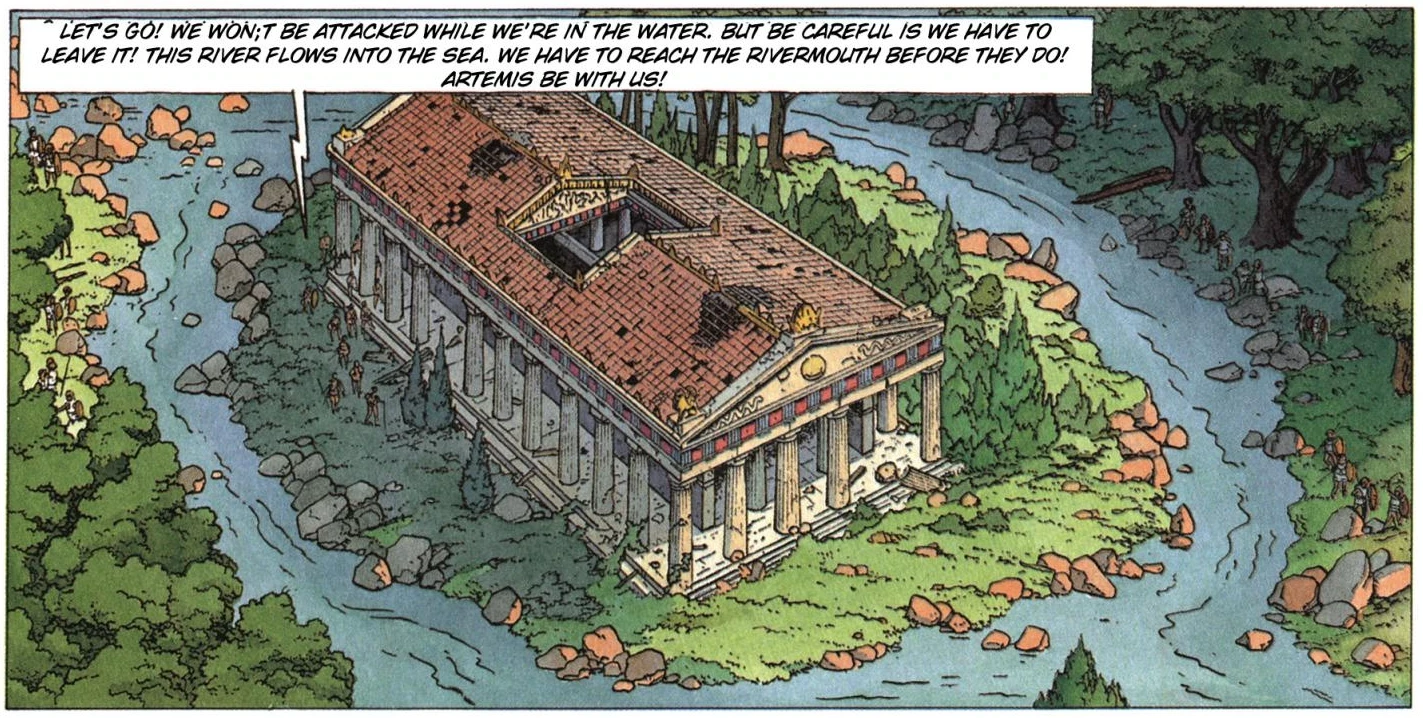
    That's the Temple of Artemis, from an old series I was reading by Jacques Martin:
    https://www.bedetheque.com/serie-708-BD-Orion-Martin.html

    His many series wade in to ancient and historical peoples, times, and events. Although his handling of plot and character can be pretty outdated and even bumbling, he nevertheless produces consistently interesting visuals, ones which often lead me to asking questions, as above.


    https://www.lambiek.net/artists/image/m/martin_jacq/martin_jacques_orion_1990.jpg

    I guess I'd just assumed since kid-dom that these temples were made entirely of marble or similar material, hence my puzzlement seeing the image above. Was this just neglect / incompetence by Martin? On the contrary, it seems a lot more technical and correct than I realised. Indeed, a little bit of searching suggests that such roofs were commonly made of wooden rafters, an underlayer sheathing, and then interlocking terracotta tiles.

    Something like this, I guess:

    https://ars.els-cdn.com/content/image/1-s2.0-S2352409X2300295X-gr10.jpg

    With the tiles usually looking like this, perhaps:

    https://www.iko.com/na/wp-content/uploads/2026/02/imbrex-tegula-roof-system.webp

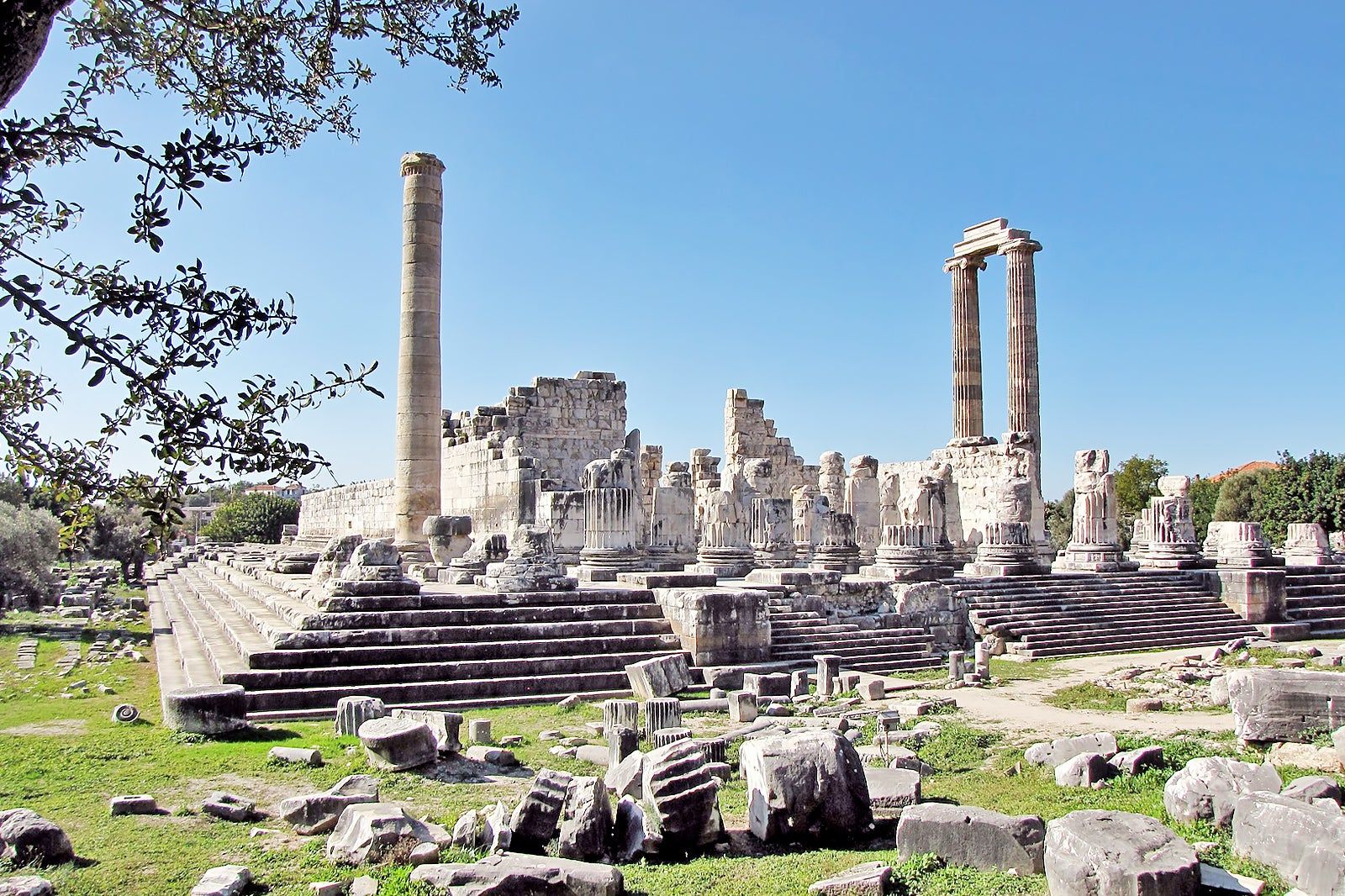
    I don't know... maybe some titanically-important temples were attempted in all marble. The Acropolis, perhaps? The problem as I understand it though is that holding up all that weight was incredibly challenging even with an open budget. Or something like that.


    https://cdn.sanity.io/images/nxpteyfv/goguides/8afd9a96dbd15f76fd716f26e1d64efdef9dc3b1-1600x1066.jpg

    view more: next ›