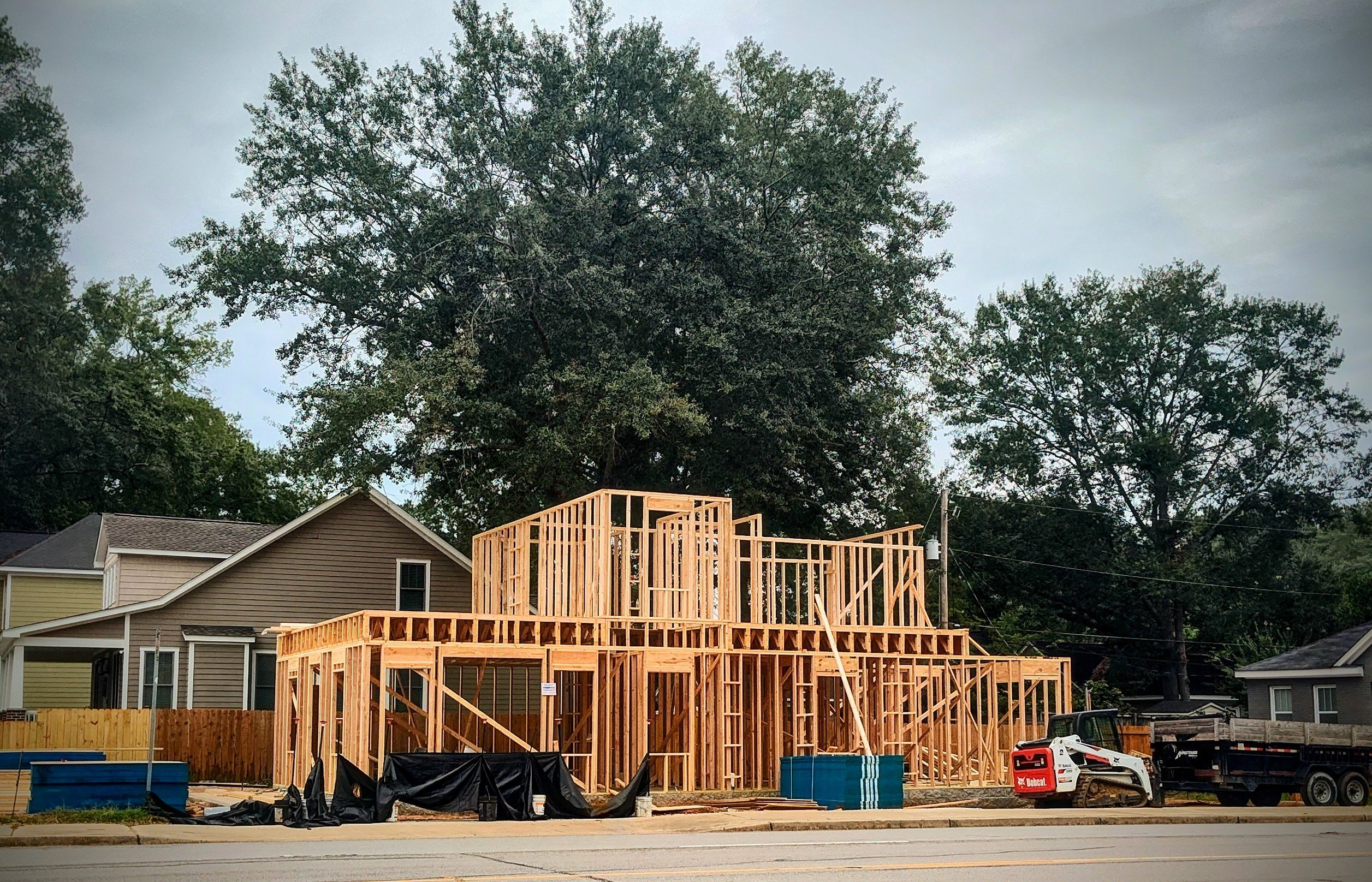
▲ 321 ▼ A new house being built down the street from me (lemmy.world) submitted 2 years ago by MrJameGumb@lemmy.world to c/pics@lemmy.world 134 comments fedilink hide all child comments
[–] HenriVolney@sh.itjust.works 69 points 2 years ago* (11 children) Always amses me to see you guys build your wood houses. This looks so much like a construction game for children, I want to play too! permalink fedilink source hideshow 15 child comments replies: [–] ophy@lemmy.nz 43 points 2 years ago (1 child) I live on a fault line along the pacific ring of fire, and so building with wood was an absolute necessity for us so long, as they were structurally more lenient to the constant earthquakes. Even now I believe our old government building is the largest wooden building in the Southern hemisphere (and it's only 4 stories tall). These days as construction techniques have changed, we've obviously built things with concrete, steel, brick, etc., but the wooden tradition remains strong, with a huge majority of modern houses here still being built like this. That aside, wood was also just a much cheaper material to build with, so it was the most economical material to use for a long time for much of the "new world". permalink fedilink source parent hideshow 2 child comments replies: [–] HenriVolney@sh.itjust.works 9 points 2 years ago (1 child) Right. Buildings were mostly wood and mud in Europe until the 18th Century. By then, cities became so dense that big fires were extremely deadly. Little by little people started building in stone, then bricks and now reinforced concrete. permalink fedilink source parent hideshow 2 child comments replies: [–] droans@lemmy.world 12 points 2 years ago (1 child) It didn't really have anything to do with fires. Pretty much every hardwood forest was cut down in Europe and any remaining were protected so they could be used to build ships. America was colonized late enough that it never really became an issue. permalink fedilink source parent hideshow 1 child comment load more comments (1 reply) [–] MrJameGumb@lemmy.world [S] 32 points 2 years ago (8 children) you guys build your wood houses What do you normally build houses with? permalink fedilink source parent hideshow 13 child comments replies: [–] HenriVolney@sh.itjust.works 51 points 2 years ago (7 children) Here in Europe, we use mostly cinder blocks or bricks. I guess wood is more common in Northern Europe and Switzerland permalink fedilink source parent hideshow 12 child comments replies: [–] proudblond@lemmy.world 43 points 2 years ago (16 children) In California we use wood because it flexes during earthquakes. There may be damage during a big one but at least the house is less likely to collapse on you. permalink fedilink source parent hideshow 19 child comments replies: [–] MrsDoyle@lemmy.world 23 points 2 years ago In earthquakes in NZ the wooden houses flex for sure. What kills you is the brick chimney falling through the roof. permalink fedilink source parent [+] HYPERBOLE_TRAIN@lemmy.world 14 points 2 years ago* (last edited 2 years ago) [deleted] permalink fedilink source parent [+] railsdev@programming.dev 9 points 2 years ago* (last edited 2 years ago) (1 child) [deleted] permalink fedilink source parent hideshow 2 child comments replies: [–] jcit878@lemmy.world 5 points 2 years ago (1 child) isnt brick an excellent insulator? permalink fedilink source parent hideshow 2 child comments replies: [+] railsdev@programming.dev 4 points 2 years ago* (last edited 2 years ago) (2 children) [deleted] permalink fedilink source parent hideshow 3 child comments replies: [+] the_third@feddit.de 13 points 2 years ago* (last edited 2 years ago) (1 child) [deleted] permalink fedilink source parent hideshow 2 child comments replies: [–] RubberElectrons@lemmy.world 3 points 2 years ago (1 child) Pretty neat, I've never seen masonry like this before. I'll point out that the webbing is likely strong, but considering the lack of ductility, this seems likely to fail during an earthquake. What're these called, I'd like to look into them more. permalink fedilink source parent hideshow 1 child comment load more comments (1 reply) load more comments (1 reply) load more comments (13 replies) [–] dandroid@dandroid.app 17 points 2 years ago (5 children) If we did that in the US west coast, they would crack and fall apart from tectonic plate shift. You need to build things to be flexible for earthquakes and general shift. permalink fedilink source parent hideshow 7 child comments replies: [–] I_Fart_Glitter@lemmy.world 11 points 2 years ago I live in a 100 year old farm house in California and every spring and fall we have to move the strike plate (thing the door latch nubbin goes into) on the front door up or down about 3/4 inch due to seasonal house shifting. The door stops closing and we know it's spring time! permalink fedilink source parent [–] HenriVolney@sh.itjust.works 3 points 2 years ago (2 children) Steel reinforcement is what keeps them up. At least it's supposed to. permalink fedilink source parent hideshow 4 child comments replies: [–] schmidtster@lemmy.world 10 points 2 years ago The structure would still be damaged, although it may be “standing”. It doesn’t work, it’s been tested plenty by people far smarter than either of us. permalink fedilink source parent [–] dandroid@dandroid.app 6 points 2 years ago It would stick crack and crumble around the steel. It wouldn't work here, which is why it against building codes here. permalink fedilink source parent load more comments (3 replies) [–] Nougat@kbin.social 15 points 2 years ago (1 child) That's because Europe has had many more centuries worth of deforestation. The greatest resource the Americas had to offer to Europe was essentially unlimited lumber. permalink fedilink source parent hideshow 2 child comments replies: [–] HenriVolney@sh.itjust.works 11 points 2 years ago* (last edited 2 years ago) (4 children) And we wasted a lot of our forests on superfluous things like war ships - see the Castillan plateau which is now a dry and barren land. permalink fedilink source parent hideshow 4 child comments load more comments (4 replies) [–] naonintendois@programming.dev 11 points 2 years ago* (3 children) In Florida houses are also built from cinder blocks because wood is too weak against hurricanes. Edit: interiors can be built from wood, but all exterior walls are made with cinder blocks. permalink fedilink source parent hideshow 6 child comments replies: [–] HenriVolney@sh.itjust.works 11 points 2 years ago So that people can remain secure like the third little pig! permalink fedilink source parent [–] schmidtster@lemmy.world 10 points 2 years ago (3 children) Exteriors are wood too, hurricane straps. Basically metal connectors connect everything from ground across the roof to the ground again. permalink fedilink source parent hideshow 3 child comments load more comments (3 replies) [–] NewNewAccount@lemmy.world 9 points 2 years ago (1 child) Interesting. Here in California, building brick structures is prohibited because of the risk during earthquakes. permalink fedilink source parent hideshow 1 child comment load more comments (1 reply) [–] MrJameGumb@lemmy.world [S] 5 points 2 years ago We have plenty of brick houses here too, but they all are still built around wooden frames for the most part permalink fedilink source parent load more comments (2 replies) [–] lunarul@lemmy.world 17 points 2 years ago (2 children) something like this for example permalink fedilink source parent hideshow 2 child comments load more comments (2 replies) [–] HenriVolney@sh.itjust.works 7 points 2 years ago (1 child) Or this permalink fedilink source parent hideshow 2 child comments replies: [–] MrJameGumb@lemmy.world [S] 7 points 2 years ago (2 children) That appears to be a military bunker of some sort permalink fedilink source parent hideshow 4 child comments replies: [–] HenriVolney@sh.itjust.works 9 points 2 years ago (1 child) It does, doesn't it? That's before surfacing is done. permalink fedilink source parent hideshow 1 child comment load more comments (1 reply) [–] scottywh@lemmy.world 4 points 2 years ago I was thinking more like a commercial building than a residential. permalink fedilink source parent [–] drolex@sopuli.xyz 6 points 2 years ago In Europe? Bricks and mortar permalink fedilink source parent [–] banneryear1868@lemmy.world 3 points 2 years ago It's not like it's a "wood house" though just the framing is softwood lumber. The foundation is reinforced poured concrete, there's steel support braces, the ties and hardware are likely zinc coated steel, roof is asphalt shingles or steel, wind bracing is lumber or steel rods depending on code, could even have exterior brick or vinyl siding. permalink fedilink source parent load more comments (3 replies) [–] ChocoboRocket@lemmy.world 8 points 2 years ago (6 children) Wouldn't the inside of your house still have wood framing structure like this though? Looks like this neighbourhood uses vinyl siding, but you could easily have a brick/stone/stucco exterior. Isn't it way harder to run plumbing/electric through cinder blocks, let alone hanging drywall? Or do you build a cinderblock box first and then frame the inside with wood? This place looks like it doesn't have a basement, which is a must in Canada, and all our basements are generally concrete pour or cinderblocks, but we still have framing on the inside walls, and usually everything above the basement is wood + facade permalink fedilink source parent hideshow 9 child comments replies: [–] PixTupy@lemmy.ml 14 points 2 years ago* Portugal here, no wood, just iron, steel and concrete. And bricks, of course. permalink fedilink source parent [–] MrJameGumb@lemmy.world [S] 7 points 2 years ago (1 child) Where I am in South Carolina very few people have basements as they would be prone to flooding permalink fedilink source parent hideshow 2 child comments replies: [–] Maeve@kbin.social 3 points 2 years ago Interestingly enough, I was contemplating the amount of sand used in cinder blocks vs tabby. permalink fedilink source parent [–] enki@lemm.ee 3 points 2 years ago Typically, yes. In the US at least, cinder block houses are common particularly in Florida and coastal regions. The inside would still likely have a moisture barrier and insulation on modern homes, so you will typically have wood framing for interior walls to allow for wiring, plumbing, and insulation that is then drywalled over. permalink fedilink source parent load more comments (3 replies) [–] CoriolisSTORM88@lemmy.world 4 points 2 years ago (3 children) I'm genuinely curious. I am in the southern US, Alabama specifically with the heat and humidity that entails. There are cinder block homes here, but they're mostly looked down upon and almost always have mold and mildew problems. How is that handled with brick and mortar or concrete construction? permalink fedilink source parent hideshow 4 child comments replies: [–] qyron@sopuli.xyz 10 points 2 years ago (3 children) Double walls, with thermal insulation, external vapor barrier and built in ventilation ducts. Special additives for the mortars prevent moisture from seeping into the walls. Double or even triple pane windows and good quality, properly applied exterior paint reinforces the insulation. permalink fedilink source parent hideshow 3 child comments load more comments (3 replies) load more comments (2 replies) load more comments (7 replies)
[–] ophy@lemmy.nz 43 points 2 years ago (1 child) I live on a fault line along the pacific ring of fire, and so building with wood was an absolute necessity for us so long, as they were structurally more lenient to the constant earthquakes. Even now I believe our old government building is the largest wooden building in the Southern hemisphere (and it's only 4 stories tall). These days as construction techniques have changed, we've obviously built things with concrete, steel, brick, etc., but the wooden tradition remains strong, with a huge majority of modern houses here still being built like this. That aside, wood was also just a much cheaper material to build with, so it was the most economical material to use for a long time for much of the "new world". permalink fedilink source parent hideshow 2 child comments replies: [–] HenriVolney@sh.itjust.works 9 points 2 years ago (1 child) Right. Buildings were mostly wood and mud in Europe until the 18th Century. By then, cities became so dense that big fires were extremely deadly. Little by little people started building in stone, then bricks and now reinforced concrete. permalink fedilink source parent hideshow 2 child comments replies: [–] droans@lemmy.world 12 points 2 years ago (1 child) It didn't really have anything to do with fires. Pretty much every hardwood forest was cut down in Europe and any remaining were protected so they could be used to build ships. America was colonized late enough that it never really became an issue. permalink fedilink source parent hideshow 1 child comment load more comments (1 reply)
[–] HenriVolney@sh.itjust.works 9 points 2 years ago (1 child) Right. Buildings were mostly wood and mud in Europe until the 18th Century. By then, cities became so dense that big fires were extremely deadly. Little by little people started building in stone, then bricks and now reinforced concrete. permalink fedilink source parent hideshow 2 child comments replies: [–] droans@lemmy.world 12 points 2 years ago (1 child) It didn't really have anything to do with fires. Pretty much every hardwood forest was cut down in Europe and any remaining were protected so they could be used to build ships. America was colonized late enough that it never really became an issue. permalink fedilink source parent hideshow 1 child comment load more comments (1 reply)
[–] droans@lemmy.world 12 points 2 years ago (1 child) It didn't really have anything to do with fires. Pretty much every hardwood forest was cut down in Europe and any remaining were protected so they could be used to build ships. America was colonized late enough that it never really became an issue. permalink fedilink source parent hideshow 1 child comment load more comments (1 reply)
[–] MrJameGumb@lemmy.world [S] 32 points 2 years ago (8 children) you guys build your wood houses What do you normally build houses with? permalink fedilink source parent hideshow 13 child comments replies: [–] HenriVolney@sh.itjust.works 51 points 2 years ago (7 children) Here in Europe, we use mostly cinder blocks or bricks. I guess wood is more common in Northern Europe and Switzerland permalink fedilink source parent hideshow 12 child comments replies: [–] proudblond@lemmy.world 43 points 2 years ago (16 children) In California we use wood because it flexes during earthquakes. There may be damage during a big one but at least the house is less likely to collapse on you. permalink fedilink source parent hideshow 19 child comments replies: [–] MrsDoyle@lemmy.world 23 points 2 years ago In earthquakes in NZ the wooden houses flex for sure. What kills you is the brick chimney falling through the roof. permalink fedilink source parent [+] HYPERBOLE_TRAIN@lemmy.world 14 points 2 years ago* (last edited 2 years ago) [deleted] permalink fedilink source parent [+] railsdev@programming.dev 9 points 2 years ago* (last edited 2 years ago) (1 child) [deleted] permalink fedilink source parent hideshow 2 child comments replies: [–] jcit878@lemmy.world 5 points 2 years ago (1 child) isnt brick an excellent insulator? permalink fedilink source parent hideshow 2 child comments replies: [+] railsdev@programming.dev 4 points 2 years ago* (last edited 2 years ago) (2 children) [deleted] permalink fedilink source parent hideshow 3 child comments replies: [+] the_third@feddit.de 13 points 2 years ago* (last edited 2 years ago) (1 child) [deleted] permalink fedilink source parent hideshow 2 child comments replies: [–] RubberElectrons@lemmy.world 3 points 2 years ago (1 child) Pretty neat, I've never seen masonry like this before. I'll point out that the webbing is likely strong, but considering the lack of ductility, this seems likely to fail during an earthquake. What're these called, I'd like to look into them more. permalink fedilink source parent hideshow 1 child comment load more comments (1 reply) load more comments (1 reply) load more comments (13 replies) [–] dandroid@dandroid.app 17 points 2 years ago (5 children) If we did that in the US west coast, they would crack and fall apart from tectonic plate shift. You need to build things to be flexible for earthquakes and general shift. permalink fedilink source parent hideshow 7 child comments replies: [–] I_Fart_Glitter@lemmy.world 11 points 2 years ago I live in a 100 year old farm house in California and every spring and fall we have to move the strike plate (thing the door latch nubbin goes into) on the front door up or down about 3/4 inch due to seasonal house shifting. The door stops closing and we know it's spring time! permalink fedilink source parent [–] HenriVolney@sh.itjust.works 3 points 2 years ago (2 children) Steel reinforcement is what keeps them up. At least it's supposed to. permalink fedilink source parent hideshow 4 child comments replies: [–] schmidtster@lemmy.world 10 points 2 years ago The structure would still be damaged, although it may be “standing”. It doesn’t work, it’s been tested plenty by people far smarter than either of us. permalink fedilink source parent [–] dandroid@dandroid.app 6 points 2 years ago It would stick crack and crumble around the steel. It wouldn't work here, which is why it against building codes here. permalink fedilink source parent load more comments (3 replies) [–] Nougat@kbin.social 15 points 2 years ago (1 child) That's because Europe has had many more centuries worth of deforestation. The greatest resource the Americas had to offer to Europe was essentially unlimited lumber. permalink fedilink source parent hideshow 2 child comments replies: [–] HenriVolney@sh.itjust.works 11 points 2 years ago* (last edited 2 years ago) (4 children) And we wasted a lot of our forests on superfluous things like war ships - see the Castillan plateau which is now a dry and barren land. permalink fedilink source parent hideshow 4 child comments load more comments (4 replies) [–] naonintendois@programming.dev 11 points 2 years ago* (3 children) In Florida houses are also built from cinder blocks because wood is too weak against hurricanes. Edit: interiors can be built from wood, but all exterior walls are made with cinder blocks. permalink fedilink source parent hideshow 6 child comments replies: [–] HenriVolney@sh.itjust.works 11 points 2 years ago So that people can remain secure like the third little pig! permalink fedilink source parent [–] schmidtster@lemmy.world 10 points 2 years ago (3 children) Exteriors are wood too, hurricane straps. Basically metal connectors connect everything from ground across the roof to the ground again. permalink fedilink source parent hideshow 3 child comments load more comments (3 replies) [–] NewNewAccount@lemmy.world 9 points 2 years ago (1 child) Interesting. Here in California, building brick structures is prohibited because of the risk during earthquakes. permalink fedilink source parent hideshow 1 child comment load more comments (1 reply) [–] MrJameGumb@lemmy.world [S] 5 points 2 years ago We have plenty of brick houses here too, but they all are still built around wooden frames for the most part permalink fedilink source parent load more comments (2 replies) [–] lunarul@lemmy.world 17 points 2 years ago (2 children) something like this for example permalink fedilink source parent hideshow 2 child comments load more comments (2 replies) [–] HenriVolney@sh.itjust.works 7 points 2 years ago (1 child) Or this permalink fedilink source parent hideshow 2 child comments replies: [–] MrJameGumb@lemmy.world [S] 7 points 2 years ago (2 children) That appears to be a military bunker of some sort permalink fedilink source parent hideshow 4 child comments replies: [–] HenriVolney@sh.itjust.works 9 points 2 years ago (1 child) It does, doesn't it? That's before surfacing is done. permalink fedilink source parent hideshow 1 child comment load more comments (1 reply) [–] scottywh@lemmy.world 4 points 2 years ago I was thinking more like a commercial building than a residential. permalink fedilink source parent [–] drolex@sopuli.xyz 6 points 2 years ago In Europe? Bricks and mortar permalink fedilink source parent [–] banneryear1868@lemmy.world 3 points 2 years ago It's not like it's a "wood house" though just the framing is softwood lumber. The foundation is reinforced poured concrete, there's steel support braces, the ties and hardware are likely zinc coated steel, roof is asphalt shingles or steel, wind bracing is lumber or steel rods depending on code, could even have exterior brick or vinyl siding. permalink fedilink source parent load more comments (3 replies)
[–] HenriVolney@sh.itjust.works 51 points 2 years ago (7 children) Here in Europe, we use mostly cinder blocks or bricks. I guess wood is more common in Northern Europe and Switzerland permalink fedilink source parent hideshow 12 child comments replies: [–] proudblond@lemmy.world 43 points 2 years ago (16 children) In California we use wood because it flexes during earthquakes. There may be damage during a big one but at least the house is less likely to collapse on you. permalink fedilink source parent hideshow 19 child comments replies: [–] MrsDoyle@lemmy.world 23 points 2 years ago In earthquakes in NZ the wooden houses flex for sure. What kills you is the brick chimney falling through the roof. permalink fedilink source parent [+] HYPERBOLE_TRAIN@lemmy.world 14 points 2 years ago* (last edited 2 years ago) [deleted] permalink fedilink source parent [+] railsdev@programming.dev 9 points 2 years ago* (last edited 2 years ago) (1 child) [deleted] permalink fedilink source parent hideshow 2 child comments replies: [–] jcit878@lemmy.world 5 points 2 years ago (1 child) isnt brick an excellent insulator? permalink fedilink source parent hideshow 2 child comments replies: [+] railsdev@programming.dev 4 points 2 years ago* (last edited 2 years ago) (2 children) [deleted] permalink fedilink source parent hideshow 3 child comments replies: [+] the_third@feddit.de 13 points 2 years ago* (last edited 2 years ago) (1 child) [deleted] permalink fedilink source parent hideshow 2 child comments replies: [–] RubberElectrons@lemmy.world 3 points 2 years ago (1 child) Pretty neat, I've never seen masonry like this before. I'll point out that the webbing is likely strong, but considering the lack of ductility, this seems likely to fail during an earthquake. What're these called, I'd like to look into them more. permalink fedilink source parent hideshow 1 child comment load more comments (1 reply) load more comments (1 reply) load more comments (13 replies) [–] dandroid@dandroid.app 17 points 2 years ago (5 children) If we did that in the US west coast, they would crack and fall apart from tectonic plate shift. You need to build things to be flexible for earthquakes and general shift. permalink fedilink source parent hideshow 7 child comments replies: [–] I_Fart_Glitter@lemmy.world 11 points 2 years ago I live in a 100 year old farm house in California and every spring and fall we have to move the strike plate (thing the door latch nubbin goes into) on the front door up or down about 3/4 inch due to seasonal house shifting. The door stops closing and we know it's spring time! permalink fedilink source parent [–] HenriVolney@sh.itjust.works 3 points 2 years ago (2 children) Steel reinforcement is what keeps them up. At least it's supposed to. permalink fedilink source parent hideshow 4 child comments replies: [–] schmidtster@lemmy.world 10 points 2 years ago The structure would still be damaged, although it may be “standing”. It doesn’t work, it’s been tested plenty by people far smarter than either of us. permalink fedilink source parent [–] dandroid@dandroid.app 6 points 2 years ago It would stick crack and crumble around the steel. It wouldn't work here, which is why it against building codes here. permalink fedilink source parent load more comments (3 replies) [–] Nougat@kbin.social 15 points 2 years ago (1 child) That's because Europe has had many more centuries worth of deforestation. The greatest resource the Americas had to offer to Europe was essentially unlimited lumber. permalink fedilink source parent hideshow 2 child comments replies: [–] HenriVolney@sh.itjust.works 11 points 2 years ago* (last edited 2 years ago) (4 children) And we wasted a lot of our forests on superfluous things like war ships - see the Castillan plateau which is now a dry and barren land. permalink fedilink source parent hideshow 4 child comments load more comments (4 replies) [–] naonintendois@programming.dev 11 points 2 years ago* (3 children) In Florida houses are also built from cinder blocks because wood is too weak against hurricanes. Edit: interiors can be built from wood, but all exterior walls are made with cinder blocks. permalink fedilink source parent hideshow 6 child comments replies: [–] HenriVolney@sh.itjust.works 11 points 2 years ago So that people can remain secure like the third little pig! permalink fedilink source parent [–] schmidtster@lemmy.world 10 points 2 years ago (3 children) Exteriors are wood too, hurricane straps. Basically metal connectors connect everything from ground across the roof to the ground again. permalink fedilink source parent hideshow 3 child comments load more comments (3 replies) [–] NewNewAccount@lemmy.world 9 points 2 years ago (1 child) Interesting. Here in California, building brick structures is prohibited because of the risk during earthquakes. permalink fedilink source parent hideshow 1 child comment load more comments (1 reply) [–] MrJameGumb@lemmy.world [S] 5 points 2 years ago We have plenty of brick houses here too, but they all are still built around wooden frames for the most part permalink fedilink source parent load more comments (2 replies)
[–] proudblond@lemmy.world 43 points 2 years ago (16 children) In California we use wood because it flexes during earthquakes. There may be damage during a big one but at least the house is less likely to collapse on you. permalink fedilink source parent hideshow 19 child comments replies: [–] MrsDoyle@lemmy.world 23 points 2 years ago In earthquakes in NZ the wooden houses flex for sure. What kills you is the brick chimney falling through the roof. permalink fedilink source parent [+] HYPERBOLE_TRAIN@lemmy.world 14 points 2 years ago* (last edited 2 years ago) [deleted] permalink fedilink source parent [+] railsdev@programming.dev 9 points 2 years ago* (last edited 2 years ago) (1 child) [deleted] permalink fedilink source parent hideshow 2 child comments replies: [–] jcit878@lemmy.world 5 points 2 years ago (1 child) isnt brick an excellent insulator? permalink fedilink source parent hideshow 2 child comments replies: [+] railsdev@programming.dev 4 points 2 years ago* (last edited 2 years ago) (2 children) [deleted] permalink fedilink source parent hideshow 3 child comments replies: [+] the_third@feddit.de 13 points 2 years ago* (last edited 2 years ago) (1 child) [deleted] permalink fedilink source parent hideshow 2 child comments replies: [–] RubberElectrons@lemmy.world 3 points 2 years ago (1 child) Pretty neat, I've never seen masonry like this before. I'll point out that the webbing is likely strong, but considering the lack of ductility, this seems likely to fail during an earthquake. What're these called, I'd like to look into them more. permalink fedilink source parent hideshow 1 child comment load more comments (1 reply) load more comments (1 reply) load more comments (13 replies)
[–] MrsDoyle@lemmy.world 23 points 2 years ago In earthquakes in NZ the wooden houses flex for sure. What kills you is the brick chimney falling through the roof. permalink fedilink source parent
[+] HYPERBOLE_TRAIN@lemmy.world 14 points 2 years ago* (last edited 2 years ago) [deleted] permalink fedilink source parent
[+] railsdev@programming.dev 9 points 2 years ago* (last edited 2 years ago) (1 child) [deleted] permalink fedilink source parent hideshow 2 child comments replies: [–] jcit878@lemmy.world 5 points 2 years ago (1 child) isnt brick an excellent insulator? permalink fedilink source parent hideshow 2 child comments replies: [+] railsdev@programming.dev 4 points 2 years ago* (last edited 2 years ago) (2 children) [deleted] permalink fedilink source parent hideshow 3 child comments replies: [+] the_third@feddit.de 13 points 2 years ago* (last edited 2 years ago) (1 child) [deleted] permalink fedilink source parent hideshow 2 child comments replies: [–] RubberElectrons@lemmy.world 3 points 2 years ago (1 child) Pretty neat, I've never seen masonry like this before. I'll point out that the webbing is likely strong, but considering the lack of ductility, this seems likely to fail during an earthquake. What're these called, I'd like to look into them more. permalink fedilink source parent hideshow 1 child comment load more comments (1 reply) load more comments (1 reply)
[–] jcit878@lemmy.world 5 points 2 years ago (1 child) isnt brick an excellent insulator? permalink fedilink source parent hideshow 2 child comments replies: [+] railsdev@programming.dev 4 points 2 years ago* (last edited 2 years ago) (2 children) [deleted] permalink fedilink source parent hideshow 3 child comments replies: [+] the_third@feddit.de 13 points 2 years ago* (last edited 2 years ago) (1 child) [deleted] permalink fedilink source parent hideshow 2 child comments replies: [–] RubberElectrons@lemmy.world 3 points 2 years ago (1 child) Pretty neat, I've never seen masonry like this before. I'll point out that the webbing is likely strong, but considering the lack of ductility, this seems likely to fail during an earthquake. What're these called, I'd like to look into them more. permalink fedilink source parent hideshow 1 child comment load more comments (1 reply) load more comments (1 reply)
[+] railsdev@programming.dev 4 points 2 years ago* (last edited 2 years ago) (2 children) [deleted] permalink fedilink source parent hideshow 3 child comments replies: [+] the_third@feddit.de 13 points 2 years ago* (last edited 2 years ago) (1 child) [deleted] permalink fedilink source parent hideshow 2 child comments replies: [–] RubberElectrons@lemmy.world 3 points 2 years ago (1 child) Pretty neat, I've never seen masonry like this before. I'll point out that the webbing is likely strong, but considering the lack of ductility, this seems likely to fail during an earthquake. What're these called, I'd like to look into them more. permalink fedilink source parent hideshow 1 child comment load more comments (1 reply) load more comments (1 reply)
[+] the_third@feddit.de 13 points 2 years ago* (last edited 2 years ago) (1 child) [deleted] permalink fedilink source parent hideshow 2 child comments replies: [–] RubberElectrons@lemmy.world 3 points 2 years ago (1 child) Pretty neat, I've never seen masonry like this before. I'll point out that the webbing is likely strong, but considering the lack of ductility, this seems likely to fail during an earthquake. What're these called, I'd like to look into them more. permalink fedilink source parent hideshow 1 child comment load more comments (1 reply)
[–] RubberElectrons@lemmy.world 3 points 2 years ago (1 child) Pretty neat, I've never seen masonry like this before. I'll point out that the webbing is likely strong, but considering the lack of ductility, this seems likely to fail during an earthquake. What're these called, I'd like to look into them more. permalink fedilink source parent hideshow 1 child comment load more comments (1 reply)
[–] dandroid@dandroid.app 17 points 2 years ago (5 children) If we did that in the US west coast, they would crack and fall apart from tectonic plate shift. You need to build things to be flexible for earthquakes and general shift. permalink fedilink source parent hideshow 7 child comments replies: [–] I_Fart_Glitter@lemmy.world 11 points 2 years ago I live in a 100 year old farm house in California and every spring and fall we have to move the strike plate (thing the door latch nubbin goes into) on the front door up or down about 3/4 inch due to seasonal house shifting. The door stops closing and we know it's spring time! permalink fedilink source parent [–] HenriVolney@sh.itjust.works 3 points 2 years ago (2 children) Steel reinforcement is what keeps them up. At least it's supposed to. permalink fedilink source parent hideshow 4 child comments replies: [–] schmidtster@lemmy.world 10 points 2 years ago The structure would still be damaged, although it may be “standing”. It doesn’t work, it’s been tested plenty by people far smarter than either of us. permalink fedilink source parent [–] dandroid@dandroid.app 6 points 2 years ago It would stick crack and crumble around the steel. It wouldn't work here, which is why it against building codes here. permalink fedilink source parent load more comments (3 replies)
[–] I_Fart_Glitter@lemmy.world 11 points 2 years ago I live in a 100 year old farm house in California and every spring and fall we have to move the strike plate (thing the door latch nubbin goes into) on the front door up or down about 3/4 inch due to seasonal house shifting. The door stops closing and we know it's spring time! permalink fedilink source parent
[–] HenriVolney@sh.itjust.works 3 points 2 years ago (2 children) Steel reinforcement is what keeps them up. At least it's supposed to. permalink fedilink source parent hideshow 4 child comments replies: [–] schmidtster@lemmy.world 10 points 2 years ago The structure would still be damaged, although it may be “standing”. It doesn’t work, it’s been tested plenty by people far smarter than either of us. permalink fedilink source parent [–] dandroid@dandroid.app 6 points 2 years ago It would stick crack and crumble around the steel. It wouldn't work here, which is why it against building codes here. permalink fedilink source parent
[–] schmidtster@lemmy.world 10 points 2 years ago The structure would still be damaged, although it may be “standing”. It doesn’t work, it’s been tested plenty by people far smarter than either of us. permalink fedilink source parent
[–] dandroid@dandroid.app 6 points 2 years ago It would stick crack and crumble around the steel. It wouldn't work here, which is why it against building codes here. permalink fedilink source parent
[–] Nougat@kbin.social 15 points 2 years ago (1 child) That's because Europe has had many more centuries worth of deforestation. The greatest resource the Americas had to offer to Europe was essentially unlimited lumber. permalink fedilink source parent hideshow 2 child comments replies: [–] HenriVolney@sh.itjust.works 11 points 2 years ago* (last edited 2 years ago) (4 children) And we wasted a lot of our forests on superfluous things like war ships - see the Castillan plateau which is now a dry and barren land. permalink fedilink source parent hideshow 4 child comments load more comments (4 replies)
[–] HenriVolney@sh.itjust.works 11 points 2 years ago* (last edited 2 years ago) (4 children) And we wasted a lot of our forests on superfluous things like war ships - see the Castillan plateau which is now a dry and barren land. permalink fedilink source parent hideshow 4 child comments load more comments (4 replies)
[–] naonintendois@programming.dev 11 points 2 years ago* (3 children) In Florida houses are also built from cinder blocks because wood is too weak against hurricanes. Edit: interiors can be built from wood, but all exterior walls are made with cinder blocks. permalink fedilink source parent hideshow 6 child comments replies: [–] HenriVolney@sh.itjust.works 11 points 2 years ago So that people can remain secure like the third little pig! permalink fedilink source parent [–] schmidtster@lemmy.world 10 points 2 years ago (3 children) Exteriors are wood too, hurricane straps. Basically metal connectors connect everything from ground across the roof to the ground again. permalink fedilink source parent hideshow 3 child comments load more comments (3 replies) [–] NewNewAccount@lemmy.world 9 points 2 years ago (1 child) Interesting. Here in California, building brick structures is prohibited because of the risk during earthquakes. permalink fedilink source parent hideshow 1 child comment load more comments (1 reply)
[–] HenriVolney@sh.itjust.works 11 points 2 years ago So that people can remain secure like the third little pig! permalink fedilink source parent
[–] schmidtster@lemmy.world 10 points 2 years ago (3 children) Exteriors are wood too, hurricane straps. Basically metal connectors connect everything from ground across the roof to the ground again. permalink fedilink source parent hideshow 3 child comments load more comments (3 replies)
[–] NewNewAccount@lemmy.world 9 points 2 years ago (1 child) Interesting. Here in California, building brick structures is prohibited because of the risk during earthquakes. permalink fedilink source parent hideshow 1 child comment load more comments (1 reply)
[–] MrJameGumb@lemmy.world [S] 5 points 2 years ago We have plenty of brick houses here too, but they all are still built around wooden frames for the most part permalink fedilink source parent
[–] lunarul@lemmy.world 17 points 2 years ago (2 children) something like this for example permalink fedilink source parent hideshow 2 child comments load more comments (2 replies)
[–] HenriVolney@sh.itjust.works 7 points 2 years ago (1 child) Or this permalink fedilink source parent hideshow 2 child comments replies: [–] MrJameGumb@lemmy.world [S] 7 points 2 years ago (2 children) That appears to be a military bunker of some sort permalink fedilink source parent hideshow 4 child comments replies: [–] HenriVolney@sh.itjust.works 9 points 2 years ago (1 child) It does, doesn't it? That's before surfacing is done. permalink fedilink source parent hideshow 1 child comment load more comments (1 reply) [–] scottywh@lemmy.world 4 points 2 years ago I was thinking more like a commercial building than a residential. permalink fedilink source parent
[–] MrJameGumb@lemmy.world [S] 7 points 2 years ago (2 children) That appears to be a military bunker of some sort permalink fedilink source parent hideshow 4 child comments replies: [–] HenriVolney@sh.itjust.works 9 points 2 years ago (1 child) It does, doesn't it? That's before surfacing is done. permalink fedilink source parent hideshow 1 child comment load more comments (1 reply) [–] scottywh@lemmy.world 4 points 2 years ago I was thinking more like a commercial building than a residential. permalink fedilink source parent
[–] HenriVolney@sh.itjust.works 9 points 2 years ago (1 child) It does, doesn't it? That's before surfacing is done. permalink fedilink source parent hideshow 1 child comment load more comments (1 reply)
[–] scottywh@lemmy.world 4 points 2 years ago I was thinking more like a commercial building than a residential. permalink fedilink source parent
[–] drolex@sopuli.xyz 6 points 2 years ago In Europe? Bricks and mortar permalink fedilink source parent
[–] banneryear1868@lemmy.world 3 points 2 years ago It's not like it's a "wood house" though just the framing is softwood lumber. The foundation is reinforced poured concrete, there's steel support braces, the ties and hardware are likely zinc coated steel, roof is asphalt shingles or steel, wind bracing is lumber or steel rods depending on code, could even have exterior brick or vinyl siding. permalink fedilink source parent
[–] ChocoboRocket@lemmy.world 8 points 2 years ago (6 children) Wouldn't the inside of your house still have wood framing structure like this though? Looks like this neighbourhood uses vinyl siding, but you could easily have a brick/stone/stucco exterior. Isn't it way harder to run plumbing/electric through cinder blocks, let alone hanging drywall? Or do you build a cinderblock box first and then frame the inside with wood? This place looks like it doesn't have a basement, which is a must in Canada, and all our basements are generally concrete pour or cinderblocks, but we still have framing on the inside walls, and usually everything above the basement is wood + facade permalink fedilink source parent hideshow 9 child comments replies: [–] PixTupy@lemmy.ml 14 points 2 years ago* Portugal here, no wood, just iron, steel and concrete. And bricks, of course. permalink fedilink source parent [–] MrJameGumb@lemmy.world [S] 7 points 2 years ago (1 child) Where I am in South Carolina very few people have basements as they would be prone to flooding permalink fedilink source parent hideshow 2 child comments replies: [–] Maeve@kbin.social 3 points 2 years ago Interestingly enough, I was contemplating the amount of sand used in cinder blocks vs tabby. permalink fedilink source parent [–] enki@lemm.ee 3 points 2 years ago Typically, yes. In the US at least, cinder block houses are common particularly in Florida and coastal regions. The inside would still likely have a moisture barrier and insulation on modern homes, so you will typically have wood framing for interior walls to allow for wiring, plumbing, and insulation that is then drywalled over. permalink fedilink source parent load more comments (3 replies)
[–] PixTupy@lemmy.ml 14 points 2 years ago* Portugal here, no wood, just iron, steel and concrete. And bricks, of course. permalink fedilink source parent
[–] MrJameGumb@lemmy.world [S] 7 points 2 years ago (1 child) Where I am in South Carolina very few people have basements as they would be prone to flooding permalink fedilink source parent hideshow 2 child comments replies: [–] Maeve@kbin.social 3 points 2 years ago Interestingly enough, I was contemplating the amount of sand used in cinder blocks vs tabby. permalink fedilink source parent
[–] Maeve@kbin.social 3 points 2 years ago Interestingly enough, I was contemplating the amount of sand used in cinder blocks vs tabby. permalink fedilink source parent
[–] enki@lemm.ee 3 points 2 years ago Typically, yes. In the US at least, cinder block houses are common particularly in Florida and coastal regions. The inside would still likely have a moisture barrier and insulation on modern homes, so you will typically have wood framing for interior walls to allow for wiring, plumbing, and insulation that is then drywalled over. permalink fedilink source parent
[–] CoriolisSTORM88@lemmy.world 4 points 2 years ago (3 children) I'm genuinely curious. I am in the southern US, Alabama specifically with the heat and humidity that entails. There are cinder block homes here, but they're mostly looked down upon and almost always have mold and mildew problems. How is that handled with brick and mortar or concrete construction? permalink fedilink source parent hideshow 4 child comments replies: [–] qyron@sopuli.xyz 10 points 2 years ago (3 children) Double walls, with thermal insulation, external vapor barrier and built in ventilation ducts. Special additives for the mortars prevent moisture from seeping into the walls. Double or even triple pane windows and good quality, properly applied exterior paint reinforces the insulation. permalink fedilink source parent hideshow 3 child comments load more comments (3 replies) load more comments (2 replies)
[–] qyron@sopuli.xyz 10 points 2 years ago (3 children) Double walls, with thermal insulation, external vapor barrier and built in ventilation ducts. Special additives for the mortars prevent moisture from seeping into the walls. Double or even triple pane windows and good quality, properly applied exterior paint reinforces the insulation. permalink fedilink source parent hideshow 3 child comments load more comments (3 replies)