1
posts
2
Harmeet Nanner: Justin Trudeau feared proportional representation, but the countries using his preferred electoral systems are where fears have become reality
(www.fairvote.ca)

Harmeet Nanner is a Research Analyst with a graduate degree in public health, with a focus on analyzing the impacts of health policy. He enjoys analyzing a range of policy issues, both inside and outside of healthcare. He uses his Substack to write evidence-based commentaries about topics that interest him. The piece below was originally published at
https://harmfulthoughts.substack.com/p/justin-trudeau-feared-proportionalproportional
Justin Trudeau feared proportional representation, but the countries using his preferred electoral systems are where fears have become reality
Former prime minster Justin Trudeau infamously broke his promise to reform the electoral system. Trudeau’s own preference was for a type of majoritarian system called the Alternative Vote (AV) AKA Instant Runoff Voting (IRV). However, the House of Commons Special Committee on Electoral Reform established by his government went in a different direction: it ultimately recommended that the government design a system of proportional representation (PR) and vote on it through referendum.
Grossly, electoral systems are classified into majoritarian and proportional types. In addition to AV there are two other well-known majoritarian systems: FPTP and the two-round system (used in France). Trudeau rejected the recommendation to move away from a majoritarian system and has negatively characterized proportional representation in different ways. In this townhall exchange, Trudeau explains his opposition to PR.
If we were to make a change or risk a change that would augment individual voices — that would augment extremist voices and activist voices that don’t get to sit within a party that figures out what’s best for the whole future of the country, like the three existing parties do — I think we would be entering a period of instability and uncertainty.
In another instance, Trudeau used the example of a CPC leadership candidate, Kellie Leitch, describing her as a fringe voice because she wanted immigrants to be screened for “Canadian values.” Here are his comments on that:
“Do you think that Kellie Leitch should have her own party?” Trudeau told a voter Thursday during his visit to Iqaluit. “Because if you have a party that represents the fringe voices … or the periphery of our perspectives and they hold 10, 15, 20 seats in the House, they end up holding the balance of power.”
He recently reiterated support for AV, stating that it would be a way to deter polarization and divisiveness, and in the past has aid that PR would exacerbate these concerns:
“Parties would spend more time trying to be people’s second or third choices and people would be looking for things they have in common rather than trying to polarize and divide Canadians against each other.”
“I understand people want proportional representation, but too many people don’t understand the polarization and the micro issues that come through proportional representation,” he said during a [2013] leadership debate.
Trudeau appears to be of the belief that majoritarian systems like FPTP and AV are much more resilient or even immune to these concerns, but an observation of the world right now suggests that not only do majoritarian systems fail to protect against these threats, these threats manifest more profoundly in majoritarian countries (this isn’t an attribution of cause and effect, it’s mere observation of outcomes). We’ll analyze a few cases around the world to see how Trudeau’s fears have played out by comparing major western countries that use proportional electoral systems to those that use majoritarian systems.
The Methods
Every major western country that uses a majoritarian system is included in this analysis, ex-Canada . To find comparisons for these majoritarian countries, I opted to examine those that use the STV and MMP proportional systems because they are favored for use in Canada, and so every major example of an STV and MMP system is also included.
By a wonderful coincidence, it turns out that every STV/MMP country pairs excellently with a majoritarian country. These pairings are useful because of geographic and sociocultural similarities, which helps control for some of the extraneous factors that influence the attitudes in a country (for example, two countries that are similarly on the frontlines of the refugee crisis will be similarly vulnerable to xenophobic sentiment). These pairings act sort of like control groups (although they are not perfect enough to be able to make causal statements).
This is a reminder for readers wondering why I didn’t bring up xyz proportional country: the above paragraphs explain the selection criteria.
Those natural country pairings will be leveraged in the analysis as follows:
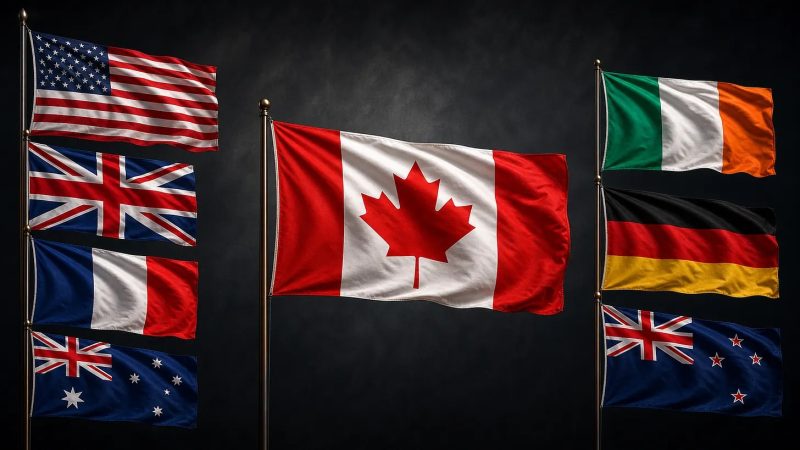
- UK (majoritarian, FPTP) and Ireland (proportional, STV)
- France (majoritarian, two-round system) and Germany (proportional, MMP)
- Australia (majoritarian, AV)1 and New Zealand (proportional, MMP)
- USA (majoritarian, FPTP) which has no partner to compare against
I will compare the above countries on the following dimensions that Trudeau highlighted as concerns. Note that there will be overlap between these dimensions, e.g. “instability” can refer to a growing threat of political violence, fractured social cohesion, and polarization.
- Instability – using the World Bank’s measure of political stability.
- Doing “what’s best for the country.” I am going to use “dissatisfaction with democracy” as a proxy measure for this because research shows it tracks with governments’ failure to deliver probity, economic security, and responsiveness to public concerns (see the footnote for more).2 Unfortunately the best measure, published by the Bennett Institute, is from 2020.
- Where fringe parties and radical departures from the mainstream hold more political power.
- Heightened anti-immigrant sentiment and xenophobia (an extreme belief that Trudeau put the spotlight on when he criticized Kellie Leitch).
- Polarization and division, mostly relying on the V-Dem political polarization score, but also sometimes on opinion polls.
The easy data
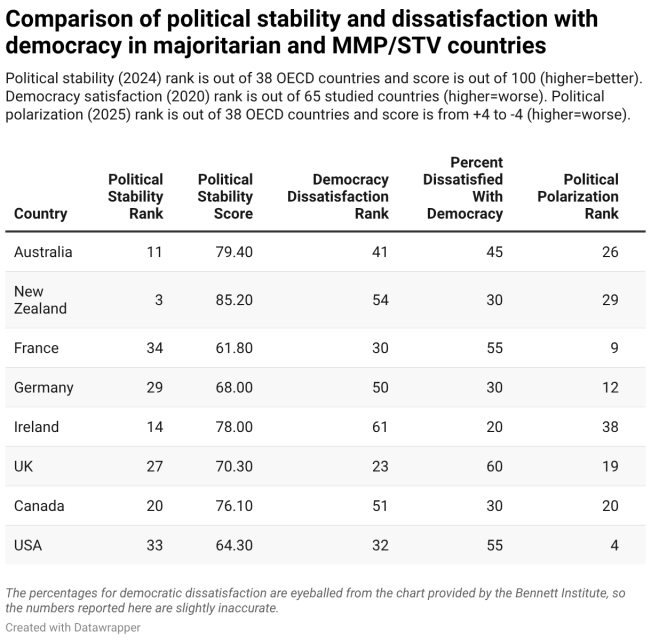
Political stability, dissatisfaction with democracy, and political polarization are easiest to compare with simple data. With political stability, PR countries on average perform better. With democratic dissatisfaction, PR countries dramatically outperform majoritarian countries. On political polarization, PR countries outperform, with Ireland achieving the lowest polarization score in the whole OECD.
Further, when you examine the three comparison pairings listed above, the PR country performs better on each dimension for all three pairs. Trudeau feared that proportional systems would bring instability, polarization, and that voices which undermine what’s good for the country would be augmented, but it’s the majoritarian countries where these concerns are more severe.
The USA
Canadians are generally attuned to the ongoings of US politics, so I’m not going to bother with citations here. The country is unstable, one of the most divided and polarized countries in the OECD, one man who uses extreme methods and who represents radical beliefs is exerting control over all branches of government, there are factions of the public that want to launch a civil war, anti-immigrant sentiment is incredibly strong, democratic institutions are being completely undermined, political stability in the country is awful, and democratic dissatisfaction isn’t so great either. It’s everything Trudeau feared and much worse.
Ireland and UK
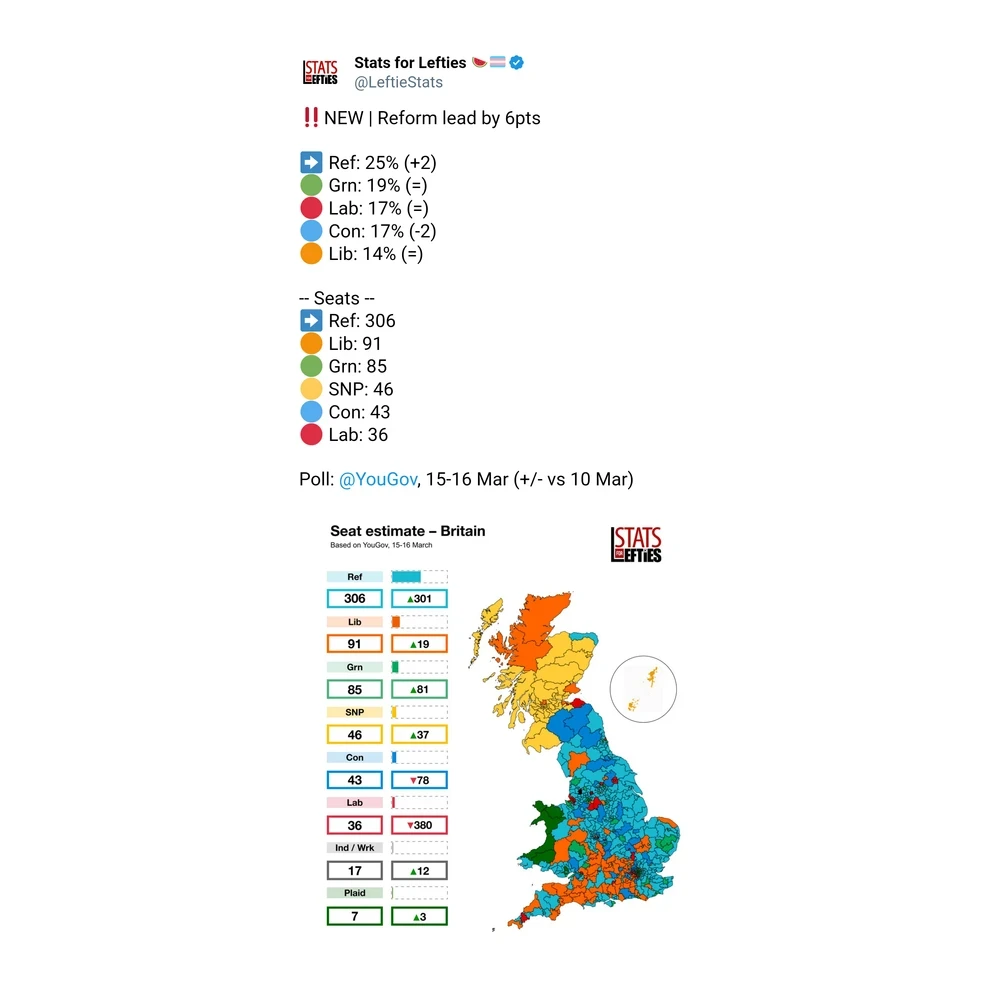
The rise of UK’s Reform party is what made me want to write this commentary. It can be characterized as radical, far-right (though a contested characterization), populist, nationalist with profound anti-immigrant sentiment, critical of multiculturalism while promoting a narrower conception of national identity and values, and skeptical towards liberal institutions and mainstream consensus.
Reform is everything that Trudeau claimed to have feared, but apparently didn’t believe could actually be a material concern under the FPTP system. However, Reform is currently polling NEAR MAJORITY TERRITORY. Some modeling shows that they really could win a majority with current levels of support, depending on the specific ways that strategic voting happens (a casualty of FPTP, I might add). This isn’t just a case of a radical party holding the balance of power—which was Trudeau’s criticism of PR—Reform has a real shot at holding all the power.
Further, the UK has become a very polarized and divided country. It’s also become a very unstable country, with the vast majority of the public fearing a rise of political violence that will throw the country into chaos.
You would expect something similar to happen in Ireland; it faces many similar material pressures such as rapidly rising immigration, a deep housing crisis, and a cost-of-living crisis. However, Ireland is a much more stable country right now and the least polarized in the OECD. So while polarization, division, and social unrest are growing in response to the aforementioned pressures, the scale is nothing like that of the UK.
Xenophobia and anti-immigrant views are difficult to compare from the polling I found, but these perceptions are certainly growing in Ireland and both countries have experienced riots related to the issue. However, if we take the political agenda as a reflection of society, the immigration topic hasn’t consumed Ireland the way it has consumed the UK.
The material pressures in Ireland are fueling political dissatisfaction among the electorate, but parties that represent a radical departure from the mainstream akin to Reform UK have stayed at the margins. Trudeau would predict that these marginal parties would hold the balance of power in a place like Ireland, but that’s not happening; the legislature and its agenda are entirely dominated by centrist parties and pragmatic independents. This correlates to Ireland’s position as one of the least democratically dissatisfied countries in the world; voters aren’t disillusioned with the establishment and are sticking with them. By contrast, the UK has one of the most dissatisfied electorates in the world, so I’m not surprised that voters have chosen a radical departure from the mainstream.
Across all 5 dimensions being analyzed, the proportional country is performing much better, while the majoritarian country is falling victim to the exact problems that Trudeau based his rejection of PR on. In addition, Reform is not merely exerting influence on UK politics, it is on the verge of taking total control thanks to FPTP’s distortions, while Ireland’s fringe parties are tightly contained. Major L for Trudeau on this one. (side note: Brexit was also a severely polarizing and destabilizing event, which further contradicts Trudeau’s opinion on majoritarian systems ensuring stability).
France and Germany
When it comes to stability, both of these countries are in a worse position than either Ireland or UK, but France has deteriorated much further, and it’s the same story with polarization. Democratic dissatisfaction is also considerable in France, but only mildly so in Germany.
AfD is currently the most popular party in Germany, and it is also a much more extreme party than Reform UK. However, Germany’s proportional nature means that AfD is nowhere near achieving a majority government, and although AfD has radically altered political discourse, it’s been completely shut out of governance and doesn’t hold the balance of power, as Trudeau would have feared.
Over in France, National Rally (RN) is also a powerful far-right party, but doesn’t have the same extreme elements as AfD: RN is trying to carve out mainstream legitimacy, while AfD is committed to its extreme beliefs (but that said, RN is a more extreme party than Reform UK). There’s no doubt that AfD is the more problematic party, but it’s still isolated in the legislature. RN is also the most popular party in its country. but by contrast has managed to directly alter French policy, and mainstream parties are willing to make inroads to cooperate with it.
RN has also come stunningly close to claiming total power, and it happened because France’s electoral system massively inflates the number of seats a party can win, just as FPTP does. The only reason this didn’t happen is because RN’s major opponents frantically created tactical alliances to prevent vote splitting. In this case, the majoritarian electoral systems that Trudeau prefers narrowly made his worst fears come true—the fear of a far-right, anti-immigrant, and divisive political party taking total control of the legislature.
On the issue of anti-immigrant sentiment, it seems to be pretty even. However, Germans seem to be more extreme in this belief given the much greater scale of hate crimes that are taking place.
In summary, the proportional country fares better on 4/5 of Trudeau’s concerns, where only the degree of anti-immigrant sentiment is worse in Germany. And while AfD is the more extreme political party, its influence is constrained by the mechanisms inherent to proportional systems, whereas France’s electoral distortions directly bolster the strength of its far-right party, thus requiring external measures of containment.
Australia and New Zealand
As a reminder, Australia uses the electoral system that Trudeau wanted to switch Canada to, the Alternative Vote—but Australia fails as a ringing endorsement of Trudeau’s claims. Political stability is better than all the European countries, but democratic dissatisfaction is worse than all proportional countries. Compared to New Zealand, Australia performs worse on both.
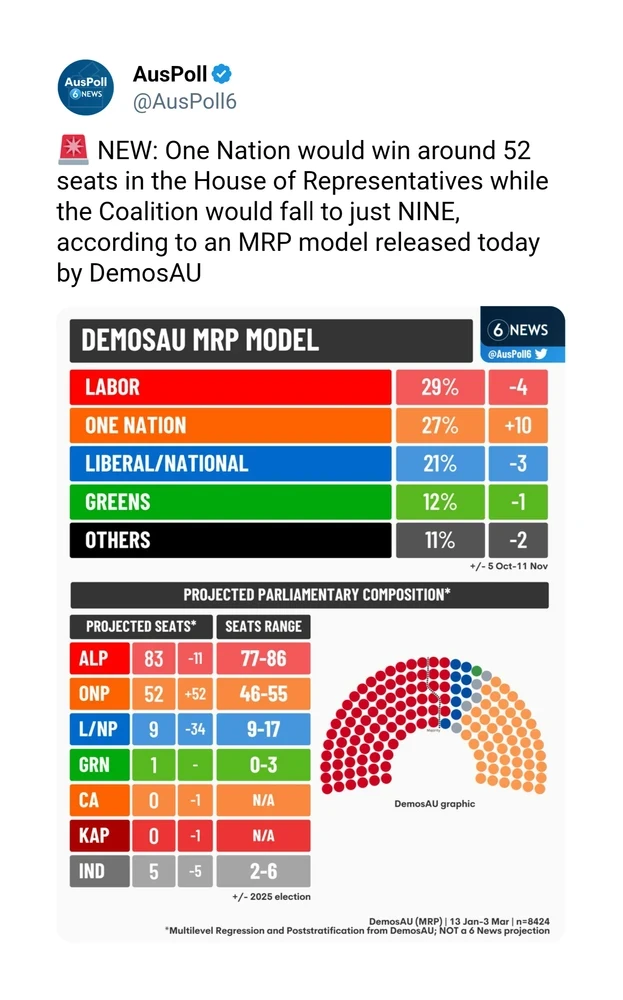
Australia’s One Nation—a political party that was once dismissed as fringe—is similar to Reform UK in both ideology and its recent surge to the top of everyone’s mind. Recent polling places it in a dead heat with the current governing party, Labor. And thanks to the distortions that come with majoritarian systems, including the AV system, current modelling shows that this once fringe party will win a greater percentage of seats than its vote share to become the official opposition.
Shifting focus to New Zealand, New Zealand First (NZF) is the closest analgoy to One Nation, but it’s not a good one. While NZF can be characterized as nationalist, it is not considered radical or a departure from the mainstream. All parties in the New Zealand legislature abide by political conventions—unlike One Nation, which is sometimes described as political “wrecking ball” because of the desire to confront, dismantle, and fundamentally reshape certain elements of Australia’s political and institutional systems.
So while NZF has governed through coalitions and exerted influence on policy, does this align with Trudeau’s assertion that PR allows fringe or radical elements to hold the balance of power? In era of surging radical parties, NZF is pretty tame (I’d say it’s about as extreme as a combination of the Canadian Conservative Party and Bloc Quebecois), so I wouldn’t say so. All this is to say that New Zealand has been able to successfully keep extreme elements out of its politics.
Voter support for NZF is also weak, with polls showing just over 10% support, which is less than half the support One Nation currently receives. The difference in support reflects a much more extreme anti-immigrant position taking hold in Australia, which can be seen in opinion polling about immigration as well: while Australians have overall soured on immigration, New Zealanders have a more mixed and positive view of it.
Last is the issue of polarization and division. Opinion polling shows a polarized and divided Australia, and Australian intelligence sees the risk of political violence “flashing red.” Similar opinion polling was not available for New Zealand, but a less extreme politics suggests a society that is also less fractured. New Zealand’s excellent ranking in political stability and better score on the polarization index also point to a less polarized society.
Trudeau outlined a clear mechanism for how AV would benefit a country: “Parties would spend more time trying to be people’s second or third choices and people would be looking for things they have in common rather than trying to polarize and divide.” By performing worse on all 5 dimensions, Australia demonstrates a collapse of his argument, while its proportional neighbor has managed to achieve everything Trudeau wanted by maintaining remarkable political stability, resilience to xenophobic sentiment, and resistance to extreme political elements in the legislature.
Conclusion
Trudeau’s thesis was that these problematic outcomes should be happening in PR countries, not majoritarian ones. Given the observation we see, there is no basis to say that majoritarian electoral systems can minimize these concerns, there is simply no supporting evidence for this.
The idea that PR (at least the MMP and STV systems) would definitely lead to these outcomes is also not supported by the evidence. To be able claim that PR would cause extremism, or that majoritarian systems protect against, you would at least need to observe an association that suggests this possibility, but we do not observe any such association.
What we do have an association for is that MMP/STV are protective against democratic and social decay, while majoritarian countries inflame these issues, which is the opposite of what Trudeau believed. This does not mean causality, but it does make a causal relationship possible.
This is just an observational analysis, one that’s helped by those excellent country pairings (it controls for some confounding variables), but actually making causal statements that one electoral system is responsible for certain outcomes is not possible. However, I think there are very plausible mechanisms whereby proportional systems prevent these failures from occurring.
Ultimately, polarization, division, and extremism derive from a government’s inability to deliver good outcomes for the public. I believe that because politicians in majoritarian systems are shielded from outside competitors (due to issues like vote splitting and wasted votes) they are much more complacent about their own mediocrity and ignore growing societal issues. They do not believe that some disruptive political force can realistically overcome the shielding of a majoritarian electoral system, believing that voters have nowhere else to go, and so the disillusionment and anger of the public simply builds. One day, the pressure becomes overwhelming, the shielding fails, and anger consumes everything.
The illusions of invincibility, invulnerability to failure, and certainty of success, are symptoms of groupthink, which political parties are highly vulnerable to, and there is very little that can be done to remediate this when one party feels entitled to control the whole government. Groupthink can explain why governments in majoritarian countries completely neglect the threat of a disruptive political force until it blows up in their face.
In proportional systems, coalitions tend to form, and different political parties sharing power helps alleviate the irrational decision-making of groupthink in a majority government. In addition, politicians must always be wary about losing their spot at the top because voters can easily select alternative parties without the inhibitions of vote splitting and vote wasting. In a proportional system, there is no shielding to give a false sense of security: politicians understand that if they are complacent, a disruptive political force can easily swallow them, so they must stay vigilant and proactive about emerging political issues to keep the public satisfied. In proportional systems, complacency and corruption can be easily punished by the electorate, which keeps politicians disciplined.
Australia uses the Alternative Vote for its lower house, and Single Transferable Vote for its upper house. I am classifying it as a majoritarian country because the lower house dominates the pubic discourse, sets the political agenda, and has substantially greater public exposure.
Why is “dissatisfaction with democracy” a good proxy for “what’s best for the country”? In their report, Cambridge University’s Bennett Institute for Public Policy makes the explicit link between voter dissatisfaction and objective governance failures:
That means that if satisfaction with democracy is now falling… [it is] because democratic institutions are falling short of the outcomes that matter most for their legitimacy, including probity in office, upholding the rule of law, responsiveness to public concerns, ensuring economic and financial security, and raising living standards for the larger majority of society…. democratically elected governments have not been seen to succeed in addressing some of the major challenges of our era, including economic coordination in the eurozone, the management of refugee flows, and providing a credible response to the threat of global climate change. The best means of restoring democratic legitimacy would be for this to change.
3
Proportional representation ensures more choices get real power without giving a minority total control.

4
We speak of shared values, but most of Europe uses proportional representation while Canada still grants majority power with 30% to 40% of the vote.
(media.piefed.ca)
We won't be united on democracy until we adopt a system that ensures governments reflect a broad majority consensus.

5
6
When politicians win majorities without a majority of the vote, they can change rules to suit themselves and limit transparency.
(media.piefed.ca)
Proportional representation creates multi-party governments representing a broad majority, ensuring rule changes require genuine consensus.

7
8
9
10
Proportional representation changes the incentives from winning power to earning it.
That is how top democracies stay strong.

11
Proportional representation adds a vital check by requiring broad consensus before these can be used.

12
The 2026 World Happiness Report is out, and the pattern is clear. Countries with proportional representation rank at the top.
(media.piefed.ca)
That's not a coincidence. These systems push governments to serve everyone, not just swing ridings.
It's time to make every vote count here too.

13
In most democracies, 25% of the vote means about 25% of seats. Under first-past-the-post, it could mean near total power.
This cannot be our future. Canada needs proportional representation.
14
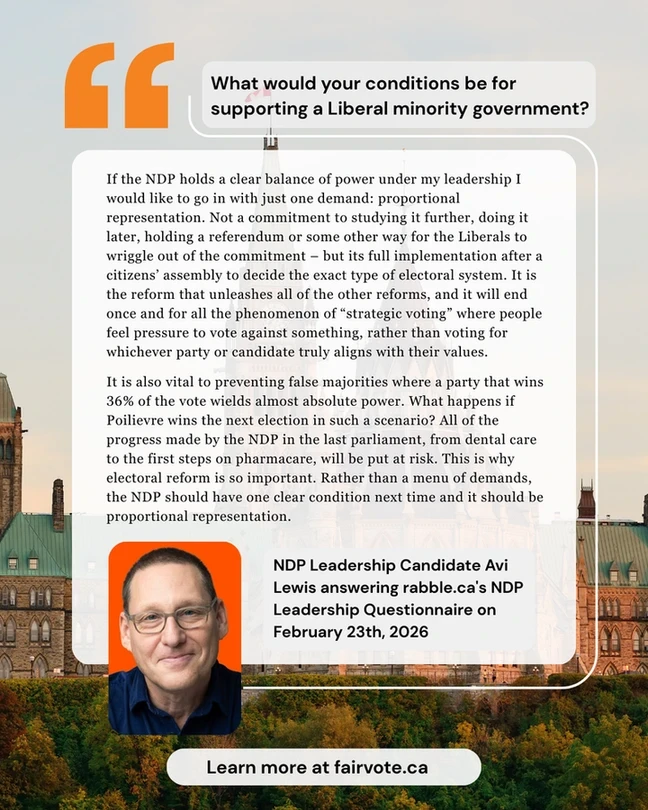
Rabble asked every leadership candidate. We’re highlighting all who said proportional representation should be a condition.
Here’s Avi Lewis’ response:
15
Far right One Nation is surging in Australia and closing in on majority territory.
(media.piefed.ca)
Ranking alone does not fix single winner ridings. Win your base, take swing seats, ignore the rest.
Proportional representation means seats match votes and requires broad support everywhere.
16
17
18
19
20

21

22
Proportional representation rewards policies that can survive change because they are backed by a real majority.

23
That is a serious democratic process that deserves action, not delay.
If you want a voting system where results actually reflect voters, now is the moment to speak up.

24

25
Proportional representation encourages rule based decision making at home and credibility abroad.

view more:
next ›