I can't believe no-one else has posted this yet.
Relevant xkcd: https://what-if.xkcd.com/6/
Also, relevant xkcd video: https://youtu.be/0EytSWiKrFg
I can't believe no-one else has posted this yet.
Relevant xkcd: https://what-if.xkcd.com/6/
Also, relevant xkcd video: https://youtu.be/0EytSWiKrFg
You'll have to take my word for it, but I am pantslessly dancing in victory.
It could also be one person who is having both a heart attack and an asthma attack.
I read "I R Madlad" in the style of "I R Baboon".
"Help I'm trapped in a slogan factory."
Also tell her that we've been trying to reach her about her vehicle's extended warranty.
You just reminded me that we used to get a fried slice with our cooked breakfasts - literally a slice of bread fried in butter.
Infuriatingly, that law only applies to charger 8kW and up. A lot of chargers, especially smaller destination chargers, are 7.5kW.
This is like Dwarf Bread in the Discworld books. It's impossible to starve if you have it with you because while you can, technically, eat it you're absolutely guaranteed to find something else you'd rather eat instead.
Get in heeeeeere...
And aaa... Flarhgunnstow
but it is my number one.
You mean your numbuh one.
...but I might have made the score of the century. £30 the lot. They all boot up happily with 5v power supplied with a couple of Dupont wires and hold at least a little bit of charge. Replacement USB cables and straps ordered, so full testing will need to wait until then.

cross-posted from: https://feddit.uk/post/32080319
In video game design this would be called "emergent storytelling".

In video game design this would be called "emergent storytelling".
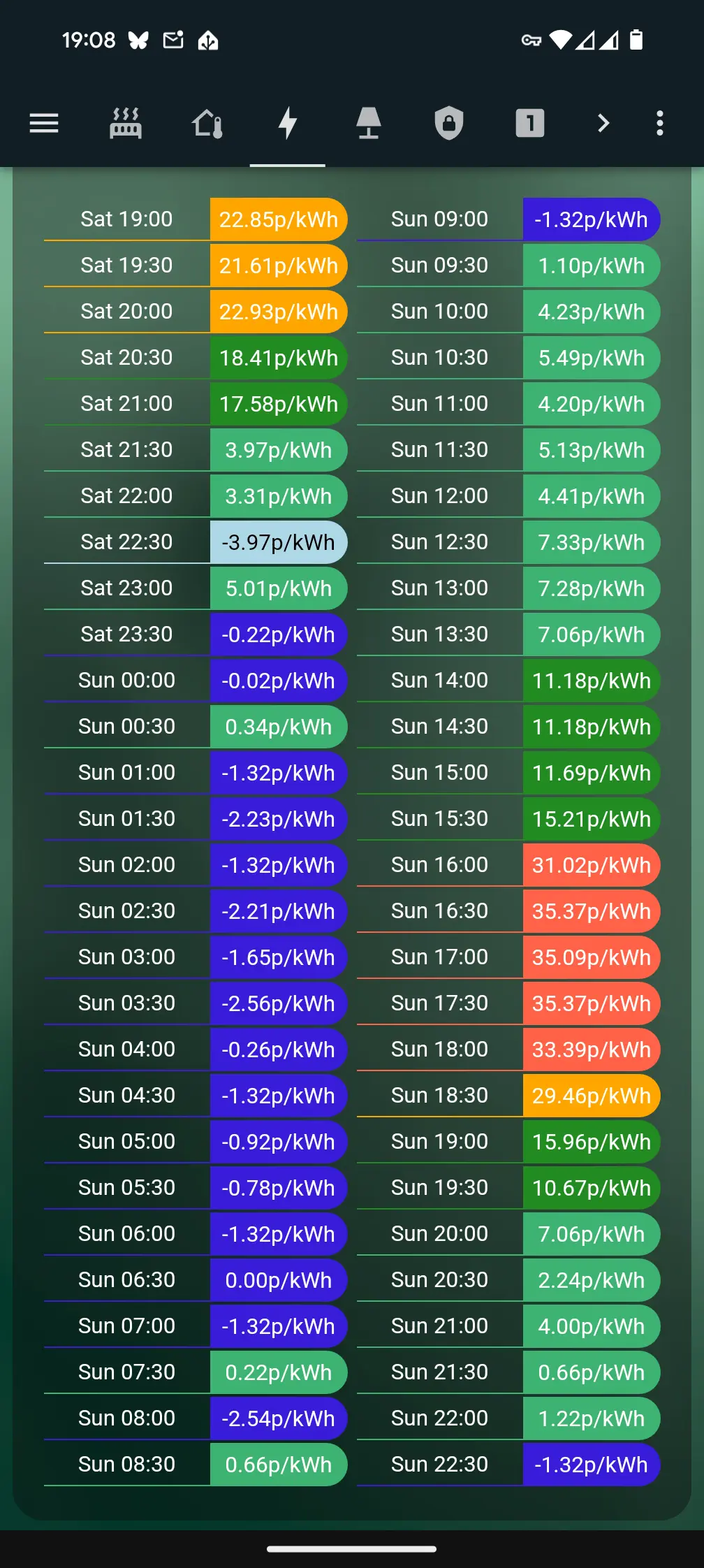
The UK is currently experiencing some prolonged windy weather and my all-renewable energy provider offers dynamic pricing. That means cheap energy and even negative-cost energy. This is where my HA instance shines and saves me a fortune on my power bill. Thanks again to the HA devs for this incredible project.
For the curious, I'm using bottlecapdave's excellent Home Assistant Octopus Energy integration via HACS.
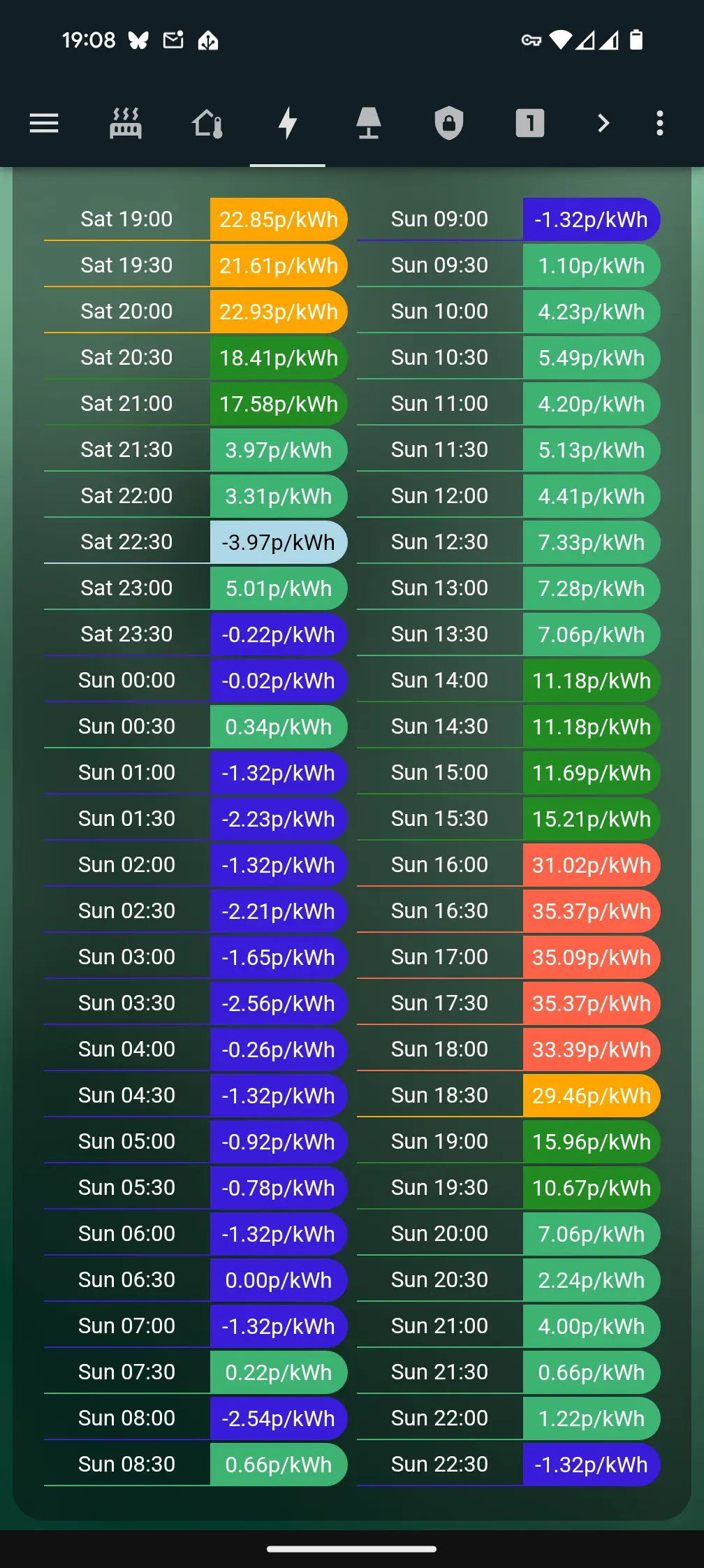
I'm on an electricity tariff with dynamic pricing. The last week has been pretty rough in fairness, but generally it's really rewarding on most days and sometimes, on days like this, it's amazing.
Based on my past calculations, whenever the cost is below ~20p, I'm paying less for heating than I would with a gas boiler. Where the cost of energy is negative, I'm essentially getting paid to use surplus energy.
These water fountains flow constantly with fresh drinking water for anyone to use and they are everywhere in Rome. Covering the spout with your finger forces the water out a hole on top, creating a arch of water at perfect 𝓼𝓵𝓾𝓻𝓹𝓲𝓷𝓰 height. The Romans were/are with us.
