Having so much fun with this thing

My home server misleads... It is the Drôme department of France where I live (originally from the Midwest US though)
There is still quite a bit, it is 27.5x3.25 but can allegedly clear 27.5x4 in the fork! I don't think I'll be needing/wanting that though. It's a fat bike on diet kinda
It's an upgrade I'm planning! I've somehow found myself doing actual mountain bike trails haha (don't really consider myself a MTBer), I think they'd help some hand fatigue for long rides with lots of descending
Having so much fun with this thing
Wise (ex TransferWise) is currently 3.14% on USD, 0.8% on EUR, and I've never seen it much higher for EUR. I've not seen it much higher there or elsewhere (lived in UK/France).
Started reading this article before realizing it's the farmer who makes my favorite brand of rice, Cahokia Rice. It's really yummy
Just to be clear, there is no intention for "Dual Power" to be confused with "White Power", there is no link there.
Dual power is a political term that means different things to different people. In the context of this gathering, it can be defined IMO as
In our view, dual power is comprised of two component parts: (1.) building counter-institutions that serve as alternatives to the institutions currently governing production, investment, and social life under capitalism, and (2.) organizing through and confederating these institutions to build up a base of grassroots counter-power which can eventually challenge the existing power of capitalists and the State head-on.
. . .
This framework of building popular power outside the governing institutions of our present system, to challenge and eventually displace those institutions with truly democratic ones of our own making, is the heart of dual power.
Source: libsoc DSA caucus, since disbanded IIRC
It's not used exclusively by libertarian socialists but by mutualist-leaning folks looking for a theoretical framework that promotes both engaging against traditional power structures/institutions while building independent movements at the same time. FYI, the EN wikipedia article on it is constantly being edited by people of opposing political views, this is the relevant subsection: https://en.wikipedia.org/wiki/Dual_power#Modern_usage_by_libertarian_socialists.
FWIW I haven't seen the term used as much in European lefty circles as in North America, but it definitely attracts anarcho-leaning folks.
Merci beaucoup, this is quite helpful! If we are successful then these will be good problems to tackle down the road. The CDI/CDD thing is something that seems to be quite a bit divide in France (have only lived here 3 years so still getting used to it).
I think there are ways you could provide financing/loan money with defined terms and/or interest rates, so the co-op has debt in your name with a defined risk/reward structure. If you're successful and new members join, there is simply debt in your name in the balance sheet still. At a risk/reward level that hopefully everything thinks is appropriate.
I think entrepreneurship and financing mechanisms can be decoupled from capitalism. In addition to your money being put at risk, it is your time and labor after all at the beginning, and it's not compensated at that time. You could record your hours in setting everything up, it's effectively back wages IMO.
Edit: ofc entrepreneurship and financing methods have existed well before modern capitalism, my point remains!
Curious more about what you learned from your SCOP experience; I'm actually in the process of setting one up with a colleague and would love to hear any tips you have! In terms of culture, things to avoid or lean in to, etc. Merci en avance :)
Yes agreed, ESOP-to-co-op requires a big shift in power away from the top and against the managerial class's interest, which is hard to pull off. More often I've seen the family-owned or conventional corporation get converted to ESOP or worker co-op when the family retires or the company is in financial difficulty. A French glass company just did the latter
Yes, big fan of Mondragon here, though I've heard they've taken some criticism for outsourcing some of their processes to non-cooperatives with poorer working conditions (perhaps in Mexico, might be wrong). But that aside I'm a big fan and suggest to anyone not familiar to read up on them!
To me it sounds like you might be describing more of (in the US context) a company with an Employee Stock Ownership Plan (ESOP) rather than say, a worker cooperative? (which can both be considered employee-owned but with very different contexts)
There is a wide range of possible structures/bylaws/statues for employee ownership that depends on the local regulations as well as the discretion of the employees with voting rights. For example, worker co-ops in France (SCOPs) can allow for external investors (capped to a certain % of equity, no voting rights), a voting system where one worker = one vote (independent of ownership %), require a fixed % of profit to be reinvested to the company's reserves before any profit sharing, etc.
I also would prefer to work at an employee-owned enterprise but to me it boils down to the culture of the people working there, independent of the chosen legal form and/or that imposed by the state. The workers can decide to do things in a capitalistic way or not, the legal form and bylaws are there to help prevent major abuse but if people want to act in a rent-seeking way, they're gonna find a way to do it, IMO.
cross-posted from: https://midwest.social/post/29115624
Been having a blast living car-free with my Jones SWB, embracing the low-tire-pressure lifestyle. Also, hello lemmy / fedi bikers!
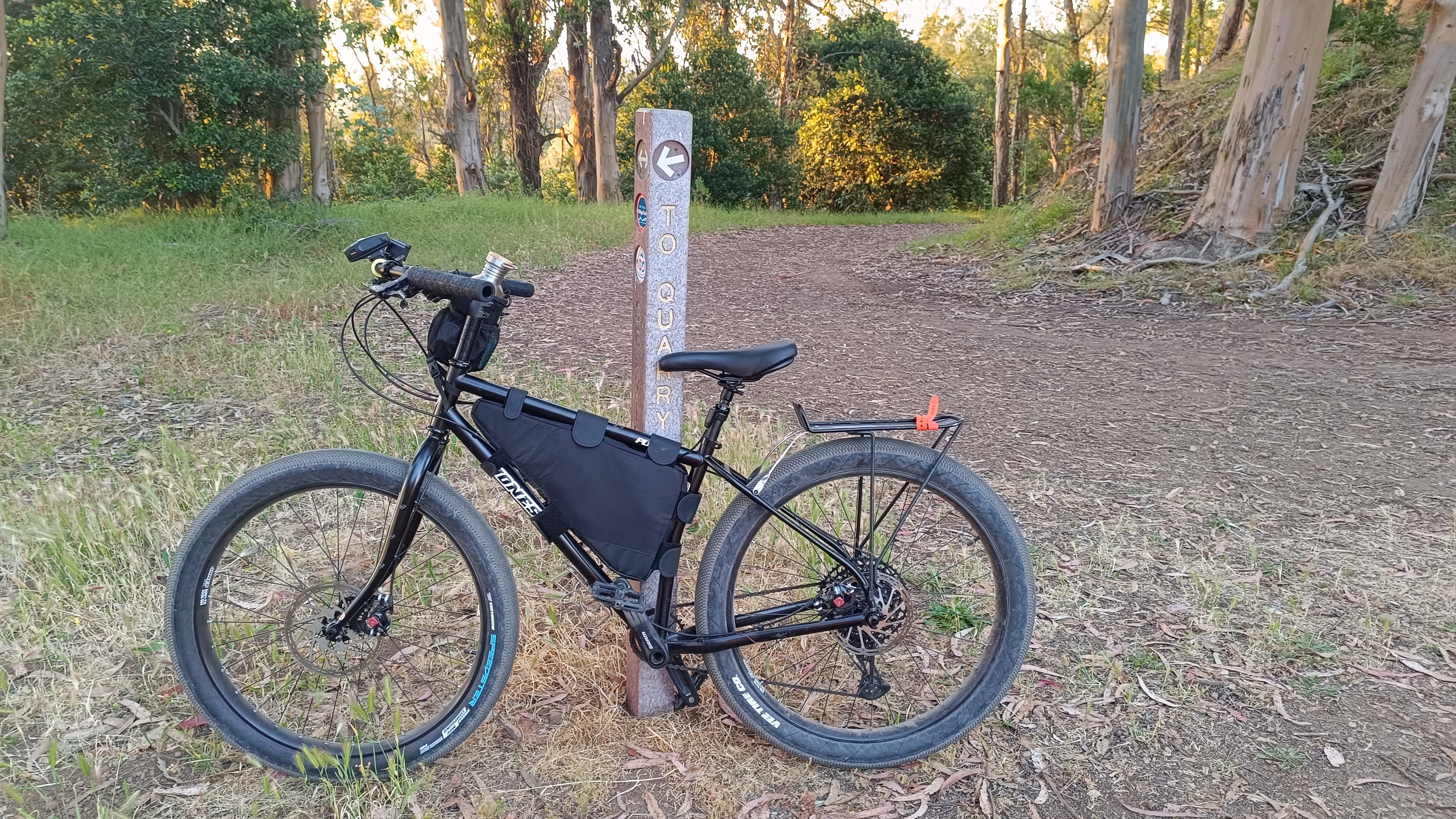


Been having a blast living car-free with my Jones SWB, embracing the low-tire-pressure lifestyle. Also, hello lemmy / fedi bikers!