I enjoy Fedora. I can complain all day about Redhat being evil, but I haven't found a desktop distro that scratches the same itch, so I'm happy for the time being.
On the server side, Debian is perfect for me and I have zero qualms with it.
I enjoy Fedora. I can complain all day about Redhat being evil, but I haven't found a desktop distro that scratches the same itch, so I'm happy for the time being.
On the server side, Debian is perfect for me and I have zero qualms with it.
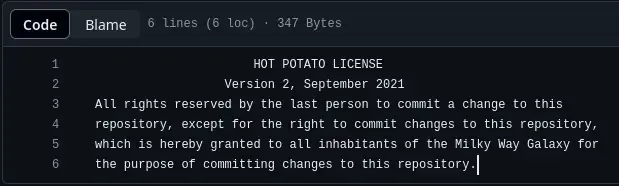
Luckily for you, there's a version 2!
Sadly a lot of the privacy switches are exclusive to enterprise and education users, but our endpoints are running Pro (we have our previous supervisor to thank for that). I guess I'll hope this is one of the ones we can just toggle off without any fuss.
I'm curious whether the increasingly invasive telemetry of modern Windows will have legal implications surrounding patient privacy here in the US. I work IT in the healthcare field, and one of our key missions is HIPAA compliance. What, then, will be the impact if Microsoft starts storing more and more in-depth data offsite? Will keyboard entries into our EHR be tracked and stored in Microsoft's servers? Will we subsequently be held liable if a breach at Microsoft causes this information to leak, or if Microsoft just straight-up starts selling it to advertisers? Windows is our one-and-only option for endpoint devices, so it's not like we can just switch.
I genuinely don't have the answers to these questions right now, but it may start to become a serious conversation for our department in the future if things continue at the trajectory they're going at. Or, maybe I'm just old and paranoid and everything will be okie dokie.
Welp, looks like I'm gonna be busy next week. We have a lot of devices that got stuck on this, and the script they provided a few weeks back didn't work on a good number of them.
I will say that, with Kagi, I enjoyed the custom site ranking feature. That said, the image results usually sucked, the site searches weren't really that much better than something like DDG, and it overall wasn't worth supporting a company with another egotistical tech bro CEO.
Shoot, that's hardly an exaggeration - I was only recently able to deprecate the last of our Server 2003 instances, which was running a program originally designed for 2000 Server!
I work IT at a hospital here in the US. The key issue is compatibility. Most of our vendor software flat-out does not support Linux at all, either on the client or server side. Shit, half of it barely even works on modern versions of Windows.
Been on it for about a year now, both with my desktop's A770 and my laptop's AMD iGPU. Experience has been pretty much flawless.
I've had a pretty smooth experience with both the Pixel 6 and the Pixel 7 Pro.
Are you doing personal file storage, or is this for backups from a server? If it's the latter case, and if your use case would benefit from deduplication, you could just stay on Backblaze and use something like Duplicacy (available as a free CLI app or paid web UI) to deduplicate and encrypt your files. This is the approach that I use for my homelab. The only issue you run into is that, in the case of Duplicacy, you have to use the CLI or web UI to restore your files (and god help you if you lose your keys).
I still use Clonezilla to back up devices before performing reinstalls/major updates (when Timeshift isn't practical). No issues so far backing up and restoring both Windows and Linux partitions/drives.