Interesting. One potential difficulty in implementation would be the creation of a believable decoy conversation (for the dictator to read) -- but LLMs might be able to automate this.
Their bias is a direct response to the rhetoric from the 'leaders' of the AI industry, who have collected billions of dollars and turned it into BS expectations.
The only way it matters is that maybe there's a way to escape 'to a higher plane'. But even without a simulation, there's always opportunities to understand the universe better and maybe make some fundamental breakthrough. Or there's mysticism. Of those three, a simulation may offer the least chance for a breakthrough.
Given how our current society operates, I think it's more likely we'd have the "Spacers" from Asimov. A small number of very rich people living with their automated servants.
syncretism is my default. The only reason to choose one at the exclusion of another is if conclusions are based on fundamentally different assumptions. For example, ancient stoics would borrow from Epicureans when they made a good point. Likewise, Thomas Jefferson borrowed from both John Locke and others when drafting the Declaration of Independence. https://www.reddit.com/r/AskHistorians/comments/15f6pl/comment/c7m1fpn/
I like them both. For stoicism, I like Massimo Pigliucci's work. For absurdism, Camus. Are there any modern day Camus'?
p.s. I created a community for discussing topics like these in more depth: https://yall.theatl.social/c/philosophy_of_life
I was just pondering something similar -- a lot of the current weirdness seems to come from a refusal to face mortality head on. They start reaching for straws, hoping that there is some magic elixir that will save them, then getting angry when there isn't one.
True. I see that Parliament also has a Speaker of the House with a similar role to the US Speaker of the House. I was confused why you equated the Prime Minister with the House Majority Leader, rather than the Speaker of the House. It sounds like in the UK, when a party gets a majority in Commons, their leader usually becomes PM, while in the US, their leader becomes Speaker.
The President in the USA can veto laws. In a Constitutional sense, this gives them more power than any other single legislator. They are also the leader of their party, which can make them just as influential as the Speaker of the House (House Majority leader) when their party has the majority. The public also pays more attention to the President than the Speaker. For these reasons, and because Presidents have defined terms, it's convenient shorthand to describe a period of time.
The 'selective enforcement' occurred because strict enforcement would be much more expensive than what anyone wanted -- yet a fanatical minority was able to play games in Congress to repeatedly block bipartisan deals for "comprehensive immigration reform" (under Bush, Obama, and Biden).
Yes this happens alot. That is also how my HOA's rules were explained to me. Laws are often a farce -- just a distraction from the raw use (abuse) of power.
The law should be revoked. I would not assume that the legislature is more legitimate than the local prosecutor who decides not to enforce. Often this situation happens when the legislature is captured by special interests who are unconcerned with popular will (and the risk of resistance), or by a national government trying to micromanage local and personal affairs.
cross-posted from: https://yall.theatl.social/post/3357080
Fixed that for you
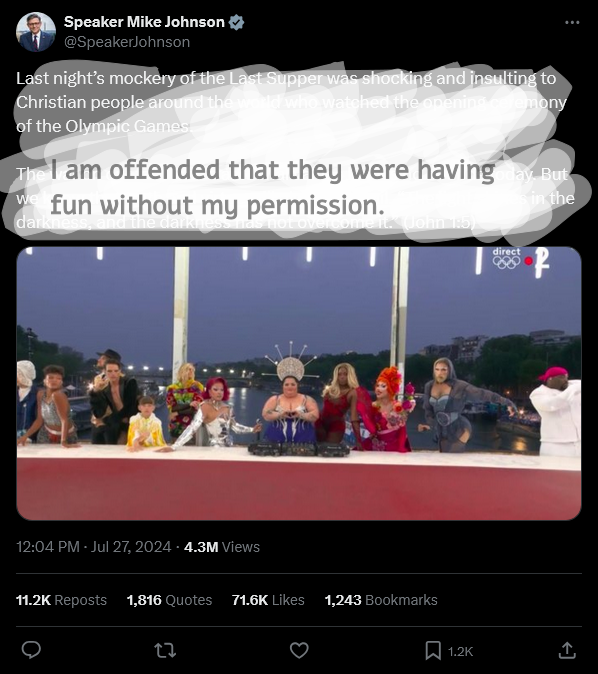
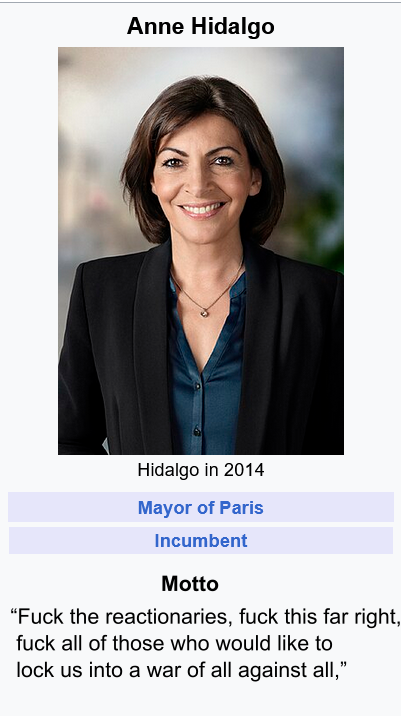

cross-posted from: https://yall.theatl.social/post/3356775
Dionysus wants you to know...
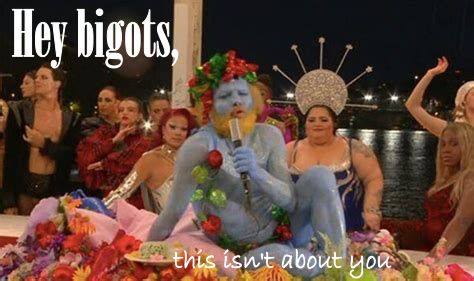
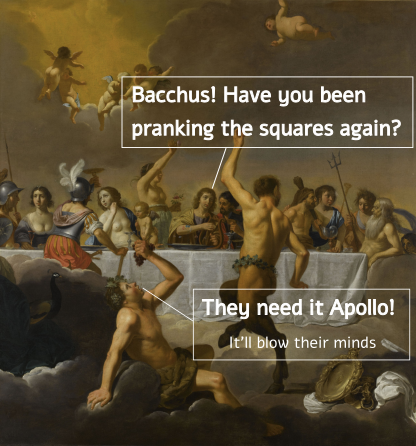
Fixed that for you
Dionysus wants you to know...
view more:
next ›