For years I’ve had a dream of building a rack mounted PC capable of splitting its resources to host multiple GPU intensive VMs:

  • a few gaming VMs
  • a VM for work that can run Davinci Resolve and Blender renders
  • an LLM server
  • a Stable Diffusion server
  • media server

Just to name a few possibilities…

Everytime I’ve looked into it, it seemed like the technology just wasn’t there yet. I remember a few years ago Linus TT took a shot at it, but in the end suggested the technology (for non-commercial entities) just wasn’t in a comfortable spot yet.

So how far off are we? Obviously AI focused companies seem to make it work, but what possibilities exist for us self-hosters who might also want to run multiple displays in addition to the web gui LLM servers? And without forking out crazy money for GPU virtualization software licenses?

top 50 comments

sorted by: hot top controversial new old
[–] 49 points 2 years ago (1 child)

The technology has "been there" for a while, it's trivial do setup what you're asking for, the issue is that games have anti cheat engines that will get triggered by the virtualization and ban you.

  • source
  • hideshow 2 child comments
  • [–] 8 points 2 years ago (4 children)

    Which games do that? Running pasthrough gpu on windows for destiny and halo at least gave me 0 issues for years

  • source
  • parent
  • hideshow 6 child comments
  • [–] 15 points 2 years ago (3 children)

    Anything using vanguard such as valorant and league of legends, battleye such as pubg, destiny 2, and rainbow 6 siege, and easy anti cheat such as fortnight blocks virtual machines. Vanguard is especially bad because it will not allow to run the game with Intel-VT/AMD-V enabled even if you are running bare metal as of its last update.

  • source
  • parent
  • hideshow 6 child comments
  • [–] 3 points 2 years ago

    Vanguard is especially bad because it will not allow to run the game with Intel-VT/AMD-V enabled even if you are running bare metal as of its last update.

    The Vanguard anti-cheat is incredibly invasive and something akin to malware, so that's not surprising.

  • source
  • parent
  • load more comments (2 replies)
  • [–] 22 points 2 years ago* (5 children)

    I’ve been doing exactly that at home for a couple years now. First with Parsec, now Sunshine/Moonlight.

    Host is Proxmox on Ryzen 5800x, 64gm RAM GPU is 2070 Super, with VGPU patched drivers from https://gitlab.com/polloloco/vgpu-proxmox

    When I’m gaming I’ll dedicate the full 8Gb to my windows Vm, otherwise I split it in 2 or 4Gb chunks to Jellyfin or my home camera monitoring. 8gb can’t split very many ways, and most things require at least 2 to run.

    Locally at home I can run 1440p 60fps rock solid over wifi on any device, from my phone/old laptop/apple tv/raspberry pi. Remote I can do 1080p60, but a bit more hit or miss depending on my network connection.

    Experimenting with LLMs I’ve done through the same windows VM, or to a ubuntu dev VM. Works the same way. I’m thinking of transitioning my gaming VM to Linux too.

    The amount of VRAM is the hard limitation to get past, the virtualization tech itself has been there for a while.

    But to be perfectly honest……it really was just a “let’s see if I could do this” type task, direct GPU pass though is more straightforward and it’s not really worth splitting 8Gb these days. Unless you get a card with significantly more VRAM passthrough is much less work.

  • source
  • hideshow 8 child comments
  • [–] 6 points 2 years ago (1 child)

    This is really amazing! In theory, can you can use 2gb with 4 different VMs?

  • source
  • parent
  • hideshow 2 child comments
  • [–] 5 points 2 years ago

    Sure, but you’ll get diminishing returns most likely as consumer hardware doesn’t really have the resources to scale that way very well if all the VMs are running demanding apps simultaneously.

    Even for something like 4 VMs that just do NVenc, there are limits for how many streams the GPU can do. I think there’s another patch that lets you raise that, but at some point you’ll run out of resources quick. Even powerful consumer gear isn’t really designed to be used by more than one user/app and it starts to show the more you virtualize and split those resources.

  • source
  • parent
  • load more comments (2 replies)
    [–] 14 points 2 years ago* (2 children)

    I bought a cheap used Dell R710 on Facebook marketplace for like $100 or so, as well as an ups, rack, 10g switch, etc, from various other sellers. All told, I’ve got about $500 in my server setup.

    Installed proxmox on it. It’s “free” if you don’t buy a license. You just have to put up with a little nag screen when you open the control panel but it still works 100%, much like winrar.

    Works great.
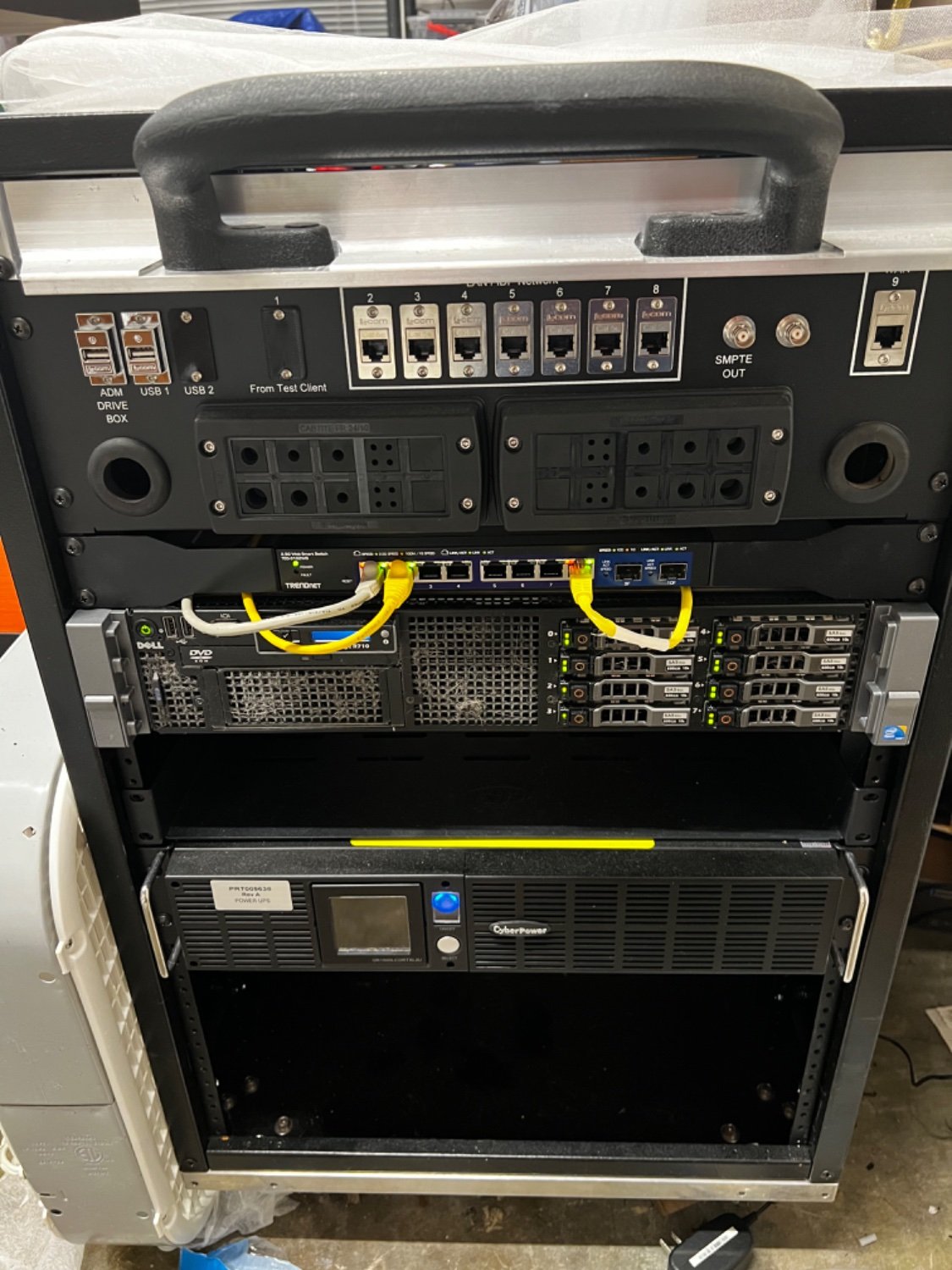
    Edit: just realized this is in c/selfhosted AND I misunderstood the post. I’m gonna leave it here just on the off chance it’s useful to somebody, but I acknowledge it’s not what you’re looking for.

  • source
  • hideshow 3 child comments
  • load more comments (1 reply)
    [–] 10 points 2 years ago*

    I know you asked about VMs, but fwiw there are GPU-capable containers now: https://docs.nvidia.com/datacenter/cloud-native/container-toolkit/latest/install-guide.html

    Used one of these and the setup is as easy as it sounds. It can run Houdini, Stable Diffusion.

  • source
  • [–] 10 points 2 years ago (6 children)

    I've also wanted to do this for a while, but there were always a few too many barriers to actually spin up the project. Here's just a brain dump of things I've seen recently.

    vGPUs continue to be behind a license. But there is now vgpu_unlock.

    L1T just showed off PCIe "fabric" from Liqid that can switch physical devices between machines.

    Turning VMs on and off isn't as slick as either of the above, but that is doable today. You'll just have to build all the switching automation yourself. That could just be a shell script running QEMU/libvirt commands, at a minimum.

  • source
  • hideshow 6 child comments
  • load more comments (6 replies)
    [+] 9 points 2 years ago* (last edited 1 year ago) (1 child)
  • [–] 9 points 2 years ago (1 child)

    You're not really describing your use-case here. Are you just trying to run a server that does all your rendering for you so you can play games elsewhere? Yes, that's totally possible.

    If you're trying to describe a business...no, it's not possible, scalable, or profitable.

    I'm curious as to what your intentions are here though.

  • source
  • hideshow 2 child comments
  • [–] [S] 6 points 2 years ago (6 children)

    I have a workstation I use for video editing/vfx as well as gaming. Because of my work, I'm fortunate to have the latest high end GPUs and a 160" projector screen. I also have a few TVs in various rooms around the house.

    Traditionally, if I want to watch something or play a video game, I have to go to the room with the jellyfin/plex/roku box to watch something and am limited to the work/gaming rig to play games. I can't run renders and game at the same time. Buying an entire new pc so I can do both is a massive waste of money. If I want to do a test screening of a video I'm working on to see how it displays on various devices, I have to transfer the file around to these devices. This is limiting and inefficient to me.

    I want to be able to go to any screen in my house: my living room TV, my large projector in my studio room, my tablet, or even my phone and switch between:

    • my workstation display running on a Window 10 VM
    • my linux VM with youtube or jellyfin player I use as a daily driver
    • a fedora or Windows VM dedicated to gaming, maybe SteamOS
    • maybe a friend comes over for a LAN party and we both can game without having to set up a 2nd rig
    • I want to host an LLM or stablediffusion server without having to buy a new GPU with enough VRAM to run SDXL
  • source
  • parent
  • hideshow 6 child comments
  • load more comments (6 replies)
  • [–] 8 points 2 years ago (1 child)

    You can use proxmox to do most of this. Currently my set will only pass-through the gpu to one VM. I have heard of splitting the power among VMs but I have not gone down that rabbit hole. If I want to play with llms I fire up that server, if I want to game, I shut that down and fire up my windows 10 vm.

  • source
  • hideshow 2 child comments
  • [–] 8 points 2 years ago (1 child)

    I currently have a setup exactly like this, with a threadripper 2950x, an RX 6600, and a 2070 super.

    Let me know if you have any questions in the specifics, but its 100% possible

    Best part of this setup is being able to connect to both via sunshine on many displays at once

  • source
  • hideshow 2 child comments
  • [–] [S] 3 points 2 years ago (1 child)

    I’m curious in a more in depth breakdown of your setup if you don’t mind. What is latency like and how are you handling switching?

  • source
  • parent
  • hideshow 2 child comments
  • [–] 4 points 2 years ago*

    I have a rack server in the garage with a gaming PC in it, 2 PSU's and the 2 GPU's mentioned, all running on Debian (which I soon plan to swap to nixos).

    The AMD GPU's is passed through to a windows VM with 8 gigs or so of ram, for VR development in the garage usually, but sometimes is streamed as well.

    The second Nvidia GPU goes to my linux machine on Ubuntu just for ease of patched nvidia drivers, a couple virtual monitors with an xconfig like this, and is my daily driver with 16 gigs of RAM.

    Both use Virtio drivers for disk, network, and anything else I'm forgetting, Pcie passthrough via KVM/QEMU on the host.

    I'd say the latency hangs around 5ms when streaming both at once, and never comes close to saturating the gigabit connection, but I'm sure some optimisations could be done somewhere along the line.

    Clients run on anything from an Xbox series X to a random PC, hopefully soon an orange pi (worried about latency though).

    When I have a workload requiring both GPU's I just keep 2 moonlight windows open and use the keybinds to unfocus the mouse then alt+tab to swap between them.

    I don't have any complaints, although one time when my thermal setup was worse I left 2 copies Subnautica running for my wife and I to at Nitrox together, and it did start to drop in fps on the Linux machine once we picked it up after an hour or 2 running the games AFK.

    Edit to add I'm mostly using this for gaming right now, but its handled everything (within reason) that I've tossed at it, but I'm planning on soon setting up this sometime soon also across a couple other PC's, but as of right now the VM's feel as if they're entirely distinct PC's from an external perspective

  • source
  • parent
  • [–] 8 points 2 years ago* (last edited 2 years ago) (3 children)

    OK, but why?

    Well, for fun and as a cool hobby project, I get that. That is enough to justify it, like any other crazy hobbyist project. Don't let me stop you.

    But in the spirit of practicality and speaking hypothetically: Why set it up that way?

    For self-hosting why not build a few standalone machines and run off that instead? The reason to do this large scale is optimizing resources so you can assign a smaller pool of hardware to users as they need it, right? For a home set of two or three users you'd probably notice the fluctuations in performance caused by sharing the resources on the gaming VMs and it would cost you the same or more than building a couple reasonable gaming systems and a home server/NAS for the rest. Way less, I bet, if you're smart about upgrades and hand-me-downs.

  • source
  • hideshow 4 child comments
  • load more comments (2 replies)
    [+] 8 points 2 years ago* (last edited 1 month ago)
    [–] 7 points 2 years ago (2 children)

    I've recently tried to do that using sunsine and different linux gaming distros and it was awful, the VM was working great for a few minutes and then suddenly crashes and I have to hard stop it.

    All the people that I've seen talking about it on the internet are using Windows VMs so I guess that I'm doing something wrong or the only way to do it is through a Windows VM, which I'll not even try.

  • source
  • hideshow 4 child comments
  • [–] 3 points 2 years ago* (3 children)

    I’ve recently tried to do that using sunsine and different linux gaming distros and it was awful, the VM was working great for a few minutes and then suddenly crashes and I have to hard stop it.

    Are you running this with something like libvirtd/qemu? If so, VFIO configurations can get pretty complex. Random crashes seem like MSI interrupt issues (or you've allocated too much RAM to the guest). Or it could be GPU reset issues that would also occur on the (Linux) host, a newer kernel and Mesa version in the guest may help.

    Setting on the kernel commandline for the host to workaround MSR interrupt crashes:

    kvm.ignore_msrs=1

    If you're running on a Windows host or with something like Virtualbox (assuming GPU passthrough is supported by these), YMMV but I wouldn't expect good results.

  • source
  • parent
  • hideshow 3 child comments
  • load more comments (3 replies)
  • [–] 6 points 2 years ago (1 child)

    I've never done anything like this myself but maybe Sunshine with Moonlight might be worth a look

  • source
  • hideshow 2 child comments
  • [–] 6 points 2 years ago* (1 child)

    Craft computing has been chasing this for several years now. His most recent attempt being the most successful one. https://m.youtube.com/watch?v=RvpAF77G8_8

  • source
  • hideshow 1 child comment
  • load more comments (1 reply)
    [–] 5 points 2 years ago (2 children)

    You should take a look at https://www.youtube.com/channel/UCp3yVOm6A55nx65STpm3tXQ he does have a serie about doing something like this and go in depth in it

  • source
  • hideshow 2 child comments
  • load more comments (2 replies)
    [–] 3 points 2 years ago (10 children)

    As others have expressed- were already there. Understand though that the reason this hasn't caught on mainstream is the entire purpose of what you are asking is simple: it runs counter to the standards of commercial capitalism. We are talking about efficiency, self hosting, doing more with less, and cutting strings.

    That said- understand that what you are undertaking is not dissimilar from building infrastructure in a company. You are building and expanding to meet your needs. Your needs are unique so there isn't a 'turn key' solution that will fit perfectly... so you need to try things and see what works.

    As far as things you are talking about specifically: you are going to ultimately be dipping your toes into the virtualization world... so xcp-ng and proxmox are good choices. If you can get your hands on older copies and uh... source a key or two: esxi is also very beginner friendly but won't be able to upgrade thanks to their new pricing model. You seem like you are aware of the YouTube sphere so let me recommend 2GuysTech and the series on different hypervisors.

    Once you decide on a hypervisor it's as 'simple' as building a PC to meet your needs. If you have one already I'd start there to get a feel for how much you can pull out of it to determine how much you may need. You can probably split up a single GPU or just pass it through (cost vs performance.). LLMs are power / resource hungry so that may require it's own GPU.

    If power is cheap by you you can look into older server hardware but honestly this can be a messy space to dabble in (noise, heat, power costs.)

    From there play with services that fit your needs.

    It's very doable and there are some easier paths to take... certainly- but again the thing about homelabs is it's very custom. This is why the community (in general) is willing to help. We all have had to forge the same path.

  • source
  • hideshow 11 child comments
  • [–] 9 points 2 years ago (9 children)

    None of the presented solutions cover the aspect of being in a different place than the rack, the same network is fine, but at a minimum a different room.

    How do you deliver high resolution (e.g. 1440p, 144 fps) to multiple monitors with low latency over a network? I haven't seen anything like that accomplished without running fiber from the host.

    Eventually, your thin client will need too much power anyway, making the costs rise a lot. It makes sense in an office where you have 500 seats and you can load balance resources.

    If someone can show me a multi seat gaming server that has native remote performance (as in you drag windows around in 144 fps, not the standard artifacty high latency behavior of vnc) I'll eat a shoe.

  • source
  • parent
  • hideshow 10 child comments
  • load more comments (8 replies)
  • load more comments (9 replies)
    [–] 3 points 2 years ago

    Do you really need multiple VMs, can't you run all at one? The easiest would be to install some windows/Linux on a single machine. Then stream your games with Sunshine/Moonshine and connect over RDP/VPN?

  • source
  • load more comments
    view more: next ›