top 50 comments

sorted by: hot top controversial new old
[–] 208 points 2 years ago* (3 children)

It is useful to have lots of stupid laws. It makes people feel powerless and frustrated. It means the police can always find excuses to persecute you.

The technicalities of the individual laws are not important. It's the psychological effect of the whole body of laws on a people.

  • source
  • hideshow 6 child comments
  • [–] 14 points 2 years ago (2 children)

    It is useful to have lots of stupid laws. It makes people feel powerless and frustrated. It means the police can always find excuses to persecute you.

    How many laws does the US have again?

  • source
  • parent
  • hideshow 4 child comments
  • [–] 92 points 2 years ago* (11 children)

    Given the context, this seems more evil than is probably intended.

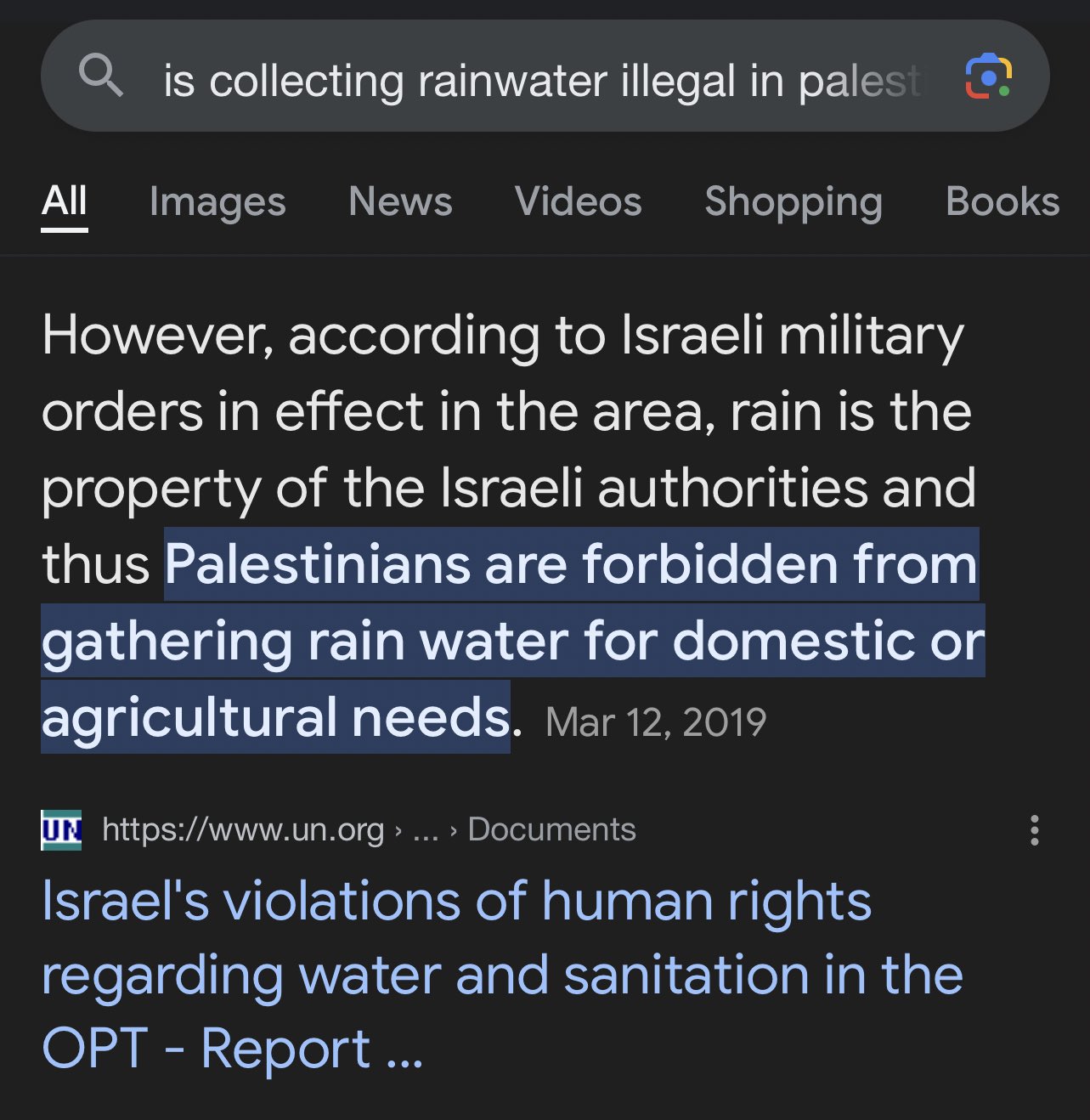
    There are laws about collection and storage of rainwater all over the world unrelated to genocide. Water falling from the sky is the source of aquifers, lakes, and rivers that are important for everyone.

  • source
  • hideshow 22 child comments
  • [–] 23 points 2 years ago

    The context is very straightfoward. It is an occupied territory. The occupier claims ownership of natural ressources in the occupied territory. This is typical imperialist behaviour and illegal under international law.

  • source
  • parent
  • [–] 19 points 2 years ago (1 child)

    https://youtu.be/QZkSRlIs9o0?si=l7jYk8g92oIS4t3b

    The evil part is having laws like this and then filling in their water sources with concrete.

  • source
  • parent
  • hideshow 2 child comments
  • To add what others said (like Israel making up rules for Palestine), the people of Palestine are being attacked and their infrastructure targeted. It is pretty evil to destroy the water supply and then say: "but you can't get it elsewhere :)".
    I don't think this is necessarily the case here, but laws like this are often an attempt to offer the appearance of legitimacy to acts of violence (i.e. "yes we imprisoned them but they broke the law!").

  • source
  • parent
  • [–] 10 points 2 years ago (1 child)

    Water for agricultural and domnestic use usually is fed back to the water cycle, though.

    Watering my veggies is distinct from e.g. building a dam, or something.

  • source
  • parent
  • hideshow 2 child comments
  • [+] 6 points 2 years ago* (last edited 10 months ago) (1 child)
  • [–] 8 points 2 years ago (2 children)

    There are laws about collection and storage of rainwater all over the world unrelated to genocide.

    I never seen them before. Too much rainwater is a problem, but not collecting it.

  • source
  • parent
  • hideshow 4 child comments
  • [–] 6 points 2 years ago

    It can be actually. People upstream of water sources - often wealthy people with land but sometimes a collective of local farmers - build dams or retaining ponds to save the water for themselves and on a significant scale can limit the amount of water that goes downstream.

  • source
  • parent
  • [–] 58 points 2 years ago (3 children)

    I don't even... how do you prevent that?

  • source
  • hideshow 5 child comments
  • [–] [S] 23 points 2 years ago (1 child)
  • [–] 12 points 2 years ago (3 children)

    What's the usual way of stopping someone from collecting rain water?

  • source
  • parent
  • hideshow 6 child comments
  • [–] 37 points 2 years ago* (last edited 2 years ago) (2 children)

    Fines/violence, usually.

    It's actually not uncommon to have laws that restrict gathering rain water in many places. Lots of US states do as well. If water is collected locally on a mass scale, it messes with water tables/rivers/lakes/etc.

    Forbidding it when a place doesnt have otherwise dependable water infastructure is inhuman however.

  • source
  • parent
  • hideshow 3 child comments
  • [–] 18 points 2 years ago* (1 child)

    I imagine the ban on rainwater collection is from before the war, and I imagine there are similar laws in Israel.

    There’s lots to be mad at the Israelis for doing. We don’t need to make things up. This article on water in Gaza makes a good point:

    A graphic representation of the unfair restrictions is that while many Jewish settlements have swimming pools, Palestinians in “Area C” of the West Bank are not allowed cisterns for collecting rainwater.

  • source
  • parent
  • hideshow 1 child comment
  • load more comments (1 reply)
  • load more comments (1 reply)
  • load more comments (1 reply)
    [–] 52 points 2 years ago (1 child)

    “Rain is the property…”

    Wow.

  • source
  • hideshow 1 child comment
  • load more comments (1 reply)
    [–] 32 points 2 years ago (3 children)

    The United States does the same thing all over the Southwest. Rural people will tell you.

  • source
  • hideshow 6 child comments
  • [–] 30 points 2 years ago (1 child)

    It's illegal in some states as well.

  • source
  • hideshow 2 child comments
  • [–] 19 points 2 years ago* (4 children)

    Hamas has banned the digging of wells since 2021. I don't see how they would permit the harvesting of rainwater, even if there weren't Israeli legal regulations in place (which seem to be on par with many other countries' laws). That plus their systematic dismantling of working water infrastructure for rocket parts has had it's effects.

  • source
  • hideshow 4 child comments
  • load more comments (4 replies)
    [–] 17 points 2 years ago (3 children)

    But hamas collect the water and then make bombs to attack for no specific reason.

  • source
  • hideshow 5 child comments
  • load more comments (1 reply)
    [–] 10 points 2 years ago (1 child)
  • [+] 7 points 2 years ago
    [–] 7 points 2 years ago
    load more comments
    view more: next ›