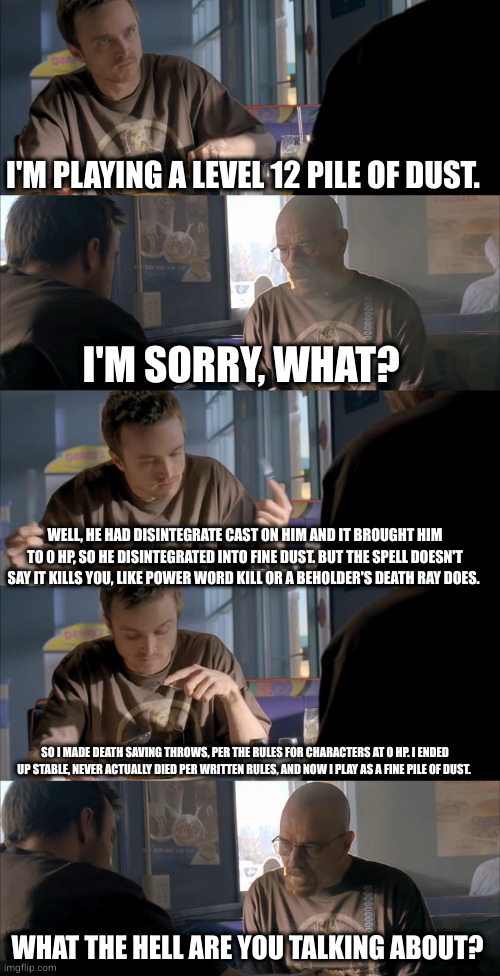
Disclaimer: this is purposefully obtuse.
Other effects in the game which explicitly state they kill you:
Shadows, succubi, massive damage, death saving throws, beholder death ray (notably not even their disintegration ray kills you), power word kill, vampires, mind flayers, night hags, drow inquisitors.
Clearly, if they intended for disintegration to kill you, they'd have said so. Since specific overrides general, and there is no general rule that disintegrated creatures are dead, I rest my case. QED.