An Australian pilot was forced to take evasive action after a Chinese military jet detonated flares close to a Navy helicopter that was operating in international waters near South Korea.
The Defence Department has described the actions of the J-10 Chinese Air Force plane as "unsafe and unprofessional" following the incident which took place in the Yellow Sea over the weekend.
On Saturday a MH-60R Seahawk which had launched from HMAS Hobart was intercepted by the People's Liberation Army-Air Force (PLA-AF) as it was taking part in a UN mission to enforce sanctions against North Korea.
Falls under "freedom of overflight," which necessitates that when entering another country's EEZ you must
shall have due regard to the rights and duties of the coastal state

shall comply with the laws and regulations adopted by the coastal state
Per these stipulations, overflight is meant to be for peaceful purposes, not for e.g. spying, military coercion, etc. These are, more or less, the same conditions granted for innocent passage. Moreover, overflight often requires clearing with the government as per local laws and regulations.
There's an open debate in international law as to whether surveillance is considered a peaceful purpose... But if someone dropped sonar buoys ("surveillance") 12 miles out of Honolulu Harbor, you'd probably throw a fit.
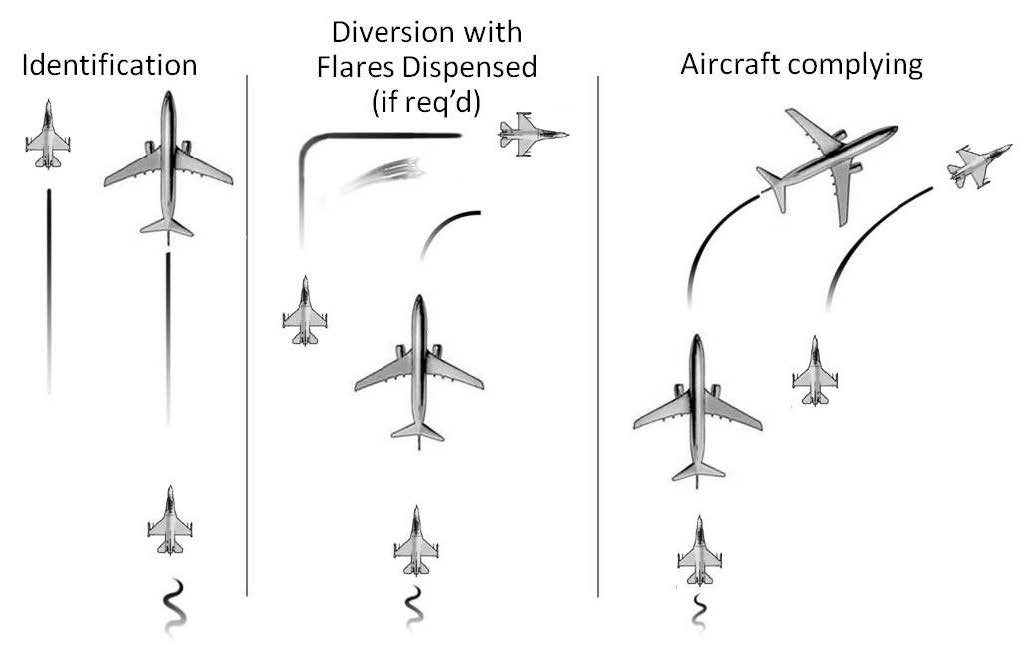
Again, as I'll repeat, flares are literally described by the FAA as a way to intercept aircraft. The US has used them against Russian aircraft, but in fact the US also does so to intercept civilian aircraft!
Current statements are that the helicopter was in "breach of Chinese EEZ" (Peter Cronau, ABC) and "within close range of Chinese airspace" (Chinese Foreign Ministry). Notably, the Australians have ignored calls by the British to release videos or GPS data on the incident.