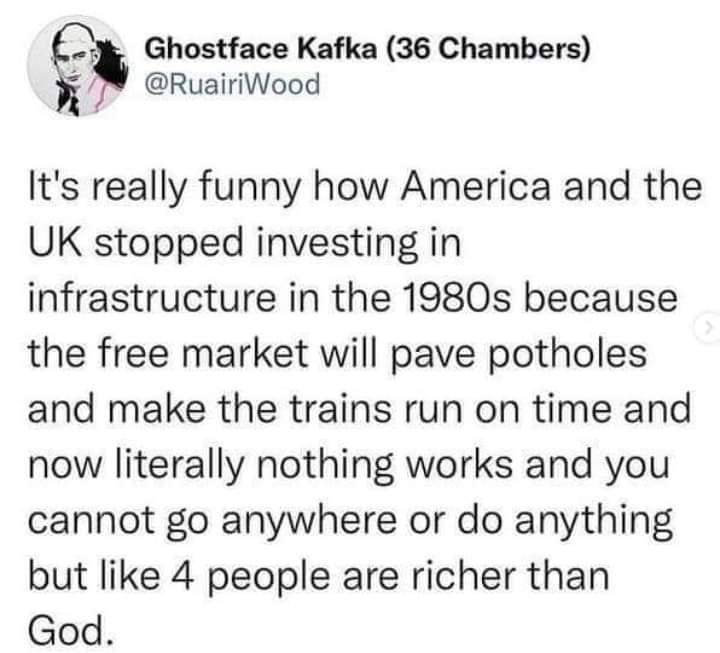
Redistribution of wealth does not solve the innate problem of a certain class of people having power over another. What it does is temporarilly solve that problem while still leaving room for the owner class to gain more power over the working class.
The only way to prevent massive wealth inequality from occuring is to give the working class the power to control the means of production.
For example, let's pretend that the taxi industry was completely socialized. A new paradigm that performs a similar function in a more convenient way will come along (Uber, Lyft, etc.) and take back control and then proceed to exploit their workers (ie: classifying them as independent contractors instead of employees, taking massive fee percentages, not being transparent about said fees). Since this new paradigm is more convenient for the consumers, the older, taxi industry is left to essentially rot and become obscelete, while the new, unregulated (or less regulated) one that is not owned by the workers takes over almost completely.
There is also the fight for privitization of already public utilities, or to create new, private utilities. Good examples (in the US) are toll roads and schooling. Toll roads are built by private corporations in order to charge a fee for those who drive on them (obviously). People then come to rely on them, and a public alternative isn't built due to the existence of the toll road making a public freeway redundant. College has remained private, regardless of the fact that a college degree is equivillent to what a high school degree used to be when it comes to job prospects. There is also a push to privitize public schooling by extremist conservative politicians, like Betsy DeVos.