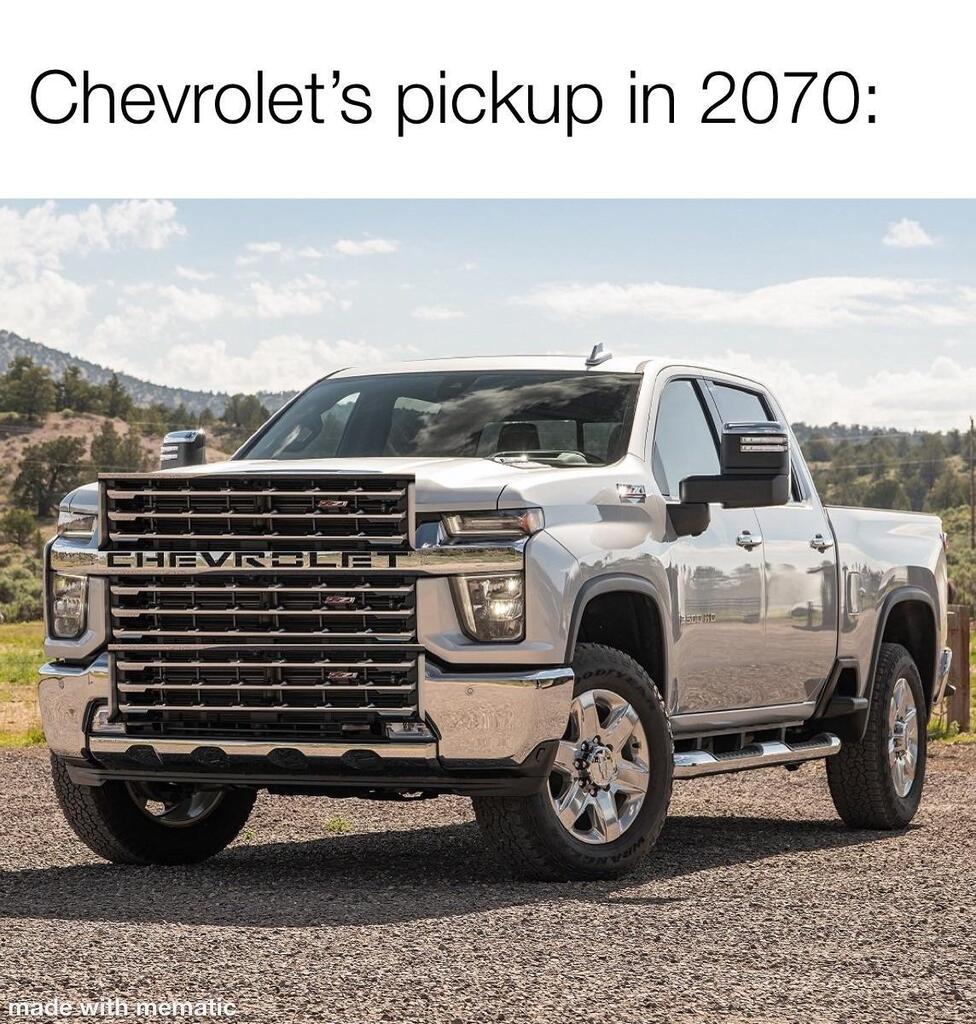
▲ 525 ▼ Before long, it'll be all grill and drivers won't be able to see which direction they're going. (startrek.website) submitted 2 years ago by The_Picard_Maneuver@startrek.website [M] to c/memes@lemmy.world 75 comments fedilink hide all child comments
[–] TehBamski@lemmy.world 1 point 2 years ago (1 child) Link or source? permalink fedilink source parent hideshow 2 child comments replies: [–] constnt@lemmy.world 5 points 2 years ago https://www.meche.engineering.cmu.edu/_files/images/research-groups/whitefoot-group/WS-FootprintFuelEconomy-EP.pdf?shem=sswnst https://me.engin.umich.edu/news-events/news/cafe-standards-could-mean-bigger-cars-not-smaller-ones/ https://en.m.wikipedia.org/wiki/Corporate_average_fuel_economy https://www.thetruthaboutcars.com/2012/10/how-cafe-killed-compact-trucks-and-station-wagons/?shem=sswnst https://www.transportpolicy.net/standard/us-light-duty-fuel-economy-and-ghg/ The footprint-based system means that selling more small vehicles does not necessarily help manufacturers meet the standards. Smaller vehicles are subject to more stringent requirements, such that a manufacturer of smaller vehicles has a lower CO2 standard while a manufacturer of larger vehicles has a higher CO2 standard. Footprint systems encourage improvements in efficiency, regardless of vehicles size, and have relatively little impact on vehicle size mix. Unlike a weight-based standard, a footprint-based standard encourages use of lightweight materials while maintaining the vehicle size, without subjecting the manufacturers to a higher CO2 requirement. permalink fedilink source parent
[–] constnt@lemmy.world 5 points 2 years ago https://www.meche.engineering.cmu.edu/_files/images/research-groups/whitefoot-group/WS-FootprintFuelEconomy-EP.pdf?shem=sswnst https://me.engin.umich.edu/news-events/news/cafe-standards-could-mean-bigger-cars-not-smaller-ones/ https://en.m.wikipedia.org/wiki/Corporate_average_fuel_economy https://www.thetruthaboutcars.com/2012/10/how-cafe-killed-compact-trucks-and-station-wagons/?shem=sswnst https://www.transportpolicy.net/standard/us-light-duty-fuel-economy-and-ghg/ The footprint-based system means that selling more small vehicles does not necessarily help manufacturers meet the standards. Smaller vehicles are subject to more stringent requirements, such that a manufacturer of smaller vehicles has a lower CO2 standard while a manufacturer of larger vehicles has a higher CO2 standard. Footprint systems encourage improvements in efficiency, regardless of vehicles size, and have relatively little impact on vehicle size mix. Unlike a weight-based standard, a footprint-based standard encourages use of lightweight materials while maintaining the vehicle size, without subjecting the manufacturers to a higher CO2 requirement. permalink fedilink source parent