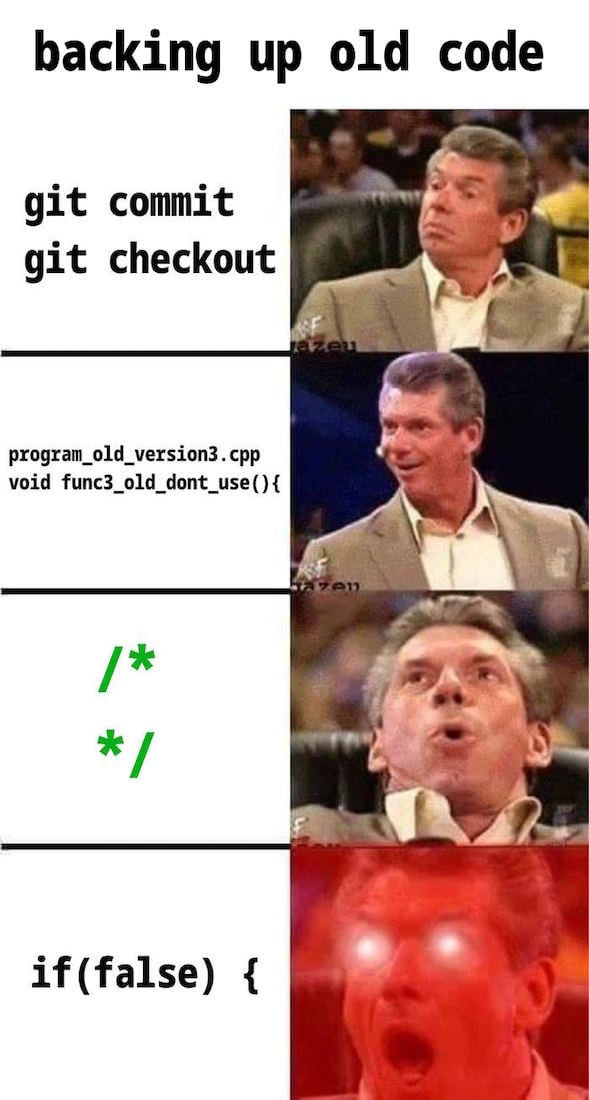
A simple if (false) will get optimized out by any modern C or C++ compiler with optimizations on, but the problem is that the compiler will still parse and spend time on what's inside the if-block and it has to be legal code, whereas with the #if 0 trick the whole thing gets yeeted away by the preprocessor before even the compiler gets to look at it regardless of whether that block contains errors or not, it's literally just a string manipulation.