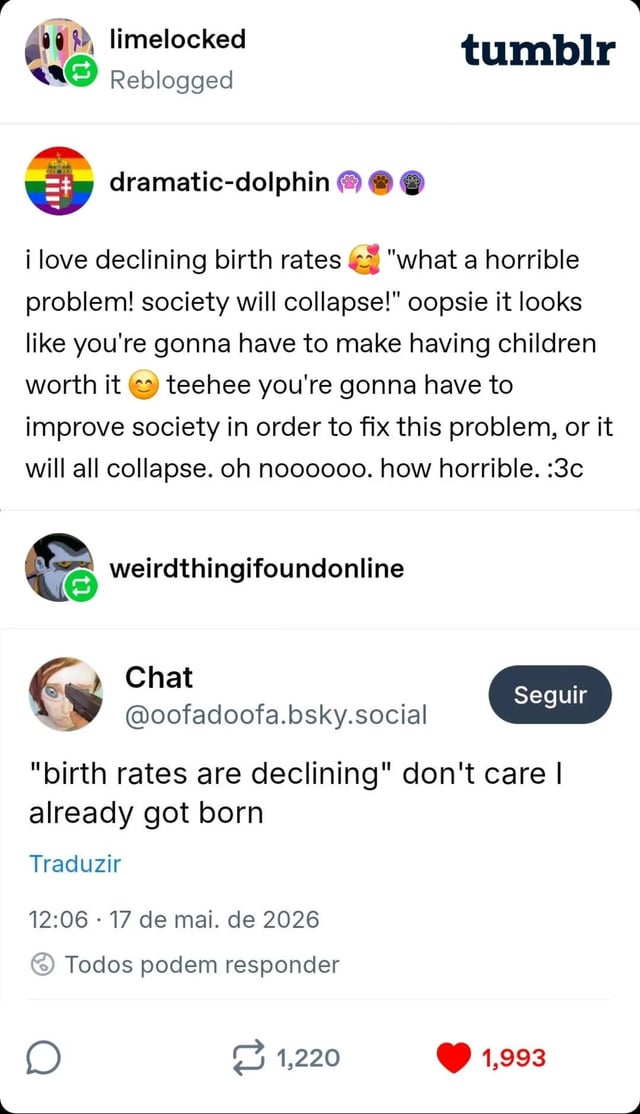
I hear this all the time, and it seems to ignore the glaring elephant in the room. When talking about whether you can keep an economic system going, what matters is not the ratio of workers to retirees, but the ratio of workers to dependents. Yes, we have more old people for each worker, but we also have fewer children. We can simply shift resources from child care to elder care. You manufacture more adult diapers and fewer infant diapers. More nurses go into gerentology than neonatal care. You shift government funding from elementary schools to pensions. More women can stay in the workforce, because fewer of us are having children. And those that do are having fewer of them.
We know that economies can adapt to rapidly growing populations. We've survived baby booms just fine. After WW2, in the US, we suddenly had to care for far more children than our system was ever built to handle. Yet we managed to muddle through it. If we can adapt to a baby boom, we can adapt to a slowly aging population. Capitalism, for all its flaws, does have some benefits. And one of those is that it's pretty efficient at reallocating resources based on changing demand.
And honestly, there are some real upsides to declining population. We can ease our impact on the environment. The real cost of housing will decline. Scarcer workers will see their wages rise. This is the real reason the billionaires are so afraid of a declining population. They need millions of desperate people struggling just to scrape by. Do you think Amazon could run its hellish warehouses the way it does if the cost of housing was half what it currently is?