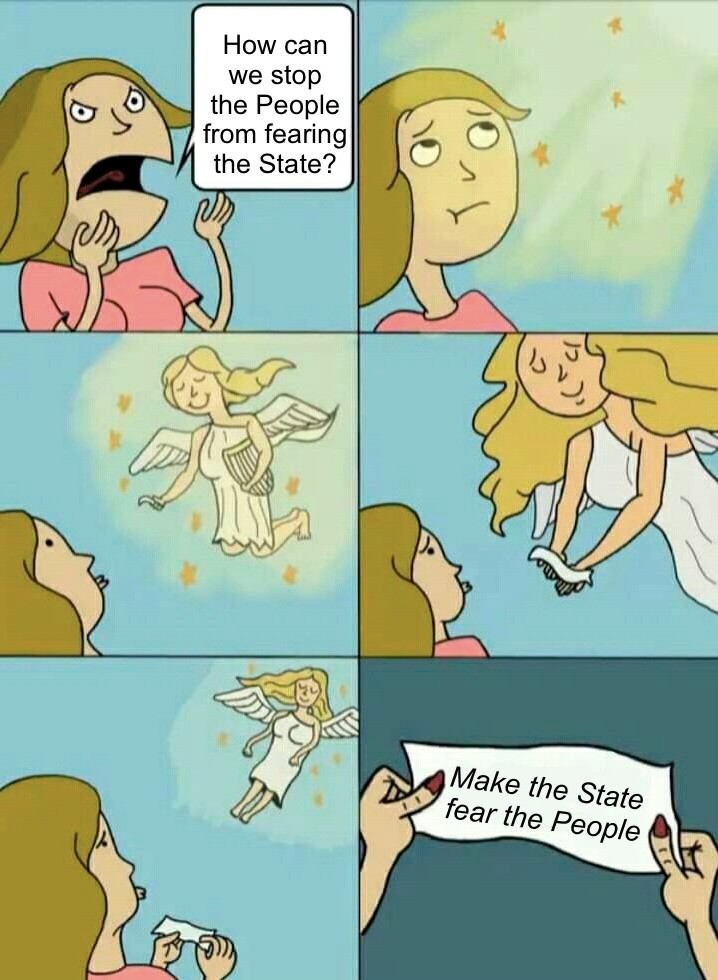
It's about the power dynamic and how it informs the relationship between the electorate and elected (or, for that matter, other hierarchical structures.) The theory is that policymakers treat people better if there are real consequences for not doing so, such as losing their elected seat. (Or more...extreme consequences.)
Another version of this would be a manager giving their unionized employees a raise because of the threat of a strike. Whether you frame it as fearing the employees or frame it as cold logic, the dynamic between a union and their boss is fundamentally different than between a single employee and their boss.