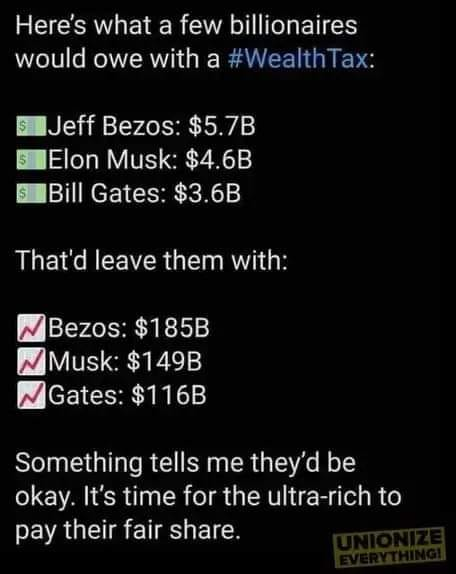
Something doesn't add up for me, maybe I'm missing it.
The stock market (as I understand it) works on the premise that you buy some shares of the company. That money goes to the company, and they use it to improve their tools/processes/etc, in order to better compete with the rest of the market and turn a higher profit. This in turn makes your shares worth more, because the company is worth more.
You're saying people can get taxed yearly on the growth of the shares - okay, understood. But here's my question:
If the market dips this year (or the company has a bad year) and the stock owner doesn't sell the shares, they are now worth less. Will the government reimburse the tax at the end of the year?
If yes - then we fix nothing, right? We even make it worse, because now we have to track everyone's stock. That'll generate a lot of meaningless work.
If no, then we're taxing every yearly gain no matter how small, but still asking stock owners to take a risk and continue to own that stock. Who would ever want to invest anymore, when potential gains are taxed before you even have a chance to withdraw them (not to mention where do you come up with the money to pay taxes if you don't sell the stocks) but losses are not compensated, and you still hold all the risk? Every stock exchange would crash and burn, with nobody investing anymore, but even worse - selling all stock before that first year runs out and they're taxed for it. All companies that are publicly traded would basically be worthless overnight. It'd lead to another great depression, no?
I'm really not very understanding of this field, but I can't find another option here that would actually end well. Am I missing something?