1


I absolutely love the unconventional and incredibly deeply layered puzzle RPG Blue Prince. Enough people before me have pointed out that the mechanics of Blue Prince lend themselves to the horror genre. I'm not here to repeat that. Instead, I had a specific DLC or spin-off idea today that I wanted to share. The information you are about to gain are part of the game's exposition and an integral part of the game's core mechanic. I thus don't consider them a significant spoiler.

In the entrance hall letter, the protagonist's grand-uncle Herbert S. Sinclair explicitly states:

YOU MAY NOT STAY OVERNIGHT.

This enforces the core rogue-like deck builder looping mechanic of the game. Once you used up your steps for the day, you have to start a new run without any items and with an empty house. I should also note that you never meet any of the mansion's staff, even though you can find all sorts of items and trinkets belonging to them, can find evidence of them communicating, and continuing their work (for example through the 'dinner is served' mechanic).

The labyrinthine ever shifting nature of the mansion paired with its elusive staff reminded me of the endless IKEA SCP. What if there was an item that did allow you to stay the night, unlocking a new gameplay layer?

In the game's logic, progressing across the ranks of the mansion corresponds to the progression of the clock (again, see the 'dinner is served' mechanic). To make this mechanic sufficiently obscure and somewhat challenging to unlock, I was thinking of the following:

  • New Activated Item: The sleeping bag. Only spawns after you have reached rank 9. The sleeping bag can be activated only while you are inside a bedroom. When activated, the sleeping bag "refunds" you any number of steps spent since you last entered a bedroom minus 1.
  • There may also be some interaction with other rooms, e.g., if you paid The Great Alzara today, maybe you get a dream with another vision.
  • On its own, the sleeping bag would be a rare but powerful item. If you play it right, it can give you a significant late game step boost to keep strong runs going. However, here's the twist: When you regain more than 9 steps using the sleeping bag, for every additional step regained this way, there's a certain chance you have a nightmare; e.g., a 10% chance for every step regained beyond 9.
  • The Nigthmare would be a whole new layer of the game: All rooms of your current map become twisted, grotesque, and morbid. There's a certain chance that doors are now closed that had been open before and new passage ways may appear. You can't open your map. You can't end the current run except by finding your way out of the mansion with your remaining steps or by being cornered by the servants:
  • ...faceless creatures whispering to you "You really should not be here at night, Master Simon!", "Your Grand-Uncle would not approve!", "Haven't you been told that you must NEVER spend the night at Mount Holly Estate?", hunting you through the maze to corner you, leading to a creepy game-over screen and looping back to a new normal run from the Entrance.
  • Other regular mechanics do apply, e.g., you can open doors and draft rooms, but drafting happens with a darkroom-like penalty, i.e., blinded selection.
  • Copious interactions with existing items, e.g., the Torch to make light, the salt shaker to block of entrances for pursuing servants, the Repellent to push back pursuing servants for a brief while, etc.
  • Copious interactions with existing mechanics, e.g., the Security Room to see the servants stalking you, look them in / out of areas, avoid their paths.
  • Hide and seek mechanics similar to Amnesia: The Dark Descent.

Anyway, these were my five cents. Don't think I had the skills or time to make it into reality. But if someone at Dogubomb or elsewhere feels inspired: Please let me know.

2


cross-posted from: https://hexbear.net/post/7627409

Mewgenics, the new release from Edmund McMillen and Tyler Glaiel, the indie devs behind hit roguelike The Binding of Isaac and all its subsequent expansions, smashed through 250,000 copies sold in just 12 hours.

In a tweet posted by Glaiel, he screenshotted a post from 2023 where he explained it would need to sell that much for him to "consider Mewgenics a success." Shortly before, IGN reported the game sold over 150,000 copies in six hours, and that McMillen's previous sales record came with The Binding of Isaac: Rebirth, at 40,000 in one day.

This came just a few hours after he revealed the team "made back their development budget after three hours," which given the game was first announced in 2012, is a huge accomplishment. That's a whopping 14 years, although it was put on hold in 2014, canceled in 2016, then picked back up again two years later

To celebrate, Glaiel posted a picture of both him and McMillen with a cat-shaped cake, while they each hold replica awards and wear gold medals. At the time of writing, Mewgenics peaked with a player count just a few shy of 66,000 on Steam, and it was the top-selling game on the platform yesterday.

It's also been received to critical acclaim, with a Metacritic score of 89 from 38 reviews. Polygon's Mewgenics review describes it as "a charmingly churlish game" that "players could likely get years of entertainment from," along with considering it "the first GOTY contender" for 2026.

3
4
5


Made a video analyzing the recent Silent Hill game and how its changes to the series both give me hope and dread for the potential future of the series

6
7
8
9
10
@videogames (mastodon.social)
submitted 3 years ago by to c/videogames@lemmy.ml


@videogames
https://youtu.be/S0zTiHiRML4

Who wants to collaborate with me

11
submitted 3 years ago by [M] to c/videogames@lemmy.ml
12


cross-posted from: https://feddit.de/post/255960

First they force everyone on a microshit account, then ban you from your own server for drinking a beer...

GODDAMNIT EVERYTHING MICROSOFT TOUCHES TURNS TO SHIT.

13
14
15
submitted 4 years ago by [M] to c/videogames@lemmy.ml
 
 
16


The greatest trick the videogame industry ever pulled was convincing the world that videogames were games rather than a medium for making metagames. Elegantly defined as “games about games,” metagames implicate a diverse range of practices that stray outside the boundaries and bend the rules: from technical glitches and forbidden strategies to Renaissance painting, algorithmic trading, professional sports, and the War on Terror. In Metagaming, Stephanie Boluk and Patrick LeMieux demonstrate how games always extend beyond the screen, and how modders, mappers, streamers, spectators, analysts, and artists are changing the way we play.

Metagaming uncovers these alternative histories of play by exploring the strange experiences and unexpected effects that emerge in, on, around, and through videogames. Players puzzle through the problems of perspectival rendering in Portal, perform clandestine acts of electronic espionage in EVE Online, compete and commentate in Korean StarCraft, and speedrun The Legend of Zelda in record times (with or without the use of vision). Companies like Valve attempt to capture the metagame through international e-sports and online marketplaces while the corporate history of Super Mario Bros. is undermined by the endless levels of Infinite Mario, the frustrating pranks of Asshole Mario, and even Super Mario Clouds, a ROM hack exhibited at the Whitney Museum of American Art.

One of the only books to include original software alongside each chapter, Metagaming transforms videogames from packaged products into instruments, equipment, tools, and toys for intervening in the sensory and political economies of everyday life. And although videogames conflate the creativity, criticality, and craft of play with the act of consumption, we don’t simply play videogames—we make metagames.

17


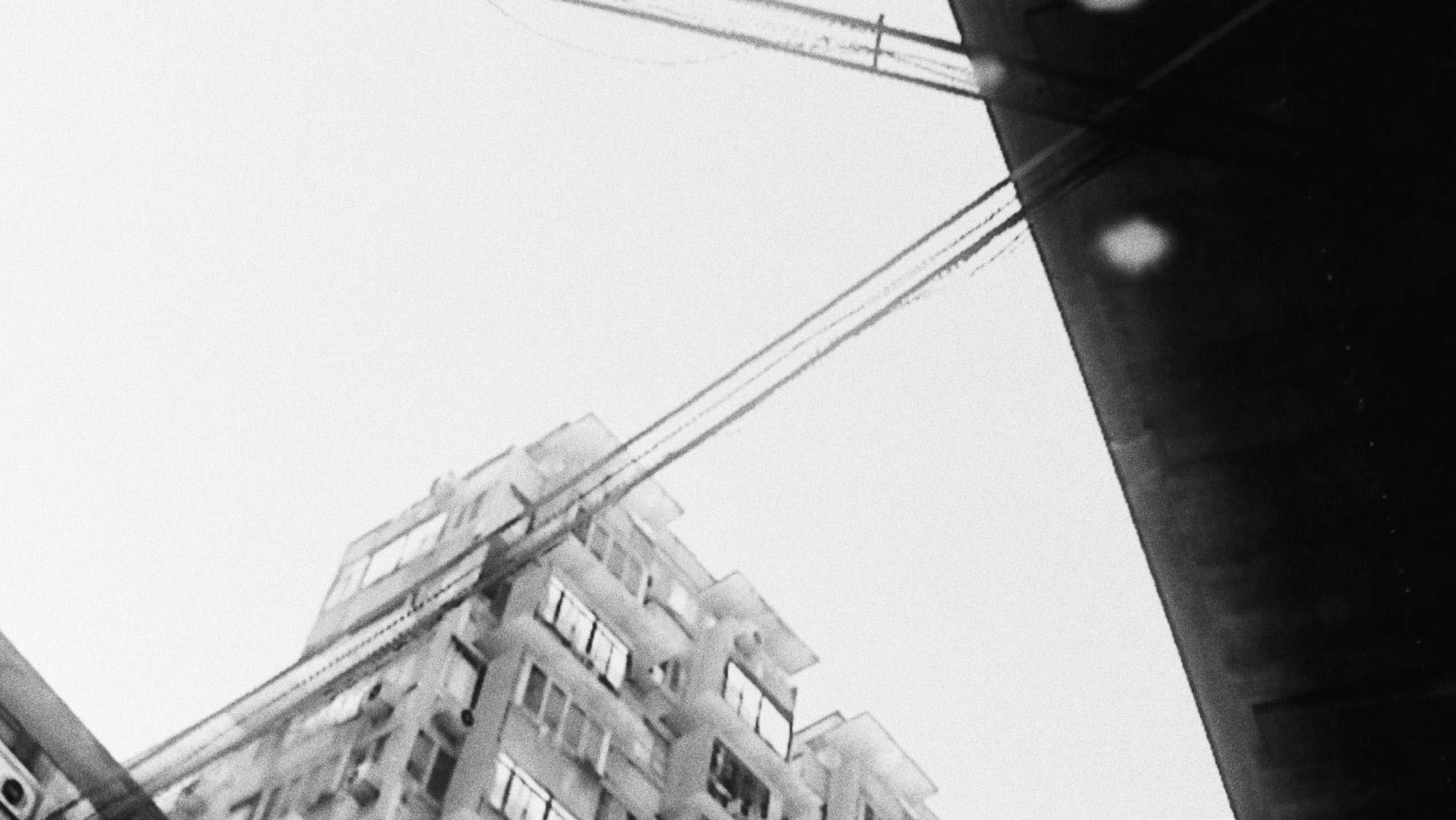
The opening shot of Kane & Lynch 2: Dog Days is of a cheap consumer-grade camcorder, its fold-out LCD screen showing the titular protagonists being tortured by an unseen hand; bloodied, blown-out and bruised with noise, sitting just out of frame.

It is a shot which is reflexive in the extreme, its central image-within-an-image muddled with a haze of digital noise, as if the camera-eye we are witnessing was turned, impossibly, on itself. It creates an unsettling distance, the sense of an inhuman perspective set at a remove from the acts of violence it depicts. The player will witness everything through this cold, unsteady camera-eye, not just the bloody but oddly unspectacular violence they direct, but also the city that shelters it: Shanghai, made exotic not just through its strangeness but through the opacity of the lens we are given to view it through.

K&L2's Shanghai is impossible to separate from this perspective, from the humming digital noise, acrid lens-flares and compression artifacts that populate its streets as if they were its citizens. This is not just because of their aesthetic ubiquity, but also because of how it has been built. The noise, the compression, the color distortion has all been baked into the digital masonry of this flickering city. Its skyscrapers don't end in neat edges; they explode into an over-exposed sky. Its textures and surfaces are not just detailed with the imagined stains, decay and damage of an invented world, but also the distortions and errors of a flawed camera-eye.

So when I sought to capture this singular depiction of a strange city, to explore its aesthetic codes and consequences, I wanted to do so without stripping it of its powerful materiality. Perhaps one of the most fascinating things about K&L2 is how its precise observation of the material qualities of cheap camcorder lenses and sensors brings attention to the screen it is played on. The LCD panel sitting before the player is recast from unsightly barrier to a collaborative canvas, its own distortions and limitations elevating and harmonizing with the game's simulacrum of low-grade video.

This was how the idea of pointing my own camera at this potent screen suddenly became obvious to me, both as a partial recreation of that first image, and a deepening of it, a following of its logic. Now, over the next pages, this strange city flowers with the grain of chemical film too, adding impossible twinnings of analogue and digital to the architecture of noise that defines this city of strays.

GDM

All images: 35mm B&W, Fujica STX-1, Gareth Damian Martin.

18


Thanks to a thought-provoking email from my friend and colleague Florence Smith Nicholls, I wanted to explore the ideas of mapping and colonialism in No Man’s Sky, something I had neglected to consider when conducting the Legacy Hub Archaeological Project for my PhD case study. The idea of colonialism in No Man’s Sky came up when I attended the Decolonize Mars unconference and met Tahir Hemphill, the Chair of Education for the Library of Congress. When I told him about the game and what the archaeologists were doing there, he wasn’t concerned with what the archaeologists were up to, but rather what the player-community was doing based on the game’s existing mechanics. His main issue was the fact that players could rename everything: systems, planets, animals, plants, points-of-interest, and that this would overwrite the indigenous names assigned by the game’s procedural algorithm. It seemed that players were encouraged by the developer, Hello Games, to adopt a colonialist attitude towards space exploration.

19
submitted 5 years ago* (last edited 5 years ago) by [M] to c/videogames@lemmy.ml


Are video games art? This fundamental question has fueled debates for years, and the conversation continues today. While the medium's cultural value is undeniable, this topic nevertheless evokes strong opinions.

Among the games at the center of this debate, one trilogy in particular stands out, created by Japanese designer Fumito Ueda. His creative approach, offering something that didn't yet exist in other games, set the road map for each of his works: ICO, Shadow of the Colossus, and The Last Guardian.

These three works share the same aesthetic, the same video game design philosophy, and even the same universe. Above all, these three works give us a look at the man behind them and his obsession: to offer a different perspective on video games.

20
 
 
21
22
submitted 5 years ago* (last edited 5 years ago) by to c/videogames@lemmy.ml


This may be an instant "yes" for some of you, but there are actual proponents to this idea of video games being an art form, separate no less.

Arguments include (non-exhaustive list):

  • Video games are just combinations of previously established art forms (music, fictional prose, visual art, etc..)
  • Certain video games (think Pong and Tetris) weren't made for the purpose of being "artistic".
  • Because video games are interactive, this positions video games outside of the area of the arts. No other types of art comes close to this level of interactivity.
  • Video games (especially mass-marketed ones), regardless of their nature, are not recognized as art for as long as the purpose is solely for financial gain, which is the norm nowadays.

Personally, I believe that video games are flexible enough to possess unlimited art forms, ranging from being creatively artistic and visually stunning (e.g. Journey [2012]) to being only a tech demo or both, since they are an amalgamation of previously established art forms.

To make this discussion productive, I'd suggest approaching these arguments with an open-mind and/or coming up with an opinion supported by some video game example (note, this is only a mere suggestion).

EDIT: Just to be clear, the counter-arguments list above are NOT my take on the matter. They're loosely taken from several sources, including an IRL discussion w/ a friend and articles online, e.g. Games aren't art, says Kojima.

23
Birthplace of Ossian (connor-sherlock.itch.io)
submitted 5 years ago by [M] to c/videogames@lemmy.ml


"[The landscape] is more real than the people who inhabit it. Drowned in eternal mist, illuminated by a decrepit sun or by emphemeral meteors, it is a world of greyness."

-Henry Okun, Ossian in Painting, 1967

24
25
submitted 5 years ago by [M] to c/videogames@lemmy.ml
view more: next ›