26
posts
27
28
29
30
31
Friends,
We're happy to announce that we have funding available to package BusKill in QubesOS as a contrib package.
Thanks to a generous donation from NovaCustom, we're offering a bounty to anyone (including you!) who packages BusKill as an official contrib package for QubesOS.
About BusKill
BusKill is a laptop kill-cord. It's a USB cable with a magnetic breakaway that you attach to your body and connect to your computer.
 |
|---|
| Watch the BusKill Explainer Video for more info youtube.com/v/qPwyoD_cQR4 |
If the connection between you to your computer is severed, then your device will lock, shutdown, or shred its encryption keys
thus keeping your encrypted data safe from thieves that steal your device.
About NovaCustom
In Mar 2015, Wessel klein Snakenborg (founder of NovaCustom) started selling highly-customizable Linux laptops from Europe.
In Aug 2021, NovaCustom released their first laptop (NV40) with coreboot pre-installed with Dasharo.
 |
|---|
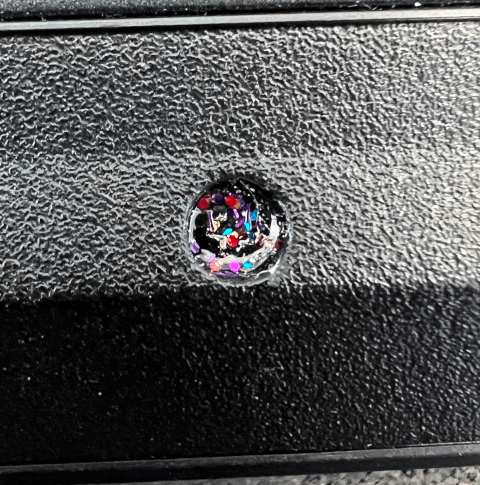
| NovaCustom offers anti-tamper options, including glitter nail polish applied to the chassis screws (photos sent to you via Proton Mail before shipment — specify PGP key at checkout for e2ee) |
Since 2023, NovaCustom has been a leader in hardware security:
- In Apr 2023, NovaCustom started offering Intel ME disabling
- In May 2023, NovaCustom demonstrated their commitment to free software and the security community by obtaining Qubes certification on their NV41 Series laptop.
- In Sep 2023, NovaCustom started offering anti-interdiction services, which includes applying a unique glitter pattern to your new laptop's chassis screws before shipment. This was inspired by Michael Altfield's article about Trusted Boot,
- In Feb 2024, NovaCustom started selling their NV41 laptop with Heads pre-installed
- In Sep 2024, NovaCustom's V56 laptop became Qubes Certified
- In Nov 2024, NovaCustom partnered with BusKill to bundle their security laptops with BusKill Kits, including the option to purchase BusKill Kits in-person (with cash) at their brick-and-mortar office in The Netherlands
- In Feb 2025, NovaCustom's V54 laptop became Qubes Certified
- In Mar 2026, NovaCustom donated $200 to BusKill, for packaging and documenting BusKill in
apt, making it easier (and safer) to install BusKill on Debian-based Linux distros
And now, in Apr 2026, NovaCustom is further working to increase the accessibility of BusKill to QubesOS users, by sponsoring the submission of an official QubesOS contrib package.
Funding Available
If you'd like to claim this bounty for yourself, please
- Read the details of the bounty, and then
- Submit a proposal by commenting on this GitHub issue
opencollective.com/buskill/projects/qubes-package
Moreover, if you're a QubesOS user and you'd like to donate additional funds in support of this bounty, you can do so here.
Stay safe,
The BusKill Team
https://www.buskill.in/
http://www.buskillvampfih2iucxhit3qp36i2zzql3u6pmkeafvlxs3tlmot5yad.onion/
32
33
34
35
cross-posted from: https://lemmy.world/post/45050923
The internet is on fire over Claude Code's (NPM CLI to be precise) "leaked" source. 512,000 lines! Feature flags! System prompts! Unreleased features! VentureBeat, Fortune, Gizmodo, The Register, Hacker News - everyone covered it. A clean-room Rust rewrite (to dodge the DMCA) hit 100K GitHub stars in nearly a day - a world record. 110K now and counting.
Here's what nobody's saying: all of that was already public! On npm. In plaintext. For years.
Open unpkg.com/@anthropic-ai/claude-code/cli.js right now - that's the entire Claude Code CLI, one click away, readable in your browser. No leak required.What "leaked" was a source map file that added internal developer comments on top of code that was never protected in the first place, plus a directory/source structure...
But the Code Was Already There Here's what most of the coverage missed: Claude Code ships as a single bundled JavaScript file - cli.js - distributed via npm. It's 13MB, 16,824 lines of JavaScript. And it's been sitting there, publicly accessible, since the product launched...
We Asked Claude to Deobfuscate Itself...
Source: https://www.afterpack.dev/blog/claude-code-source-leak [web-archive]
---
Partial de-obfuscation is sure possible today, yet still, it's inadequately time-consuming nowadays, and normally it's still impossible to recreate an original structure enough to consider complete, I believe.
Some tried to use the fairly advertized tool for Discord's app, and the result was the following (+screenshot):
- https://www.afterpack.dev/security-scanner/xml6xm2iyia0


36
37
38
39
40
41
42
43
44
45
46
47
48
49
50