1
People’s Mañanera July 27 (mexicosolidarity.com)
submitted 32 minutes ago by [M, B] to c/latam@news.abolish.capital


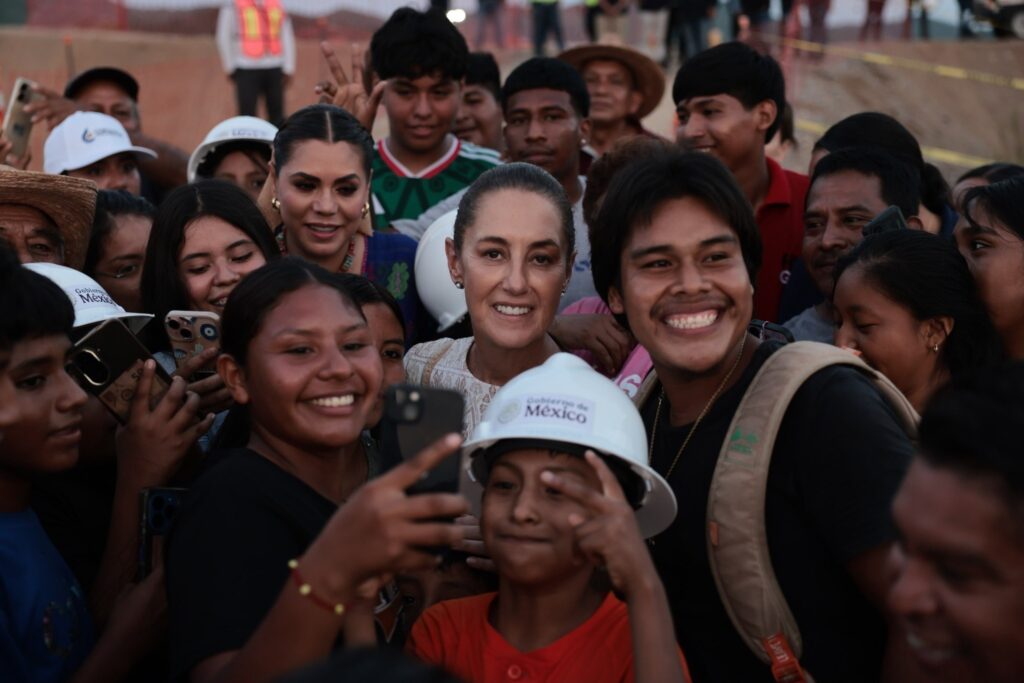
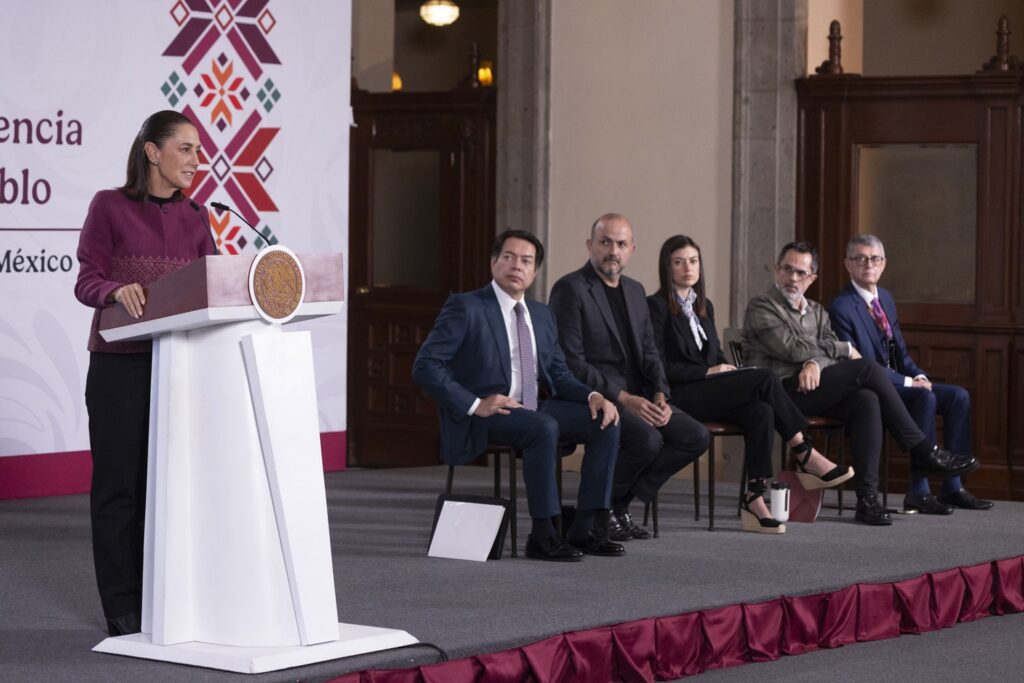
Every day, President Claudia Sheinbaum gives a morning presidential press conference and Mexico Solidarity Media posts English language summaries, translated by Mexico Solidarity’s Pedro Gellert. Previous press conference summaries are available here.

Protecting Children Also Means TransformationPresident Claudia Sheinbaum inaugurated a new section dedicated to the impact of social media and digital devices on children and adolescents. She also reported that nearly 70% of parents support regulating cell phone use in schools and announced the ABCs of Emotions to strengthen support for families, teachers, and students.

Sheinbaum: Ruffo Case Stands on Evidence, Not Political PersecutionIn response to accusations by PAN leader Jorge Romero, the President rejected the notion of a political use of the justice system. “False, absolutely false. The Prosecutor’s Office provided considerable evidence in this case,” she stated, noting that the investigation is not limited to former Baja California PAN governor Ernesto Ruffo but involves a fuel smuggling network with at least eight detainees responsible for defrauding the government.

Acapulco Will Have a More Resilient Water SystemSheinbaum reported that the National Water Commission (Conagua) is building new infrastructure to guarantee water supply in Acapulco following damage caused by hurricanes Paulina, Otis, and John. Through radial wells, network rehabilitation, and treatment plants, the aim is to ensure supply even in the face of future natural phenomena, especially in the most vulnerable communities.

Sheinbaum Rejects Milei’s AccusationsIn response to accusations by Argentine President Javier Milei, who claimed Mexico, Brazil, and the U.S. Democratic Party were financing a supposed campaign against Argentina, Sheinbaum replied that “there is no campaign against any country in the world nor against any government in the world.” She reiterated that Mexico’s foreign policy is guided by respect for sovereignty and national self-determination.

SEP to Review Militarized Schools in the Wake of Dafne Zapata CaseIt was reported that militarized education is not authorized by the Ministry of Public Education (SEP) or the Ministry of National Defense (Sedena), and a national review of these institutions was announced following the death of 13-year old Dafne Zapata. The Mexican government will strengthen oversight to prevent any mistreatment, in line with the principles of the New Mexican School and the protection of children and adolescents.

Mexico and U.S. Advance in Reopening Livestock BorderSheinbaum reported that, after more than a year of combating the screwworm plague, Mexico and the United States are advancing in reopening the border for livestock exports. The President highlighted the release of sterile flies and support for Sonora, Chihuahua, Durango, and Coahuila, adding that the reopening will begin in Sonora. “It speaks to good collaboration between both governments,” she explained.

Mexico Promotes Its ChampionsSheinbaum recognized Isaac del Toro’s historic third place in the Tour de France and Mexico’s leadership in the Central American and Caribbean Games. She highlighted the support from Conade and scholarships for athletes, stating that these achievements are built with discipline, sports, and opportunities for youth.


The post People’s Mañanera July 27 appeared first on Mexico Solidarity Media.


From Mexico Solidarity Media via This RSS Feed.

2


President Sheinbaum asserted that her administration does not interfere in the internal affairs of other countries.

On Monday, Mexican President Claudia Sheinbaum rejected accusations from Argentine President Javier Milei, who claimed that Mexico participated in an alleged social media campaign against Argentina during the 2026 World Cup.

RELATED:

Mexico Fights Stadium Discrimination for FIFA World Cup 2026

She called the claims false and asserted that her government does not interfere in the internal affairs of other countries. The Mexican president maintained that, on the contrary, her administration has been the target of attacks from various quarters, but insisted that Mexico does not respond in kind.

“Here there is indeed an orchestrated campaign against our government, but we don’t usually interfere with other countries,” she added. Sheinbaum reiterated that Mexican foreign policy is guided by the constitutional principle of non-intervention and the self-determination of peoples.

Argentina fans were insulting a Mexican fan for supporting Spain in the 2026 World Cup final.

He responded by showing them a red card and dancing in front of them. 😂👋🏼 pic.twitter.com/Nw9ehB6hQl

— All Fútbol MX 🇲🇽 (@AllFutbolMX) July 20, 2026

Milei, in an interview with Radio Mitre, claimed that the Brazilian government financed 25% of this alleged anti-Argentine campaign and that it had the backing of Mexico and the U.S. Democratic Party.

He linked the offensive to criticism circulating on social media regarding the Argentine national team’s performance in the World Cup and asserted that Argentina has become “an emblem of freedom,” which generates rejection from those who “hide behind the state.”

This episode adds to the diplomatic tension between Argentina and Brazil after Milei called President Luiz Inácio Lula da Silva a “thief” and criticized Judge Alexandre de Moraes, prompting Brazil to recall its ambassador from Buenos Aires for consultations.

#Mexico | President Claudia Sheinbaum issues a strong message against glorifying organized crime.

In a recent address, President Sheinbaum criticized past media depictions and propaganda that turned crime figures into popular icons. She emphasized the harsh realities young… pic.twitter.com/FihTN6EtCy

— teleSUR English (@telesurenglish) July 21, 2026

teleSUR: JP

Source: EFE


From teleSUR English via This RSS Feed.

3


By Lallan Schoenstein – Jul 25, 2026

Baton-swinging police waded into crowds of students and young workers in New Delhi on July 20, firing tear gas and beating marchers who are posing the most serious challenge to the rule of Narendra Modi’s government in years.

Protesters tried to reach Parliament under the banner of the Cockroach Janata Party — a name the movement took, in mockery, from a Supreme Court justice’s reported remark likening India’s jobless youth to cockroaches. Abhijeet Dipke, who harks from one of India’s oppressed classes, coined the name in a fury of exchanges on social media.

The initial demand was for the resignation of Dharmendra Pradhan, the education minister who is responsible for a corrupt system of public exams. He is seen as responsible for leaks of the exams that ruin the opportunities of millions who spend years preparing for them. Parents even sell their homes to pay for the right to participate. In May, more than a dozen students took their own lives; organizers put the number above 20. Pradhan answered by calling the protesters “the B-team of terrorists.”

The July 20 protest march, led by students, gathered on the grounds of the historic Jantar Mantar observatory in New Delhi. The march swelled as tens of thousands of Muslims, Hindus, Christians, Sikhs, Buddhists, people belonging to every caste and class flooded into the capital to join the students and to introduce their own grievances. The march rapidly escalated into a confrontation with Modi’s government. Prime Minister Modi fled the city, and members of Parliament were trapped inside the new Parliament building.

In the preceding days, on July 18, the movement broadened in scope when police disguised as medical staff seized Sonam Wangchuk, the 59-year-old engineer and climate activist, dragging him from his hunger strike at the Jantar Mantar grounds where university students were joining his fast. He had come from Ladakh in the Kashmir region to join the student protest. From his hospital bed, Wangchuk called it illegal detention.

The young people who initiated the movement are, for the most part, students, graduates, and professionals. Among the marchers on July 20 was a commercial pilot who swapped his flying duties to be there; among the movement’s backers, there were even civil servants who had voted for Modi’s Bharatiya Janata Party. At its inception, the movement was led not by factory workers from the industrial belts or landless laborers from the countryside, but mainly by students, graduates and professionals.

That is worth saying clearly, because it marks both the movement’s strength and its limit.

There is nothing new in a revolt that begins with the more privileged rather than the poorest. Writing in 1857, as the Indian soldiers of the East India Company rose against their British masters, Karl Marx observed that the first blow against the French monarchy came from the nobility, not the peasants, and that India’s revolt began not with the ryots “tortured, dishonoured and stripped naked by the British,” but with the sepoys “clad, fed, petted, fatted and pampered by them.” Those who are better off may strike the first blow. The rising becomes a national revolt only when the broad masses enter. The sepoys sparked 1857, and it took the peasants and townspeople joining them to shake the empire. Where the privileged leadership stayed in command — the princes and the landholders — it made its deals and betrayed the cause.

Acting President of Venezuela Meets Indian Industrial and Automobile Sector Representatives

The same question hangs over the Cockroach revolt now: whether it stays a rising of the educated middle class, or draws in the workers whose labor the whole country runs on — the one force that can bring it to a standstill. There are signs of the second. In Nashik, in Maharashtra, members of the Centre of Indian Trade Unions and the All-India Trade Union Congress marched on July 20 alongside sanitation workers and farmers, condemning Wangchuk’s seizure as an attack on democratic rights. Student federations have been an organizing backbone of the Jantar Mantar encampment since it went up on June 20.

The lesson is close at hand. In neighboring Bangladesh in 2024, a student revolt met the same official violence — hundreds killed — and could not be beaten down. When the students called for a general strike, and the working class answered, the government of Sheikh Hasina fell. A movement of students can shake a government. It takes the working class to bring one down.

India’s rulers understand this, which is why the batons came out. According to a report on the developments by Arundhati Roy, there are “thousands of paramilitary troops” being flown in from other states.

The whole edifice of the billionaire Raj — its exam mills, its worthless degrees, its poisonous class system — rests on the labor of hundreds of millions of workers and peasants who have not yet had their say. The cockroaches, as the court called them, have struck the first blow. Whether it becomes more than that depends on whether they can create the opening for the broader layer of society to fight in their own name.

(Struggle – La Lucha)


From Orinoco Tribune via This RSS Feed.

4


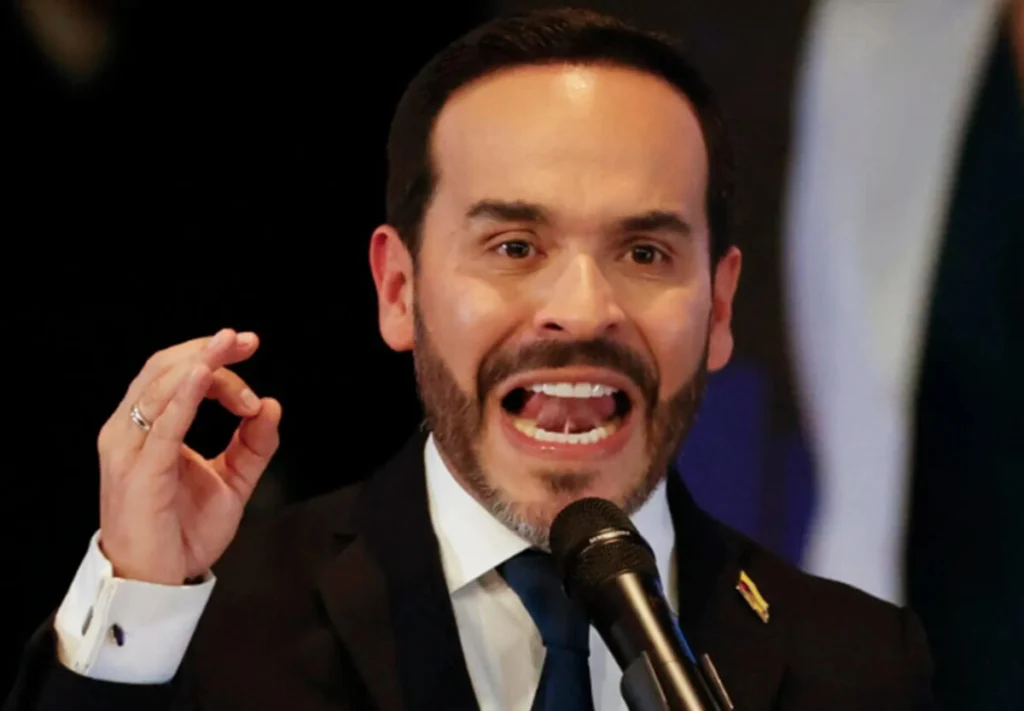
The president-elect announced the closure of 14 embassies and 15 consulates.

On Monday, various political and social sectors rejected Colombia’s president-elect Abelardo de la Espriella’s decision to sever diplomatic relations with Cuba and Nicaragua.

RELATED: Colombia’s President-Elect to Shutter 14 Embassies, Cut Ties with Cuba and Nicaragua

Colombian Congressman Gabriel Becerra described the decision as a “gesture of ideological and political subservience” that disregards decades of brotherhood between the two nations and Cuba’s historical role in Colombia’s peace processes.

He emphasized that it does not represent the Colombian people nor those who “respect the dignity” of the Cuban people. Becerra also criticized the fact that, while the world watches the crisis in Gaza, De la Espriella is opening a new front of confrontation with Cuba, reminding everyone that “governments come and go, but people remain.”

Meanwhile, former FARC commander Rodrigo Londoño called for reflection and stressed that Cuba is a friendly country, committed to Colombia’s peace process and a “moral beacon for humanity,” to which gratitude is owed.

Colombia's president-elect Abelardo de la Espriella says he'll close embassies in Algeria, Azerbaijan, Barbados, Cuba, Czechia, Ethiopia, Ghana, Haiti, Hungary, Malaysia, Nicaragua, Romania, Senegal, and South Africa.

He'll also cancel plans for an embassy in Palestine and… pic.twitter.com/z4kOYXVDYB

— Clash Report (@clashreport) July 27, 2026

De la Espriella also announced the closure of 14 embassies and 15 consulates in countries such as Algeria, the Czech Republic, Ghana, Hungary, Senegal, and South Africa, to “reorganize” diplomatic representation through concurrent accreditation arrangements.

The president-elect clarified that these measures do not imply a break in relations with these countries, except for Cuba and Nicaragua, which he described as “tyrannies.”

Meanwhile, he announced that he will reopen the Colombian Embassy in Israel and open a diplomatic mission in Nigeria as part of his reorganization strategy in Africa.

He also announced the consolidation of diplomatic missions that he considers duplicated, such as the embassies in France and UNESCO in Paris, and those in Italy and FAO in Rome.

The 2026 Central American and Caribbean Games are in full swing in Santo Domingo, drawing top athletes from across the region. From intense water polo preliminary matches between Cuba and Mexico to passionate fan support, the region's sporting excellence is taking center stage in… pic.twitter.com/LOYOjlR723

— teleSUR English (@telesurenglish) July 24, 2026

teleSUR: JP

Source: EFE


From teleSUR English via This RSS Feed.

5


U.S. trade taxes target political rivals rather than addressing genuine worker exploitation.

The resurgence of tariff war under Donald Trump’s second administration marks his commitment to international economic pressure. These trade measures, ranging from universal baseline levies to targeted duties on raw materials and manufactured goods, represent the U.S continuation of a primary point of manipulation in statecraft.

RELATED:
Canada Considers Full Range of Retaliation if Trump’s Tariffs Take Effect

The framework of modern U.S. trade wars functions to preserve national market hegemony and reconfigure global supply chains to favor concentrated corporations such as automakers, energy and defense, pharmaceutical, and others.

International trade data from organizations such as the United Nations Conference on Trade and Development (UNCTAD) and the World Bank demonstrate that unilateral trade barriers disrupt delicate global production networks without resolving the root causes of domestic industrial decline.

Understanding Trump’s renewed tariff measures requires dissecting the gap between political rhetoric and actual economic outcomes. A dynamic that reveals that the return of the tariff war is not merely a shift in tax policy, but the foundations of a fractured, increasingly unstable global trade architecture.

Antecedents, Pretexts, and Capitalist Realities

The current trade policies were established during the first Trump administration. During this period, the U.S. executive branch heavily utilized statutory authorities from past trade legislation to impose unilateral tariffs.

Under Section 232 of the Trade Expansion Act of 1962, Trump’s administration introduced 25 percent tariffs on imported steel and 10 percent tariffs on aluminum. Concurrently, under Section 301 of the Trade Act of 1974, Washington imposed tariffs on over $350 billion worth of Chinese goods. These actions signaled a sharp break from decades of nominal adherence to World Trade Organization (WTO) consensus principles.

The U.S. pretexts for these interventions centered on national security imperatives,  persistent trade deficits, and the protection of domestic intellectual property. However, the primary objective was China’s growing technological capacity and economic integration into global supply chains.

The economic evidence from studies by the National Bureau of Economic Research (NBER) and the US International Trade Commission (USITC) confirmed that the financial burden of the tariffs fell almost entirely on U.S. importers and domestic consumers, who faced higher prices for intermediate inputs and finished goods.

The agricultural sector experienced severe disruption. According to data from the US Department of Agriculture (USDA) Economic Research Service, foreign retaliatory tariffs caused a direct loss of more than $27 billion in US agricultural exports between mid-2018 and the end of 2019, with soybean exporters bearing the largest share of the decline.

To cushion the political fallout in key rural constituencies, the U.S. federal government deployed the Commodity Credit Corporation Charter Act to authorize roughly $28 billion in direct subsidy payouts.

Trump announced 50% tariffs on select Canadian imports, citing trade discrimination and escalating U.S.-Canada trade tensions. https://t.co/LIbUeOCWuU pic.twitter.com/jjWxYAYGCT

— Finance and Commerce (@BusinessMN) July 27, 2026

Legal Overreach, Judicial Snags, and the Resurgent Trade War

As trade flows reorganized following the pandemic-era supply chain, Trump’s administration attempted to declare economic “national emergencies” under the International Emergency Economic Powers Act (IEEPA) to impose universal baseline tariffs on foreign goods.

But these actions underwent an unexpected change. On February 20, 2026, the United States Supreme Court delivered a ruling in Learning Resources, Inc. v. Trump, holding that IEEPA does not grant the executive branch authority to levy import tariffs.

In response, the White House invoked Section 122 of the Trade Act of 1974, a balance-of-payments provision, to temporarily apply broad duties of 10 to 15 percent for a statutorily mandated 150-day window ending on July 24, 2026.

To replace the balance-of-payments duties, United States Trade Representative (USTR) Jamieson Greer investigated under Section 301 of the Trade Act of 1974. Rather than relying solely on arguments about national security or trade deficits, the administration shifted toward moralized trade claims centered on labor enforcement.

By leveraging statutory provisions regarding foreign labor practices, USTR constructed a new trade framework that took effect on July 24, 2026, placing comprehensive tariffs on dozens of international trading partners under the banner of combating forced labor.

The “Forced Labor” Pretext: Legal Foundations and Global Realities

The legal foundation for Washington’s tariff structure rests on Section 307 of the Tariff Act of 1930, which prohibits the importation of goods produced wholly or in part by forced, convict, or indentured labor.

This authority is supplemented by Section 301 of the Trade Act of 1974 and the Uyghur Forced Labor Prevention Act (UFLPA), which give the executive branch broad power to investigate foreign trade practices and impose import restrictions.

In its June 2026 report, USTR argued that foreign nations distorting international trade by failing to enforce equivalent import prohibitions on forced labor goods effectively create an “unreasonable” burden on United States commerce.

Through this interpretation, the United States asserts extraterritorial jurisdiction over global supply chains. Washington argues that when third countries import intermediate components or raw materials tied to forced labor, fairly produced American goods are displaced.

The scope of this U.S. policy spans 80 target economies accounting for over 99 percent of all U.S. imports by value, including major trading blocs and developing nations. Such as the European Union, East Asian economies such as Taiwan and Hong Kong, ASEAN partners like Vietnam, Thailand, and Malaysia, and key South American trade partners like Brazil.

Under the July 2026 USTR directive, standard tariffs of 10 to 12.5 percent apply to imports from these nations unless they sign bilateral trade agreements such as Reciprocal Trade (ART), Tariff-Rate Quota (TRQ), or Existing Regional Free Trade Agreements (FTAs).

According to empirical estimates by the International Labor Organization (ILO), which sets global labor benchmarks through conventions such as the Forced Labor Convention No. 29, more than 27 million people worldwide are trapped in conditions of forced labor across private industries, agriculture, construction, and state-sanctioned programs.

The ongoing uncertainty over tariff policies has become a major problem for a wide swath of the U.S. small business community, a new white paper released this week before the Trump administration replaced expiring international tariffs with new levies on 80 nations, asserts.
Read… pic.twitter.com/zP3ha3a0uk

— Forbes (@Forbes) July 27, 2026

Domestic and International Fallout: Resistance, Retaliation, and Class Impact

The implementation of broad Section 301 tariffs under the pretext of forced labor enforcement has drawn sharp resistance from domestic economic groups and international trading partners.

Within the United States, organized labor organizations, including major industrial trade unions, have voiced growing skepticism toward Trump executive trade strategies that utilize blanket taxation. Labor leaders emphasize that unilateral tariffs inflate basic living expenses for workers without securing structural protections or bargaining rights for vulnerable workers abroad.

At the same time, major corporate retailers, logistics providers, and trade associations have criticized the rapid transition from temporary Section 122 duties to permanent Section 301 measures, warning that sudden regulatory shifts distort supply-chain operations and drive import cost inflation.

International backlash to the July 2026 tariff rollout has been immediate and widespread. Governments targeted by the United States Trade Representative (USTR) have forcefully rejected Washington’s claims of forced labor non-compliance.

This rollout drew immediate, forceful rejection from major partners including Australia, Japan, Brazil, the EU, and China, all of whom denied the forced labor allegations and condemned the tariffs as unilateral and unjustified.

Rather than forcing foreign economies into submission, Washington’s persistent use of tariff threats is driving developing nations and regional trade networks toward greater integration outside the US financial sphere.

Unilateral Tariffs Do Not Empower the Working Class

By shifting legal justifications from initial emergency claims to statutory forced labor provisions under Section 301, the U.S. administration has constructed a trade mechanism that bypasses constitutional constraints and international trade norms.

Crucially, the selective weaponization of forced labor allegations undermines legitimate global efforts to eradicate severe human rights abuses. While forced labor remains an undeniable crisis affecting millions of workers worldwide, addressing this structural issue requires genuine multilateral cooperation rather than unilateral punitive tariffs.

Real labor empowerment depends on reinforcing binding international frameworks, such as those established by the International Labour Organization, and supporting independent labor unions, collective bargaining rights, and transparent global supply chains.

Sources: TeleSUR – Al Jazeera – Xinhua – CGTN – Office of the United Stated Trade Representative – International Labour Organization – OIT – OCM – DW – France 24 – The Guardian – Forbes


From teleSUR English via This RSS Feed.
6


Unpublished DEA assessment says traffickers have adapted their tactics while supply and prices remain unchanged.

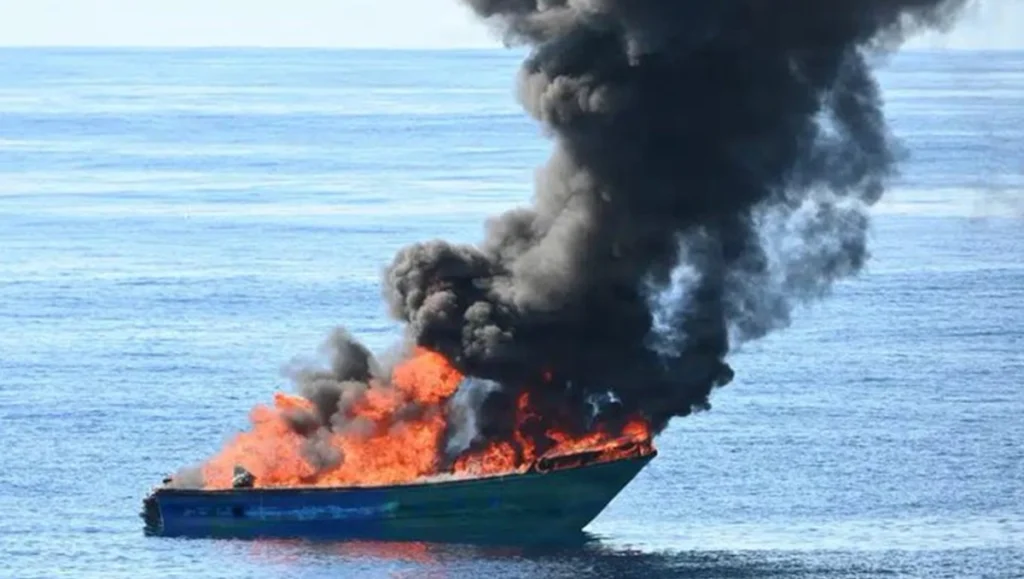
On Monday, The Washington Post published an article showing that attacks on small boats allegedly carrying drugs have failed to slow the flow of cocaine into the United States.

RELATED:

Ten Years After Duterte’s Drug War Began, Rights Abuses Persist in the Philippines

The outlet cited an unpublished assessment in which the Drug Enforcement Administration warned that the strikes have not affected the supply or price of cocaine and have instead prompted criminal groups to develop new strategies and tactics for transporting drugs.

Drug traffickers have stopped using speedboats in their operations, which now avoid international waters in favor of larger vessels and routes closer to the coast, where they are less likely to be targeted by U.S. forces.

During a closed-door briefing, Pentagon officials told lawmakers that the attacks had not reduced the purity of the drug. Instead of using boats, drug traffickers have increased their use of aircraft departing from clandestine airstrips along the Colombian border and flying east through Guyana and Suriname in an effort to evade U.S. forces, according to the DEA assessment.

🇨🇴🇻🇪🇺🇳 Colombian President Petro at the U.N. General Assembly:

“Trump fires missiles at unarmed migrant boats, calling them traffickers and terrorists though they carry no weapons.

Meanwhile real drug traffickers live in New York and Miami, cutting deals with DEA to move drugs… pic.twitter.com/EmCgKGrrcP

— HOT SPOT (@HotSpotHotSpot) September 24, 2025

“When you squeeze a balloon on one side, it always expands on the other. They always find the weak points and exploit them,” a DEA official said on condition of anonymity.

In September 2025, U.S. President Donald Trump launched Operation Southern Spear against drug trafficking, first in the Caribbean and later in the eastern Pacific. So far, the operation has targeted 67 small boats and resulted in the deaths of 221 people.

The United Nations and international human rights defenders have described the attacks as “extrajudicial executions” and have alleged that the victims include fishermen and fuel smugglers.

Pentagon spokesman Sean Parnell told The Washington Post that Operation Southern Spear was achieving its objective and that “transnational criminal organizations have continuously adapted their tactics” for decades.

“That does not indicate that the pressure is ineffective. It demonstrates that we are imposing systemic friction on their operations,” he justified.

teleSUR/ JF

Source: EFE


From teleSUR English via This RSS Feed.
7


Tehran Calls Strike Illegal and Unjustified as Russia Also Condemns the Incident.

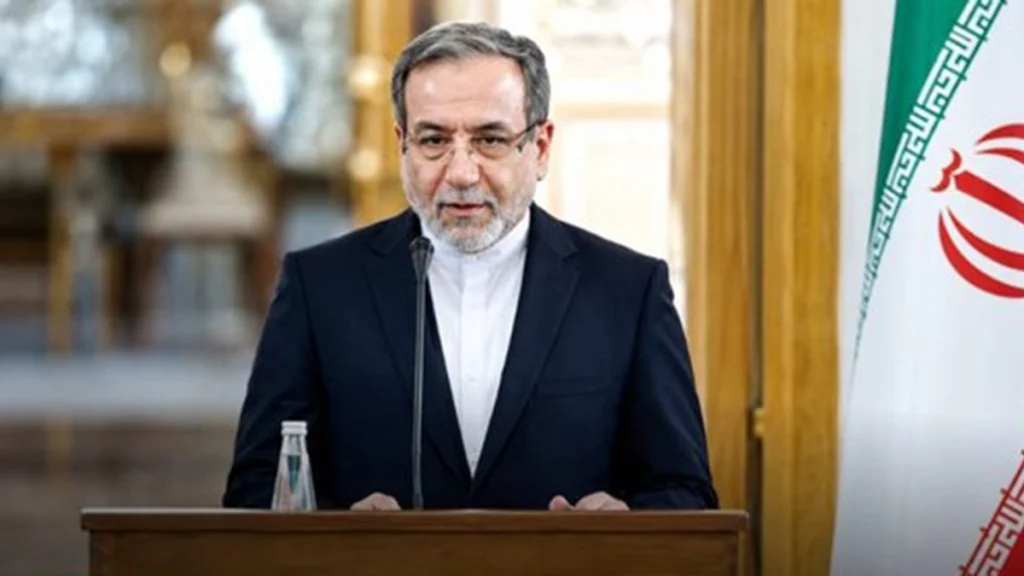
On Monday, Iranian Foreign Affairs Ministry spokesman Esmaeil Baqaei warned that his country will respond to the attack carried out by Ukraine against an Iranian commercial ship in the Caspian Sea that killed one sailor and injured another.

RELATED:

Iran Reports Useful Talks With Oman on Strait of Hormuz

The attack is an “absolutely illegal and unjustified” act, a violation of international law and the United Nations Charter, and a dangerous action that “will not go unpunished,” he stressed.

In an interview with Sky News, Ukrainian President Volodymyr Zelenskyy acknowledged that his forces carried out long-range strikes against vessels allegedly used to transport military cargo.

In an attempt to justify the Caspian Sea attack, he said that Iran has been transferring Shahed drones and new technologies to Russia since the first year of the war.

Iranian Foreign Affairs Minister Abbas Araqchi denounced before the international community that Ukraine had acted at Israel’s instigation in the attack on the Iranian ship.

“Zelensky has attacked an Iranian commercial vessel, killing a sailor. A blatant United Nations Charter violation done at Israel’s behest to drag Europe into its war. In calls with EU High Representative Kallas and Russian Foreign Affairs Sergei Lavrov, made clear that what the freeloader in Kiev CANNOT GO UNANSWERED,” he said.

🇮🇷🇺🇦 ZELENSKY IS ANARCHIST. UKRAINIAN REGIME MUST BE HELD ACCOUNTABLE FOR IT

— Iranian Foreign Ministry spokesman, Baghaei after Ukraine's strikes on Iranian vessels in the Caspian Sea

"Ukrainian regime, for the past 4 years, has turned its country to a tool in the… https://t.co/QD78R9GI1Z pic.twitter.com/bgWD4qcNfn

— Lord Bebo (@MyLordBebo) July 27, 2026

On Monday, Dmitry Peskov, the spokesman for the Russian presidency, also condemned the Ukrainian attack and said that such aggressive actions “in other times, would have been a casus belli.”

“Iran is a sovereign country that is highly determined when it comes to defending its rights and has the corresponding capabilities,” he said.

“We will see how events develop, but the expansion of the geography of the conflict, of course, is not something we would like to see,” Peskov said, recalling that Ukraine has already attacked other countries and the Nord Stream pipelines that carried Russian gas to Germany.

The Iranian Foreign Affairs Ministry summoned Ukraine’s charge d’affaires in Tehran to protest the attack on a merchant vessel. In response to Iran’s protests, Ukrainian Foreign Affairs Minister Andrii Sybiha also justified the incident by arguing that Iran has been supplying weapons to Russia since the beginning of the special military operation.

“Iran is in no position to portray itself as a victim, let alone justify its threats with absurd references to the United Nations Charter,” Sybiha posted on social media.

teleSUR/ JF

Sources: IRNA – EFE


From teleSUR English via This RSS Feed.
8


This article by Néstor Jiménez and Alonso Urrutia originally appeared in the July 27, 2026 edition of La Jornada, Mexico’s premier left-wing daily newspaper.

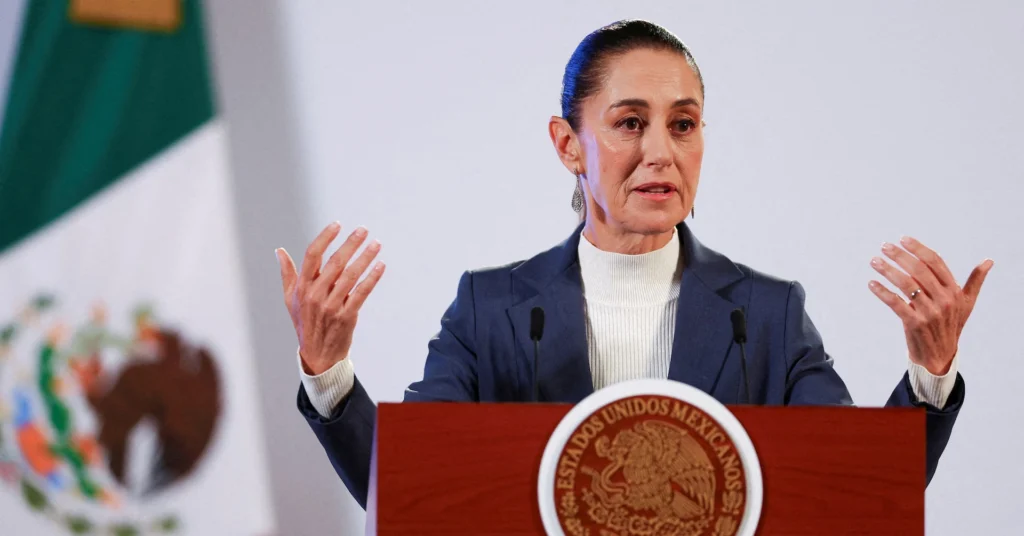
President Claudia Sheinbaum Pardo rejected that an “anti-Argentine campaign” exists, as the president of that country, Javier Milei, claimed, who asserted, without presenting evidence, that the alleged campaign was financed from Mexico, Brazil and by the Democratic Party.

Asked this Monday at her morning press conference about the statements of the South American far-right figure, Sheinbaum Pardo responded:

“It’s false, there is no campaign against any country in the world, nor against any government in the world.”

She pointed out that, on the contrary, what does exist is a campaign orchestrated from many places against our government, “but we are not in the habit of meddling with other countries. Self-determination of peoples, and we ask for the same: respect.”

Meanwhile, regarding the reform in Nicaragua that seeks to prevent the participation of opposition parties in elections, President Claudia Sheinbaum Pardo spoke out for the self-determination of peoples and for each country to decide, while noting that she is in favor of democracy.

“The first thing is the self-determination of peoples, what the people of Nicaragua decide. And we are always in agreement with democracy on all issues,” she maintained this Monday at the National Palace.

Asked whether that is the course that should be taken in Mexico with respect to conservative and right-wing groups, she made clear: “No, how could you think that? Here there are elections every six years. What’s more, there is recall of mandate.”

She insisted that there must be “democracy, democracy, democracy. Power of the people, government of the people.”

She added that “each country decides, each people decides. We are in favor of democracy, but each country has its self-determination and decides how it organizes itself. There are other presidents who have been reelected and who want to be reelected more times… each country decides. Europe has prime ministers who can be reelected, reelected and reelected. Well, each country decides.”

The post Sheinbaum: False That an ‘Anti-Argentine Campaign’ Exists from Mexico appeared first on Mexico Solidarity Media.


From Mexico Solidarity Media via This RSS Feed.

9


Government Cites Limited Effectiveness and Alleged Selectivity, Calls for Stronger African Judicial Mechanisms.

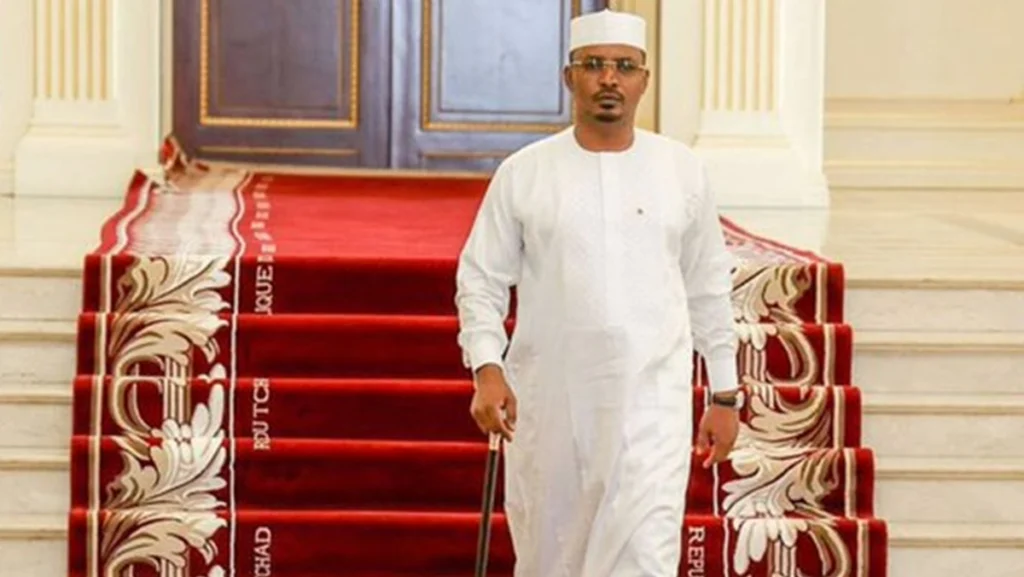
On Monday, Chad announced the process to withdraw from the Rome Statute and the International Criminal Court (ICC), arguing that the institution has shown “limited effectiveness” and has focused its activities on the Global South since it began operations in 2002.

RELATED:

European Union Reaffirms Support for International Criminal Court

“As of July 27, 2026, the Government of the Republic of Chad has notified the secretary-general of the United Nations of its sovereign intention to withdraw from the Rome Statute of the International Criminal Court,” the Foreign Affairs Ministry stated.

Chadian diplomacy attributed the decision to a “comprehensive review” of the court’s operations and record, “whose effectiveness has been limited and inconsistent in relation to the expectations that guided its creation” and which has demonstrated “undeniable selectivity” in its activities.

Data from cases pursued by the ICC “explain the perception, widely shared by numerous states and among their public opinions, of a sustained concentration of the Court’s judicial activity in the Global South in general and on the African continent in particular,” the Foreign Affairs Ministry stated, adding that those regions of the world are “willing victims of a form of political instrumentalization of the ICC.”

Actor Mark Ruffalo posted harsh criticism of Israeli Prime Minister Benjamin Netanyahu on X, stating that removing the International Criminal Court prosecutor does not erase war crimes. pic.twitter.com/gG3lhi73RL

— Al-Jarmaq News (@Aljarmaqnetnews) July 27, 2026

“Consequently, the Government of Chad invites the African Union and its member states to deepen their reflection on the future of an apparently biased system and accelerate the strengthening and implementation of African judicial mechanisms, with a view to the emergence of a more equitable, more balanced, more credible and more effective continental justice system,” it added.

Chadian diplomacy, however, stressed that “this irrevocable decision by Chad in no way constitutes a renunciation of the moral imperative to deliver justice to victims, but rather reflects the conviction that national judicial systems and African judicial mechanisms now have increasingly greater capacities that enable them to fully carry out this mission with dignity.”

Chad President Mahamat Idriss Deby Itno was elected by an absolute majority in the May 2024 presidential election, which marked the end of a three-year political transition.

Mahamat Deby Itno assumed power on April 20, 2021, following the death of his father, Marshal Idriss Deby Itno, in fighting with rebel groups after 30 years in power.

On July 24, Venezuela also announced its intention to denounce the Rome Statute and begin its definitive withdrawal from the ICC. In recent years, other countries that have withdrawn from the ICC include Burundi, Niger, Mali and Burkina Faso. Meanwhile, Russia, China, Israel, India and the United States have never been active members of the court because they did not ratify the treaty.

teleSUR/ JF

Source: EFE


From teleSUR English via This RSS Feed.
10


This article by Clara Zepeda originally appeared in the July 27, 2026 edition of La Jornada, Mexico’s premier left-wing daily newspaper.

Mexico broke export records in the first half of 2026, with a particularly strong performance in non-auto manufacturing, thanks to the technology rebound in the United States. In the first six months of the year, the value of Mexico’s total exports reached a record amount for a comparable period of 389,723 million dollars, which represented an annual growth of 24.6 percent, driven by a 25.6 percent increase in non-oil exports, but a 2.9 percent drop in oil exports, revealed figures from the National Institute of Statistics and Geography (Inegi).

Inegi specified that the value of manufacturing exports stood out, with an amount of 355,901.5 million dollars, 25.8 percent more than in the first half of 2025. This was supported by non-auto manufacturing (263,643.8 million), which surged 37.6 percent annually, due to the boom in demand for electronic products, data-processing machines, among others.

For their part, automotive foreign sales rose only 1 percent in the reference period, with an amount of 92,257.6 million dollars.

Amid a US trade policy moving toward greater protection and greater demands on its trading partners, within non-oil exports there were annual increases of 35.8 percent in those directed to the United States and of 25 percent in those channeled to the rest of the world.

Automotive exports directed to the United States fell 2.7 percent annually in January-June of this year.

Thus, 84.16 percent of non-oil exports in the first half of the year were directed to the United States, a share marginally higher than in the same period of 2025, of 84.14 percent.

Trade Balance Surplus

In the January-June period of 2026, the accumulated value of total imports was 379,866 million dollars, 22 percent higher than that observed in the same span of 2025. Within that, non-oil imports rose 22.8 percent and oil imports 12.1 percent, at an annual rate.

The structure of the value of imports was intermediate-use goods, 79.9 percent; consumer goods, 12.8 percent; and capital goods, 7.3 percent.

Thus, for the first six months of 2026, the trade balance posted a surplus of 9,857 million dollars. In the same period of 2025 it was 1,433 million.

For its part, the value of merchandise exports during June was 72,551 million dollars, an unprecedented figure since records have been kept, and it was an amount 34.4 percent higher than that of the same month of 2025.

In June 2026, the value of merchandise imports was 68,461 million dollars and represented an annual increase of 28 percent. According to Inegi, in June 2026, the preliminary foreign-trade data recorded a trade surplus of 4,090 million dollars.

The post Mexico’s Exports Reach a Record in the First Half of 2026 appeared first on Mexico Solidarity Media.


From Mexico Solidarity Media via This RSS Feed.

11


On Friday, 243 years after the birth of Simón Bolívar, the independence leader of six South American nations and one of the 19th century’s most influential political figures, Venezuelan social movements gathered in the Plaza Bolívar in Caracas to claim his integrationist and anti-imperialist thinking.

In statements to Sputnik, former Deputies Mario Silva and Fernando Rivero affirmed that the commemoration of the Liberator occurs at a time marked by the debate on national sovereignty, popular organization, and the response of social movements to foreign interference and geopolitical tensions in Venezuela and the region.

The activity, which was replicated in Bolívar squares across Venezuela, brought together popular, communal, and political leaders who linked the Bolivarian ideology to the defense of national sovereignty, the principle of self-determination of peoples, and anti-imperialism.

Sovereignty as a common front
For Mario Silva, the mobilization of social movements represents a response to what he described as a process that generates doubts about the future of national sovereignty.

“Then people can no longer view this as a tactic or strategy…” he said in reference to the Venezuelan government’s actions since the US January 3 invasion and kidnapping of President Nicolás Maduro.

Silva said the moment calls for a greater organization and unity of the grassroots. He pointed out that the political debate transcends internal differences to focus on defending the country’s independence.

In that context, he referred to the announcement of the August 1 initiation of a political dialogue process promoted by the United States, arguing that popular organizations must build a response of their own to this US “transition” push.

“We are obliged to counteract the US government. Our people must organize themselves from the ground to recover what has been lost: our sovereignty, our freedom, and the Bolivarian revolution… The revolution is in the people, it is in all the people we have here,” he said.

Silva has been a vocal critic of the direction taken by the Chavista leadership since the US imperialist bombing of Venezuela. Many claim that his connection to grassroots Chavismo is very weak, and others say that his recent belligerence comes from the loss of some privileges, such as bodyguards, thus weakening his political relevance.

When asked about the teachings left by Bolívar for present-day Venezuela, Silva established a link between the Liberator’s thinking and the political legacy of former President Hugo Chávez.

“Today, fight, just like Chávez. We cannot continue to erase Chávez or allow Chávez to be erased. Chávez set an example. Chávez was the one who woke us to Bolívar when, in the Fourth Republic, people would only visit Bolívar’s grave on the days of his birth and death to leave a flower,” he said.

According to the former deputy, the current moment demands the resumption of both Bolívar’s emancipatory thought and the political project promoted by Chávez. “We have to return to Bolívar’s emancipatory speech and Commander Chávez’s revolutionary discourse and fight,” he added.

Silva also addressed a message to the progressive movements of Latin America, calling for stronger coordination in the face of what he considers a regional political offensive.

“We are already advancing with the movements of Latin America so that, within our differences, we begin to wake up. The issue is nothing more,” he said.

In that sense, he said that different governments in the region are part of a strategy aimed at consolidating US influence on the continent.

“The ultimate victim is going to be Cuba, if we allow it. All movements now have to move beyond their differences and respond to imperialism,” he noted.

During the interview, Silva also questioned recent statements by US Secretary of State Marco Rubio about left-wing political organizations in the region.

“The fact that they continue to label those who fight Washington’s expansionist policy as terrorists or narcoterrorists demonstrates who they really are, who drive those policies. We have to respond as a people, with our own revolutionary characteristics and not according to what US imperialism dictates,” he said.

Reclaim the project of the Great Homeland
For his part, former Deputy Fernando Rivero said that the rally held in Caracas is part of a national mobilization convened by grassroots organizations.

“The people’s power organizations, the communities, and a wide range of groups representing our people have come here to the Plaza Bolívar in Caracas, as well as other Bolívar squares throughout Venezuela, to demonstrate against foreign interference, against Washington’s aggression, and against US imperialism,” he said.

Rivero added that the mobilization also seeks to condemn the kidnapping of President Nicolás Maduro and the foreign military presence in Venezuelan territory.

He also stressed that the event served to express solidarity with other countries and international causes.

“Today, the people of Venezuela raise their voices in support of Palestine, condemning the aggression against Cuba, affirming solidarity with Iran and with the peoples who fight, but, above all, endorsing their commitment to life,” he said.

Chavista Deputy Iris Varela: ‘Bolívar Teaches Us That National Independence Comes First’

For Rivero, the commemoration of Bolívar’s birth transcends the historical tribute and represents a reaffirmation of political principles.

“To celebrate the birth of Bolívar is to celebrate anti-imperialism, the unity of the peoples, and the Patria Grande project—an emancipatory project that, here in Venezuela, is called the Bolivarian Revolution and that, today, we are obliged to defend,” he concluded.

(Últimas Noticias) by Jose Negrón Valera with Orinoco Tribune content

Translation: Orinoco Tribune

OT/JRE/SF


From Orinoco Tribune via This RSS Feed.

12


Yohandri Granado secured the top spot on the podium by defeating David Millan 2-1.

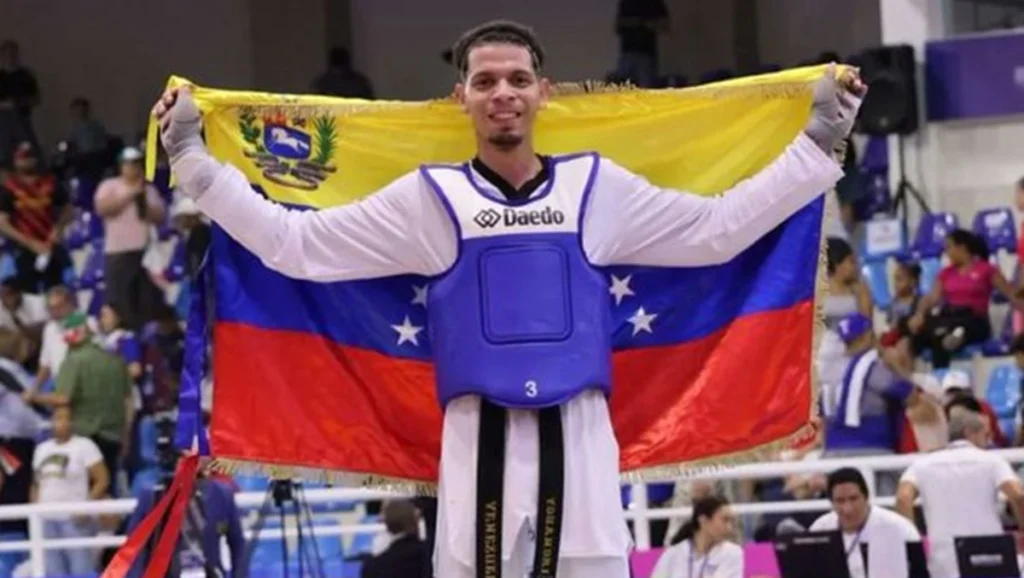
On Monday, Venezuelan athlete Yohandri Granado won the gold medal in the men’s under-63-kilogram taekwondo category at the 2026 Central American and Caribbean Games in Santo Domingo.

RELATED:

Mexico, Cuba, and Colombia Lead the Central American and Caribbean Games

With the victory, the Paris 2024 Olympian ended a more than decade-long gold medal drought for Venezuela in the sport, a regional milestone that had not been achieved since Adriana Martinez’s triumph in 2014.

Granado secured the top spot on the podium by defeating Mexico’s David Millan 2-1 in the final after overcoming Nicaragua’s Aldo Blanco in the semifinals.

The decisive bout began with the Mexican representative taking the lead after winning the opening round 3-0 with a head kick. However, the Venezuelan adjusted his offense in the second round, landing three body kicks to claim a 6-3 victory and force a deciding round.

YOHANDRI GRANADO
CAMPEÓN DE JUEGOS
CAC 2026 EN TAEKWONDO -63 KGS pic.twitter.com/ueTTm3MXVv

— Barry Cartaya (@cartayabarry) July 27, 2026

The text reads, “Yohandri Granado. champion in taekwondo -63 kgs in CAC 2026 games.”

In the final round, a technical penalty (Gam-jeom) against the Mexican competitor decided the match, with Granado prevailing 3-2.

The Santo Domingo games also produced positive results for the rest of the Venezuelan delegation in the combat sport. The South American team won a silver medal through Yoel Diaz in the men’s under-58-kilogram category and a bronze medal through Juan Grimaldo in the men’s under-54-kilogram division.

At the conclusion of the competition, Granado dedicated his victory to the people of Venezuela, who were affected by two earthquakes on June 24. “We are going to rise up, and we are going to be reborn,” he said.

teleSUR/ JF

Source: teleSUR – Sports Ministry


From teleSUR English via This RSS Feed.

13


The Cuban president rejects Washington’s allegations and calls for action to strengthen sovereignty.

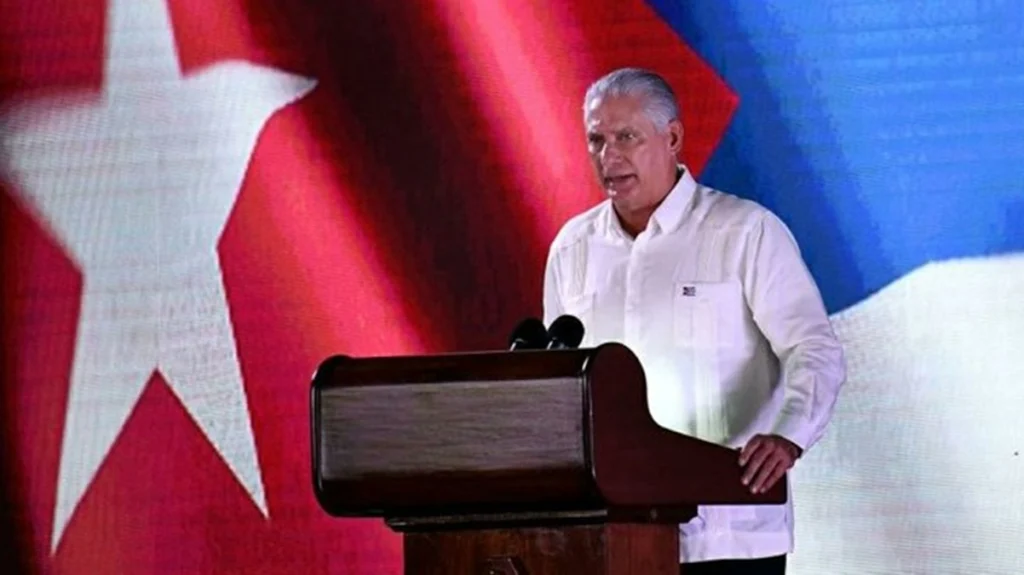
On Sunday, Cuban President Miguel Diaz-Canel led the ceremony marking the 73rd anniversary of the assault on the Moncada and Cespedes barracks in 1953, an event that launched an insurgent movement culminating in the triumph of the Cuban Revolution in 1959.

RELATED:

Thousands March in Mexico City Against U.S. Blockade of Cuba

During his speech, he denounced a campaign by U.S. President Donald Trump against progressive movements around the world. To justify a new form of McCarthyism, Washington is fabricating narratives portraying Cuba as the alleged center of international communism, a strategy that also seeks to further tighten the economic blockade against the Caribbean nation.

Diaz-Canel accused the U.S. government of pursuing a policy of maximum pressure aimed at provoking social unrest, weakening the Cuban government and paving the way for the country’s political and economic takeover.

“They are looking for a new excuse to sustain their political genocide against Cuba,” he said before hundreds of people gathered in Pinar del Rio, where he concluded his speech with a call to defend sovereignty, strengthen the economy and preserve social justice.

🇨🇺 President Díaz-Canel:

"Trump's Blockade is Killing Cuban Children." pic.twitter.com/AvBJ8cZtp6

— Jackson Hinkle 🇺🇸 (@jacksonhinkle) July 27, 2026

“Compatriots, the call now is for action, not to wait, not to lament, not to settle, to think as a country, to seek alternatives with boldness and creativity, to safeguard every resource as if it were the last, to produce, to substitute imports, to develop our potential, and to trust in our own strength,” he said.

“Let every Cuban, in their workplace, in their field, in their workshop, in their school or in their neighborhood, be and feel like a protagonist of the transformation we owe ourselves in order to overcome this moment,” Diaz-Canel stressed.

The Cuban leader’s remarks came days after the State Department published the report, “Cuba: The Capital of 21st Century Communism.” Through the document, Washington accuses Havana of building networks of espionage, political influence and support for left-wing organizations in the U.S. and other countries. It also accused Cuba of backing an alleged wave of “left-wing terrorism” on U.S. territory.

Diaz-Canel rejected those accusations and said Trump intends to blame Cuba for protests led by U.S. social groups affected by inequality, immigration policy and the deterioration of their economic conditions.

teleSUR/ JF

Sources: Subjetivo – Cuban Presidency


From teleSUR English via This RSS Feed.

14


Caracas (OrinocoTribune.com)—On Saturday night, Venezuelan Acting President Delcy Rodríguez led a ceremony to award and bid farewell to the Cuban search and rescue brigade, which completed its technical, medical, and humanitarian support work in La Guaira state following the June 24 double earthquake. Hours later, US Southern Command (SOUTHCOM) announced the withdrawal of US troops deployed to Venezuela following the natural disaster.

The acting president recognized the work of the Cuban contingent, comprising rescue specialists, surgical doctors, forensic experts, and structural engineers from the Henry Reeve International Contingent.

During the ceremony, the Venezuelan authorities awarded the “Hero of Venezuela” medal to deployed personnel for their work in assisting affected communities. The Cuban brigade carried out specialized rescue operations, surgical interventions, and infrastructure inspections across Venezuelan territory.

Foreign Affairs Minister Félix Plasencia and Cuban Ambassador to Venezuela Jorge Luis Mayo Fernández also attended the ceremony.

US SOUTHCOM withdraws troops
Hours later on Sunday, SOUTHCOM announced on social media that it officially concluded its military presence on Venezuelan soil.

With the withdrawal of its military personnel, the military arm of US imperialism in the region confirmed the end of operations in the land of the Liberator Simón Bolívar and Commander Hugo Chávez.

Venezuela: Israeli Settler Colonial Delegation Concludes ‘Humanitarian’ Mission, US Embassy Briefed on Earthquake Cleanup Operations

Following the catastrophic earthquakes, Venezuela received support from over 40 countries and more than 4,000 international aid workers assisting in relief efforts. However, the US presence was accompanied by a widely criticized military deployment.

The military branch of US imperialism in the region noted that various US-funded organizations remain on the ground and will continue operations under the coordination of the US State Department.

Among the nations that dispatched humanitarian aid to Venezuela were Mexico, Spain, Colombia, China, Cuba, Türkiye, Russia, the Netherlands, El Salvador, the Dominican Republic, Switzerland, Ecuador, Chile, Italy, Germany, and Argentina.

Special for Orinoco Tribune by staff

OT/JRE/SF


From Orinoco Tribune via This RSS Feed.

15


Iranian Foreign Minister Abbas Araghchi says Ukraine’s military attack on an Iranian commercial vessel in the Caspian Sea was carried out at the Israeli regime’s behest in a bid to drag Europe into its war in the West Asia region.

In a strongly worded post on X on Sunday, Araghchi said Ukrainian President Volodymyr Zelenskyy orchestrated the attack on the Iranian commercial vessel that left one sailor dead.

He added that the attack constituted a “blatant” violation of the United Nations Charter.

The top Iranian diplomat noted that he raised the issue in separate phone calls with European Union foreign policy chief Kaja Kallas and Russian Foreign Minister Sergei Lavrov.

He said he made clear during the conversations that the attack “cannot go unanswered.”

“I made clear that what the freeloader in Kyiv did CANNOT GO UNANSWERED,” he wrote.

Araghchi’s remarks came after the Ukrainian president announced in a post on X that Kiev had hit vessels that he claimed were used in military cargo shipments involving Iran, as well as a warship.

Iran Strikes Back: IRGC Hits US Bases, Assets in Jordan, Kuwait

After the atrocity, the Iranian and Russian foreign ministers held a phone call on Sunday and discussed the latest developments in the region and across the world.

In the phone call with Kallas on Saturday, Araghchi called for a decisive response from the UN Security Council, the European Union, and the international community regarding Ukraine’s strike.

He urged international bodies to hold “the perpetrators and supporters of this criminal act” accountable.

In a statement on Saturday, Iranian Foreign Ministry spokesman Esmaeil Baghaei said, “By attacking an Iranian commercial vessel, the Ukrainian regime not only committed an internationally wrongful act, but also, in a dangerous manner, sought to spread insecurity.”

(PressTV)


From Orinoco Tribune via This RSS Feed.

16


The Cuban delegation is looking to improve upon its achievements at San Salvador 2023.

On Sunday, at the Central American and Caribbean Games being carried out in Dominican Republic, Mexico solidified its lead in the medal count with a haul of gold medals in rowing, open-water swimming, taekwondo, and clay-pigeon shooting, reaching 16 gold, 15 silver, and 12 bronze medals for a total of 43.

RELATED:

XXV Central American and Caribbean Games

Meanwhile, Cuba got mixed results, with notable advances in badminton and taekwondo, but also eliminations and defeats in other disciplines.

In badminton, the Cuban duo of Juan Carlos Bencomo and Erly Cabrera secured their place in the quarterfinals of the mixed doubles tournament after defeating Venezuelans Ricardo Torres and Maria Rojas 21-10, 21-18 in just 23 minutes.

Also in badminton, Roberto Herrera and Juan Carlos Bencomo advanced to the quarterfinals of the men’s doubles by defeating Colombians Jeronimo Giraldo and Nicolas Morales in a hard-fought match that ended 21-18, 19-21, 21-14.

However, Cuban Erly Cabrera was eliminated in the round of 16 of the women’s individual tournament, falling to Jamaican Tahlia Richardson 21-15, 21-12. Cuba still has Taymara Oropesa in the competition, who advanced to the quarterfinals after defeating Mexican Vanessa Villalobos.

#Cuba en los Juegos Centroamericanos y del Caribe de #SantoDomingo2026
Valoraciones del entrenador jefe del equipo de #remo, Joan Manuel Paula Azcuy, luego de tres jornadas que han dejado dos títulos, tres platas y par de bronces.#DeporteCubano #InderCuba65 #SiempreXCuba pic.twitter.com/77JPgXkx83

— INDER (@InderCuba) July 27, 2026

The text reads, “Cuba: at the Santo Domingo 2026 Central American and Caribbean Games
Assessments from the head coach of the rowing team, Joan Manuel Paula, after three days that have yielded two titles, three silver medals, and two bronze medals.”

In women’s softball, the Cuban team debuted with a 7-0 loss to the Virgin Islands in their first Group B game. In taekwondo, Marlyn Perez won the silver medal in the women’s -53 kg division after losing the final to Mexican Nadia Ferreira, the current Pan American champion.

These results add to the overall performance of the Cuban delegation, which is looking to improve upon its achievements at San Salvador 2023 (23 medals, including five gold). Cuba remains in contention for a podium finish, although Mexico and Colombia hold a comfortable lead in the medal count.

Mexico, with 16 gold medals, dominates disciplines such as rowing, open water swimming, taekwondo, and clay pigeon shooting, while Colombia has won medals in cycling, water skiing, figure skating, and women’s water polo.

In skeet shooting, Luis Gallardo and Gabriela Garza added more medals for Mexico, further solidifying their delegation’s lead in the medal count.

#AGoalForVenezuela | Words of encouragement, solidarity, and hope continue to cross borders.

People from Mexico and Ecuador are sending messages full of love to the Venezuelan citizens and to all those affected by the devastating earthquakes, reminding them that they are not… pic.twitter.com/sRmjExBsVU

— teleSUR English (@telesurenglish) July 9, 2026

teleSUR: JP

Source: EFE


From teleSUR English via This RSS Feed.

17


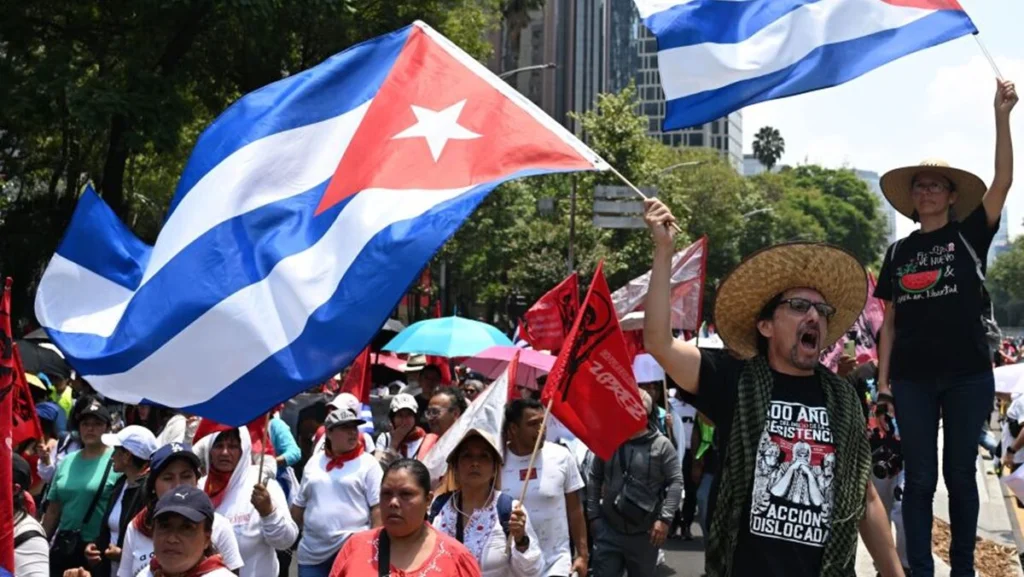
Demonstrators mark anniversary of Moncada Barracks attack and call for an end to the U.S. blockade.

On Sunday, thousands of people took part in a march in Mexico City marking the 73rd anniversary of the assault on the Moncada and Cespedes barracks in 1953, an event that launched an insurgent movement culminating in the triumph of the Cuban Revolution in 1959.

RELATED:

Colombia’s President-Elect to Shutter 14 Embassies, Cut Ties with Cuba and Nicaragua

The “March in Defense of Cuba,” which took place along Paseo de la Reforma and proceeded toward the former U.S. Embassy, aimed to denounce the U.S. blockade against Cuba.

“It is urgent for all brotherly peoples to mobilize in solidarity because Cuba’s sovereignty must be defended. In this process, we must also defend the sovereignty of all countries and the right to self-determination,” said Francisco Rosas, coordinator of the organization Va Por Cuba.

“Cuba is not alone. Cuba is not a threat. The U.S. blockade is! The solidarity of the Mexican people is present in this struggle that we must strengthen to confront imperialist aggression,” said Olivia Garza, vice president of the Jose Marti Association of Cuban Residents in Mexico.

Members of the Jose Marti Association of Cuban Residents in Mexico, farmers’ organizations and solidarity groups gathered at the Juarez Hemicycle, waving Cuban flags, calling for respect for the island’s sovereignty and chanting slogans including, “Yes to Cuba, no to the Yankees!”

🇨🇺Cuban President Miguel Díaz-Canel has accused the United States of trying to “take over” Cuba and called on the country to defend its sovereignty.

Speaking at a ceremony marking the anniversary of the 1953 attack on the Moncada Barracks, Díaz-Canel accused Washington of… pic.twitter.com/oPxvNpHArF

— NewsForce (@Newsforce) July 27, 2026

Among the banners carried by thousands of demonstrators were messages reading: “No to the war against Cuba. Down with the blockade! Defending Cuba is defending Mexico,” “United for Cuba. Down with the blockade!,” “Stop Trump’s genocidal siege. Oil for Cuba, without a doubt,” “Stop Zionism and Imperialism! Long live the peoples who resist!,” “No to the invasion,” and “No to the war against Cuba! Down with the blockade! Defending Cuba is defending Mexico!”

During the march, participants expressed their rejection of U.S. President Donald Trump and Secretary of State Marco Rubio, whom are the leading promoters of the current genocidal escalation against Cuba.

In addition to demanding an end to coercive measures against Cuba, demonstrators rejected U.S. threats to invade the Caribbean nation, an intention that mainstream media reproduce, justify and amplify.

On Sunday, President Miguel Diaz-Canel Bermudez thanked the thousands of people who participated in the march. “Thank you, Mexico. Once again at the forefront of the dignity of Our America. To everyone who marched for Cuba this July 26, the grateful embrace of a people that has always found solidarity in the noble and generous Aztec land. Cuba is not alone!” he posted on social media.

The demonstration in the Mexican capital was one of several solidarity events held Sunday to mark Cuba’s “National Rebellion Day.” Large gatherings also took place in Paris, Rome, Milan and Valparaiso.

teleSUR/ JF

Sources: La Jornada – teleSUR


From teleSUR English via This RSS Feed.

18


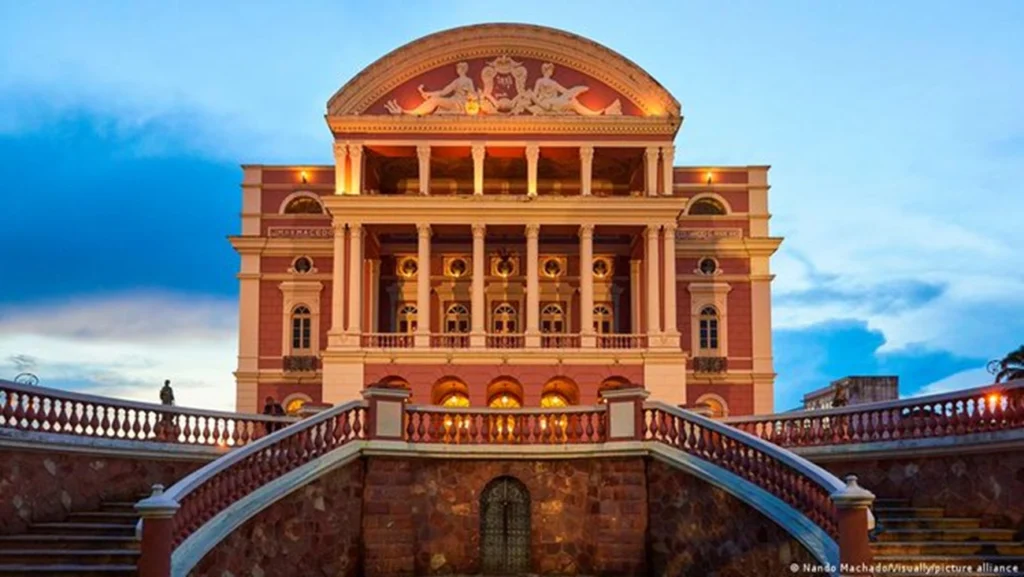
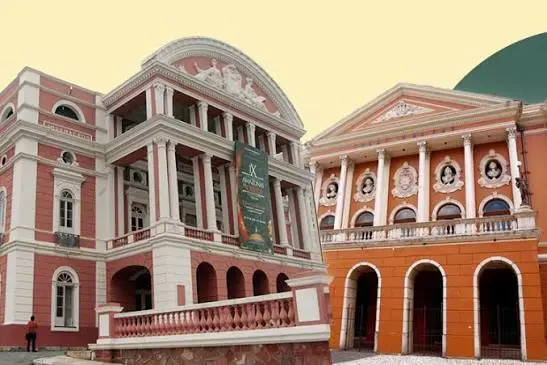
These theaters not only host opera and theater, but also carimbo dance, jazz, and film.

On Monday, UNESCO declared two iconic opera houses built in the Brazilian Amazon as World Heritage Sites: the Amazonas Theater in Manaus and the Peace Theater in Belem.

RELATED:

Brazilian Indigenous Peoples Reject River Privatization in the Amazon

Both represent the “rich cultural heritage” of the Belle Epoque in the world’s largest rainforest. The World Heritage Committee made the decision during its annual assembly in Busan, South Korea, and marks the first time a cultural site from the Brazilian Amazon has been added to the list.

The Brazilian delegation emphasized the importance of this inscription, highlighting that the Amazon is not only a paradigm of natural heritage but also a producer of cultures, memories, and identity.

These theaters not only host opera and theater, but also carimbo dance, jazz, and film, becoming spaces for broad artistic expression and symbols of cultural exchange.

La Amazonía es un patrimonio de la humanidad que debemos proteger con hechos. Reducir la deforestación, impulsar la reforestación y promover la cooperación entre gobiernos, comunidades, empresa y sociedad civil es el camino.
Desde Leticia, la IV Cumbre de la… pic.twitter.com/FqBgDN49pa

— Iván Duque 🇨🇴 (@IvanDuque) July 22, 2026

The text reads, “The Amazon is a heritage of humanity that we must protect with actions. Reducing deforestation, promoting reforestation, and fostering cooperation between governments, communities, businesses, and civil society is the way forward.”

Both were built in the late 19th century thanks to the rubber boom, when global demand for latex transformed the Amazon into an economic hub capable of importing European styles and materials.

The “odyssey” of constructing them in an isolated region, with materials transported by ship across the Atlantic and up the Amazon River, even inspired the celebrated German film Fitzcarraldo (1982).

Deyvesson Alves, president of the National Institute of Historic and Artistic Heritage, described the recognition as a “historic achievement” that showcases the region’s cultural diversity to the world.

#Brazil | President Luiz Inacio Lula da Silva responded to U.S. tariff measures, questioning the justification for taxing Brazil. He highlighted that countries around the world are adapting, learning to trade through new markets, currencies, and bilateral dialogues.#LulaDaSilvapic.twitter.com/6QzChGtUHT

— teleSUR English (@telesurenglish) July 23, 2026

teleSUR: JP

Source: EFE


From teleSUR English via This RSS Feed.

19


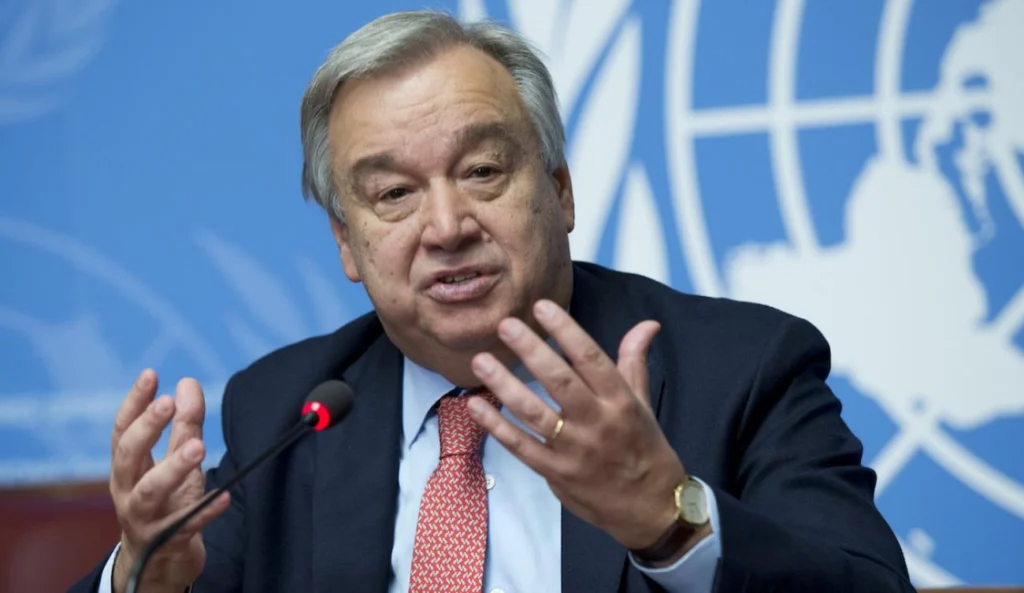
United Nations Secretary-General António Guterres will present a detailed report to the Security Council at the end of the month on Israeli violations in Syria.


The announcement came amid a three-day official visit to – in which he urged Israel to strictly comply with the 1974 Disengagement of Forces Agreement.

RELATED: UN Warns Israel Over Illegal Military Operations in Southern Syria

Guterres described aggression against Syrian sovereignty as unacceptable, and on his X account reaffirmed the urgency of respecting Syria’s independence, unity and territorial integrity while demanding an immediate halt to violations by Prime Minister Benjamin Netanyahu’s government.

Syria’s sovereignty, independence, unity & territorial integrity must be fully respected.

Violations by Israel of the 1974 Disengagement of Forces Agreement are unacceptable & must stop.

— António Guterres (@antonioguterres) July 26, 2026

The UN chief acknowledged the resilience of the Syrian people, stating that accumulated suffering had not broken their determination to achieve their legitimate aspirations. He also warned that international humanitarian assistance currently meets only 20% of existing needs.

Guterres called Syria a fundamental pillar for stability in Western Asia and advocated for its full reintegration into regional and international economic networks. He stressed the need to channel financial and logistical aid to reactivate basic services, infrastructure, health systems, education and economic opportunities.

The Syrian people have shown extraordinary resilience through years of hardship.

They should not have to carry the burden of recovery alone.

The international community must match Syrian determination with sustained political support, economic engagement & practical… pic.twitter.com/amxKiMOzpu

— António Guterres (@antonioguterres) July 26, 2026

During his stay, the Secretary-General met with Transitional President Ahmad Al Sharaa and Foreign Minister Asaad Al Shibani. His agenda included visits to Sednaya prison, the Umayyad Mosque and the old city of Damascus, as well as an inspection of the UN Disengagement Observer Force (UNDOF) in the Golan Heights buffer zone, established by Security Council Resolution 350 in 1974.

Guterres’s warnings come against a backdrop of heightened tension in southern Syria, triggered after Netanyahu declared the 1974 disengagement pact invalid in December 2024, a move that enabled Zionist troop incursions into the demilitarised zone and other territorial areas, according to the UN account.


From teleSUR English via This RSS Feed.

20


Authorities review whether warning signs were missed after attack that killed one woman and injured 29 people.

German authorities confirmed that the suspect in a vehicle-ramming and stabbing attack on Saturday in Berlin was shot dead by police on Sunday evening.

RELATED:

Why Germany Failed in UN Security Council Membership Race

The suspect was located at about 6 p.m. in Berlin’s Spandau district. Preliminary findings indicated that the suspect ran toward police officers with a bladed weapon, prompting officers to open fire.

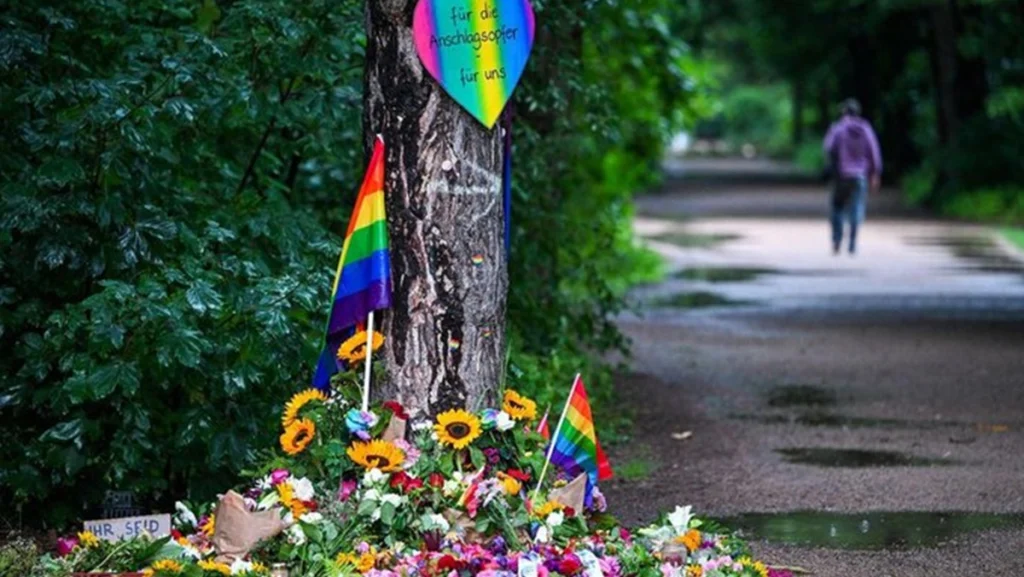
On Saturday evening, a van drove into a crowd near Berlin’s Tiergarten park. The driver then attacked passersby with a machete, leaving one woman dead and 29 others injured. The incident occurred near the site of the Christopher Street Day Pride parade.

Earlier Sunday, German Interior Minister Alexander Dobrindt said the incident was suspected to be an “Islamist terrorist attack.”

The suspect was a German citizen of Lebanese descent who had a history of multiple offenses and radicalization. He had previously been sentenced by a German court to one year and 10 months in prison, with the sentence suspended on probation.

Those injured in the vehicle-ramming attack during the LGBTQ+ Pride celebrations are recovering favorably. Four of the 29 people who sustained the most serious injuries in the attack, were transferred to Charite Hospital in central Berlin. Most of the injured suffered lacerations and multiple bone fractures caused by the impact of the vehicle.

Authorities continue to investigate the circumstances surrounding the attack. The main suspect, identified as 21-year-old Abdul Ballout, had previously attempted to join the Islamic State group. Authorities have not ruled out the possibility that he had accomplices or that someone may have known about his plans.

Abdul Ballout of Lebanese descent who drove a van into a crowd at a Berlin Pride event was shot dead during an SEK operation in a garden shed in the Berlin district of Spandau.
German Interior Minister Alexander Dobrindt called it an Islamic terror attack. pic.twitter.com/WWMhwa7mZe pic.twitter.com/60rx9ff28P

— Tony (@TonyL_01) July 26, 2026

Attorney General’s Office spokesperson Ines Peterson confirmed that an Iranian national arrested Saturday night has been released because of insufficient evidence linking him to the vehicle-ramming attack.

According to the newspaper Bild, the man was found injured at the scene. Investigators initially believed he might have been inside the vehicle used in the attack, but DNA evidence later ruled out that possibility.

In the aftermath of the attack, Germany is also debating whether authorities failed at any stage to prevent the suspected attack, given that Ballout had a criminal record and was considered a security risk because of his Islamist ideology.

The court that sentenced him to 22 months in prison for attempting to join the Islamic State group defended its decision to allow Ballout to remain on probation while prosecutors appealed the ruling.

The suspect had already spent six months in pretrial detention, a period the court described as “relatively long for a German citizen who, at the time of the offense and sentencing, still fell within the juvenile category.”

Justice Ministry spokesperson Eike Hosemann said authorities would examine “carefully” the lessons that can be learned from the attack, while stressing that it is still too early to draw conclusions.

Hosemann recalled that penalties for terrorism offenses were increased in April, although the changes did not apply to Ballout. He said Ballout’s record “shows no gaps in substantive criminal law” and added that the Justice Ministry has commissioned a study to examine potential reforms to juvenile criminal law, which some critics consider too lenient.

teleSUR/ JF

Sources: Xinhua – EFE


From teleSUR English via This RSS Feed.

21


By Stephen Sefton – Jul 23, 2026

Nicaragua is one of the only countries forthrightly defending its sovereignty and self-determination and is again coming under the attack of Washington and the news media it controls.

The US-centered Western techno totalitarian ruling elite is greatly intensifying their assault on democracy and freedom around the world seeking to recover and remake the West’s now vanishing monopoly control of international trade, technology and finance. Abandoning international law and destroying free and fair election processes at home and abroad have been central to that global assault. Western style democracies themselves are now more than ever militarized financial and digital shell games under governments progressively less and less responsive to their peoples’ needs.

Overall, the US elite driven global offensive aims to consolidate and extend control over vassal states around the world, militarizing them, while maintaining division among potential rival power structures such as BRICS and undermining powerful adversaries such as the Russian Federation and the People’s Republic of China. This same logic underlies and drives the different varieties of aggression by the US and allied ruling classes against any country resisting the West’s outright gangsterism. Integral to this global assault is relentless, ever more sophisticated psychological warfare.

This involves the most extensive concentrated control possible of news media and related information sources such as non-governmental organizations and universities. This concentration of power over information sources combines now with mass surveillance and manipulation of consciousness via powerful digital platforms controlled by giant, hugely wealthy multinational corporations. All of these information and mind control structures serve as essential support to Western economic and military aggression around the world. Among the most successful achievements of this psychological warfare is the way whole populations in Western and allied countries have come to accept as normal government policies which actually harm their countries’ political and economic interests.

Latin America and the CaribbeanIn Latin America and the Caribbean, the US ruling elite’s war on democracy, which some experienced observers call Plan Condor 2.0, referring to the period of US supported dictatorships in the last century,  has used their vast psychological warfare resources to control, manipulate and intimidate voter opinion on a mass scale. Together with the influence of US allied local oligarchies over their countries’ judicial and electoral systems the combined effect eliminates any chance of free and fair elections. Last year’s national elections in Bolivia, Honduras and Ecuador, for example, were clearly vitiated both by abuses of the electoral process and by brazen US government interference, which also markedly affected the outcome of Argentina’s legislative elections that year.

This year, similar electoral abuses and interference facilitated the highly questionable electoral victories of pro-US candidates in Peru and Colombia, where the president elect even has dual Colombian and US citizenship. An important regional and international effect of these successful attacks on democracy in Latin America and the Caribbean is that regional integration forums like the Community of Latin American and Caribbean States (CELAC) are rendered ineffective by deliberate obstruction from US aligned governments. Similarly, the region’s vassal governments become more susceptible to US policies seeking to block China’s economic relations in the region, while also promoting the region’s diplomatic relations with the genocidal regime governing Israel.

Nicaragua rejects US electoral meddlingRight now in Latin America and the Caribbean, Brazil, Cuba, Mexico and Nicaragua are the main countries forthrightly defending their sovereignty and self-determination, fundamental concepts of the UN Charter and international law. This is the context of the current, highly contrived media and political furor over purposefully misreported remarks by Nicaraguan Co-President Daniel Ortega during last weekend’s celebration of the 47th anniversary of the triumph of the Sandinista People’s Revolution in 1979. Faithfully translated in context, Comandante Ortega addressed the issue of undue US influence in Nicaragua’s elections saying,  “…there will be no elections like that again here, no more elections via which they can cheat their way to government so as cheat their way to taking power.”

However, practically no mainstream or alternative media in Europe or the Americas truthfully reported the sense of Co-president Comandante Ortega’s remarks. In Western and allied media, Daniel Ortega’s declarations were reported as stating flatly that Nicaragua will no longer hold elections at all or else that future elections would include only government approved candidates. Currently, Nicaragua’s National Assembly and the country’s Supreme Electoral Council are preparing the relevant legislation strengthening the integrity of the country’s election process to present for review and approval by the National Assembly in early August.

In an interview with the Sputniknews agency, Dr. Gustavo Porras, National Assembly president, explained that the legislative and electoral authorities are working so as “to identify the principal elements and not leave even the tiniest opening which might permit dreadful manipulation by the imperialists and their servants… never again elections serving the imperialists or their underlings who are enemies of our country.” The misreporting of this episode is the most egregious recent example from a long history of malevolent false reporting on Nicaragua by Western and allied news media.

Implanting false beliefs and false memories
Conventional journalism around the world in general, but especially in the US and Europe, long ago abandoned conventional reporting standards to practice outright psychological warfare instead. No one employed in Western media reporting on foreign affairs now would keep their job if they tried genuinely to respect due diligence, cross checking facts and corroborating quotes, acknowledging their own viewpoint so as to offer as faithful a report as possible of any given issue. Practically no Western news outlet offers information on international affairs in a way that allows people to make up their own minds by mentioning contrary sources and interpretations.

Attempts to distribute or even access truthful foreign affairs reporting now face practically universal censorship in most Western and allied media. Internet search engine algorithms filter out reporting sources contradicting dominant western narratives and doctrines. Artificial intelligence is wide open to the mis- and dis-information falsely touted by Western media as good faith reporting. Examples of this reality abound in relation to NATO’s war against Russia in Ukraine, Israel’s genocide in Palestine or Iran’s courageous defense against US and allied aggression. For decades now, Western psychological warfare has planted false beliefs in the minds of a mass public who assimilate them as false memories, enabling the West’s sinister ruling elites to constantly dupe their countries’ populations into accepting policies that damage their own interests.

The main false belief inculcated among the peoples of the Americas and Europe has always been the falsehood that their governments seek to ensure freedom and democracy both at home and abroad. But the use of lawfare to exclude politicians as electoral candidates or of the abuse of government aligned media to stigmatize politicians and political parties is normal in Europe, as has long been the case in the Americas. Among the most prominent examples are those of Marine Le Pen in France or the AfD party in Germany or the brazen EU interference in the last elections in Moldova and in Rumania or more recently, in the US, repressive moves against candidates like the anti-zionist Republican Thomas Massie  or anti-zionist Democrats challenging the party’s old guard domination of selection processes.

Meddling Through Mistranslation: US Interferes in Nicaragua’s Elections

Outright political censorship and arbitrary politically motivated repression too are now the norm across Europe against anyone seeking to challenge government support for Ukraine or Israel. Brave reporters like German citizen Hüseyin Dogru or respected commentators like Swiss national Jacques Baud, among many others have been stripped of basic rights and have no legal remedy. That political repression is accompanied by systemic corruption. Political funding scandals are a fixture of French and German politics while, in the UK, the current orchestrated attack on Reform party leader Nigel Farage has highlighted the gross double standards prevailing in Britain over campaign financing.

In all Western countries the electoral rules permit funding one way or another by big business and wealthy donors blocking genuinely independent candidates and political parties from achieving electoral success. Less blatant but more sinister has been the growing use of data analysis and surveillance to target voters via social media so as as to influence their voting intentions. The mass harvesting and analysis by Cambridge Analytica of the data of tens of millions of Facebook users to try and influence both the 2016 Brexit referendum and the 2016 US presidential election is notorious. That abuse has become even more sinister and sophisticated since then with digital technology billionaires treating sovereign governments with open contempt as a tiresome anachronism, good only for fleecing.

As Abraham Istillarte the Venezuelan communicator has remarked, elections can be heavily and readily influenced by the capacity of algorithms to target individuals via “psychological microsegmentation seeking to make you feel in specific ways and along particular lines so that you come to believe specific things, so that you do indeed think in a particular way and act in a particular way.” Self-evidently, the fusion of corporate and political power in Europe and the Americas has created an ever more clearly fascist status quo fusing corporate and State power in which elections are bought, managed and controlled so as to offer the flimsiest legitimacy for antidemocratic policies dictated by the ruling elites against their peoples’ interests.

Sandinista youth participate in the celebration of the 47th anniversary of the triumph of the Sandinista Popular Revolution in Managua. (July 19, 2026)

Nicaragua’s authentic democracyAfter twenty years in government, Nicaragua’s co-presidents enjoy well over 80% popular approval, with good reason. Nicaragua’s economy has grown at around 4% a year since 2022. Unemployment is around 3%. Inflation has held steady at between 5% and 7%. The country’s exports increase briskly from one semester to the next. The Central Bank holds record foreign exchange reserves. The country is self sufficient in food production. Education and health care are free, provided by the best equipped public health system in Central America and the region’s most innovative education system. The country has the best highways in the region and the best citizen security.

With Chinese help, the government is providing thousands of new houses a year for people on low incomes. Russian development cooperation has provided an advanced plant producing vaccines for use across the region and is developing a nuclear medicine center to provide state of the art cancer care. The country has harmonized its medicine protocols with India to facilitate the purchase of inexpensive medicines. The electricity supply now covers 99% of the country, with up to 80% generated from renewable energy sources. 95% of the country has access to drinking water. The percentage of people hoping to migrate abroad has dropped to 12%  from a high of 38% in 2021.

The government has achieved these enviable levels of political support thanks to the formidable results of its economic management and commitment to the well-being of all Nicaragua’s families but especially the majority on low incomes. For that reason, the government subsidizes the cost for households using less electricity, the fares for bus services and, since 2022, the prices of diesel, gasoline and liquid gas for cooking. The government also provides assistance to school students at the start of the year to purchase their school needs and ensures a free school meal every day for around 1.2 million school children.

Western governments and media constantly attack Daniel Ortega and Rosario Murillo because they are focused on the human development of all Nicaragua’s families via poverty reduction, provision of accessible, good quality health care and education, maintaining a strong economy and encouraging a strong sense of national unity and identity. Above all the country has recovered a stable equilibrium of peace and security with a highly respected national police and much trusted and admired armed forces. These are the reasons the US ruling elites and their allies detest Nicaragua. They cannot stand so much Truth and Light from a country devoted to and committed to its Christian, Socialist, Solidarity inspired authentic democracy focused on the human development needs and aspirations of its People.

A naturalized Nicaraguan citizen, Stephen Sefton is a writer and community worker based in Nicaragua since 1994. Besides coordinating the web outlet Tortilla con Sal since 2008, he has supported community education and health programs in and around Estelí, where he lives, since 1996.

(Kawsachun News)


From Orinoco Tribune via This RSS Feed.

22


More than 220,000 people remain evacuated as record-setting blaze scorches 42,000 hectares near Bordeaux.

On Monday, French Interior Minister Laurent Nuñez said that the massive wildfire in the Gironde department near Bordeaux has been stabilized, but that conditions remain unfavorable.

RELATED:

Spain’s Ávila Blaze Becomes the Country’s Largest in History

“This is an unprecedented fire,” he said after an interministerial crisis unit meeting on the wildfires chaired by President Emmanuel Macron, followed by a full Cabinet meeting.

Given the unpredictable nature of the wildfire, Nuñez urged the public to exercise the utmost caution and acknowledged that authorities will continue to consider the situation “unfavorable” until the fire is fully contained.

That assessment comes despite improved conditions overnight compared with previous nights, as officials recorded no advance of the flames beyond the 42,000 hectares that had already burned as of Sunday.

🚨 #BREAKING:

Striking aerial imagery shared from a Canadair plane exposes the immense "fire monster"

tearing through Gironde, offering a pilot's-eye perspective of the relentless wildfire crisis.
pic.twitter.com/9ZXQQaMtyi

— GBX (@GBX_Global) July 26, 2026

At least 2,500 firefighters, 1,700 gendarmes and police officers, and 1,500 military personnel are working in the area, along with volunteer organizations and farmers assisting in support roles. Authorities have deployed 18 aircraft of various types to drop both water and fire retardant over the affected area.

The number of evacuees remains at 220,000, and authorities do not expect them to return home in the near term, not until the fire is fully contained. That effort could be complicated by rising temperatures expected beginning Tuesday as France faces its fourth heat wave of the year, with temperatures in the southwest forecast to reach as high as 40 degrees Celsius.

Macron is scheduled to travel to Gironde on Monday afternoon, the epicenter of a crisis that is setting historic records for the amount of land burned. So far this year, with the summer wildfire season still far from over, 116,085 hectares have already burned in France, well above the 70,000 hectares destroyed during all of 2022, which had previously been the country’s worst wildfire year on record.

teleSUR/ JF

Source: EFE


From teleSUR English via This RSS Feed.

23


Biometric Verification Prevents Fraud as Registration Continues for Families Affected by June 24 Earthquakes.

On Sunday, La Guaira Gov. Jose Alejandro Teran announced that 21,075 families have been registered through the Single Housing Registry in his state so far.

RELATED:

Venezuelan President Honours Cuban Aid Brigade ‘Henry Reeve’

“As of noon this Sunday, 21,075 households, comprising 71,120 people, have benefited from the census that began 13 days ago,” he said, dismissing any possibility of fraud involving the data.

“This system records people’s identities by capturing their fingerprints. The information is then validated through an interconnected system,” Teran explained.

The Single Housing Registry verifies applicants’ information by cross-checking it with municipal land records, the Great Housing Mission, and other public entities to determine geographically whether the information provided by the citizen is accurate.

“This system has been a success and demonstrates the confidence that the people of La Guaira have in the Single Housing Registry and the public policies the government is implementing to provide housing solutions,” Teran said.

“The census will continue for as long as necessary. It is not aimed solely at families whose homes are in buildings that received a red tag,” he added.

Currently, the Venezuelan Housing Ministry is keeping the Single Housing Registry active to expedite assistance for families affected by the June 24 earthquakes.

The census is being conducted in person at the temporary camps where those affected are staying and constitutes the mandatory first step to promptly process the allocation of new homes.

To prevent duplicate registrations, the census uses biometric recognition technology to build a reliable database and ensure the unique identity of each beneficiary before proceeding with the final housing allocations.

It also collects data to contact beneficiaries, document the composition of each family and assess the actual condition of the affected property.

Each head of household receives a printed receipt with a unique QR code. This document serves as the official certification confirming the citizen’s right to receive a permanent housing solution from the Venezuelan state.

Additionally, officials from the Housing Ministry are conducting field visits in the areas affected by the earthquakes to register potential beneficiaries of this emergency social program.

teleSUR/ JF

Sources: AVN – La Radio del Sur


From teleSUR English via This RSS Feed.

24


(FILE) Amazon Teathers. Photo: Brazilian government.

UNESCO’s World Heritage Committee decided on Monday, during its annual assembly in Busan, South Korea, to inscribe two 19th‑century opera houses – the Amazon Theatre in Manaus and Theatro da Paz in Belém – as World Heritage sites, marking the first time a cultural property from the Brazilian Amazon has been added to the list, according to the Brazilian delegation.


The architectural ensemble, built with European materials and styles, symbolises the wealth of the Belle Époque in the world’s largest rainforest.

RELATED: UNESCO Adds New Sites to Its World Heritage List

Deyvesson Israel Alves Gusmão, president of Brazil’s National Institute of Historic and Artistic Heritage, called the decision a “historic achievement” and said it recognises that the Amazon is not only a natural and environmental paradigm but also a producer of cultures, memories and identity. He stated that the site shows the world the richness of the Brazilian Amazon’s cultural diversity.

🔴 BREAKING!

New inscription on the @UNESCO #WorldHeritage List: Amazonia Theaters, #Brazil 🇧🇷.

➡ https://t.co/iO4B0Cjg9u #48WHC pic.twitter.com/VaDgJg8kub

— UNESCO (@UNESCO) July 27, 2026

Both theatres were constructed in the late 19th century in the region’s two largest urban centres, funded by the rubber boom, when global latex demand turned the area into a major economic hub and enabled the reproduction of European cultural and architectural refinement in the tropics.

The buildings host not only opera and theatre but also a wide variety of artistic activities, including carimbó dance, jazz and cinema.

The logistical challenge of building in an isolated jungle region – where most materials had to cross the Atlantic and sail up the Amazon River – inspired the German film ‘Fitzcarraldo’ (1982), whose protagonist dreams of constructing an opera house in the jungle.

For decades, the two venues hosted European opera companies, orchestras and artists drawn by the region’s wealth, becoming symbols of cultural exchange between the Americas and Europe in the 19th and 20th centuries, according to the UNESCO announcement.


From teleSUR English via This RSS Feed.

25


Public disapproval of Chilean President José Antonio Kast reached 54% on July 26, up two points, following the passage of a frontal system that caused widespread damage.


The survey, conducted on July 23, also revealed a deterioration in public perception of the government’s handling of the emergency created by the storm, as 43 out of every 100 respondents considered the Executive’s response incorrect, five points more than in a previous measurement.

RELATED: Chilean Storm Death Toll Rises to 13 as Catastrophic Floods Hit Northern Regions

The frontal system, accompanied by an atmospheric river, affected the south, the center, and the northern part of central Chile.

Mayors of the impacted areas criticized the Executive over bureaucratic obstacles, administrative slowness in releasing humanitarian aid, territorial neglect, delays in declaring a state of catastrophe, and prevention failures.

🚨 Encuesta #Criteria: Aprobación Presidencial José Antonio Kast Rist 🙋🏼‍♂️

❎🙋🏼‍♂️ Desapruebo: 54% +2
✅🙋🏼‍♂️ Apruebo: 36% -1#Criteria pic.twitter.com/Vj00LSvgJ3

— Encuestas Chile 🇨🇱 (@EncuestasChil10) July 26, 2026

According to the National Service for Disaster Prevention and Response, the storm left 13 dead, 18 missing, more than 13,500 displaced, and 40,000 isolated. The same agency reported 1,600 completely destroyed homes, over 5,000 with major damage, and 27,290 with minor damage.


From teleSUR English via This RSS Feed.

view more: next ›