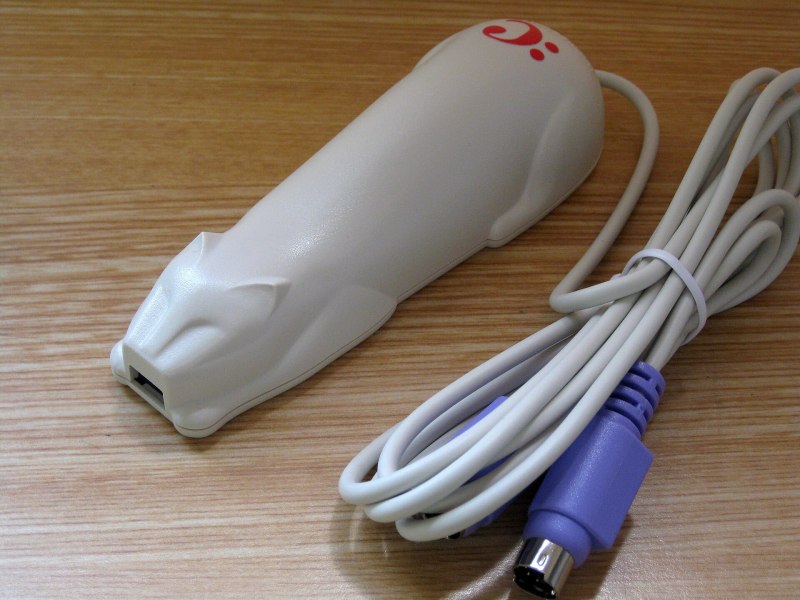
Digital Convergence Corporation is hardly a household name, and there’s a good reason for that. However, it raised about $185 million in investments around the year 2000 from companies such as Coca-Cola, Radio Shack, GE, E. W. Scripps, and the media giant Belo Corporation. So what did all these companies want, and why didn’t it catch on? If you are old enough, you might remember the :CueCat, but you probably thought it was Radio Shack’s disaster. They were simply investors.
The Big Idea
The :CueCat was a barcode scanner that, usually, plugged into a PC’s keyboard port (in those days, that was normally a PS/2 port). A special cable, often called a wedge, was like a Y-cable, allowing you to use your keyboard and the scanner on the same port. The scanner looked like a cat, of course.
However, the :CueCat was not just a generic barcode scanner. It was made to only scan “cues” which were to appear in catalogs, newspapers, and other publications. The idea was that you’d see something in an ad or a catalog, rush to your computer to scan the barcode, and be transported to the retailer’s website to learn more and complete the purchase.
The software could also listen using your sound card for special audio codes that would play on radio or TV commercials and then automatically pop up the associated webpage. So, a piece of software that was reading your keyboard, listening to your room audio at all times, and could inject keystrokes into your computer. What could go wrong?
Of Interest
You might think this was some tiny startup that died with a whimper, but Radio Shack, Forbes, Wired, and several major newspapers were onboard. The :CueCat cost about $6.50 to produce, but most people never bought one. Radio Shack, Forbes, and Wired were giving them away.
The problem is, even free was too high a price for most people. To use the device, you had to register and complete a long survey full of invasive questions. Then the software showed you an ad bar. Digital Convergence had your demographic info, your surfing habits, and knew what you were scanning.
Even then, the scanner solved a non-problem. If you saw something in a Radio Shack catalog, for example, it was probably not so hard to go to their website and search for it by title or stock number. Especially if you were sitting in front of your computer. If you weren’t… well, then, the :CueCat didn’t help you in that case, anyway.
The Next Big Thing?
It is easy to look back on this and think, “What a bad idea?” But Digital Convergence and its investors were in a full-blown media blitz. The video below shows a contemporary demo of the technology.
If you still aren’t sold, look at how happy the woman in the Radio Shack commercial is that she didn’t have to manually search the web for her next phone purchase.
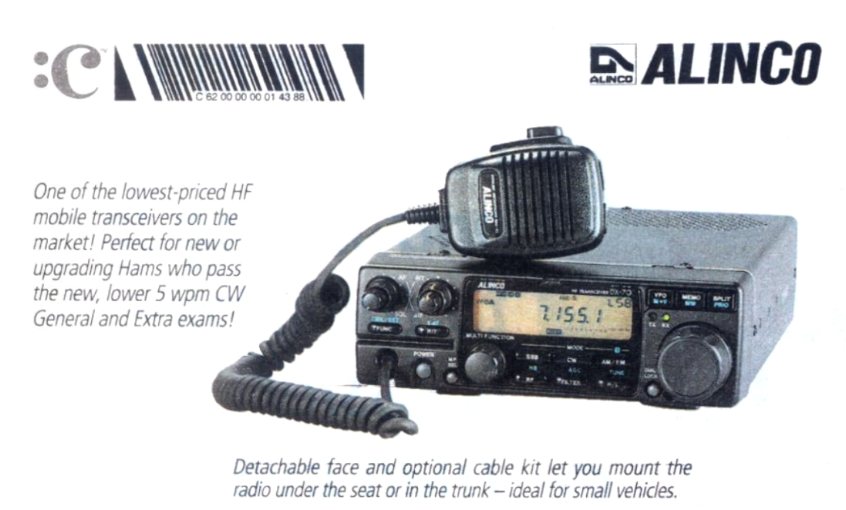
A clip from the Radio Shack 2002 catalog (from RadioShackCatalogs.com)
Problem solved, right? Want to buy that new ham radio? Scan the code, and you don’t have to type “Alinco” into a search box! Even the table of contents in the 2002 RadioShack catalog was festooned with barcodes.
The RadioShack catalog might have been an exception, though. A 2001 issue of Forbes magazine showed sparing use of the barcodes and no obvious ones linking to big advertisers. You would think the advertisers would have been a prime target, even if you had to make deals to get them onboard.
Hackers
Naturally, hacks immediately appeared. Drives from [Pierre-Philippe Coupard] and [Michael Rothwell] allowed you to use the :CueCat without the invasive software or registration. You could even scan normal barcodes like UPC codes. Radio Shack and others wound up simply giving away $6.50 barcode scanners.
While people were already prickly about the amount of information gathered and the tracking, hackers found a report file on a public server that revealed personal info about 140,000 users — a huge number for the year 2000.
With hackers attacking both the hardware and the company’s website, Digital Convergence had to act. They changed their license, claiming that you didn’t own the scanner and forbidding reverse engineering. There were no real lawsuits, but there were threats and, as you might imagine, that just made things worse.
The Decline
By 2001, there were a very few USB-native :CueCats distributed. But the bad publicity and the lack of usefulness took its toll. By mid-year, most of the 225 employees at Digital Convergence had been let go. Later in the year, the investors decided to stop using the tech entirely.
By 2005, you could buy the now-surplus devices for $0.30 each, as long as you agreed to take 500,000 or more of them. You can still find them on the used market if you look. Open source software is still around that can make them do useful things, but honestly, unless you’re hacking it into a custom hardware setup, your phone is a better barcode scanner.
Hardware
You can still find some of the contemporary teardowns of the :CueCat online. There were, apparently, several revisions of the hardware, but at least one version had a cheap CPU, a serial EEPROM, an 8 KB static RAM, and a handful of small parts. For a free device, the insides looked pretty good.
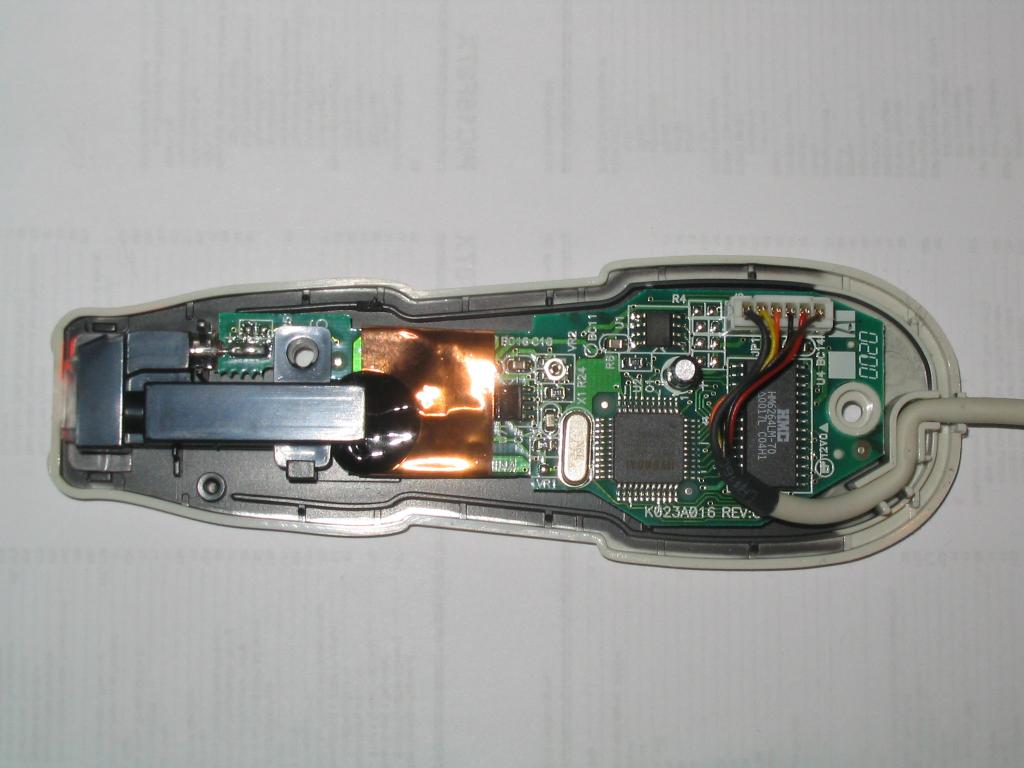
:CueCat without cover by [Shaddack]
Removing the ID from the device was as easy as removing the EEPROM, although people were less equipped to remove SMD chips in those days. You could also just lift a single pin, which was slightly easier. At least one enterprising hacker added a DIP switch to experiment with the pin settings.
Aftermath
Of course, now we have QR codes. But these are somewhat more private, work with the ubiquitous cell phone, and even then haven’t caught on in the way Digital Convergence had planned.
Was it a good idea? That’s debatable. But giant privacy grabs usually go poorly. Granted, in 2000, that might not have been as obvious as it is today. But it still doesn’t keep companies from finding it out all over again.
Featured image: The :CueCat. Photo by [Jerry Whiting]
From Blog – Hackaday via this RSS feed

![Photo by [Jerry Whiting]](https://commons.wikimedia.org/wiki/File:CueCat_barcode_scanner.jpg)