1
posts
2
3
cross-posted from: https://mander.xyz/post/55261585
cross-posted from: https://hexbear.net/post/8991894
Article nerds
Mexico City. The Supreme Court of Justice of the Nation (SCJN) will review an unprecedented case in which Mayan communities in the municipality of Hopelchén, Campeche, seek to have bees recognized as subjects of rights—a legal status that would allow their caretakers to go to court to defend them and demand that authorities take action to protect them and prevent their deaths.
The case—an amparo review proceeding (file number 790/2025)—was formally brought before the Supreme Court this Thursday at the proposal of Justices Hugo Aguilar Ortiz (President of the Court) and Irving Espinosa Betanzo; the decision passed with eight votes in favor and one against, cast by Justice María Estela Ríos González.
“It allows us to examine the ancestral relationship between the Mayan community and bees—specifically, whether indigenous communities can act as guardians of nature and, in that capacity, bring legal action on its behalf—as well as to evaluate the standard of state conduct regarding the ecological crisis,” said Justice Espinosa.
Justice Arístides Guerrero García noted that exercising jurisdiction over this case would enable the Court to establish a precedent recognizing the Melipona bee—which is closely linked to the economic and cultural identity of Mayan communities in the municipality of Hopelchén—as a subject of rights or a legal entity deserving of protection within the framework of the comprehensive safeguarding of indigenous peoples, who have maintained a historic relationship with this species.

4
Trump Guts Two National Monuments 'At the Behest of Polluting Corporations Who Seek to Ravage Them' | Common Dreams
(www.commondreams.org)
cross-posted from: https://hexbear.net/post/9026838
cross-posted from: https://news.abolish.capital/post/64339
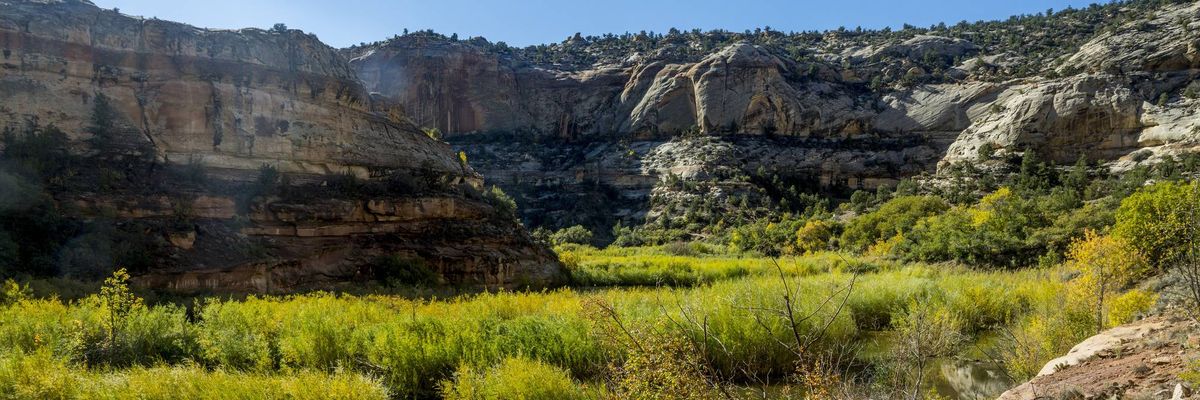
US President Donald Trump on Monday signed proclamations dramatically shrinking the size of two national monuments in Utah, eliminating roughly 3 million acres of protections for Bears Ears and Grand Staircase-Escalante and potentially opening the beloved, wildlife-rich areas to industry exploitation.
Trump's proclamations, issued at the urging of Utah Republicans including Sen. Mike Lee, aim to reduce Bears Ears to just under 121,100 acres (down from nearly 1.4 million) and Grand Staircase-Escalante to 181,541 acres (down from 1.87 million). The president declared in his orders—which opponents say are unlawful—that the areas he's stripping of their monument designation contain "several resources that are vital to energy and resource independence," including silver, copper, uranium, and zinc.
The orders were met with immediate outrage from tribes, Democratic lawmakers, and conservationists. Rep. Jared Huffman (D-Calif.), the top Democrat on the House Natural Resources Committee, said in a statement that the president has "illegally opened up two of the most extraordinary landscapes in America at the behest of polluting corporations who seek to ravage them for short-term profits."
"Trump has been selling out our public lands and waters since the day he took office," said Huffman, pointing to previous attacks on the monuments during the president's first White House term. "Trump tried this once before. We fought him then, and we are ready to fight him now, because no president should have the power to give away what belongs to the American people, including future generations. Keep public lands in public hands.”
Scott Braden, executive director of the Southern Utah Wilderness Alliance, said his organization "will challenge this unlawful decision in federal court" and expressed confidence that Trump's "reckless and unlawful acts will be rejected."
“Today’s action makes it clear that Utah is the epicenter of Republican efforts to dismantle and obliterate America’s system of public lands," said Braden. "President Trump’s outrageous attack on Grand Staircase-Escalante and Bears Ears national monuments was taken at the urging of Utah politicians—Sens. Mike Lee and John Curtis, Gov. Spencer Cox, and the others—who championed this action. These two landscapes deserve to be protected for current and future generations of Utahns and Americans, not opened to exploitation."
During a signing ceremony on Monday, flanked by Utah Republicans, Trump characterized his scaling back of monument protections as an effort to give land "back to the people of Utah." The president falsely claimed that people could "virtually not even walk on" the lands under the protections he targeted.
"You can’t go hunting. You can’t go fishing," the president said, incorrectly. "You can’t do anything."
Trump's proclamations cite authority under the Antiquities Act of 1906, which empowers the president to "reserve parcels of land as a part of the national monuments." But opponents of Trump's assault on the two Utah national monuments noted that the law does not explicitly authorize the president to scale back protections implemented by previous administrations.
In 2021, then-President Joe Biden restored protections to Bears Ears and Grand Staircase-Escalante after Trump's first attempt to gut them in 2017. Trump's new assault on the two national monuments goes much further than the previous one. (The far-right Project 2025 agenda, which Trump has repeatedly tried to disavow despite his ties to its architects, called for the downsizing of national monuments and repeal of the Antiquities Act.)
"President Trump’s attack on Bears Ears and Grand Staircase-Escalante National Monuments is just as illegal today as it was in 2017,” Heidi McIntosh, managing attorney for Earthjustice’s Rocky Mountain Office, said in a statement on Monday. "The Antiquities Act authorizes presidents to designate national monuments, not to destroy them. Today’s proclamations are a slap to the face of public lands visitors across the country, as well as the local communities and tribes that have worked for years to protect these special places. Earthjustice and our partners are prepared to vigorously defend the monuments once again."
Autumn Gillard, coordinator for the Grand Staircase-Escalante Inter-Tribal Coalition, said Monday that "our tribes were not informed of or asked about this decision, and that’s unacceptable."
“Today’s action is a direct strike against the federal government’s duty to consult with tribes," said Gillard. "It also profoundly disrespects our intergenerational traditional knowledge by destroying a framework for tribal co-stewardship over our ancestral lands in which we invested years of effort. Today’s action cannot stand."
From Common Dreams via This RSS Feed.
5
Indigenous and Climate Campaigners Decry 'Deep Betrayal' as Michigan Issues Key Enbridge Line 5 Permits | Common Dreams
(www.commondreams.org)
cross-posted from: https://hexbear.net/post/9044687
cross-posted from: https://news.abolish.capital/post/65003
Anti-fossil fuel campaigners on Wednesday emphasized that Michigan state regulators had issued key permits for the Enbridge Line 5 tunnel in the Straits of Mackinac on the same day that "wildfire smoke from climate change blotted out the Mackinac Bridge from view" and as the US and other countries faced extreme heatwaves.
Despite the mounting evidence that—as energy and climate experts have long warned—continued fossil fuel extraction is heating the planet and causing dangerous extreme weather, Michigan's Department of Environment, Great Lakes, and Energy handed down a permit Wednesday to allow the Canadian company Enbridge to construct a tunnel that EGLE officials acknowledged will likely have "significant impacts" on threatened or endangered species and Indigenous burial ground in the Straits.
“The magnitude of impacts to recognized historic and cultural values of this proposed project exceeds that of any other that EGLE has reviewed,” said EGLE in its statement on the permits.
Enbridge has sought to build a tunnel around its Line 5 pipeline in the Straits for years, following a massive oil spill from its Line 6B pipeline in the Kalamazoo River. Line 5 has been struck by ships' anchors numerous times, heightening concerns.
EGLE said in its explanation that the oil spill risk was found to be "unacceptable" and that the need for the tunnel outweighed its risks.
But opponents who have argued that Line 5 should be permanently shut down, including the Bay Mills Indian Community, condemned the agency for "rewarding" Enbridge with new permits even after its fossil fuel infrastructure has caused hazardous oil spills.
“Enbridge has spilled oil, committed safety violations, trespassed on lands, shattered ecosystems, pierced aquifers, violated our laws, and repeatedly shown contempt for tribal sovereignty," said Whitney Gravelle, president of the Bay Mills Indian Community. "They have left devastation in their wake, and now they’re being rewarded with responsibility over one of the most precious and sacred resources in our state. The Great Lakes are not safe in their hands. This decision is a deep betrayal of our Great Lake State, and we will confront it immediately, fiercely, and without hesitation.”
The state Department of Natural Resources also issued a permit following EGLE's decision, granting permission for the tunnel despite its potential impact on rare plants and animal habitats.
According to Michigan Bridge, about 1.53 acres of wetlands in Mackinac County would be impacted by the tunnel project, as well as 0.17 acres of Lake Michigan bottomlands in Emmet County, where Enbridge is expected to build a water intake structure.
The environmental legal organization Earthjustice, which has helped represent the Bay Mills Indian Community in its legal challenges against Enbridge, said that with the permits, the company will "transform the Straits of Mackinac into an industrial construction zone for at least six years, destroying views, displacing wildlife, and interrupting tourism dollars."
“Our environmental laws, the looming climate crisis, and simple common sense tells us that an oil pipeline doesn’t belong in the Great Lakes,” said Earthjustice managing attorney Debbie Chizewer. “Today’s decision is a setback, but we’re not giving up. A future without oil in the Great Lakes is still possible.”
EGLE is also expected to rule by September 30 on an Enbridge request to discharge millions of gallons of treated wastewater per day into Lake Michigan while it is constructing the tunnel, and the Michigan Supreme Court is considering a lawsuit brought by four Tribal Nations, including Bay Mills, alleging that the Michigan Public Service Commission improperly issued a key tunnel permit in 2023.
The state is also fighting Enbridge over Democratic Gov. Gretchen Whitmer's 2020 order to shut down Line 5 over oil spill concerns. She had campaigned in 2018 on a promise to shut down the pipeline. A federal judge ruled last year that the state had no authority to terminate the use of the pipeline, and the state appealed that ruling.
Advocates expressed anger on Wednesday at Whitmer as her government issued the permits.
“It’s incredibly disappointing that a governor who ran on a commitment to the climate and protecting the Great Lakes has now decided to instead endorse a Canadian industrial tunnel project that still threatens the Great Lakes and will contribute fossil fuels to the climate,” David Holtz, coalition coordinator for the anti-Line 5 group Oil & Water Don’t Mix, told Bridge Michigan.
David Gover, managing attorney for the Native American Rights Fund, said that "the Straits of Mackinac are not a piece of Enbridge oil infrastructure; they are the heart of creation for Anishinaabe people and a vital source of life for all who depend on the Great Lakes."
“We will pursue every legal avenue," Gover said, "to defend treaty rights, protect drinking water, and preserve tribal lifeways from another Enbridge disaster.”

From Common Dreams via This RSS Feed.
6
7
In 'Death Knell for America's Wildlife,' Trump Admin Guts Habitat Protections for Endangered Species | Common Dreams
(www.commondreams.org)
cross-posted from: https://hexbear.net/post/8995275
cross-posted from: https://news.abolish.capital/post/63708
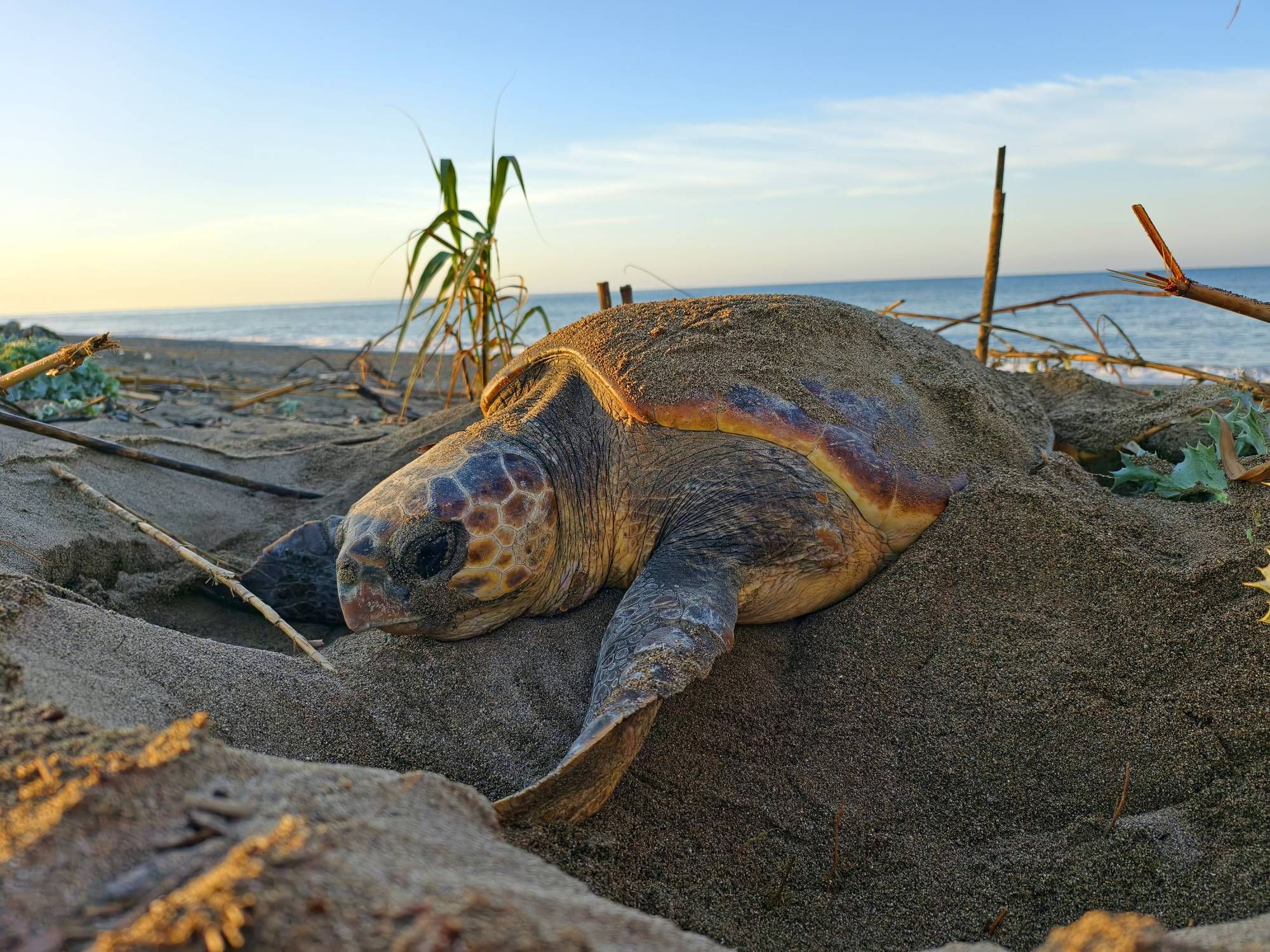
President Donald Trump's administration on Friday paved the way for letting US corporations destroy the habitats of endangered species by rescinding a longtime interpretation of the Endangered Species Act.
As reported by The New York Times, the Interior Department and the Commerce Department announced that they were narrowing the law's definition of what constitutes harming endangered species.
Whereas the law has for decades been interpreted as protecting endangered animals' habitats from significant "modification or degradation," the administration said that offenders would have to directly injure or kill an endangered animal to be considered in violation of the law.
"The change could open the door for fossil fuel companies, agricultural interests, land developers, and others," wrote the Times, "to disturb or even destroy the habitats of vulnerable species."
The Endangered Species Act has been interpreted as protecting animals' habitats for decades, and that interpretation upheld by the US Supreme Court in 1995.
Environmental advocates expressed horror in response to the rule change, which they said would put endangered species at unprecedented risk.
Kristen Boyles, attorney for Earthjustice, vowed that the administration would face legal challenges for its rule change, which she said would jeopardize endangered animals' ability to "raise their young, or search for food."
"Let’s be clear: There is no support for the Trump Administration’s rule—no scientific support, no legal support, no public support," Boyles said. "We will see the Trump Administration in court."
Ben Greuel, wildlife campaign manager at the Sierra Club, called the rule changed "a direct attack on the foundation of the Endangered Species Act" that, if kept in place, would put species "on a path to extinction."
"This rule ignores that reality in an unlawful attempt to open the door for corporate polluters to degrade vitally important habitats, wildlife be damned," Greuel emphasized. "The Endangered Species Act is a bedrock law that must be followed."
Tara Zuardo, a senior campaigner at the Center for Biological Diversity, pointed out that "habitat destruction is the number one threat to endangered species," while calling the Trump administration's new policy "a death knell for America’s wildlife."
"If animals don’t have a place to live, they can’t live," Zuardo said. "Spotted owls, Atlantic salmon, Florida panthers, and thousands of other species need protections for the wild places where they make their homes."
Andrew Bowman, president and CEO of Defenders of Wildlife, accused the Trump administration of embracing an "erroneous and nonsensical interpretation" of the Endangered Species Act that he vowed to challenge in court.
"We intend to fight back with the full force of the law," said Bowman, "to defeat this attack and innumerable others by the administration on the statutes and regulations that protect America’s cherished wildlife."
From Common Dreams via This RSS Feed.
8
9
10
11
12
How the world’s voracious appetite for shrimp is destroying Ecuador’s mangroves
(www.theguardian.com)
13
"Cold spot" in the ocean has baffled scientists. New Study Says It's an Ominous Sign
(agupubs.onlinelibrary.wiley.com)
14
15
'Absolutely Crazy': Acceleration of Climate Collapse Feared as Temps in Antarctic 20°C Higher Than Normal | Common Dreams
(www.commondreams.org)
cross-posted from: https://hexbear.net/post/8776534
cross-posted from: https://news.abolish.capital/post/57000
Climate scientists are sounding the alarm after an unprecedented heatwave hit Antarctica this month and delivered temperatures 20°C higher than normal.
According to a Friday report in The Guardian, temperatures at Antarctica's Trinity Peninsula this month hit peaks of over 15°C, even though it is the start of winter when ice typically expands on the continent. The prior record June temperature at the peninsula, 13.3°C, was set in 1998.
After weeks of above-average temperatures, scientists noticed that an area of sea ice that typically forms in the region—one roughly the size of France—was missing.
"It’s depressing,” Will Hobbs, an Antarctic sea ice expert at the University of Tasmania, told The Guardian. "It is remarkable that we are in June and there is no sea ice there."
Hobbs also predicted that the loss of sea ice is likely permanent at this point given the trajectory of global temperature changes.
Peter Fretwell, a scientist at the British Antarctic Survey, explained to the newspaper that the loss of sea ice poses a serious threat to penguin populations.
"Sea ice is forming too late and breaking up too early," Fretwell explained. "It leads to reduced breeding success and longer trips to moulting grounds."
In a separate interview with The Guardian last week, Raúl Cordero, a climate professor at the University of Groningen, expressed astonishment at the record-breaking Antarctic heat.
“This is absolutely crazy,” Cordero said. "That is a huge anomaly.”
Luis Muñoz, a Chilean glaciologist, told the newspaper he was shocked to step outside at King George's Island, located just north of Trinity Peninsula, and seeing the ground uncovered by snow.
"The temperatures here went very high so everything outside melted,” Muñoz explained. “Usually there is 20 centimeters of snow and a lot of ice on the ground at this time.”
Taking stock of the bigger picture, the newspaper reported that scientists are now fearful that some of the biggest glaciers in the region of the peninsula have now "past a tipping point" that could "push up global sea levels by four meters."
Such a rise in global sea levels would be unprecedented. Scientists estimate that global sea levels have risen by between 21 and 24 centimeters since 1880.

From Common Dreams via This RSS Feed.
16
cross-posted from: https://hexbear.net/post/8802800
cross-posted from: https://news.abolish.capital/post/57608
This story was originally published by The Texas Tribune.
Berenice Garcia
The Texas TribuneMcALLEN, Tex. — Conservation groups are trying to stop the U.S. Fish and Wildlife Service from exchanging hundreds of acres of land with SpaceX.
This month, the U.S. Fish and Wildlife allowed a land swap deal with SpaceX to move forward that would give SpaceX 715 acres of land in the Lower Rio Grande Valley National Wildlife Refuge in exchange for 683 acres of private land that is adjacent to another refuge, the Laguna Atascosa National Wildlife Refuge.
The conservation groups suing include the Center for Biological Diversity, Save RGV, and the South Texas Environmental Justice Network. They are joined by the Carrizo/Comecrudo Nation of Texas, a nonprofit indigenous group that considers the land that SpaceX is now occupying and seeks to develop as sacred. However, the tribe is not officially recognized by the federal government.
The groups said they hope to preserve the land to protect the diverse wildlife there, including the endangered ocelot. They argue SpaceX’s presence in the area has also begun degrading the land, particularly through rocket test launches that send debris onto refuge lands.
SpaceX did not immediately respond to questions about the land exchange.
“Our protected public lands are being gifted for the benefit of the world’s richest man, who could trash them while playing with his exploding rockets,” said Laiken Jordahl, national public lands advocate at the Center for Biological Diversity. “The Lower Rio Grande Valley National Wildlife Refuge was built by decades of conservation work and funded by millions of taxpayer dollars to protect our vulnerable wildlife like ocelots and piping plovers.”
Jordahl added: “We’re not letting Trump and his political cronies lock the American people out of Texas’ cherished public lands just to give Elon Musk another payday.”
In the lawsuit, filed on Wednesday, the groups argued that the land swap is inconsistent with the National Wildlife Refuge System Improvement Act, a law that lays out the mission and management of refuge lands, and that by approving the exchange, the Fish and Wildlife Service violated the National Historic Preservation Act, a statute enacted to protect historical sites from development.
They also argued that the environmental analysis of the land exchange did not meet the requirements of the National Environmental Policy Act, and accused the agency of working with SpaceX to come up with “unfounded” scores to rate the land they would be giving up against the land the agency would be obtaining.
As part of an environmental assessment published in May, the agency evaluated habitat quality using “Biological Importance Scores.” A score was assigned to each parcel of land based on three equally weighted criteria: habitat quality, refuge connectivity, and critical habitat. The refuge land proposed to be given to SpaceX scored lower than the land the Fish and Wildlife Service would obtain.
Additionally, the conservation groups argued that the agency’s analysis of the swap didn’t meet the requirement of the National Environmental Policy Act, alleging that they did not consider reasonable alternatives and did not take a hard look at the impacts the deal would have due to SpaceX’s expansion.
A spokesperson for the U.S. Department of the Interior, which oversees the U.S. Fish and Wildlife Service, declined to comment on active or pending litigation.
Environmental assessment
In June, the Fish and Wildlife Service determined that the land exchange would not have significant adverse effects on public health or safety, historic or cultural resources, tribal sacred sites for federally recognized Tribes, ecologically critical areas, wetlands or floodplains, or on designated wilderness or research and natural areas.
The agency began holding talks with SpaceX over a potential land exchange in 2023. The goal, the agency said in their May environmental assessment, was to reduce the fragmented ownership of the land and consolidate them.
The assessment looked at whether the land exchange furthered the purpose of the Lower Rio Grande Valley National Wildlife Refuge, whether it fulfills the conservation mission of the National Wildlife Refuge System, and whether it provides a net conservation benefit to the refuge.
Most of the land being offered up by the agency was acquired in the 1990s through condemnation for the protection of natural resources located on them, including endangered species habitat, coastal wetlands and barrier islands.
Industrial development
Since then, the surrounding area has experienced significant industrialization and development, especially because of SpaceX’s presence and expansion there. The industrial activity and the fragmented pattern of private land ownership led to increased disturbance from noise and lights and elevated levels of habitat fragmentation. The agency said those factors diminished the value of the land for purposes of conservation.
“The resulting changes in land use and landscape context have impacted the ability of these parcels to function as effective components of the regional conservation network,” the agency said.
Those parcels of land are also fragmented by private land owned by SpaceX, including the SpaceX Massey Test Site used for tests of space launch vehicles and land being developed by SpaceX for residential, commercial and possibly other uses.
The U.S. Fish and Wildlife Service said it expects SpaceX will use the acquired land for residential, commercial, or institutional development in addition to infrastructure or other manufacturing activities.
The parcels that SpaceX would be giving the agency in return are adjacent to the Lower Rio Grande Valley National Wildlife Refuge and the Laguna Atascosa National Wildlife Refuge.
One set of land parcels is known informally as “Las Palomas” and is surrounded by land belonging to the Lower Rio Grande Valley refuge. Another set of parcels lies between the communities of Laguna Heights and Laguna Vista. That set of land is contiguous with a portion of the Laguna Atascosa refuge.
The conservation groups pointed out that the refuge land that would be handed over to SpaceX include portions of the Palmito Ranch Battlefield National Historic Landmark, the site of the last Civil War battle, and warned that SpaceX could choose not to preserve its historic values.
However, the Fish and Wildlife Service said it signed a contract, known as a programmatic agreement, with SpaceX, the Texas Historic Commission and the National Park Service on May 11. A programmatic agreement allows federal agencies to continue managing historic properties.
In 2024, SpaceX was in talks with Texas Parks and Wildlife on a different land swap deal that would have given SpaceX 43 acres from Boca Chica State Park.
In exchange, SpaceX would have transferred 477 acres near the Laguna Atascosa refuge. The conservation groups sued to stop that land deal as well before SpaceX pulled out of the deal.
Reporting in the Rio Grande Valley is supported in part by the Methodist Healthcare Ministries of South Texas, Inc.
The Texas Tribune is a nonprofit, nonpartisan media organization that informs Texans — and engages with them — about public policy, politics, government and statewide issues.
The post Conservation groups sue to stop SpaceX land deal appeared first on ICT.

From ICT via This RSS Feed.
17
18
19
Bycatch has ‘shocking’ toll on British marine life, first-ever analysis reveals
(www.theguardian.com)
20
cross-posted from: https://hexbear.net/post/8563701
cross-posted from: https://news.abolish.capital/post/51219
This story was originally published by Grist.
Te Aniwaniwa Paterson
GristThis story is published through the Indigenous News Alliance.
In Aotearoa New Zealand, record-breaking storms and flooding are impacting Māori land, health, and culture. And, according to a new national climate report, colonization has intensified those risks.
The 2026 National Climate Change Risk Assessment is composed of four reports, including a companion document focused on Māori communities. That report argues that climate change is likely to deepen existing inequities shaped by colonization, exclusion from decision-making, and chronic underinvestment.
To mitigate the impacts of climate change, the assessment points to Māori-led adaptation as uniquely effective. It calls for policy grounded in Māori customs and knowledge, Indigenous data sovereignty, and stronger Māori authority in climate decision-making.
“For more than 150 years Māori have been pushed to the margins, literally, by an aggressive colonization process,” said Paora Tapsell, who is Ngāti Whakaue and Ngāti Raukawa, and the director of the Kāika Institute of Climate Resilience at Lincoln University.
The assessment, released earlier this month, adds to a growing body of national reports that highlight the harmful impacts of colonial policies on Indigenous peoples and the environment. In 2023, the United States’ Fifth National Climate Assessment found that land theft and colonization had exacerbated climate change’s impact. The year before, Australia’s State of the Environment report was prepared with an Indigenous lead author for the first time; it found that Indigenous peoples were more likely to be impacted by extreme weather events like fires. It too called for incorporating Indigenous knowledge into climate policies. Despite these findings, Indigenous leaders around the world say national governments are still not listening to them.
Aotearoa New Zealand recently experienced one of its most active severe weather seasons on record, with multiple declared states of emergency across the nation’s two islands. It also found that the country’s Indigenous peoples are essential in responding to such disasters. “The report accurately acknowledges that many kāinga [Māori settlements], despite their relative impoverishment, are still willing first responders on the front line of increasingly severe climate events,” Shaun Awatere, who is Ngāti Porou and lead author of the companion report, said.
The assessment’s seven interconnected risk areas span environmental, cultural, and economic domains. It says the loss of protected endemic species is not only a biodiversity issue but also affects food gathering places, the Māori lunar calendar, traditional customs, and intergenerational knowledge systems. According to the report, some species could face near-irreversible decline in parts of the country under high-emissions scenarios by 2090.
Across Māori lands, climate-driven extreme weather events have had a destructive impact on infrastructure. But the report outlines how flooding, erosion, storms, and wildfires also present cultural risks by threatening tribal meeting places, burial sites, and communal homes. It warns that repeated damage and displacement could lead to long-term cultural fragmentation and disconnection from ancestral land.
Climate impacts may also be felt economically. Māori-owned forestry, farming, aquaculture, and horticulture enterprises face rising pressure from climate hazards, costs, and underinvestment in adaptation. Without structural reform and targeted support, the assessment says that economic vulnerability will increase.
Awatere said the findings confirm what tribes have been saying for years. “Climate events do not arrive one at a time,” he said. “A storm floods a road, damages a marae [tribal meeting place], erodes whenua [land], disrupts access to mahinga kai[food gathering places], and overwhelms health and welfare systems that were already stretched, all at once. Each of those harms compounds the next.”
The assessment also said climate-driven displacement and ecological degradation could disrupt the transmission of language, customary practices, lineage relationships, and Indigenous knowledge systems between generations.
Awatere highlighted ongoing structural exclusion of Māori from climate planning and adaptation systems, despite the government’s obligations under the Treaty of Waitangi, which is the country’s founding document. The report describes legal exclusion and governance failure as a major risk multiplier, compounding climate impacts across all domains.
Awatere said the central question is whether adaptation plans will reflect that evidence, or whether Māori communities will continue to carry a disproportionate risk of harm.
The post Māori climate risk worsened by colonization, report finds appeared first on ICT.

From ICT via This RSS Feed.
21
22
23
Indigenous organizers win temporary restraining order to halt drilling at sacred Black Hills site
(redphoenix.news)
cross-posted from: https://hexbear.net/post/8527862
cross-posted from: https://news.abolish.capital/post/48924
Evan R. | Red Phoenix correspondent | Oregon–
Oceti Sakowin activists celebrate their victory in Rapid City, SD. (NDN Collective)
Deep in the Black Hills of South Dakota, known as He Sapa to the Oceti Sakowin (the Great Sioux Nation), organized Indigenous power has secured a vital victory in the ongoing struggle for national sovereignty. This triumph, while perhaps temporary, marks a significant milestone in the long-standing effort to reclaim ancestral lands and exercise self-determination.
The United States Federal District Court for the District of South Dakota in Rapid City ruled in favor of Oceti Sakowin tribes and activists by issuing a temporary restraining order against exploratory graphite drilling near the sacred Pe’ Sla, a site which holds high religious and cultural significance to the Oceti Sakowin people.
Pe’ Sla is a site in He Sapa that aligns with celestial patterns in traditional Lakota spirituality. It is a “bald spot” of prairie in the middle of the otherwise heavily forested mountain range. Used for prayer and sacred ceremonies, much of the land is now tribally owned, ensuring the Lakota can continue their cultural and spiritual practices there.
Spanning several thousand acres, the area is divided between land owned by the sovereign nations of the Oceti Sakowin and territory managed by the U.S. Forest Service. In a 2014 Memorandum of Understanding, the Forest Service formally recognized the site’s profound cultural and religious significance to the Oceti Sakowin, establishing a two-mile buffer zone and committing to the protection of that surrounding area.
The drilling sites at Pe’ Sla. (NDN Collective)
This victory did not emerge from a vacuum, nor did it spring from the grace or goodwill of the state administration; it was seized through the disciplined, organized action of the Oceti Sakowin and their allies. When the Forest Service granted the local firm Pete Lein and Sons exploratory drilling rights within the two-mile buffer zone surrounding Pe’ Sla, Indigenous defenders and their supporters immediately mobilized, utilizing every available tactic to halt the encroachment.
Nine tribal nations, representing the entire Oceti Sakowin people, filed suit. They were joined by allied organizations such as the Rapid City based NDN Collective, Black Hills Clean Water Alliance and Earthworks in Washington D.C. The lawsuit alleges that the Forest Service misapplied a “categorical exclusion” to circumvent required evaluations of the project’s environmental and cultural impacts.
Beyond just legal action, activists from the NDN Collective launched an active campaign of civil disobedience, physically stopping the drilling by occupying the site. Starting on Apr. 30, activists set up camps and began religious ceremonies in Pe’ Sla, and several members of the Oglala Lakota Youth Council locked themselves to the drilling machinery to prevent its operation.
Oceti Sakowin activists occupying a drilling site near Pe’ Sla. (ictnews.com)
Many of those involved in the struggle at Pe’ Sla are also involved in a mobilization against uranium mining in southern He Sapa, where the Canadian-based company Clean Nuclear Energy Corporation plans to begin exploratory drilling seven miles north of Edgemont, SD.
According to its application, the company intends to drill holes up to 700 feet deep at 50 different locations on state land, with each project lasting roughly two weeks. Similar drilling proposals for federal land are currently being evaluated by the U.S. Forest Service. Court hearings for this are scheduled for the May 20 and 21.
This project is proceeding under a “fast-track” permit issued by the Trump regime, part of a broader mandate to open publicly-managed lands for private exploitation.
As the administration accelerates the opening of federal lands and systematically guts the Forest Service budget, it has become clear that there is an intentional effort to dismantle long-standing protections for over 193 million acres of American wilderness. The ultimate objective is the complete privatization of these lands, handing them over to extractive industries. Due to the fact that Indigenous peoples represent a fundamental barrier to this project, the state has resorted to forced displacement.
The provocations by state and federal authorities here are merely the latest in a relentless history of attacks against the Oceti Sakowin and Indigenous nations at large.
After the long, drawn out wars of conquest during the late 1800s, the United States government signed the Fort Laramie treaty of 1868, which recognized He Sapa and all lands west of the Missouri river in present-day South Dakota as part of lands “set apart for the absolute and undisturbed use and occupation” of the Oceti Sakowin as a “permanent home.”
Known as Wamaka Og’naka I’cante (“the heart of everything that is”) in Lakota, the entire mountain range is considered sacred to the Oceti Sakowin, not just Pe’ Sla.
He Sapa. (Encyclopedia Britannica)
Following the 1874 Custer expedition’s discovery of gold, which triggered a massive influx of illegal settlers, the U.S. government attempted to purchase He Sapa in 1876. The Oceti Sakowin refused. In response, the U.S. launched an unprovoked war of aggression that same year. Despite heroic resistance, the Oceti Sakowin were eventually defeated, and their land was unilaterally seized in 1877.
The illegality of this seizure was so absolute that in 1980, the Supreme Court ruled in favor of the Oceti Sakowin, ordering the U.S. government to pay $106 million in compensation. The tribes refused the settlement. Their position remains steadfast: the land was never ceded by tribal authorities, and their continued resistance declares with firmness that it is still not for sale
In a testimony to Congress in 2023, Oglala tribal president Frank Star Comes Out said:
“The United States broke its treaty promises when it invaded our territory to make war. After the defeat of the United States and the Seventh Cavalry at the Battle of Little Bighorn in June 1876, Congress attached a ‘Sell or Starve’ rider to the Indian Appropriations Act of 1876, 19 Stat. 176, which cut off rations to our people in an attempt to coerce us to sell the Black Hills to the United States. Yet, we stood firm, and the United States was unable to secure our consent to the sale of the Black Hills. We said then — and we have repeated for generations — that the Black Hills are not for sale.”
The victory at Pe’ Sla is a testament to the fact that the struggle for Indigenous sovereignty is inseparable from the global fight against extractive capital. We Marxist-Leninists recognize here that, the state is not a neutral arbiter of law but an instrument of the ruling class. The “fast-track” permits and the gutting of the Forest Service are not mere policy shifts; they are the machinery of primitive accumulation, where the remaining commons are seized to offset the falling rate of profit in the metropole.
The Oceti Sakowin’s refusal of the 1980 settlement is a profound rejection of the commodification of the earth. It asserts that land is not capital to be bought and sold, but the material basis for national existence. By physically occupying Pe’ Sla and locking themselves to the machinery of production, the Oglala Lakota youth have engaged in the highest form of class struggle: direct confrontation with the forces of private property.
However, as long as the dictatorship of the bourgeoisie remains intact, these victories will remain temporary. The state’s drive toward privatization and environmental degradation is an existential necessity for the capitalist mode of production. True liberation for the Oceti Sakowin,and the protection of Wamaka Og’naka I’cante, requires a unified revolutionary front that recognizes the Indigenous struggle as a vital part of the struggle against imperialism. The land is not for sale because the future of the working class and the survival of the planet depend on its liberation from the hands of the exploiters.
This struggle demands more than passive observation; it requires the active mobilization of the international working class. We must move beyond “solidarity” in name only and do our utmost to organize the Indigenous Nations and integrate their struggle for self-determination as an integral part of our eventual socialist revolution.
We can support the front-line defenders at Pe’ Sla and those resisting uranium mining in the southern Hills by contributing to the NDN Collective and the Black Hills Clean Water Alliance. We must organize within our own communities to disrupt the flow of capital to the extractive industries that seek to desecrate Indigenous land. The fight for He Sapa is a fight for the future, not just for the Oceti Sakowin, but for all who wish to preserve a home on this Earth.
As the Lakota say, Mitákuye Oyás’iŋ: we are all related. The Indigenous struggle is inseparable from the movement for a truly free, democratic, and progressive society; one that finally represents the collective will of the people rather than the insatiable greed of the bourgeoisie.


From The Red Phoenix via This RSS Feed.
24
cross-posted from: https://hexbear.net/post/8519070
cross-posted from: https://news.abolish.capital/post/49757
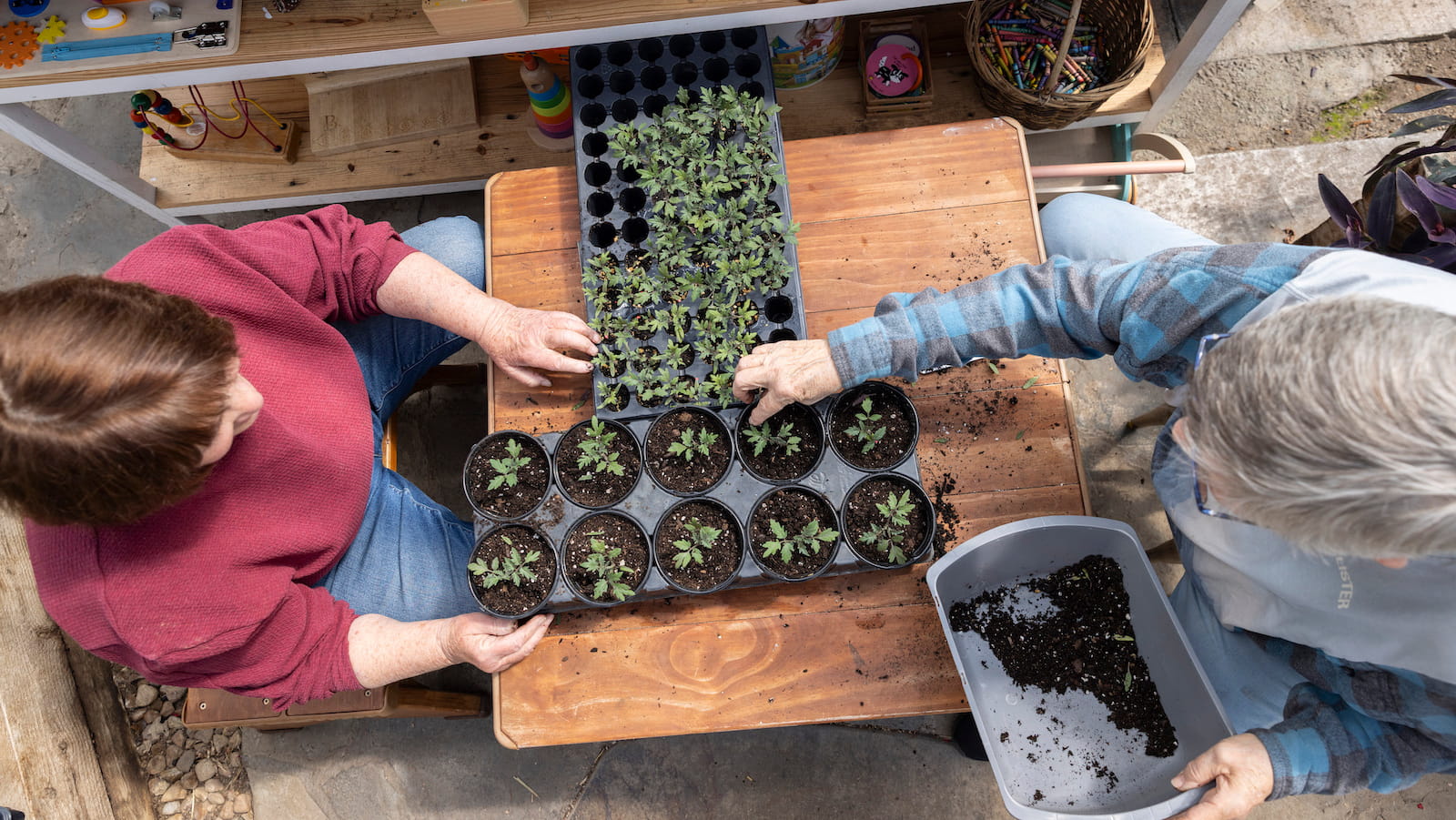
Renee Costanzo cranked on the rusty pulley with both hands, watching the greenhouse roof creak open in sections. A breeze of spring air swept over 12,000 seedlings lined up in plastic trays in the Kilbourn Park greenhouse.
Costanzo, the Chicago Park District’s only full-time employee at the northside greenhouse, spearheads a months-long effort to grow more than 15,000 plants, including vegetables, greens, and flowers, to get them ready in time for the Kilbourn Park’s annual plant sale.
The massively popular sale, which took place earlier this month, typically draws upwards of 1,100 people every year, with local gardeners lining up around the park waiting to snatch up plants at $4 a piece. But this year, attendance broke records — over 2,300 shoppers turned out.
“We generally start these annuals at the end of February,” said Costanzo, pointing to rows of popular annual flowers like zinnias, marigolds, and geraniums, which provide bright blooms all summer long before dying at the end of the season. “So we’ve been coddling and loving these babies for months now, and we just want to get them into happy homes.”
Volunteers at Kilbourn Park prepare for the Mother’s Day plant sale. Manuel Martinez / WBEZ
For decades, Chicago gardeners flocked to the Kilbourn Park sale to pick up tomatoes, cucumbers, and some annuals — the standard starter kit for backyard gardeners. But this year, the park responded to a relatively new demand: Nearly 1 in 5 plants for sale are native plant species that have adapted to the local climate and wildlife and are generally low maintenance.
“Just in the last five years, people have asked for more natives, which is why we’ve been increasing our production,” said Costanzo, who experimented with 30 different native species in November ahead of the plant sale this year.
For a long time, native plants were seen as little more than weeds, but their value has grown significantly in recent years. Other local plant sales across Chicago and the country are incorporating native species at a pace surprising to even veteran horticulturalists who remember a time when they couldn’t give them away.
“I’ve watched this for 44 years, from almost zero to now,” said Neil Diboll, the president of Prairie Nursery, a Wisconsin-based nursery dedicated to growing and shipping native plants across the country.
“It’s not a fad,” Diboll said. “This is a long, steady climb.”
Last year, Diboll said his nursery experienced a 7 percent increase in native plant sales. This year, they’re shipping out about 500,000 plants and even more seeds. Back in 1982, when Diboll first started selling plants, business was tougher: The company grossed just over $13,000. These days, he said, “you can add a few zeros on there.”
That relatively new mainstream demand has been driven, in part, by concerns about dramatic declines in insect species and climate change-powered extreme heat, drought, and flooding. The caterpillars of the Monarch butterfly, for example, depend on native milkweed as a food source. But as land use patterns have changed, local milkweed species have disappeared, leading to recent declines in Monarch populations.
The Kilbourn Park annual plant sale is now in its 30th year. Manuel Martinez / WBEZ
“Native plants have been adapting to change for thousands of years,” said Tiffany Jones, who leads habitat education throughout the Great Lakes region for the National Wildlife Federation. “They need less water, less maintenance, and they’re incredibly resilient — not to mention they help flood prevention with their deep root systems and provide habitat for all kinds of crucial species and pollinators. They’re practical and beautiful.”
In Minnesota, Becky Klukas-Brewer, co-owner and head of marketing and sales at Prairie Moon Nursery, a popular native plant nursery, said the Midwest greenhouse is shipping more plants and seeds than ever before. “In the last seven years, we have seen a 350 percent increase in sales, which is pretty awesome,” said Klukas-Brewer. At the same time, the 44-year-old nursery has seen its orders triple. She credits that success, in part, to the growing number of local plant sales across the country, drumming up interest in ecologically-minded gardening.
For nearly 50 years, Wild Ones, a national nonprofit, has been educating the public about the benefits of reintroducing native plants back into their habitat. What started as a gardening club in Milwaukee, Wisconsin, has ballooned into a nationwide organization with over 14,000 gardening enthusiasts putting on plant sales, seed giveaways, and exchanges. The group has also been noticing an uptick in native plant sales.
Over 110,000 native plants were sold last year through the organization’s 107 plant sales last year, according to Josh Nelson, development director with the Wild Ones. He added that another 40,000 native plants were distributed as part of the group’s various programs.
Lourdes Valenzuela works on transplanting young plants before Kilbourn Park’s annual plant sale. Manuel Martinez / WBEZ
As the native plant business continues to grow, the annual Kilbourn Park plant sale is helping meet some of that demand. To make it happen, a team of local volunteers came out on a weekly basis over several months to help sort, pot, and move seedlings.
“It’s completely worth it,” said Lourdes Valenzuela, a retired schoolteacher who has volunteered at the north side plant sale for 12 years. Valenzuela is part of the Friends of Kilbourn Park Greenhouse, a dedicated group of local volunteers who fundraise to help expand the resources at the nursery. With help from funds collected at previous plant sales, they’ve been able to buy benches, a shed, and even a patio — increasing the footprint of the educational center. The goal this year was to raise $25,000, about half of the total projected cost, for a new outdoor learning center. But Valenzuela said the plant sale was a huge hit, and they easily surpassed the goal. The Chicago Park District confirmed the sale generated approximately $48,000.
“We literally sold every possible plant, all the compost, lots of baked goods,” she said. “We’re not fighting against the climate here. We’re working with it because it’s what’s native to this area, and they’re beautiful.”
This story was originally published by Grist with the headline Once dismissed as weeds, native plants are now flying off the shelves on May 15, 2026.


From Grist via This RSS Feed.
25
Katzie First Nation guardians and partners celebrate restoration of important ‘B.C.’ marsh
(indiginews.com)
cross-posted from: https://hexbear.net/post/8519092
cross-posted from: https://news.abolish.capital/post/50076
Mike Leon, at centre, leads the Katzie First Nation’s team of eight guardians. They’ll be monitoring the benefits of the wetland restoration to measure its impact on native species, including sandhill cranes and salmon. Photo by Santana Dreaver
This story was originally published in the Narwhal and appears here with permission and minor style edits.
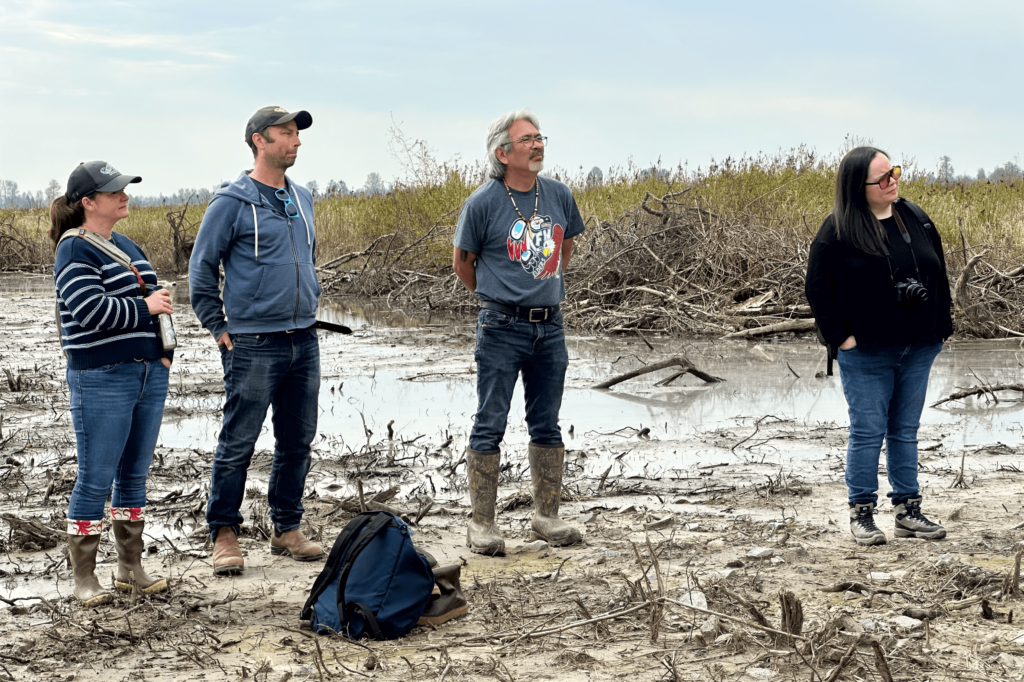
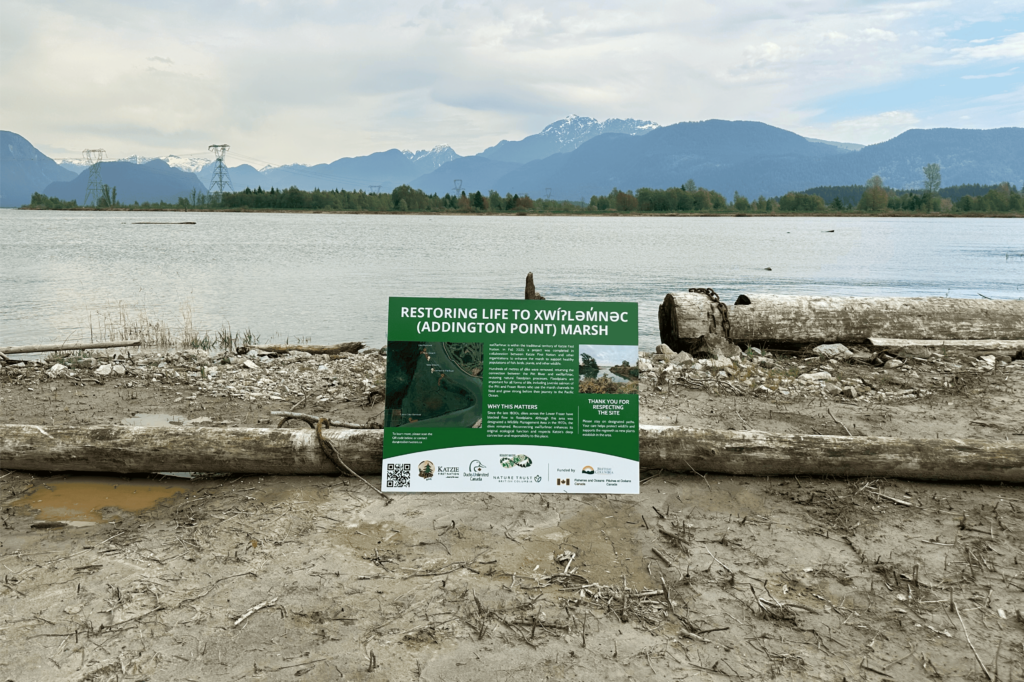
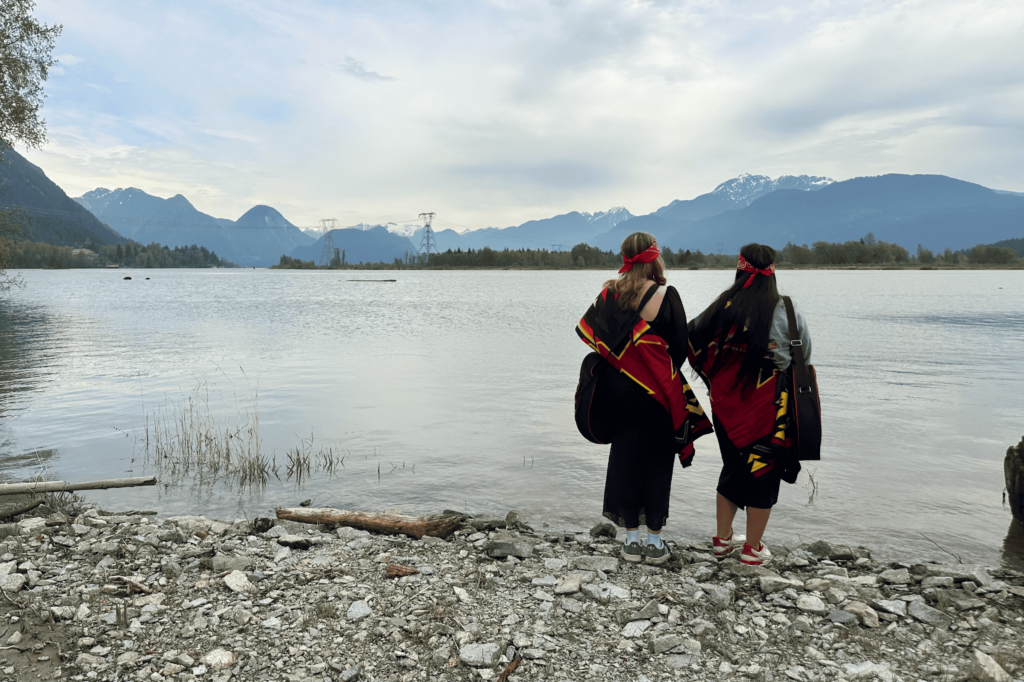
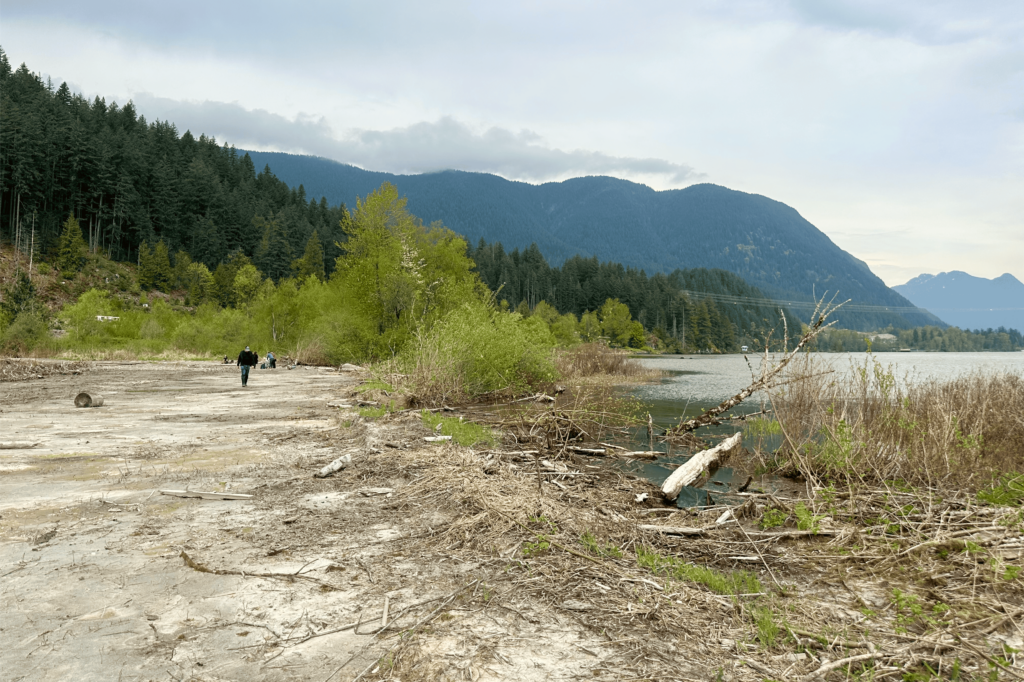
On a late April morning, a group of Katzie First Nation land guardians, conservation workers, government representatives and others trek down to Xwíʔləm̓nəc (Addington Point Marsh).
They gather in the First Nation’s Lower Mainland territory to celebrate the long-awaited completion of a wetland restoration project connecting to the Stó:lō (Fraser River).
Mike Leon leads Katzie’s team of eight guardians, and has been involved with the marsh restoration project from the beginning.
After everyone bypasses a locked gate — there to reduce the risk of bear-human encounters — they stop by the water, and he addresses the group.
“I would really like to raise my hands to all of you, to the hard work and willingness to work with us,” he said, “to be with us, to be with this land.”
READ MORE: New wetland salmon habitat to help restore syilx floodplain
The restoration effort was funded by the provincial government and the federal Department of Fisheries and Oceans.
Katzie First Nation implemented the project with Resilient Waters, Ducks Unlimited Canada, and the Nature Trust of British Columbia, with many helping hands involved.
For three years, the partners worked together to reestablish waterflow in the marsh.
The wetlands connection to the “Pitt River” and south “Fraser River” system was disconnected when early settlers installed a dike, which has since been removed.
“I love doing the work,” added Mackenzie Adams, another Katzie guardian.
“I love being on our territory and helping the environment.”
Adams monitored the site throughout the project, and collected water and bird surveys to compare data before and after restoration.
The marsh restoration project was a collaboration among many partners, with all partners clear that Katzie First Nation was in the lead.
‘You can already see the differences’
Xwíʔləm̓nəc is now letting nature take its course, and with the area being home to one of the country’s largest salmon runs and smallest sandhill crane populations, monitoring the wetland is critical work for Katzie guardians.
“Comparing the first day to the last day was pretty eye opening because you can already see the differences from the river water coming in,” Adams said.
“It will be an awesome habitat for all birds and salmon fry.”
While the exact impact is still unknown, wetland restoration benefits are well-documented.
According to the B.C. Wildlife Federation, wetland monitoring is just as important as the initial restoration during a project.
“Monitoring, maintenance, and data collection help us evaluate the effectiveness of restoration techniques and improve the performance and function of future projects,” it reads on their website.
READ MORE: Indigenous conservationists are imitating beavers — hoping for their return
Leon’s team will be on top of that data, working with partners to restore and conserve native plants and animals in the area.
Beyond its environmental impacts, the project has brought people together from all walks of life who want to see salmon and wildlife in and around the Fraser River thrive.
Relationships between Katzie guardians and partners in the project have flourished.
A local property owner who attended the celebration shared their initial concerns after seeing excavation equipment clearing a path to the dike — and their relief after learning more about the endeavour.
Katzie had final say in restoration with many partners
Dan Straker, the manager for the Resilient Waters project, was a lead organizer under the direction of Katzie guardians and the First Nation’s leaders.
He said Katzie First Nation informed the project along the way and held final decision-making power.
“All the partners fell in line with that idea and thinking,” Straker told the Narwhal.
“What we ended up with was this really nice blended way of doing things.”
Leon added that, throughout the endeavour, Katzie brought in its customs, culture and laws.
READ MORE: How this Katzie First Nation birth worker carries on the teachings of her great-grandmother
“It’s really important and special to us to know our place names in our territory,” Leon said.
“When we have our guardians come out, we’re honoured to be on those place names such as Xwíʔləm̓nəc.”
It’s a sentiment shared by Katzie’s guardian co-ordinator April Pierre. In a quiet moment of emotion in the circle, she addressed a reality shared by many First Nations people: growing up away from her homelands.
The Xwíʔləm̓nəc restoration project gave Pierre an opportunity to spend time on land she had never been to — the land of her ancestors.
It’s one emotional moment of many that were shared during the celebration, as others reflected on the marine and wildlife already making appearances in the marsh.
After three years of restoration work, Katzie First Nation guardians and partners from conservation, government and community celebrated the reconnection of the Xwíʔləm̓nəc (Pitt-Addington Marsh) to the Stó:lō (Fraser River) watershed and surrounding floodplains — restoring critical salmon habitat in their territory.
Farmland saw marsh habitat ‘alienated’ from river
Dikes were built to create flat land for agriculture in the area since the late 1800s.
Restoring the marsh’s connection to the river has immense ecological benefits and cultural benefits for local First Nations.
“Conservation organizations in previous decades had a different approach to conservation land management that I think sometimes excluded other organizations and nations,” said Eric Balke, a senior restoration biologist with Ducks Unlimited.
“I think we are learning new and better ways of moving forward — more collaborative ways — and this project is a great example of that.”
Balke has been involved with restoring Xwíʔləm̓nəc since brainstorming and planning stages, eventually passing the reins to his colleague Alison Martin, a conservation specialist with degrees in ecological restoration.
The project is “all about restoring relationships,” Balke said, something he’s particularly excited about.
“You’re restoring the relationship between the river and these wetlands that were formerly alienated by dikes,” he explained.
“You’re restoring the relationship between Xwíʔləm̓nəc and juvenile salmon that previously were prevented from accessing the site … It’s also restoring the relationship between Katzie and their kin.”
Wetland restoration benefits salmon
In the Pacific Northwest, both people and the ecosystem know how important salmon is.
Xwíʔləm̓nəc is connected to Stó:lō waterway, the country’s largest salmon-bearing watershed.
“Floodplains provide critical, food-rich habitat for juvenile salmon,” explains the Pacific Salmon Foundation.
“These low-lying areas adjacent to stream channels allow young salmon to grow healthy and strong before their journey to the ocean.”
READ MORE: Troubled waters: A new fish weir on Stó:lō territories is met with colonial challenges
But dikes disrupt the river’s connection to the marsh, blocking valuable nutrients and harming the salmon and other species.
Tidal marshes and other wetlands collect nutrient-rich sediment, helping protect communities from flooding, he said.
“This land that settlers found is super valuable for farming and agriculture,” he said. “It was valuable because of the sediment that was delivered — because of the nutrients that were delivered — by the river.
“When we construct dikes we disconnect the river from its floodplain. The river can no longer deliver those critical ingredients.”
A huge benefit of restoring tidal marshes is that they are one of the most effective ways of capturing and storing carbon, contaminants, and pollutants that flow downstream.
Wetlands have many ecological benefits. But they also protect people and communities by mitigating the risk of floods, which have hit the valley hard around the Stó:lō (Fraser River) three times in the past five years.
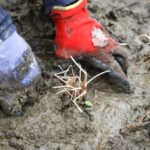
Further, Xwíʔləm̓nəc is home to wapoto and tule, two traditional plants for Katzie First Nation that have been impacted from dikes.
Members of the nation say restoring their wetland is giving hope that these plants can be harvested for food and mat-making once again.
The marsh is also home to sandhill cranes, whose local population has hovered around just 30 to 35 birds for decades, wildlife biologist Myles Lamont told the Narwhal.
He joined the restoration project as a sandhill crane consultant. He said the few remaining birds often next on golf courses and small regional parks.
READ MORE: In ‘B.C.’s’ interior, a syilx program is returning burrowing owls to the grasslands
“Unfortunately they’ve been getting struck by golf balls,” he said.
“Quite commonly over the last 10 to 15 years, I’ve had to rescue a few birds that have had broken legs or injuries as a result of golf ball strikes.”
He hopes restoring Xwíʔləm̓nəc to a wetland will bring in enough water to create a nesting habitat for the birds, drawing them away from golf courses.
As participants spoke around the sharing circle, Lamont spotted a sandhill crane flying above the gathering, and called out, “Crane!”
To Adams, being part of the restoration initiative was “really cool … knowing that we’re making a difference,” recalled the Katzie guardians member.
“The salmon habitat has a place to go throughout the winter, and so do the sandhill cranes and [other] birds,” Adams said.
“It’s a good feeling … I feel accomplished.”
The post Katzie First Nation guardians and partners celebrate restoration of important ‘B.C.’ marsh appeared first on Indiginews.



From Indiginews via This RSS Feed.
view more:
next ›