1
posts
2
3
4
5
Chinese companies are taking over the EV market. What’s behind their meteoric rise?
(theconversation.com)
6
7
8
The article gives a summary of various alternative fuels being developed in Australia.
While Australia’s rapid electrification is critical for net-zero targets and resilience across Australia’s energy system, it cannot solve the entire equation.
Hard-to-abate sectors – including aviation, heavy industry, agriculture and mining – face challenges relating to the use of electricity at the scales and temperatures required. Major fuel users require scalable and affordable alternative fuels to lower emissions while safeguarding operational continuity.
According to CSIRO’s research director – energy technologies Dr Daniel Roberts, who presented on a panel at the recent SAF APAC (Sustainable Aviation Fuel) Summit in Melbourne, supporting and enabling the alternative fuel transition requires a shift in mindset.
“There is no such thing as a single solution approach for a challenge of this magnitude,” Dr Roberts said. “Ultimately we will rely on a balanced portfolio of feedstocks and technologies, with each being evaluated on a case-by-case basis from the perspectives of scale, deployment time, feedstock availability, and cost.”

9
10
11
I am lucky enough to have red-necked wallabies visit my place and I love the way they stand very still looking at me to make sure I am no threat. I'm not but vehicle drivers on the streets around my place often are. I've pulled off a dead wallaby and a friend helped me to get another badly-injured one to the vet where it was put down. Other neighbours have had similar experiences. What a terrible feeling it is to see these and other beautiful native animals dead by the side of the road. If cars weren't bad enough, wallabies face other threats.
Australia's larger kangaroos are generally widespread, mobile, able to use a range of open habitats and capable of fending off predators. Our wallabies are far more particular. Some depend on rocky ranges and escarpments. Others need dense woodland or particular patches of arid-country vegetation. Their smaller ranges and more specialised habitats make them especially vulnerable when Country is cleared, fragmented, overgrazed, or affected by climate change and catastrophic bushfires.
Many smaller wallabies also fall within, or close to, Australia’s notorious “critical weight range”: mammals weighing roughly 35 grams to 5.5 kilograms that are particularly devastated by foxes and feral cats.
For more interesting info and great photos of various types have a look at this article: https://www.lyrebirddreaming.com/post/our-other-wallabies?cid=041a981b-853b-4355-a7b0-1182c033c5f6
You might also like this video, Fight to save the endangered [Victorian] southern brush-tailed rock wallaby https://www.youtube.com/watch?v=Vd3Q0uGKcDc

12
As the UK and Europe battle deadly wildfires, what lessons can Australia offer?
(www.theguardian.com)
13
14
15
16
17
18
19
20
21
22
A day in the life of... a wildlife rescuer and carer (specialising in gliders)
(backyardsforbiodiversity.org)
23
Death trap: what to do about the everyday items catching and killing Australian wildlife
(www.theguardian.com)
24
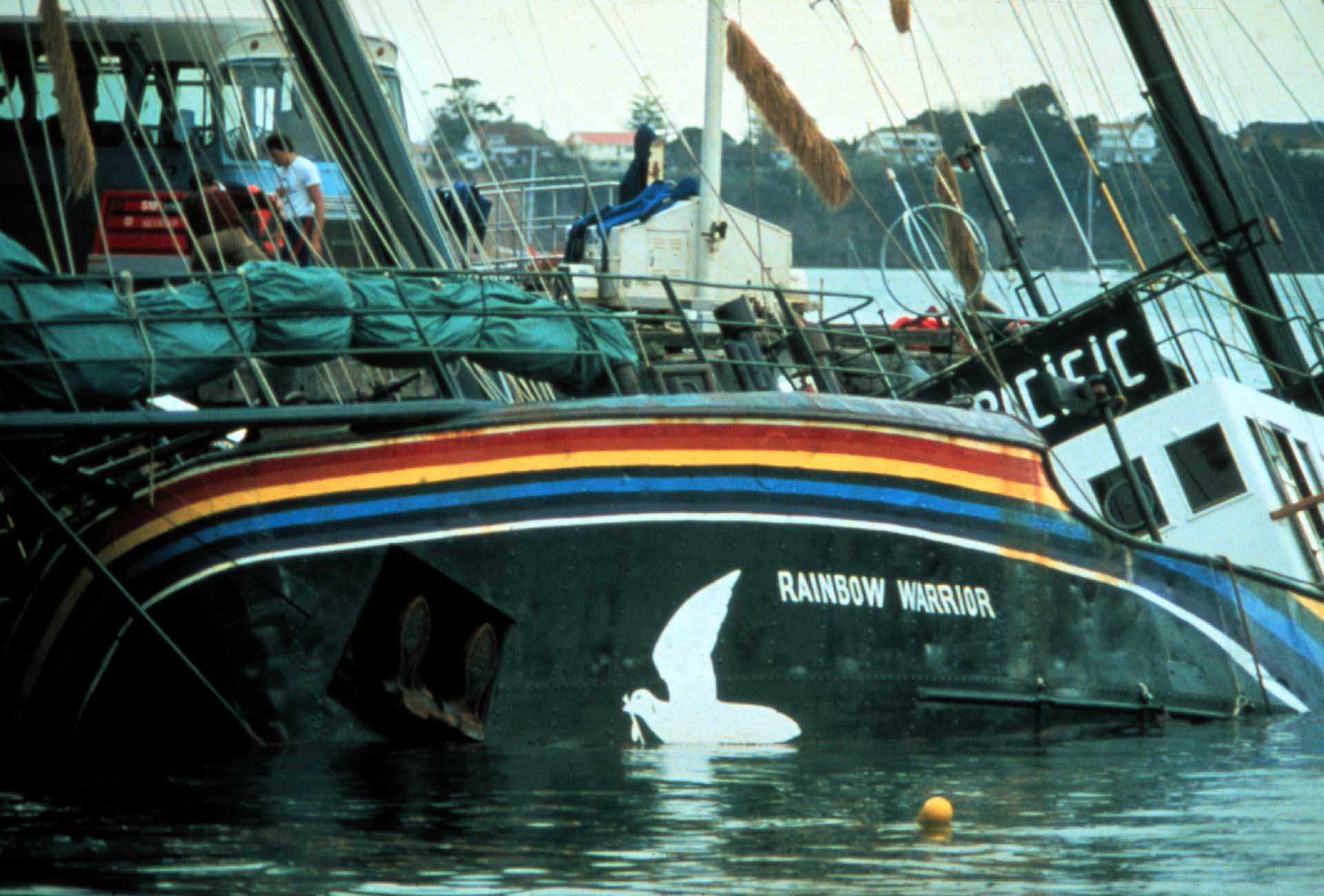
Sinking of the Rainbow Warrior (1985) On this day in 1985, the French government, in an act of state-sponsored terror, bombed the Greenpeace-operated boat Rainbow Warrior, which was en route to...
(stahmaxffcqankienulh.supabase.co)
cross-posted from: https://lemmy.world/post/49266190
Sinking of the Rainbow Warrior (1985)
Wed Jul 10, 1985
Image: The Rainbow Warrior in Marsden Wharf in Auckland Harbour after the bombing by French secret service agents. © Greenpeace / John Miller [greenpeace.org]
On this day in 1985, the French government, in an act of state-sponsored terror, bombed the Greenpeace-operated boat Rainbow Warrior, which was en route to protest a nuclear weapons test planned by the French state. The bombing, later found to be personally ordered by French President François Mitterrand, killed a freelance photographer on board named Fernando Pereira.
France had been testing nuclear weapons on the Mururoa Atoll in French Polynesia since 1966. In 1985 eight South Pacific countries, including New Zealand and Australia, signed a treaty declaring the region a nuclear-free zone.
Since being acquired by Greenpeace in 1977, Rainbow Warrior was active in supporting a number of anti-nuclear testing campaigns during the late 1970s and early 1980s, including relocating 300 Marshall Islanders from Rongelap Atoll, which had been polluted by radioactive fallout by past American nuclear tests.
For the 1985 tests, Greenpeace intended to monitor the impact of nuclear tests and place protesters on the island to observe the blasts. Three undercover French agents were on board, however, and they attached two limpet mines to Rainbow Warrior and detonated them ten minutes apart, sinking the ship.
France initially denied responsibility, but two of the French agents were captured by New Zealand Police and charged with arson, conspiracy to commit arson, willful damage, and murder.
The resulting scandal led to the resignation of the French Defence Minister Charles Hernu, while the two agents pleaded guilty to manslaughter and were sentenced to ten years in prison. They spent a little over two years confined to the French island of Hao before being freed by the French government.
In 1987, after international pressure, France paid $8.16m to Greenpeace in damages, which helped finance another ship. It also paid compensation to the Pereira family, making reparation payments of 650,000 francs to Pereira's wife, 1.5 million francs to his two children, and 75,000 francs to each of his parents.
- Date: 1985-07-10
- Learn More: www.greenpeace.org, en.wikipedia.org, www.zinnedproject.org.
- Tags: #Terrorism, #Protests.
- Source: www.apeoplescalendar.org
25
view more:
next ›