1
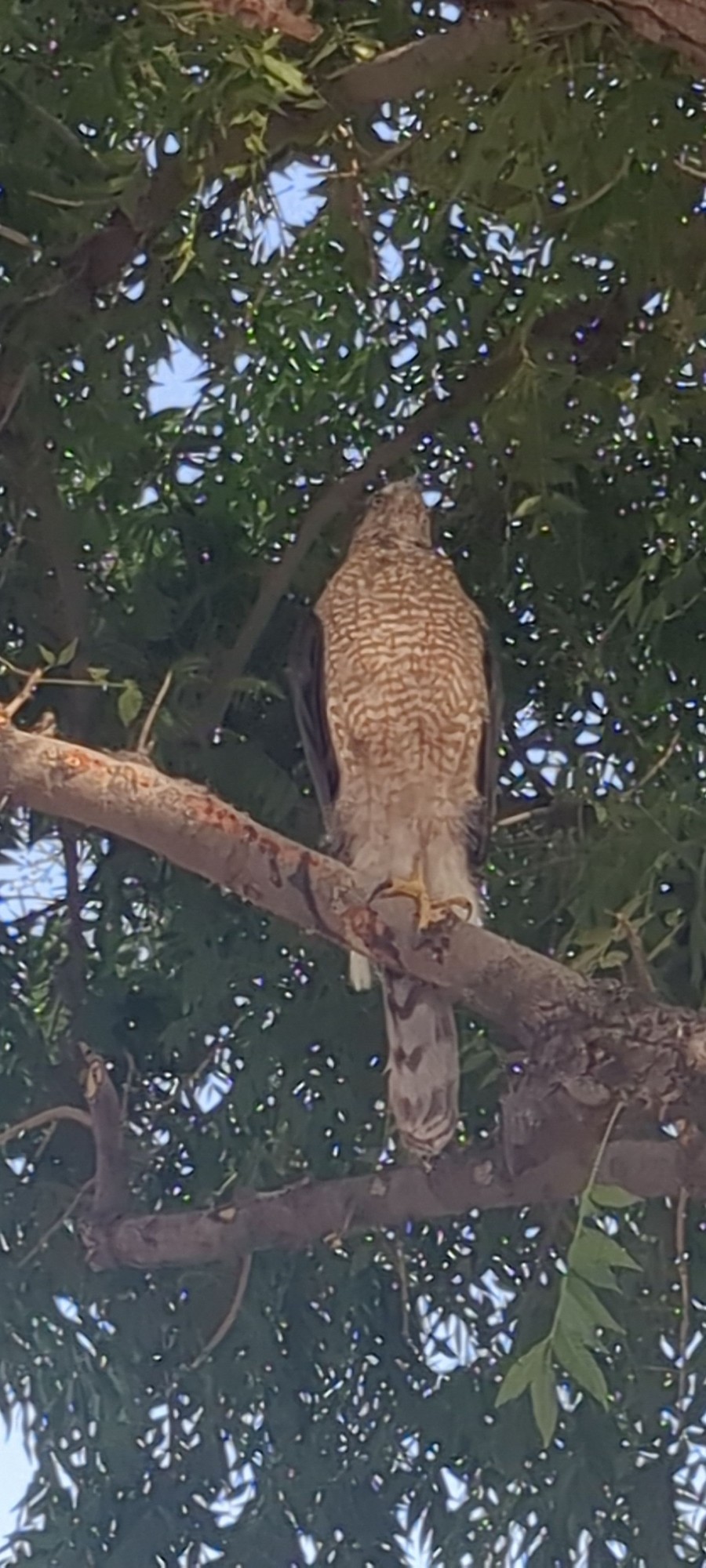
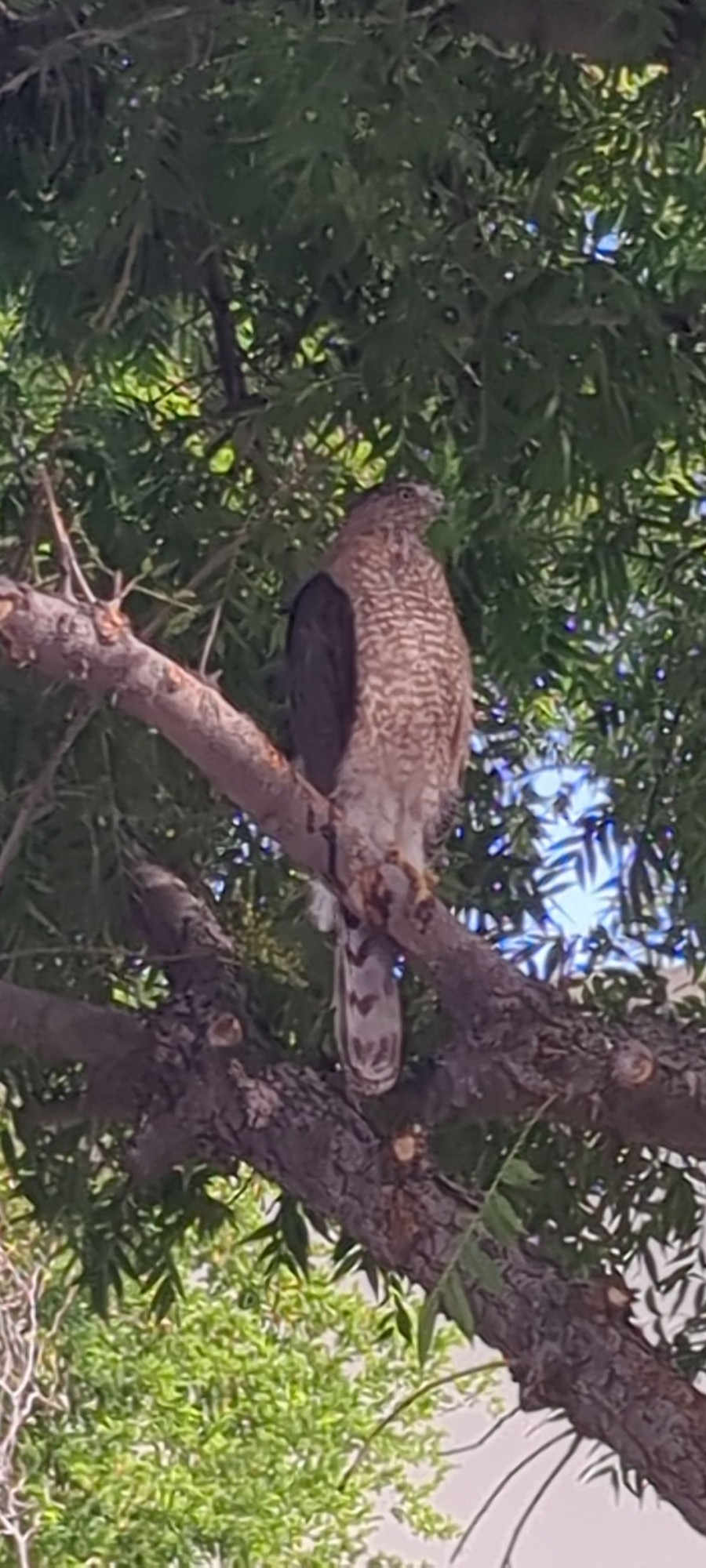
Noticed this bird the other day and just wanted to know what it was
Update: Thanks for all the responses looks like its a coopers hawk.
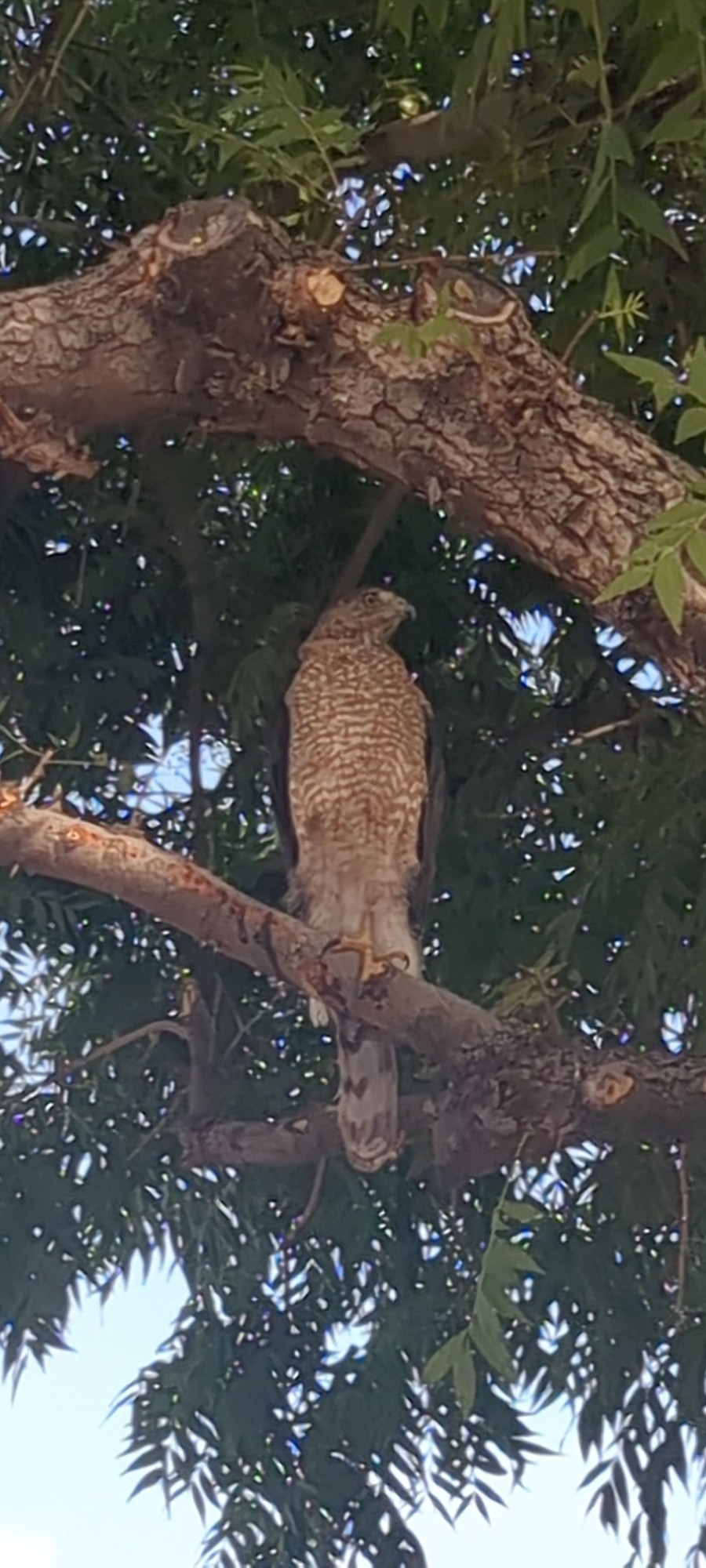
Noticed this bird the other day and just wanted to know what it was
Update: Thanks for all the responses looks like its a coopers hawk.
there are very few bugs this year. not sure if the birds are eating them all or something else is out of whack. illinois

A while ago, my dad was helping my sister and her boyfriend to make some new bird boxes for their garden. I managed to get a photo afterwards of a local robin who was checking them out.

It’s from Our Little Library Volume 1: Forest Animals by Tabitha Paige. The book also has a woodpecker and an owl but this bird is just a plain old “bird”…

I put the feeders up to invite the songbirds, Mr Blue Jay. I'm not sure if anyone's told you, but your song sucks and you eat too much.
Sure are nice to look at though....


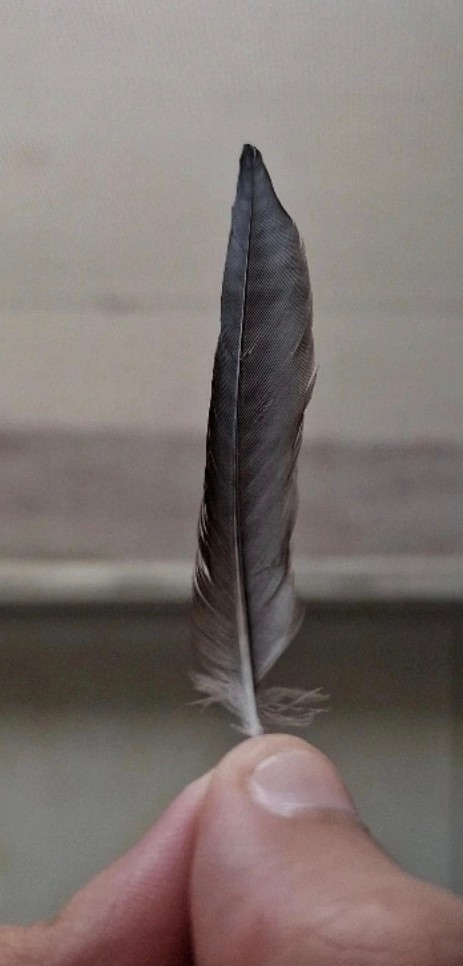
This is a feather I found today of a dusky crag martin (I know this because I watched it get shed by one) and just wanted to talk on something cool about feathers in general and how they can be used to know more about the state of the bird that they came from.
Growth bars are faint lines and barrings which form over the normal growth of feather growth, typically forming every 24 hours as the feather grows, these bars show light bands and dark bands. The dark bars are from feather materials created during the day and the light bars during the night. And each light and dark bar corresponds to a 24 hour period of growth, so scientists can actually use growth bars to calculate how much time is needed to replace all of the feathers on a bird's body in some pretty useful ways. For instance, when all the growth bars on all feathers of a bird seem to be in line pretty uniformly, that usually means that all the feathers were replaced at the same time, which usually only happens during the first set of plumage (which means that the bird is still pretty young even if it sports adult plumage) so you can also also get clues about how old the bird may be from its growth bars.
But age and growth arent the only things you can get from looking at these growth bars, but also the birds overall state of heath. The growth bands being regular means that the bird was living good and that availability of the diet wasnt really an issue for it. But on the other hand a bird going through tough times will have irregular growth bars as well the apperance of fault bars on their feathers.
When a bird is subject to stressors such as a period of poor nutrition from a lack of sufficient food resources, illness, psychological stressors or due to sudden muscle contractions in the feather follicle (like a fright molt to distract and escape predators) its body diverts the protein, energy, and micronutrients required for synthesising keratin and developing feathers properly towards its vital systems and organs instead leading to the feather barbules not developing right and instead appearing as narrow transluscent bars of missing barbules in the feathers. These "defects" in the feather called fault bars and can prove helpful in understanding the life history of the certain bird that they came from.
cross-posted from: https://crazypeople.online/post/7448881
Individuals below.
Left side friend:
Right side friend in three poses. It's hard to believe it's the same bird:

Auckland, New Zealand - February 2024
#bird #birds #sparrow #PasserDomesticus

A turkey in a tree! This guy was settling in for the night as I came along with my camera
Image description: A scrub turkey, surrounded by leaves, sitting in a tree
Kedron Brook, Brisbane, Australia - January 2025